
Park City sits about 65 miles from Provo, which makes it the most-visited place in Utah that most Utah Valley residents still treat as a special occasion. It shouldn't be. It is a comfortable day trip in every season, and outside of ski weekends it is often an easier drive than Salt Lake City.
It is also, right now, the Utah destination with the most out-of-date information circulating about it. Two things have changed that most published guides have not caught up with — one that removes something from Park City's calendar, and one that is about to add a great deal to it. Both are below.
The two routes, and when each one is wrong
Almost every guide gives one route. There are two, they are close in time, and they behave completely differently.
North on I-15, east on I-80 through Parley's Canyon. Roughly 75 to 85 minutes. This is the all-weather route. It is freeway the entire way, it is heavily plowed and patrolled, and it is the one you want after dark, in a storm, or when you are driving something without much ground clearance. The cost is that it is dull, and that you inherit whatever Salt Lake County traffic is doing on the way past.
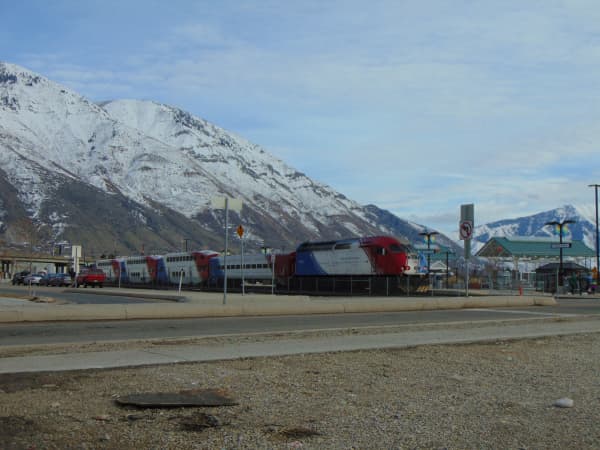
East through Provo Canyon on US-189, then US-40 past Heber. Roughly 75 to 90 minutes and much the better drive — up the canyon past Bridal Veil Falls, along Deer Creek Reservoir, through Heber Valley and Midway and over. It also puts Midway, the reservoirs and Soldier Hollow directly on your route, which the freeway does not.
The catch is that Provo Canyon is the first section to deteriorate in weather and the last to be fully cleared. In January, at night, in snow, the freeway is the correct answer even though it is less scenic. In July it is not close — take the canyon.
A third option exists and is worth knowing about: US-40 continues past the Park City turnoff toward Heber and the Uinta Basin, so the canyon route can be run as a loop, going out one way and back the other. That turns a day trip into a genuine drive rather than an out-and-back.
What changed: Sundance has left Park City
For four decades, "Park City in January" meant the Sundance Film Festival. That is over.
The festival's final Park City edition ran January 22 to February 1, 2026. From 2027 it relocates permanently to Boulder, Colorado, under a ten-year agreement, after a search process in which Boulder beat out Cincinnati and a joint Salt Lake City–Park City bid.
This matters for planning in a specific and practical way. January in Park City has just become a substantially different month. The festival brought roughly 30,000 people at peak, and with them the lodging prices, the Main Street closures, the shuttle systems and the reservations-months-in-advance culture that defined late January in town. Guides written before 2027 will tell you to avoid Park City in January unless you have festival tickets, or to book eleven months out. That advice is now aimed at an event that will be happening in Colorado.
What replaces it is not yet clear, and anyone who tells you confidently is guessing. What is clear is that if you have historically written off late January as a Park City weekend, that assumption is worth re-testing.
One important disambiguation, because search results conflate these two constantly: the Sundance Film Festival is not the same thing as Sundance Mountain Resort, the ski area and lodge in Provo Canyon about 35 minutes from Provo. Robert Redford founded both, and the festival takes its name from the resort, but they are separate entities in separate counties. The resort is not moving, is not closing, and is still there. Our Sundance Mountain Resort guide covers it properly.
What is coming: the 2034 Winter Olympics
The Games return to Utah from February 10 to 26, 2034, and the Park City area carries a large share of them. Organizers have branded the event Utah 2034 specifically to signal that it is a regional rather than a Salt Lake City event.
Three Park City venues are confirmed, all of them returning from 2002:
- Park City Mountain — snowboard halfpipe and slopestyle, freestyle skiing halfpipe and slopestyle.
- Deer Valley Resort — freestyle skiing moguls and aerials, on the Champion and White Owl runs, the same runs used in 2002.
- Utah Olympic Park — ski jumping and the Nordic combined jumping, the sliding sports (bobsled, luge, skeleton), plus snowboard cross, ski cross and parallel giant slalom.
Soldier Hollow, over in Wasatch County near Midway, takes biathlon and cross-country — which puts an Olympic venue directly on the Provo Canyon route described above. Rice-Eccles Stadium in Salt Lake City hosts the ceremonies, Snowbasin takes all alpine racing (a change from 2002, when Snowbasin shared that role differently), and a new big air venue goes into downtown Salt Lake City.
Here is the fact almost nobody in Utah Valley knows: Provo is on the official venue list. The International Olympic Committee's own summary of the Games names Salt Lake City, Park City, Soldier Hollow, Snowbasin and Provo as competition locations. Ten of the thirteen competition sites are reused from 2002, no permanent construction is required, and every venue sits within an hour of the athlete village at the University of Utah.
We are not going to tell you which Provo building it is, because the published venue tables name arenas inconsistently and the assignment has been described more than one way. What is solid is that Provo is listed. If you have been thinking of 2034 as something that happens to Salt Lake and Park City, it isn't.
Two other things worth holding onto for planning purposes: there are roughly 40 percent more events in 2034 than in 2002 with only one additional snow venue, so expect the existing venues to run busier than they did; and Paralympic events are slated for Park City venues in 2034, which did not happen in 2002.
Winter: the actual ski comparison
Park City Mountain is the largest ski resort in the United States by acreage — around 7,300 acres and over 330 trails, spread across two bases, the historic Park City side and Canyons Village. The scale is genuinely the point; you can ski for several days without repeating much.
Deer Valley is the other half of the town's skiing, historically the more manicured and service-heavy of the two, and it has been in the middle of a major expansion that has been changing its footprint season to season.
We are deliberately not printing lift ticket prices, pass requirements or parking reservation rules here. All three change every season, several are dynamic and priced by date, and both resorts have altered their parking reservation systems more than once in recent years. Check the resort directly for the season you are going. A guide that quotes you a 2024 lift price is doing you harm, not a service.
If you are weighing Park City against closer options, our skiing near Provo guide covers the whole comparison, including why the Utah Valley resorts are often the better midweek call.
Summer and shoulder season: the better value
Ski season is what Park City is famous for and summer is when it is a better day trip from Provo. Lodging drops, Main Street is pleasant to walk, and the drive is trivial in both directions.
Mountain biking is the headline. The trail network around Park City is among the most developed anywhere in the country, with lift-served riding at both mountains and a large system of free trails that connect the town itself. Riders from Utah Valley tend to underrate how much is rideable directly from Main Street without a lift ticket.
Utah Olympic Park is the single best summer stop, and it is the one most Provo families skip. The grounds and the museum are the low-commitment version; the paid activities include an extreme zipline, an alpine slide and, in season, a bobsled ride on the actual track. It is also a working training facility, so on a normal summer day you may well watch aerialists landing in the splash pool.
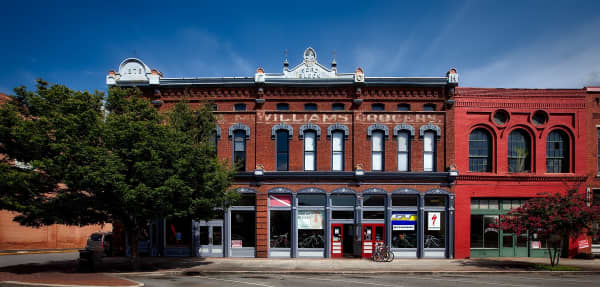
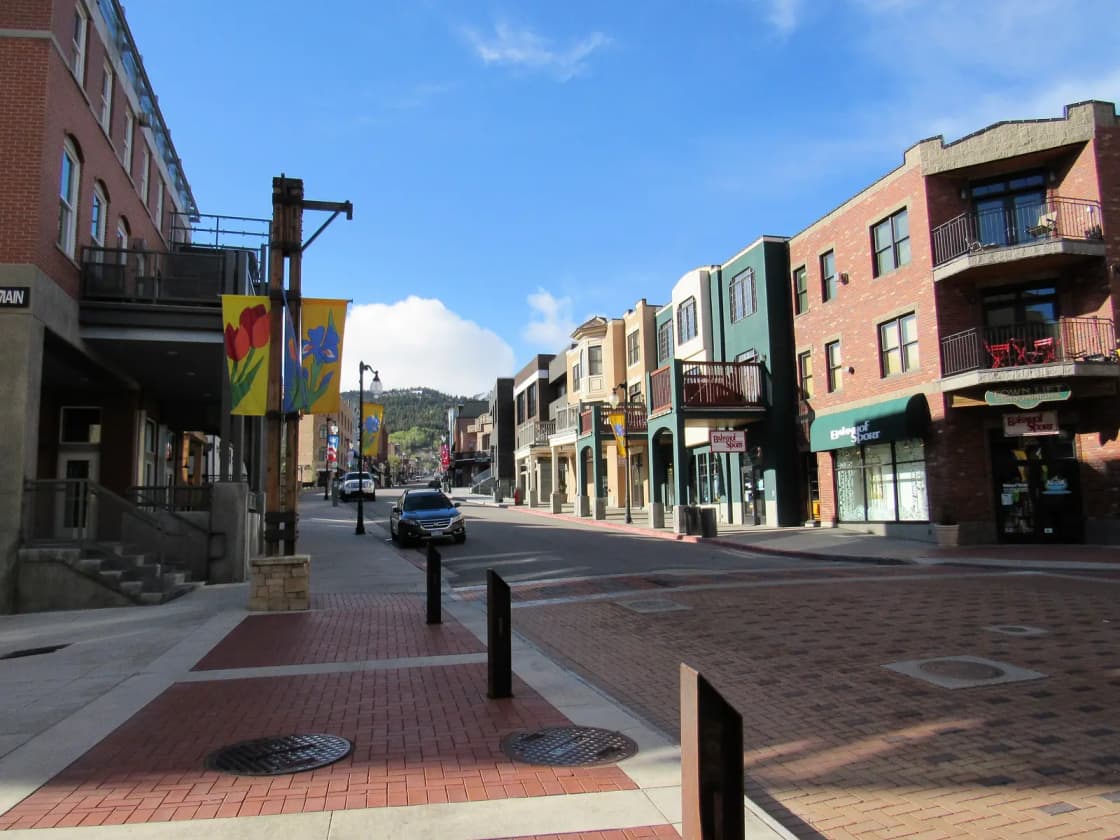
Main Street is a genuine historic district rather than a themed one — Park City was a silver mining town first and a ski town second, and the buildings are the mining town's. The Egyptian Theatre, the galleries and the restaurant density make it a reasonable afternoon on its own.
It was a mining town first, and that is still visible
Park City is unusual among western ski towns in that its historic district is genuinely historic rather than built to look that way. Silver was found here in the 1860s, and the boom that followed made it one of the richest mining districts in the territory — the Ontario Mine in particular produced on a scale that funded fortunes well beyond Utah. At its peak the town held several thousand miners, most of them immigrants, and it had the saloons and boarding houses to match.
A fire in 1898 destroyed a large part of Main Street, which is why the surviving commercial buildings mostly date from the rebuilding immediately after. When the silver market collapsed the town nearly emptied — Park City was close to a ghost town by the 1950s, before skiing rescued it.
Two consequences you can see today. First, the Park City Museum on Main Street is worth the hour; it occupies the old city hall, and the territorial jail in the basement is the part people remember. Second, the mountain itself is full of mine workings, and both resorts have preserved head frames and structures on the ski runs — so if you ski here you are skiing through the industrial archaeology, which is not true at Deer Valley's neighbors in Little Cottonwood.
Main Street, specifically
Main Street is compact and walkable end to end in about fifteen minutes, which makes it a realistic afternoon even if you drove over after lunch.
The Egyptian Theatre dates from 1926 and still operates as a working venue rather than a museum piece. The Town Lift is the genuinely unusual one: a ski lift whose base sits partway up Main Street, so in winter you can walk out of a restaurant and get on the mountain without moving your car — an arrangement almost no other American ski town has.
High West is the distillery most visitors have heard of, notable locally as the first licensed distillery in Utah since the nineteenth century, with a saloon in a historic building on Main Street. Utah's alcohol rules are not intuitive for out-of-state visitors and they have changed recently; our Provo nightlife guide explains how the state's licensing actually works, and most of it applies in Summit County too.
For events, the one to know about is the Kimball Arts Festival, a long-running Main Street arts festival held in high summer that closes the street entirely. If you are planning an August day trip, check whether your date is the festival weekend — it is either the reason to go or the reason to go another day, depending on your tolerance for crowds. Dates move year to year, so confirm rather than assuming.
What this costs you, honestly
Park City is the most expensive place in Utah, and Utah Valley visitors routinely underestimate this. Restaurant prices on Main Street run well above Provo equivalents, parking is paid where Provo's is free, and lift tickets in peak season are among the highest in North America.
The ways around it are straightforward: go in summer, eat before you go or away from Main Street, use the free town buses instead of moving your car, and treat Utah Olympic Park's free grounds access as the anchor rather than a paid activity.
Getting around once you are there
The single most useful thing to know is that Park City runs a free public bus system, and it is good — frequent, covering Main Street, both resort bases and most of the lodging corridors. It is not a token service; it is how the town solves its own parking problem.
The practical pattern for a Utah Valley visitor is therefore: drive over, park once in whichever structure or lot you can get into, and then stop driving. Trying to move your car between Main Street, Park City Mountain and Deer Valley over the course of a day is the version of this trip that people come home irritated by, and it is entirely avoidable.
If you are bringing children, note that the Utah Olympic Park is the easiest win of anywhere in town — the grounds and viewing areas cost nothing, and watching freestyle aerialists train into the splash pool in summer is free entertainment that holds attention better than a museum.
Making it a day rather than a drive
The mistake is treating Park City as a single destination. From Provo, the canyon route gives you a sequence: Bridal Veil Falls and Provo Canyon, Deer Creek, Heber Valley, Midway and Soldier Hollow, then Park City itself. Any two of those plus Main Street is a full and unhurried day.
In winter, invert it — drive the freeway out early, ski, and come home down US-40 and the canyon in daylight if the weather is clean, or back the way you came if it isn't. The rule that matters is that you decide the return route based on what the sky is doing at 3 p.m., not on what you planned at 8 a.m.
For the wider set of options in the same direction, see our day trips from Provo guide, which covers everything within about three hours of the valley.
Why Everything Costs More Up There, in One Statute
Visitors from Utah Valley notice the price difference in Park City and reach for the obvious explanation — resort town, captive audience, charge what the market bears. That is part of it. But a measurable slice of the gap is statutory, and knowing which slice changes what you buy where.
The mechanism is the resort communities tax, in Utah Code § 59-12-401. It lets a city or town impose an additional sales and use tax of up to 1.1% on top of everything else, and it is not available to any municipality that wants it. Subsection (1)(a) sets a qualifying test: the tax is open only to a city or town whose transient room capacity is greater than or equal to 66% of its permanent population. In plain terms, a place qualifies when it can sleep roughly as many visitors as it houses residents. Park City can. Provo, Orem and every other Utah Valley city are nowhere near that ratio, which is why this particular levy simply does not exist at home.
The exclusions are where it gets useful for a day-tripper, because the statute carves out specific categories rather than applying flatly. Under Subsection (1)(b), a resort communities tax may not be imposed on the sale of a motor vehicle, an aircraft, a watercraft, a modular home, a manufactured home or a mobile home; on sales already exempt under § 59-12-104; or — the one that matters on an ordinary Saturday — on amounts paid or charged for food and food ingredients. There is a qualification worth reading in Subsection (1)(d): where food is sold as part of a bundled transaction combining food with other tangible personal property, the tax does apply to the bundle.
So the practical shape of it is: groceries are not where the extra rate bites; restaurant meals, retail, rentals and gear are. A carload of people who buy sandwich ingredients in Heber and eat them on Main Street is behaving rationally rather than cheaply. So is a group that rents skis at home and drives them up.
Two cautions, because this is a live area of law rather than a fixed fact. First, § 59-12-401 is one component of a combined rate that also includes state, county and other local levies, and the combined rate is what appears on your receipt — do not treat 1.1% as the whole difference. Second, the section has been amended repeatedly, including provisions interacting with the fairpark district, military installation development areas and major sporting event venue zones, and the version effective at the start of 2026 differs from earlier ones. If you need the current combined rate for a specific address rather than the mechanism, the Utah State Tax Commission publishes it, and that is the source to use — not a figure quoted in an article, including this one.
The broader point survives the details. Park City is expensive partly by design and partly by statute, and the statutory part is a deliberate policy choice: a town that hosts far more people than it houses is permitted to recover some of the cost of serving them from the people being served. Understanding that makes the price tag less mysterious, and it makes the food exclusion the single most actionable line in the whole chapter for anyone driving up for the day.
Related Guides
- The Heber Creeper: A Complete Guide to the Heber Valley Railroad
- Dispersed Camping Near Provo: The Rules, The Roads & What Most Guides Get Wrong (2026)
- The Lavender Farm in Mona: What to Know Before You Drive Down
- Capitol Reef from Provo: The Closest National Park Nobody Plans For
- Hot Springs Near Provo & Utah Valley (2026)
- Moab from Provo: Planning the Drive, Arches and Canyonlands
- Zion and St. George from Provo: The Southern Utah Weekend
- Bear Lake from Provo: Turquoise Water, Raspberry Shakes, Real Distance
- The Sundance Film Festival's Utah Era Is Over: What Happened, and What Stays
- Utah 2034: What the Olympics Bring to Utah Valley
- Utah Olympic Park From Provo: The Summer Playground That Is Also a 2034 Venue
Frequently Asked Questions
How far is Park City from Provo?
Is the Sundance Film Festival still in Park City?
Is Park City worth visiting in summer?
What is Park City hosting in the 2034 Winter Olympics?
Do I need a car, or can I get to Park City without one?
Where do you park in Park City?
Is Park City a day trip or an overnight from Provo?
Which is better from Provo — Park City or Sundance Mountain Resort?