Halloween ends at midnight on 31 October. What follows in a good many Utah Valley households is not an extension of it, and treating the two as one thing is the most common mistake made about the observance.
Día de los Muertos falls on 1 and 2 November. It is a family observance about particular named dead people, kept at home and at the graveside. It is not Mexican Halloween, and there is no version of this guide that would be useful while pretending otherwise.
What the observance is, from the record
The most authoritative general description is not a listicle but a formal one. In 2008 UNESCO inscribed the indigenous festivity dedicated to the dead on the Representative List of the Intangible Cultural Heritage of Humanity, having originally proclaimed it in 2003. The inscription's own description is worth reading closely, because it is specific in ways popular accounts are not.
It records that, as practiced by the indigenous communities of Mexico, the observance commemorates the transitory return to Earth of deceased relatives and loved ones, with festivities running each year from the end of October into the beginning of November. It notes that this period also marks the completion of the annual cycle of maize cultivation — the observance is agricultural as well as familial, tied to the close of a harvest.
Four elements from that description matter for anyone encountering it here:
The path is literal. Families facilitate the return of the souls by laying flower petals, candles and offerings along the path leading from the cemetery to their homes. This is why the marigold petals are strewn in trails rather than only arranged in vases, and why the observance has two locations rather than one.
The offerings are personal. The deceased's favorite dishes are prepared and placed around the home shrine and the tomb, with flowers and handicrafts such as paper cut-outs. An ofrenda is assembled for specific people, with the things those people liked. It is not a generic altar.
The care is consequential. The inscription records a belief that the dead are capable of bringing prosperity or misfortune upon their families depending on how satisfactorily the rituals are carried out. That is a different emotional register from decoration.
The dead are categorized. They are divided into several categories according to cause of death, age, sex and in some cases profession, with a specific day of worship designated for each. The observance has internal structure that a two-day summary flattens.
UNESCO also records what the observance is in origin: a fusion of pre-Hispanic religious rites and Catholic feasts, bringing together two worldviews — indigenous belief systems and those introduced by Europeans in the sixteenth century. It sits alongside All Saints' Day on 1 November and All Souls' Day on 2 November.
Why this belongs in a Utah Valley guide
Because a substantial part of this valley keeps it, and because almost nothing published locally treats it as its own subject rather than as a Halloween footnote.
Utah County has a long-established Latino community, most visibly in Provo and Orem, and the infrastructure that supports the observance is already here — the panaderías and Latino markets that supply pan de muerto, the parishes that hold the corresponding feasts, and the cemeteries where families visit.
The observance here is also shaped by two local realities that Mexican accounts do not have to deal with:
Distance from the graves. A great many families observing in Utah Valley have their dead buried in Mexico, or in California or Texas. The home ofrenda carries the whole weight of the observance in a way it does not where the cemetery is a walk away. This is one reason the domestic side is more prominent here than the graveside side.
Timing against the American calendar. 1 and 2 November land immediately after a large secular holiday and immediately before the American holiday season begins in earnest. Public events get squeezed into a narrow window and compete for the same venues and volunteers.
The two tracks the observance runs on here
The private track is the real one. It happens in houses, and it is not an event. If you are not part of the family, you are not part of it, and that is not a slight — it is what the observance is.
The public track exists and is open. It appears through cultural organizations, through programming at BYU and UVU, through libraries and schools, and through Catholic parishes. Community ofrendas are frequently assembled in public settings where anyone may add a photograph of their own dead, and those are among the more moving things available in this valley in any season.
The frustrating practical detail is that public Día de los Muertos programming in Utah Valley is announced late, for the same reason the valley's trunk-or-treats are: it is organized by institutions that are not in the events business, working to their own calendars. Anything you see published in August is provisional.
We do not print a date here that the organizer has not published. The Utah Valley events calendar carries confirmed community events as they are announced, and the arts view filters to cultural programming.
Building or visiting an ofrenda
If you are invited to see one, the useful thing to understand is that everything on it is doing a job.
Photographs identify who is being received. Without them the ofrenda has no addressee.
Food and drink are the specific favorites of specific people. A bottle of something a grandfather drank is not a symbol; it is his.
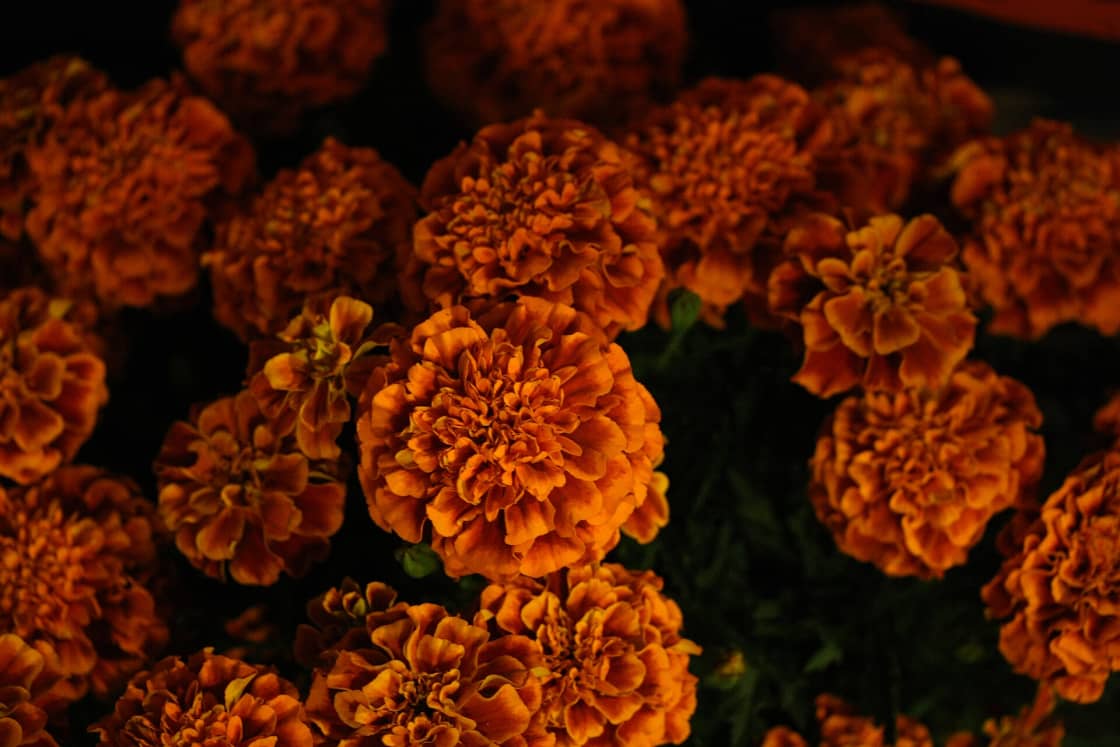
Cempasúchil — the Mexican or Aztec marigold — marks the path. In Utah Valley this is the item with a genuine supply problem, because the flower is a seasonal import here rather than something you cut from a garden in November. The Latino markets are the reliable source, and they sell out. Ordering ahead is normal.
Pan de muerto appears in the valley's panaderías in the run-up, and this is one of the few parts of the observance that is straightforwardly available to anyone. Buying it, and knowing what it is, is a reasonable way to encounter the tradition without intruding on it.
Candles light the way. This is the one element with a practical Utah constraint attached, discussed below.
Papel picado — the cut paper — is the handicraft UNESCO's description names directly.
The two practical Utah constraints
Cemetery rules. Public cemeteries in Utah Valley are open during posted daylight hours, and they set their own rules about what may be left on a grave and when it is removed. Provo City Cemetery is municipally run by the city's Parks Department, which means its rules, fees and records are public and its office is a city office you can telephone. Before leaving anything at a graveside that you want to keep — a photograph, a handmade item, a dish — check the removal schedule. Groundskeeping cycles do not know what an ofrenda is.
Open flame. Veladoras are central, and open flame at a graveside in Utah is governed by fire code and by seasonal restrictions rather than by preference. Utah adopts the International Fire Code by statute, and local fire authorities and individual cemeteries apply it. Late autumn is generally past the worst of the fire-restriction season here, but "generally" is not a permission. Enclosed glass votives are the normal accommodation, and the cemetery office will tell you what is allowed on their ground.
Etiquette, stated plainly
The question people want answered is whether they can take part without doing something wrong. The answer is yes, with a short list.
Go to the public events. They exist to be attended and the hosts want people there.
Ask before photographing. An ofrenda is a family's grief arranged on a table. A community ofrenda in a public venue is a different case, but individual altars and gravesides are not backdrops.
Do not wear it as a costume. Calavera face paint at a Halloween party on 31 October is the clearest single example of the thing that lands badly, because it borrows the imagery and drops everything the imagery is for.
Understand the register. The calaveras are not macabre. They are bright, named and affectionate, and they often carry the names of living people as a gentle joke about shared mortality. This is a tradition that treats the dead as guests, not as threats. Reading the skulls as spooky decoration inverts the meaning entirely, which is exactly what happens when the imagery is lifted into a Halloween aisle.
Bring your own dead. At a community ofrenda that invites additions, adding a photograph of someone you have lost is the most straightforward form of respectful participation there is. It is what the table is for.
The short version
Día de los Muertos is 1 and 2 November, and it is its own observance rather than the back end of Halloween. UNESCO's 2008 inscription describes it accurately: the transitory return of specific dead relatives, received with petal paths from cemetery to home, their own favorite dishes on a home shrine, and a syncretic fusion of pre-Hispanic rites with Catholic feasts. In Utah Valley it runs privately in homes and publicly through cultural organizations, universities, libraries and parishes, announced late. Marigolds and pan de muerto come from the Latino markets and they sell out. Check cemetery decoration rules and open-flame rules before the day rather than at the graveside. And the imagery is affectionate, not frightening — which is the single thing most worth carrying away.
The calendar around it, and why the two days are different
The observance is commonly described as a single festival. It is closer to a sequence, and the distinction is one families here keep even when the public programming does not.
1 November is generally kept for children who have died — Día de los Angelitos, the day of the little angels. The offerings shift accordingly: toys, sweets, milk, things a child would want, and often lighter, smaller portions.
2 November is for adults, and the food and drink on the ofrenda change with it — the coffee, the mezcal or beer, the dishes a grown person favored.
This maps onto the structure UNESCO's inscription records, which notes that the dead are divided into several categories by cause of death, age, sex and in some cases profession, with a specific day of worship designated for each. Some communities extend the sequence further, marking those who died by accident or violence on their own day at the end of October.
The practical consequence for anyone attending a public event in Utah Valley is that a community ofrenda assembled on 1 November and one assembled on 2 November may be doing different work, and asking which is a perfectly welcome question.
31 October is not part of it. The proximity is a calendar accident of the Catholic feasts, not a relationship. A household can keep both — plenty here do, with children trick-or-treating on Friday and the family visiting an ofrenda on Sunday — but they are two observances that happen to be adjacent.
What pan de muerto is
Of all the elements, this is the one most accessible to someone outside the tradition, and it is worth understanding rather than just buying.
It is an enriched wheat bread, usually scented with orange blossom water or orange zest and often anise, baked as a round loaf. The decoration on top is the part that carries meaning: strips of dough laid across the loaf in a pattern generally read as bones, with a small round knob at the center commonly read as a skull or a teardrop. The whole loaf is frequently read as a grave, or as the circle of life and death.
It is placed on the ofrenda and it is also simply eaten, in quantity, through the season. There is no contradiction there — the food on an ofrenda is real food and it does not go to waste.
In Utah Valley the panaderías begin producing it in the second half of October. It is seasonal, it sells through, and it is best on the day. Buying a loaf in the week before the observance is an ordinary transaction that nobody will find strange.
Public ofrendas, and how to contribute to one
A community ofrenda is a shared altar assembled in a public venue — a library, a university building, a parish hall, a museum — where anyone may add a photograph or a small offering for their own dead.
These are the most straightforward point of entry for someone outside the tradition, and they are also, quietly, one of the more useful things a community institution can provide in a valley with as much transplant population as this one. Grief here is frequently at a distance from the graves it belongs to, and that is not a specifically Mexican problem.
If you contribute:
- Bring a copy, not the original photograph. The altar is handled, moved and eventually dismantled.
- Label it if the venue asks. Many keep a list so that items can be returned.
- Ask about collection. Public ofrendas come down within days and venues vary in whether they hold items for retrieval or discard them.
- Small is correct. A framed portrait the size of a paperback is the usual scale.
Nobody is going to test your credentials. The invitation to add your dead to a shared table is meant literally.
Common misunderstandings, corrected
"It is a sad occasion." It is not, and visitors bracing for solemnity are frequently surprised. The observance treats the returning dead as guests, and the register at a graveside gathering is closer to a family reunion than a funeral — food, music, conversation, children present. Grief is in the room, but it is not the tone.
"The skulls are morbid." The calaveras are bright, named and affectionate, and the literary tradition of calaveras literarias — short satirical verses written about living people as though they had died — is a joke shared with the subject. Reading the imagery as gothic inverts it.
"It is a Mexican holiday, so it is the same everywhere in Mexico." UNESCO's inscription is specifically about the practice of Mexico's indigenous communities, and the observance varies substantially by region, community and family. A description of how it is kept in Oaxaca is not a description of how it is kept everywhere, and families in Utah Valley carry the version from wherever they or their parents are from.
"You need permission to acknowledge it." You do not need permission to attend a public event, buy pan de muerto, or add your own dead to a community ofrenda that invites additions. What is asked is that you understand what you are participating in. That is a low bar and it is the whole of the etiquette.
Why this is worth a page of its own
Search for this observance locally and you will mostly find it appended to Halloween listicles as a paragraph, usually alongside a photograph of face paint.
That treatment fails on its own terms. It puts a two-day family observance about named dead people inside a guide to a costume holiday, describes the imagery without the practice, and leaves out every piece of information a person here would need — where to buy cempasúchil before it sells out, what a cemetery's decoration removal schedule means for something handmade, what a community ofrenda is and whether you may add to it.
It is also simply a miss. This valley has a long-established community that keeps this observance, the institutions that support it are already here, and nothing published locally treats it as its own subject. A guide to things to do in Utah Valley that covers Halloween across four pages and Día de los Muertos in one sentence is not describing the valley accurately.
Related Guides
- Latino markets and panaderías in Provo
- Provo City Cemetery: finding a grave and reading the records
- Halloween in Utah Valley: the October circuit
- Live theater and arts in Utah Valley
- Fall in Provo: the complete autumn guide
Frequently Asked Questions
When is Día de los Muertos, and is it the same as Halloween?
What is an ofrenda?
Why marigolds?
Is Día de los Muertos a religious observance?
Where can I observe Día de los Muertos in Utah Valley?
Can I visit a cemetery in Utah Valley for Día de los Muertos?
What is the etiquette if I am not Mexican and want to take part?
Is the sugar skull imagery the same thing as a Halloween skeleton?
Sources
The facts in this guide were checked against these sources. Hours, fees and rules change, so confirm anything time-sensitive with the source before you go. How we make Provo.com.
- Utah Code 15A-5-103. Nationally recognized codes incorporated by reference., Utah State Legislature. Checked October 12, 2026.
- Indigenous festivity dedicated to the dead, UNESCO Intangible Cultural Heritage. Checked October 12, 2026.