Utah Valley has spent a surprising amount of its screen career pretending to be somewhere else. It has played a Midwestern farm town that outlawed dancing, first-century Jerusalem, and an all-American high school town throwing a parade. The mountains usually give the game away, which is half the fun of watching: once you know this valley, you start spotting it behind the actors.
This guide sticks to the productions whose Utah Valley connection holds up at the source, meaning the state film office, the studios and venues themselves, and on-the-record news reporting, rather than the long tail of rumors that attaches itself to any scenic county. For each one, it covers where the filming happened, what is still standing, what is gone, what you can see, and how to be a considerate fan at places that are, for the most part, working businesses, churches, schools and farms. None of them stopped being those things when the cameras left.
The Short List
If you want the headlines first, here they are.
Footloose is the valley's most famous screen credit. The fictional town of Bomont was mostly Payson, with key scenes at the old Payson High School, and the production also worked in Lehi and American Fork.
The Chosen, the multi-season drama about the life of Jesus, films on a replica of ancient Jerusalem outside Goshen, at the southwest edge of Utah County, on a set owned by The Church of Jesus Christ of Latter-day Saints.
Hatching Pete, a Disney Channel movie, shot its parade scenes on Main Street in Payson.
Dry Bar Comedy, the clean stand-up series, tapes its specials in front of live audiences in downtown Provo, at the headquarters of Angel, the Provo media company that grew out of VidAngel.
BYU-rooted comedy, including BYUtv's family sketch show Studio C and JK! Studios' series Freelancers, came out of Provo.
Sundance Mountain Resort, up Provo Canyon, is where the Sundance Institute began and ran its filmmaker labs, which puts the valley in the independent-film story even though the festival itself was held in Park City.
The rest of this guide takes them one at a time, starting with the one that still brings people to Payson to look for a high school that is no longer there.
Footloose: The Valley's Biggest Role
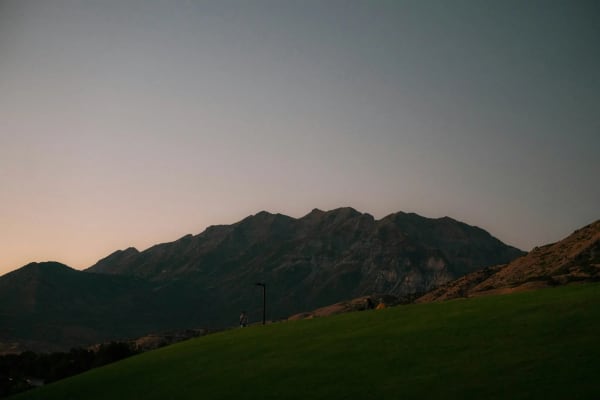
Footloose tells the story of a city kid who moves to a small town where dancing is against the law and eventually persuades the town's minister, a grieving father played by John Lithgow, to let the teenagers hold a dance. Kevin Bacon played the newcomer, Ren McCormack, and the cast included Lori Singer as the minister's restless daughter, Dianne Wiest, Chris Penn and a young Sarah Jessica Parker. The story is set in the Midwest. The Wasatch Mountains behind nearly every exterior shot are the giveaway.
Paramount shot the film in 1983 and released it in 1984, and the Utah Film Commission, the state office that recruits and supports productions, says filming started in Payson. The commission credits Payson and its high school with the backdrop for many of the film's most recognizable scenes. Salt Lake Magazine's retrospective describes a production that moved between Lehi, American Fork, Payson and Orem, and fan location databases add a few addresses in Provo.
The movie's staying power is the reason this page exists. It was a major box-office hit, its soundtrack still turns up on prom and wedding playlists, and it has given generations of Utah Valley teenagers a reason to feel briefly famous by association.
Payson as Bomont
Payson did most of the work of being Bomont. Its downtown kept the older commercial blocks that make a location scout's job easy, and the Film Commission lists Payson Memorial Park, downtown, among the film's surviving locations. Location guides place Ren's run-in with the local police, when he is pulled over for playing his music too loud, on the park's north side.
The town wears the connection lightly. Footloose is part of how people describe Payson, right alongside its orchards, its Scottish festival and Golden Onion Days, and when the movie's big anniversary came around, the high school's students turned it into a statewide story. Our guide to things to do in Payson covers the rest of the town, and our look at living in Payson explains why it has kept more of its small-town shape than most of the valley.
What Happened to the Footloose High School
The most important thing for a Footloose pilgrim to know is that the building that played Bomont High is gone.
The old Payson High School building used in the film was demolished on June 25, 2025, after its replacement next door was finished, and KSL reported the demolition that July. Before it came down, the students' #BaconToPayson campaign, backed by the Utah Film Commission and Gov. Spencer Cox, brought Kevin Bacon back to the old school on April 20, 2024, which was prom night, for the movie's 40th anniversary.
The visit doubled as a service project. Bacon's charity, SixDegrees.org, organized volunteers to assemble essential resource kits for people in need, and the students who had spent months campaigning for the visit got to share a prom with the man who made their hallway famous. It made for a night the school will be talking about for a long time.
There is one survivor. Kevin Bacon's locker, the one fans came to see, was saved and placed among the lockers in the new school as a tribute. That is a lovely touch, but the new Payson High is a working school, and a locker in a hallway during the school day is not a public attraction. Do not walk into any school building looking for it. If you have a genuine reason to visit, such as a reunion or a school event, go through the front office like any other visitor, and otherwise simply enjoy knowing that it is there.
Lehi Roller Mills
Lehi Roller Mills, the tall flour mill on Lehi's Main Street, is the best-known Footloose location still standing. It dates to the first years of the twentieth century, it is listed on the National Register of Historic Places, and it is still a working mill, now trading as Lehi Mills. Location guides identify it as the mill where Ren takes a job and where the teenagers finally hold their dance, safely beyond the reach of Bomont's ordinance.
Go with the right expectations. The mill is an industrial building doing industrial work. There is no tour, no exhibit and no dance floor, and the best way to experience it is from the Main Street sidewalk with a camera. Our Lehi Roller Mills guide covers the building's history and what a visit realistically looks like, and our guide to things to do in Lehi has the rest of the city.
American Fork Presbyterian Church
The Film Commission also lists American Fork Presbyterian Church among the film's iconic locations that are still around. It is an active congregation in downtown American Fork, not a set piece, so admire it from outside unless you are attending a service, and do not block its doors or its parking for a photo. Our guide to things to do in American Fork has the rest of the downtown.
Orem, Provo and the Hi-Spot
Fan location databases also place scenes in Orem and Provo, and those are the hardest to confirm and to find, because the valley's two biggest cities have changed the most. The Hi-Spot, the teen hangout where the minister catches his daughter dancing, is listed in those databases as a Provo drive-in that has since been demolished.
That is the pattern for every older production on this list. Utah Valley has grown quickly, and a spot that looked timeless on screen may now be a parking lot, a subdivision or a much busier street. Treat any old location list you find online as a starting point to check, not a promise of what you will see.
The Orchard Scenes
The fruit country around Payson supplied the film's farm scenery, including the game of chicken played on tractors. Fan guides disagree about which farm hosted it, and the orchards are private working land. Enjoy them from the road, especially when the trees are in bloom, and if you want a piece of the place, buy fruit from a farm stand in season rather than walking into the rows.
A Self-Guided Footloose Drive
You can see every surviving Footloose location in a relaxed half day, and the geography makes the order obvious: start at one end of the county and work toward the other.
Lehi. Begin at the mill on Main Street. Park legally nearby, take your photos from public sidewalks, and resist the temptation to wander onto the working property. Downtown Lehi has lunch options if you started late.
American Fork. Continue a short drive east to downtown American Fork for the Presbyterian church. This is also the moment to cue up the soundtrack.
South on I-15. From American Fork, Payson is a straight run down the freeway, typically half an hour or more depending on traffic. The mountains off your left shoulder are the ones in the film.
Payson. Walk the downtown blocks and Payson Memorial Park, then drive past the new high school if you want to see where the old one stood, remembering that school grounds are not a tourist stop during the school day.
The orchards. Finish on the farm roads around town, where the scenery still looks the way the movie remembers it.
A few habits make the drive better. If you are bringing teenagers who have never seen the film, watch it together the night before; the places land very differently when they recognize them. Weekday mornings are the calmest time on the Main Streets. And pair the trip with a meal: our guide to the best restaurants in south Utah County covers Payson and its neighbors.
The Chosen and the Jerusalem Set at Goshen
Drive to the southwest corner of Utah County, out past the farm town of Goshen, and you reach one of the strangest sights in the state: a replica of ancient Jerusalem, with walls, gates, narrow streets and a marketplace, rising out of open ground. Its official name is the Motion Picture Studio South Campus. The Church of Jesus Christ of Latter-day Saints owns it.
The Church built the set for its own productions. It has used the site to film its Bible and Book of Mormon video series, and its scale is the point: it is large enough to carry the exterior, marketplace and landscape scenes that a smaller set cannot.
The Chosen, the independently produced series about the life of Jesus created by Dallas Jenkins, came to Goshen for its second season, after the Church approved a lease for the set. The Church said at the time that the lease was not an endorsement and that the show was not a Church production, but that it was pleased to see the setting used for faith-based work. The series had started as a VidAngel project, back when the Provo company now called Angel still went by that name, and it has rented the Goshen set ever since.
Because of the set's scale, the production uses it for most of its exterior shots, marketplace scenes and landscape sequences, and its creative team arrives about a month before the cameras to dress the streets for first-century Judea. In recent seasons the show has split its schedule between Goshen and a second set in Midlothian, Texas. The Deseret News reported in June 2026 that the seventh and final season was filming in Goshen, ahead of the sixth season's release that fall.
Can you visit? Plan on seeing it on screen. The set is private, Church-owned property and a working studio, and the public has seen inside mainly through organized media tours and as extras on filming days, not by dropping in. Do not drive onto the property, and do not fly a drone over it. If you want to walk those streets, the honest route is to answer a casting call as an extra. The show has leaned on local background actors for years, and one local actor told KSL that once you are on the set, you forget you are in Utah.
Goshen itself is a small farm town with fewer than a thousand residents, and the people who live near the set are the ones who absorb the traffic on filming days. Be a good neighbor if you are there as crew, cast or anything else. Our guide to Utah County's small towns covers Goshen and its neighbors.
Hatching Pete and the Payson Parade
Payson had its Disney moment when Salty Pictures, the production company behind the first two High School Musical movies, dressed downtown for a parade scene in Hatching Pete, a Disney Channel comedy about a shy teenager who becomes a school celebrity inside the mascot's chicken suit. The Deseret News covered the parade shoot on Main Street in March 2008, and the movie premiered in April 2009. The school scenes were filmed at Hillcrest High School in Midvale, according to KSL, so Payson's claim is the parade and the downtown.
That is a fair trade. A small-town Main Street is exactly what a parade scene needs, and it says something about why Payson keeps getting calls: its downtown reads as the American small town on camera without much dressing, and it is within an easy drive of the Salt Lake Valley.
Provo's Homegrown Screen Industry
Hollywood productions come and go. Provo has built a small screen industry of its own, much of it aimed at audiences who want entertainment without the profanity.
Dry Bar Comedy. The clean stand-up series tapes in a small theater on Center Street in downtown Provo. Each show features three comedians performing for a live studio audience, and the finished specials stream on the Angel app and on Dry Bar's own app. Filming runs in two seasons a year, with encore shows in between, so check Dry Bar's events page for the current schedule and ticket prices before you plan an evening around it. Sitting in the audience is the easiest way in the valley to be part of a filmed production, and your laugh may well end up in a special watched around the world.
Angel. Dry Bar belongs to Angel, a media company that began as VidAngel, launched Dry Bar as the first project of its original-content studio, and grew into a distributor of independent family and faith films and series, with a membership that votes on which projects the company should back. Its offices are not a tourist attraction, but its theater is the one place where the public regularly watches it work.
Studio C and JK! Studios. BYUtv, the university's channel, is based at BYU in Provo, and its best-known homegrown hit is Studio C, a sketch comedy show pitched at the whole family. Several of Studio C's original cast members later formed JK! Studios, whose comedy series Freelancers, about a struggling video production company in a small, quirky town, was shot in Provo. Between them, these companies have made Provo a place where comedy is written, shot and edited, not just watched.
For more on the valley's live laughs, see our guide to comedy in Provo, and for the stage side of local entertainment, our live theater guide.
Sundance: The Canyon Where the Institute Began
Sundance Mountain Resort, about fourteen miles up Provo Canyon, is the valley's deepest link to the film world, even though the Sundance Film Festival itself was held in Park City. The resort is where Robert Redford's Sundance Institute began, and it hosted the institute's labs, the workshops where filmmakers developed projects long before those films reached a festival screen.
Redford sold the resort in 2020 and died at his home at Sundance in September 2025, and the festival's final Park City edition ran in early 2026 before its move to Boulder, Colorado. The resort continues to operate year-round under its current owners.
It is not a film set to tour, but it is the best place in the valley to understand the story: the lodge, the Tree Room restaurant Redford founded, and the canyon that made him want to build something there in the first place. Our Sundance Resort guide covers a visit, and our explainer on the Sundance Film Festival's Utah era covers the festival, the institute and the move.
The Provo Dating Show and the YouTube Era
Not every Utah Valley production needs a studio. Some of the most-watched video made here has come from students with borrowed cameras, and the best-known example is the Provo dating show, a student YouTube series that turned the valley's famously intense dating culture into a format that other creators copied. We tell that story, including what it cost the people on camera, in The Provo Dating Show: How a Student YouTube Series Became a Genre.
The broader point is that Provo is full of people who make video for a living or for fun. BYU and Utah Valley University both teach media production, the valley's tech companies hire video teams, and the result is a steady supply of short films, web series and online channels that never pass through Hollywood at all. Some of the names that came out of that world are in our roundup of famous people from Utah Valley.
Why Productions Keep Choosing Utah Valley
A few things work in the valley's favor, and they explain why the list above is longer than you might expect for a county best known for universities and software.
The look. Within a short drive, a production can find a small-town Main Street, working farms and orchards, a big freshwater lake, sagebrush desert to the west and mountain canyons to the east. Very few places pack that much variety into a commute.
A set you cannot find elsewhere. The Goshen Jerusalem set is one of the few places in the country that can pass for first-century Israel, and on its own it has brought The Chosen, a series the Deseret News calls a global phenomenon, back to the valley season after season.
Local companies and crews. Provo has its own studios, a university channel and a deep bench of people who make video, and the larger Salt Lake production community is just up the freeway.
A state film office. The Utah Film Commission markets Utah locations to producers and supports productions once they arrive, and it has made a point of celebrating the state's screen history, Footloose included.
How to Tell When Something Is Filming
Most shoots in the valley are small and quick, and many are commercials or corporate videos rather than movies, but a production of any size tends to leave clues. Look for long lines of trucks and trailers, orange cones and signs directing crew parking, portable lights on stands, and production assistants in vests holding foot traffic for a few minutes at a time. Cities generally require a permit for filming on public streets and in parks, so a sizable shoot on a public street has usually been planned well ahead.
If you come across one, the etiquette is simple. Follow the directions of the crew members holding the sidewalk, because they are timing your crossing to the camera. Stay quiet when you hear "rolling," and wait for "cut" before you move. Do not walk into a shot to get on camera, do not chase actors for photos, and do not assume that a friendly production assistant can let you onto the set. If you want to be in the movie, there is a proper way to do that.
Working as an Extra or on a Crew
Background acting. Productions that film here hire local extras through casting calls posted by casting agencies and on the productions' own channels. The Chosen has relied on local background actors for years, and a Dry Bar audience is, in a sense, a room full of extras who get to laugh for real. Legitimate casting calls tell you the date, the general location, what to wear, and what the job pays or whether it is volunteer. They do not charge you to be considered.
Crew work. The Utah Film Commission's website is the natural starting point for anyone who wants to work behind the camera, and the commission has published a warning about fraudulent hiring practices aimed at would-be crew members. The rule of thumb is the same as for extras: a real production pays you, not the other way around. Be wary of anyone who asks for an upfront fee, your bank details before a job is confirmed, or payment for headshots or "registration" as a condition of work.
Students. If you are at BYU or UVU and interested in the industry, student productions are the most reliable way to build experience and a reel, and they often need extra hands.
Being a Good Film-Location Visitor
Film tourism is fun because it turns ordinary places into shared memories. It goes wrong when fans forget that the ordinary places are still ordinary. A few rules keep it good for everyone.
Stay on public property. Photograph from sidewalks and streets. Working mills, orchards, farms and studios are private, and "it was in a movie" is not an invitation.
Remember that schools and churches have jobs to do. A school during the day and a church during services are not places to wander for a photograph.
Leave homes alone. Any house that appears in a film is someone's home. Do not park in the driveway, knock on the door, or post the address to a fan group.
Buy something. The businesses that host film fans, from Main Street shops to farm stands, are what make a location worth visiting. A purchase is the easiest way to say thanks.
Mind the drone. Federal rules and local restrictions apply, and flying over private property, crowds or an active set is a good way to make a production, a farmer or a neighbor very unhappy.
Planning a Film-Location Day
A Utah Valley film day can be as simple or as ambitious as you like.
The Footloose day is the classic: the mill in Lehi and the church in American Fork in the morning, lunch, then Payson's downtown, park and orchard roads in the afternoon. Watch the movie the night before.
The Provo evening pairs dinner downtown with a Dry Bar Comedy taping or encore show on Center Street, when the schedule lines up, and a walk past the theater where the specials are made.
The canyon afternoon heads up Provo Canyon to Sundance for a meal and a walk around the resort, with the institute's story as the backdrop.
For a longer weekend, combine them, and fill the gaps with the valley's other attractions. Our guides to Lehi, American Fork and Payson have the rest.
The Short Version
Utah Valley's best-known screen credit is Footloose, which made Payson into the town of Bomont and used Lehi Roller Mills, American Fork Presbyterian Church and other valley locations. The old Payson High School building from the film was demolished after its replacement was finished, though Kevin Bacon's locker was saved inside the new school. The Chosen films on a Church-owned replica of Jerusalem outside Goshen, Hatching Pete shot its parade on Payson's Main Street, and Dry Bar Comedy tapes clean stand-up in downtown Provo. Sundance Mountain Resort, up Provo Canyon, is where the Sundance Institute began. Visit the surviving places from public property, respect the working businesses, schools and churches that host them, and never pay anyone to be cast.
Related Guides
- Lehi Roller Mills
- Things to Do in Payson
- The Sundance Film Festival's Utah Era
- Sundance Resort Guide
- Comedy in Provo
- The Provo Dating Show Story
- Famous People From Utah Valley
Frequently Asked Questions
What movies were filmed in Utah Valley?
Where was Footloose filmed in Utah?
Can you visit the Footloose high school in Payson?
Is Lehi Roller Mills open to visitors?
Where is The Chosen filmed in Utah?
Can you tour The Chosen set in Goshen?
How can I see Dry Bar Comedy being filmed?
How do I become an extra in a movie filmed in Utah?
Sources
The facts in this guide were checked against these sources. Hours, fees and rules change, so confirm anything time-sensitive with the source before you go. How we make Provo.com.
- Footloose: 40 Years Later, Utah Film Commission. Checked October 12, 2026.
- Newly demolished iconic Payson High School makes way for new memories ahead, KSL.com. Checked October 12, 2026.
- Robert Redford, cinema icon and Sundance founder, dies at 89, Axios Salt Lake City. Checked October 12, 2026.
- Sundance Film Festival is officially moving to Boulder, Colorado, in 2027, KSL.com. Checked October 12, 2026.
- Disney movie parades through Payson, Deseret News. Checked October 12, 2026.