
The single most useful thing to know about shared scooters in Provo is that the company name on the handlebars has changed at least three times since 2019, and there has been at least one stretch when there were no shared scooters in the city at all.
That is not a knock on the program. It is the defining feature of it, and it is why a page like this one has to be written carefully. Anything that names an operator, a price or a fleet size is a fact with a short shelf life. What lasts is the shape of the system, the corridors people actually ride, and the two or three rules that have survived every vendor.
The vendor history, because it explains everything else
Provo's shared micromobility program has run through a sequence of partners.
2019 — the pilot. The city launched its first e-scooter share, announced alongside a partnership with Zagster and rolling out Spin-branded scooters. The opening fleet was around 200 vehicles with room to expand to 500 if demand justified it. Published pricing was $1 to unlock and 15 cents per minute. The launch event was held at 680 North and 200 East. Notably, the rollout did not include BYU campus, which was the angle student coverage led with at the time.
The pilot arrived in a busy stretch for Provo transportation generally — it landed close to the completion of the UVX bus rapid transit line and the announcement of the airport expansion.
The middle period. The city subsequently worked with Superpedestrian. That agreement expired at the end of September, and the replacement was not ready. City officials acknowledged a delay with the incoming vendor, and Provo went through a stretch with no rental scooters on the street while a new contract was finalized.
October 2022 — Bird. Provo launched a multimodal program with Bird Global Inc., covering both e-scooters and e-bikes, with a gradual release of up to 500 scooters and 200 e-bikes. The gradual part was deliberate; the city's stated concern was avoiding the sidewalk clutter of oversupplied fleets.
Since then. Bird has remained the contracted operator through subsequent city review — Provo's transportation advisory committee was still working through Bird ridership data in its 2025 meetings, including the observation that riders use the service year-round rather than seasonally.
The lesson for a reader: open the app before you plan around it. This program has gone dark once already between contracts.
What it costs, and the discount most riders miss
The pricing model has been consistent in structure even as the numbers moved: an unlock fee, then a per-minute charge. The 2019 pilot published $1 plus 15 cents a minute. Treat that as the shape rather than the number.
The part that is more durable and more valuable is the discount tier. The current operator has advertised roughly 50% off for students, teachers, veterans, senior citizens and low-income riders. In a city where a very large share of the population is a student, that is not a footnote — it is most of the addressable market. Verification runs through the operator's own program rather than the city.
Scooters are normally unlocked through the app, though the operator has said other rental methods exist for riders without a smartphone.
Where people actually ride
The corridor that dominates real usage is not a road.
The Provo River Trail. City officials describing the program have noted that it is not unusual to see riders taking shared scooters up the river trail as far north as Bridal Veil Falls. That is a substantial ride, and it reframes the program: a meaningful share of the use is recreational, not commuting.
If you are riding that corridor, know that the trail is striped into separate lanes — two for wheeled traffic and one for pedestrians. Using them correctly is the whole safety story on a shared-use path, more than speed or helmets.
The transit last mile. The city's stated purpose for micromobility is connecting riders to and from mass transit — bus stops, the UVX line, the FrontRunner station. Our UVX bus guide covers the spine those scooters are feeding.
Downtown and the campus edge. The dense residential blocks south of BYU, the downtown core, and the routes between them are where the fleet concentrates. Riders here are covering distances that are annoying on foot and absurd by car.
Across the city line. Because the operator holds contracts with roughly a dozen Utah cities including Orem, a Provo ride can legally end in Orem. Earlier operators did not allow that, and it was named as a specific improvement when the current agreement was signed.
The BYU campus question
This deserves its own section because it has genuinely changed, and because the answer is not the city's to give.
Provo's first rollout excluded BYU campus outright. When the city signed the current agreement, officials indicated that bikes would be permitted on campus, and BYU was named as one of the destinations the multimodal program could serve.
The important structural point: campus policy belongs to the university, not to Provo City. A city contract does not bind BYU, and BYU can change its own rules on wheeled vehicles without any change to the city program. If you are riding to campus, verify against BYU's own transportation policy. The same logic applies at UVU.
The canyon is a different rental market
For Provo Canyon specifically, the shared fleet is not usually the right tool. The canyon has a dedicated rental operation aimed at exactly that trip.
Voltage Rentals works out of a large trailer in the parking lot at the mouth of Provo Canyon, on the east side of the road, in the west end of the lot. They rent e-bikes and scooters for riding up the Provo Canyon Trail.
Two practical details that matter more than the price:
- They post height minimums, not age minimums. Riders need to be roughly 5 feet 1 inch for the e-bikes, which are large, and about 4 feet 5 inches for the scooters. Families splitting a group across both categories is the normal pattern.
- The bikes are full electric with both a thumb throttle and pedal assist, which changes who can realistically make the ride. The canyon grade stops being the limiting factor.
Reserve ahead in summer. There is a waiver, and a short orientation before you ride.
What about owning a bike instead?
For anyone here longer than a semester, the arithmetic usually favors ownership, and Provo has the infrastructure to support it. The city has a long-running Provo Bike Collective, and the same trail network that makes the shared fleet attractive makes a personal bike genuinely practical.
The rough version of the comparison a city coordinator offered when the program was being designed: an annual bike-share membership was pitched at around the cost of a single bike tune-up. That framing cuts both ways — it is cheap for a visitor, and it is a poor deal against simply owning a bike if you are staying.
The honest split:
- Here for a few days or a few weeks? Shared fleet.
- Here for a semester? Shared fleet plus the trail, or a cheap used bike.
- Here for years? Own the bike. Provo's trail network rewards it.
Why the vendors keep changing
It is worth understanding the churn rather than just noting it, because it predicts what happens next.
Shared micromobility has been a difficult business everywhere. The economics are unforgiving: vehicles are expensive, they live outdoors, they get vandalized, they need to be collected and charged nightly, and the revenue per ride is small. Cities want fleets large enough to be useful and small enough not to clutter sidewalks — two demands that pull against each other.
The industry has consolidated hard as a result. Operators have merged, exited markets, and in some cases failed outright. A city the size of Provo is not a market anyone fights to keep, which is why a contract expiring here produced a service gap rather than three competitors rushing in.
Provo's own approach has been notably cautious in response. The gradual release written into the current agreement — fleet built up over time rather than dropped all at once — is a direct answer to the sidewalk-clutter problem that soured a lot of cities on the first wave. The mayor's framing at signing was about minimizing the public nuisance potential of unused vehicles, which is the polite version of "we watched what happened elsewhere."
What this means for you as a rider: treat the service as useful infrastructure that might not be there next year, and do not build a commute around it that you could not do another way.
Where to leave one
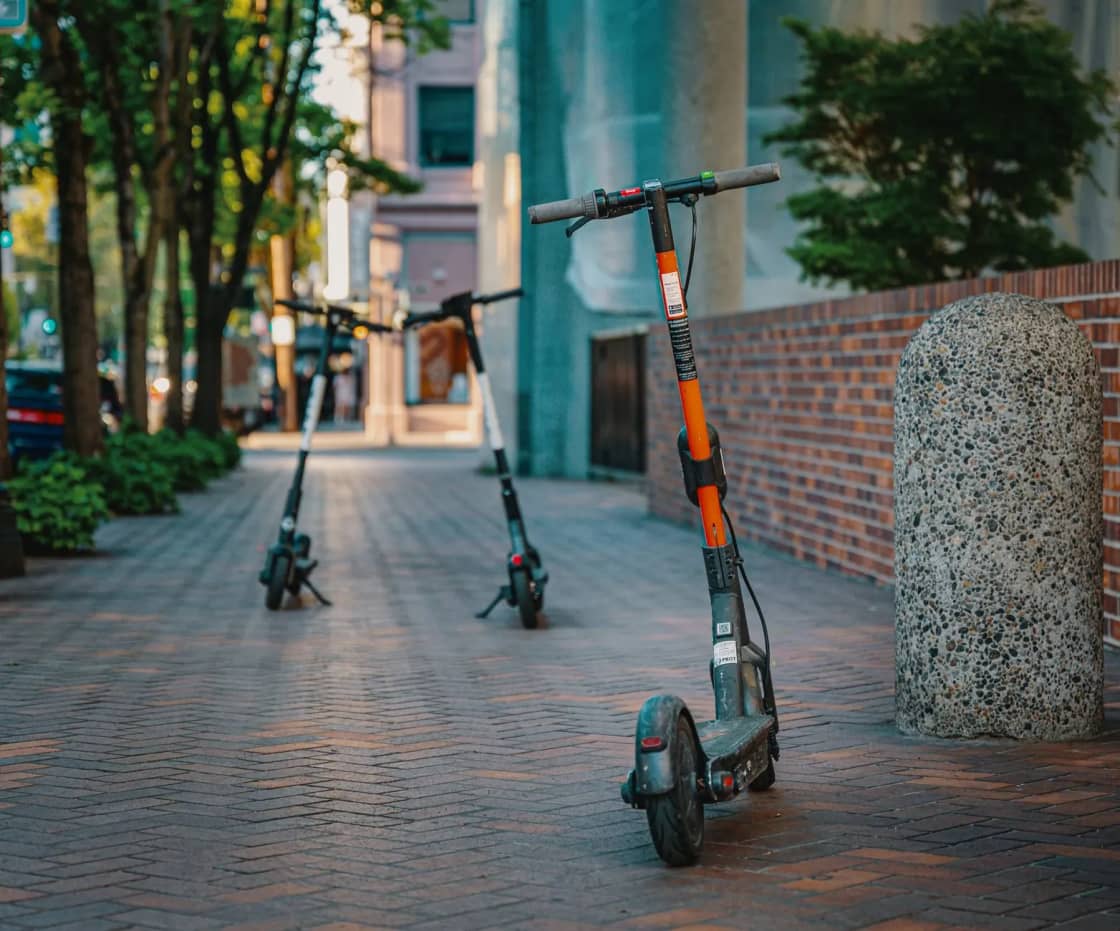
The single most common way to be a bad neighbor with a shared scooter is parking.
The general expectations, which hold across operators:
- Upright, on the sidewalk, out of the path of travel. Not blocking a doorway, a ramp, a bus stop or a crosswalk.
- Not on private property, including apartment complex grounds and campus areas where the operator has no agreement.
- Not lying down. A scooter on its side is both a trip hazard and the image that gets programs canceled.
The app typically shows permitted parking zones and will flag areas where ending a ride is not allowed. Ending a ride outside the service area can incur a fee, and the service area boundary is the thing most riders discover by accident.
The accessibility point deserves emphasis. A scooter parked across a curb ramp is not a minor inconvenience to a wheelchair user — it is an impassable barrier. Sidewalk clutter is the complaint that has ended shared-mobility programs in city after city, and it is entirely within riders' control.
Winter, and whether these are year-round
Provo's transportation committee reviewing ridership data noted something that surprises people: riders use the service year-round rather than only in summer.
That said, winter riding here is a genuine skill question rather than a preference. Two-wheeled vehicles on ice are unforgiving, the Provo River Trail is not always cleared, and battery range drops in cold. Fleet availability also tends to thin in the worst weather.
The honest guidance: the service exists in winter, but if you have not ridden a scooter on a cold wet surface before, downtown Provo in January is not the place to learn. Bare pavement on a clear cold day is fine. Anything slick is not.
If something goes wrong mid-ride
Because there is no staffed location, everything runs through the app.
- A vehicle that will not unlock — try a different one nearby rather than troubleshooting. Report the broken one in the app.
- A vehicle that stops mid-ride, usually battery. End the ride in the app, park it properly, and walk. Do not leave it in the roadway.
- A crash or injury. Report it in the app and, if there is another party or property damage, to police. Shared-vehicle incidents are ordinary traffic incidents.
- A billing dispute. These are resolved through the operator's support, and having the ride ID from your history is what makes that fast.
Keep in mind that the vehicle is not yours. If you abandon a ride without ending it in the app, the meter keeps running, and that is the most common cause of a surprising charge.
The bigger transportation picture
A shared scooter is a component of a system rather than a standalone answer, and it is worth seeing how the pieces fit before deciding whether you need one.
The spine is UVX, the bus rapid transit line running the length of the valley and connecting UVU, downtown Provo and BYU. It is frequent, and for a great many trips within that corridor it is simply better than any other option including a car.
The rail connection is FrontRunner, from Provo Central Station north through Salt Lake City. That is the link that makes a car-free trip to the airport, a Jazz game or a downtown Salt Lake evening realistic.
The trail network — the Provo River Trail above all — does double duty as recreation and as genuine transportation infrastructure, largely separated from traffic.
The shared fleet fills the gaps between those, which is exactly what the city says it is for. The stated purpose is last-mile connection to transit, and the usage data supports it.
Where this leaves you: a resident who lives near the UVX corridor, works or studies along it, and uses a scooter or bike for the ends of the trip can function here without a car far more easily than the valley's car-oriented reputation suggests. A resident living in an outlying subdivision cannot, and no amount of micromobility fixes that.
The location decision matters more than the vehicle decision. If going car-free or car-light is the goal, choose where you live with the transit spine in mind, and the rest follows.
The short version
- Provo has shared e-scooters and e-bikes, under one operator and one app.
- The operator has changed at least three times since 2019, with at least one gap in service. Check the app before you rely on it.
- Pricing is unlock fee plus per minute, with roughly 50% discounts advertised for students, teachers, veterans, seniors and low-income riders.
- The Provo River Trail is the signature ride, used as far north as Bridal Veil Falls.
- Rides can end in Orem under the current agreement. They could not under earlier ones.
- Campus access is BYU's decision, not the city's — verify separately.
- For the canyon, rent from the canyon-mouth operator, and check the height minimums before you bring kids.
For how the rest of the transportation picture fits together — buses, the train, and what it costs to get around here without a car — start with the UVX guide and the broader living in Provo overview.
Related Guides
- Buses From Provo to Vegas, St. George & Beyond: The Intercity Guide
- Car Insurance in Utah: The Minimums Changed, and What Actually Drives Your Rate Here
- Driving Schools in Provo: Driver Ed, Road Tests & the Third-Party Shortcut
- Provo City School District: The Parent's Guide to How It Actually Works
- Tattoo & Piercing in Provo: Shops, Utah Law & What to Check First
- The Provo DMV, Decoded: Two Agencies, Two Buildings
- Winter Tires & Canyon Driving in Utah: What You Actually Need
- Cracked Windshields in Provo: The Utah Rule Everyone Quotes Wrong
- Parking in Downtown Provo Without Getting a Ticket
- FrontRunner from Provo: What to Know Before You Ride
- PVU or SLC: Which Airport Should You Fly From?
- Finding a Trustworthy Mechanic in Utah Valley
- Bike Shops in Provo and Orem: Who Fixes What, and the Co-op That Teaches You Instead
- EV Charging in Utah Valley
- Bike Commuting in Provo
Frequently Asked Questions
Are there electric scooters in Provo?
How much does a shared scooter cost in Provo?
Can I ride a scooter on BYU campus?
Can I take a Provo scooter to Orem?
Where can you actually ride a scooter in Provo?
Is there a bike-share program in Provo, or just scooters?
Can I rent an e-bike for Provo Canyon instead of using a shared scooter?
Do I need a helmet to ride a scooter in Provo?