
Most guides to this subject are written by funeral homes. That is not a criticism — they know the process better than anyone — but it does mean one fact rarely reaches the top of the page.
Utah law allows families to care for their dead without a licensed funeral director. The Utah Office of Vital Records says so. The Utah County Health Department says so, in almost identical words.
That is not advice to do it. It is context for everything below, because a family that knows a service is optional negotiates differently from a family that believes it is required.
The first hours
What has to happen depends on where the death occurred.
In a hospital or care facility, staff handle the immediate medical and legal steps, including notifying the physician who will certify the cause of death. You will be asked which funeral home or mortuary to release the remains to, and you can say you need time to decide.
At home, expected, under hospice care, the hospice is the first call. They have a defined process for this and they run it often.
At home, unexpected, or in any circumstance that is sudden or unexplained, call 911. This may involve the medical examiner, and it is not something a family can shortcut.
The single most useful thing to know is that you are almost never required to decide anything in the first hour. Families under pressure make expensive decisions quickly, and the pressure is usually self-generated rather than imposed.
The death certificate is the document everything else runs on
The state's vital records office cites Utah Code 26B-8-114 for the requirement that a death certificate be filed within five days of the death and before final disposition of the remains. Cause of death is certified by the attending physician.
If you engage a funeral home, filing the record is a standard part of what it does, and this is one of the genuine practical values of using one.
If you do not, that duty is yours. The state's guidance for families caring for their own dead is to contact the local health department in the county where the death occurred, or the state Office of Vital Records, for direction. Do that early. The five-day window is short and it runs during the week you are least equipped to handle paperwork.
Ordering copies in Utah County
Certified copies come from the Utah County Health Department's vital records offices, in person at any of their locations or by mail. Their vital records line is 801-851-7005.
Every request needs three things: a completed request form, the correct fee, and valid photo identification. Mailed requests need an enlarged copy of the front of the ID. Requests missing the fee or the ID get sent back rather than held.
If you are requesting a relative's record, expect to prove the relationship — a birth or marriage certificate is the usual evidence. Certificates go out by First Class Mail, and the county states plainly that it is not responsible for mail the postal service loses.
The state also takes orders online and by mail. State mail processing should be assumed to take weeks rather than days, so if you need a certificate quickly, in person at the county is the faster route.
Order more copies than feel necessary
This is the most common practical regret in the whole process.
Certified copies are demanded, one each and not photocopies, by banks, life insurers, pension and annuity administrators, the Social Security Administration, title companies, brokerages, the DMV for vehicle transfers, and sometimes by employers settling final pay or benefits.
Getting more later means repeating the whole request. Getting more at the outset costs a fee per copy and nothing else. Families routinely land somewhere in the range of five to ten, and almost nobody reports having ordered too many.
Choosing a funeral home
Utah County has a spread of providers, from long-established Provo family firms — one of which has been operating here for more than a century — to newer businesses and cremation-focused providers, plus mortuaries anchoring most of the county's larger towns.
Three things are worth knowing before you call any of them.
You are entitled to an itemized price list. Federal rules governing funeral providers require it, and they require that prices be given over the telephone if you ask. You do not have to visit in person to find out what something costs.
You may buy individual items rather than a package. Packages are frequently good value and frequently not, and you cannot tell which without seeing the itemization.
You are not required to buy the casket from the provider. A funeral home cannot refuse to handle a casket you obtained elsewhere, and cannot charge you a handling fee for doing so.
Beyond price, the questions that differentiate providers here are practical ones: whether they can accommodate the specific religious service your family wants, how they handle out-of-state family and travel timing, what their facilities can seat, and whether they will file the death certificate and how many copies they will order on your behalf.
Burial and cremation, locally
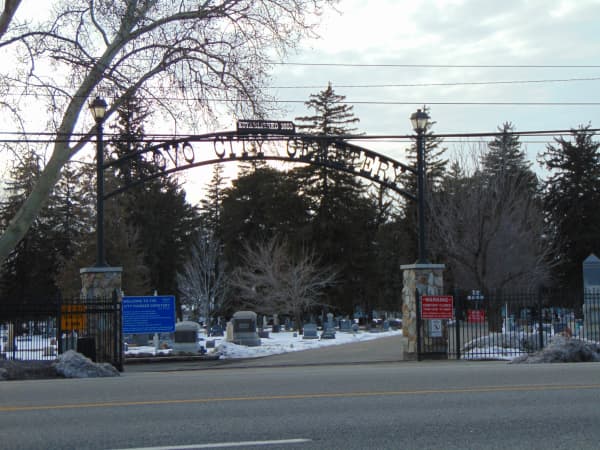
Cemeteries in this county are a mix, and it matters for both cost and process. Provo City operates a municipal cemetery, as do most of the county's other cities, and there are private and church-associated burial grounds as well. Municipal cemeteries typically have residency-linked pricing and their own rules on markers, plantings and decorations. Those rules are set by the city rather than by the funeral home, so ask the cemetery directly.
Cremation is now widely used and the providers here reflect that, including businesses built primarily around it. Cremation and a service are not alternatives — a memorial service can follow a cremation on any timeline you like, which is often the practical answer when family has to travel.
Interment timing is not always immediate. Winter ground conditions and cemetery scheduling both affect it, and a delayed interment with an earlier service is entirely normal.
Obituaries: where they go
This confuses people, because there are two distinct systems and the search results mix them.
The newspaper. The Daily Herald is Utah County's paper of record and carries paid obituary notices. Newspaper obituaries are typically priced by length, which is why the traditional form is so compressed. Notices placed there are generally syndicated onward to the large national obituary aggregators, which is why the same text turns up on several sites.
The funeral home. Nearly every mortuary now publishes obituaries on its own website, usually at no additional charge, usually without a length limit, and usually before the newspaper notice appears. Most also host a guest book and service details there.
For a recent death, check the funeral home's website first. It is faster, more complete and more current than searching a newspaper.
If you are writing one, the practical content people need is the service time and location, and it is the detail most frequently left until a second version. Include the essentials early even if the tribute is still being written.
Finding older records
Different problem, different tools.
Utah death records become public after 50 years. Before that they are restricted to the eligible-requester categories — person of record, immediate family, guardian, legal representative. After it, some of the material becomes searchable through the Utah State Archives.
For comparison: birth records are public after 100 years, and marriage and divorce records after 75.
One useful local quirk: the state's vital records office holds Utah marriage and divorce records statewide for roughly 1978 through 2011, and after that only Utah County records and only through about 2015. For anything outside those windows you are dealing with the county clerk where the marriage was filed, or the district court where a divorce was finalized.
And Provo is, for obvious reasons, an unusually well-equipped place to do this kind of research — the concentration of genealogical resources here is a real advantage if the search is a family history project rather than an administrative one.
Veterans
Worth a section of its own, because the entitlements are real and are routinely missed.
An honorably discharged veteran is generally eligible for burial in a national cemetery at no cost to the family, and for a government-furnished headstone or marker, a burial flag and a Presidential Memorial Certificate. Utah has a national cemetery, and the state also operates veterans cemetery capacity, so this is not a question of shipping remains out of state.
Eligibility extends in many circumstances to spouses and certain dependents, and it is not affected by having also arranged a private service. A funeral home will normally handle the paperwork if you tell them the person was a veteran — which is the point, because they cannot know unless you say so.
Find the discharge paperwork early. The DD-214 or its equivalent is the document that unlocks all of this, and hunting for it during the week of a funeral is a common and avoidable scramble. If it cannot be located, the National Archives holds military service records and can supply a copy, though not on a funeral's timescale.
When the death happens somewhere else
Two versions of this, and they run in opposite directions.
A Utah County resident dies out of state. The death certificate is issued by the state where the death occurred, not by Utah, and that is the certificate every institution will want. Transporting remains back is routine and is handled between funeral homes at each end; ask the receiving provider here to coordinate it rather than trying to manage two firms yourself.
Someone dies here while visiting. The death certificate comes from Utah, through the county where the death occurred. If family is elsewhere, most of the arrangement conversation can be done by telephone, and providers here are accustomed to it — Provo has a large transient and visiting population and this is not an unusual request.
In both cases, air transport of remains has its own documentation requirements and airline schedules, which is the practical constraint on timing more often than anything else is.
If the money is not there
This is a real situation and there are more options than most families realize.
Ask about the least expensive alternatives specifically. Federal price-disclosure rules mean providers have to tell you what their cheapest options are, including direct cremation and immediate burial. These are legitimate, dignified choices, not a lesser tier you have to justify wanting.
A memorial service costs whatever you want it to cost. Separating the disposition from the gathering is the single largest lever available. A church, a home or a park can hold a service, and the congregations in this valley are generally very willing to help with one.
Ask the county. Utah counties have statutory responsibility in indigent-death circumstances, and the county health department or human services can explain what applies. It is an uncomfortable call to make and it is a normal one to receive.
Faith communities and mutual-aid networks are unusually active in Utah Valley, and the practical support they offer around a death — meals, transport, hosting, sometimes direct assistance — is one of the genuine strengths of living here.
Be cautious with crowdfunding as a first resort. It works, but it is slow relative to a five-day filing window and it does not solve the immediate arrangement decision.
The administrative tail
The certificate is the beginning of the paperwork, not the end.
Social Security is usually notified by the funeral home, but confirm it rather than assume it, and understand that the surviving spouse and dependent benefit questions are separate matters requiring their own contact.
Financial institutions each want their own certified copy. Start the list on paper on day one — accounts surface for months afterwards.
Property and vehicles transfer through their own processes. If there is real property involved, the title and recording steps are county-level work.
Utilities and subscriptions are the long tail, and the recurring charges that nobody cancels are a real and avoidable cost.
Probate may or may not be required depending on how assets were held. That is a question for an attorney rather than for a website, and it is worth asking early because the answer determines a great deal of what follows. Our retiring in Utah Valley guide touches on the estate-planning side from the other direction, which is the far cheaper end of this to deal with.
Planning ahead, briefly
Almost everything above is easier if some of it was decided in advance.
The preneed market exists and is regulated, and prepaid funeral arrangements have genuine advantages and genuine risks — chiefly what happens if you move, or if the provider changes hands. If you are considering one, ask specifically what is guaranteed at today's price and what is not, and what happens to the money in the meantime.
The cheaper and in some ways more valuable version costs nothing: write down what you want, tell the people who will have to act on it, and put the document somewhere they can find it without a locksmith. The most common failure in this whole area is not a bad decision. It is a family guessing.
The honest summary
Utah County has capable providers, a straightforward county vital records process, and a state law that gives families more latitude than they generally know they have.
Order more certified copies than you think you need. Ask for the itemized price list, because you are entitled to it. Check the funeral home's own website for the obituary before searching anywhere else. And remember, on the day it matters, that almost nothing about this has to be decided in the first hour.
The federal rule behind the price list, and what it entitles you to
The consumer protections in this market are federal, they are old, and they are far more specific than the summary most families are given. They live in the Federal Trade Commission's Funeral Rule, 16 C.F.R. Part 453, and the whole structure is built on a single idea: a funeral provider must let you buy the items you want, priced separately, without conditioning one on another.
§ 453.2(a) frames it as a prohibition. It is an unfair or deceptive act or
practice for a funeral provider to fail to furnish accurate price information
disclosing the cost of each specific good and service, including at least
embalming, transportation of remains, use of facilities, caskets, outer burial
containers, immediate burials and direct cremations, to persons inquiring about
the purchase of funerals. § 453.2(b) then converts that into four concrete
duties.
Telephone price disclosure. Under § 453.2(b)(1), a provider must tell
anyone who asks by telephone about its offerings or prices any accurate
information from its price lists, plus any other readily available information
that reasonably answers the question. You do not have to come in. You do not have
to give your name. This is the single most useful provision in the rule for a
family comparing three providers in an afternoon, and it is the one most
routinely deflected with an invitation to come and sit down.
Three separate price lists. The rule requires a casket price list, handed
over on an in-person inquiry about caskets, offered when discussion begins and in
any event before showing caskets (§ 453.2(b)(2)); an outer burial container
price list, on the same timing ((b)(3)); and a general price list, the
master document, which must carry the provider's name, address and telephone
number, a caption identifying it as a general price list, and an effective date
((b)(4)). Alternative formats — notebooks, brochures, charts — are permitted
where they carry the same information clearly.
Embalming is not required by law, and the general price list has to say so.
§ 453.3(a) makes it deceptive to represent that state or local law requires
embalming when it does not, or to fail to disclose that it is not required except
in certain special cases. (a)(2)(ii) prescribes the exact disclosure that must
appear immediately next to the embalming price, telling the reader that if they
do not want embalming they usually have the right to choose an arrangement that
does not require paying for it, such as direct cremation or immediate burial. A
general price list that omits that sentence is not compliant.
A casket is not required for direct cremation. § 453.4(a) makes it an
unfair or deceptive practice for a funeral provider or a crematory to require
one, and requires providers who arrange direct cremations to make an alternative
container available.
The provision worth understanding properly is § 453.4(b)(1). It is deceptive
for a provider to condition the furnishing of any good or service on the purchase
of any other, except as required by law, and to charge any fee as a condition
of furnishing goods or services other than three permitted ones: services of
funeral director and staff, other goods and services the purchaser selected, and
goods or services required to be purchased, explained on the itemized statement.
That three-item list is the whole answer to the surcharge question. A fee that is
not one of those three cannot be imposed as a condition of service. The
prescribed disclosure at (b)(2)(i)(A) must appear on the general price list
telling you that you may choose only the items you desire, and that if legal or
other requirements force an item on you, the reason will be explained in writing.
Two closing details that make the rule usable. § 453.6 requires providers to
retain copies of the price lists for at least one year after last distribution,
and a copy of each statement of goods and services selected for at least one year
from the arrangements conference. And § 453.7 forbids putting anything in the
price lists that alters or contradicts the required information — so a caveat
printed at the bottom of a general price list cannot undo what the rule requires
at the top.
If you are making calls this week, the practical script is short: ask for prices by telephone, ask for the general price list by email or in hand before any discussion of caskets, and ask which of the three permitted fee categories any disputed charge falls into.
Related Guides
- Provo City Cemetery: Finding a Grave, Reading the Records, and the 1853 Ground Underneath It
- Radon in Utah Valley: One in Three Homes, and the Only Way to Know Is to Test
- Locksmiths in Provo: The City License Almost Nobody Asks to See
- Asbestos and Lead in Older Utah Valley Homes: The Exemption Turns on Whether You Live There
- Garage Doors in Utah Valley: Two Federal Dates, One Spring, and the Test You Should Run Tonight
- Calling Provo Police Without Calling 911: The Non-Emergency Line, Online Reports & Records
- Swim Lessons in Provo: Levels, Registration Timing, and the Trick Almost Nobody Uses
- Vital Records in Utah County
- Wills, probate and dying without one in utah
Frequently Asked Questions
Do I have to use a funeral home in Utah?
How quickly does a death certificate have to be filed?
How do I get a death certificate in Utah County?
Who is allowed to order one?
How many copies of the death certificate should I order?
Where are Utah County obituaries published?
How do I find an old obituary or death record?
What does a funeral cost in Utah County?
Sources
The facts in this guide were checked against these sources. Hours, fees and rules change, so confirm anything time-sensitive with the source before you go. How we make Provo.com.
- Death Records | Utah Office of Vital Records and Statistics, Utah Department of Health and Human Services. Checked October 12, 2026.
- Birth & Death Certificates, Utah County Health Department. Checked October 12, 2026.
- Death Records research guide, Utah Division of Archives and Records Service. Checked October 12, 2026.
- Utah Code 26B-8-114 Certificate of death, Utah Legislature. Checked October 12, 2026.