
More on Vineyard: every guide we have published there, in one place.
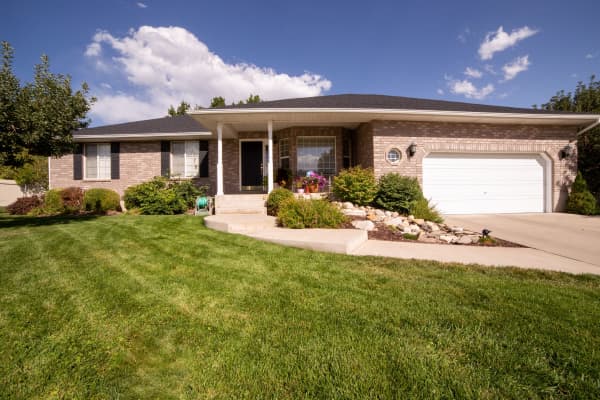
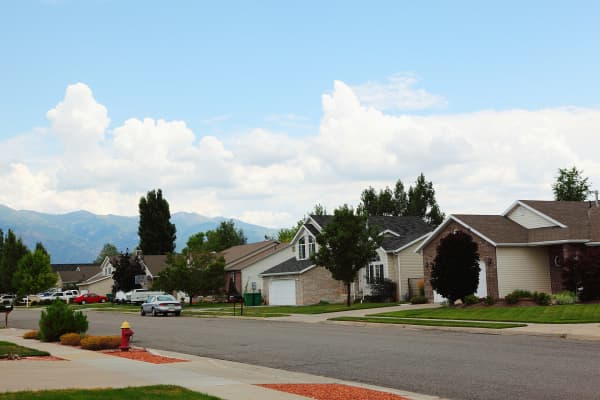
Drive anywhere in northern or western Utah County and you pass entrances with stone monuments, a name in serif capitals, and a rendering of a clubhouse. Most people read these as subdivisions with better signage.
Some of them are. Several are something different — developments planned as whole places, with commercial cores, several housing types, trail networks and a phasing schedule stretching decades ahead.
That difference matters when you are buying, because the things that make a master-planned community attractive and the things that make it risky come from the same source: one developer controls the plan, and the plan is not finished.
Prices, phase schedules, amenity timelines and boundaries all change. Utah is also a non-disclosure state, so nobody publishes verified sale prices here. Nothing below is financial advice; verify everything specific with the developer, the city and your own professionals.
What separates one from a subdivision
Four things, and a development needs most of them to earn the label honestly.
A single master developer controlling a long-range plan across the whole site, rather than multiple builders each buying and platting parcels independently.
Mixed housing types — detached homes, townhouses, condominiums and often rental apartments — deliberately placed rather than segregated by accident.
Commercial and civic land set aside in the plan: shops, offices, schools, sometimes a town center.
Shared amenities and a governing HOA with the authority and the budget to maintain them.
A large subdivision has houses, streets and maybe a park. A master-planned community is attempting to be a place.
The Utah County versions sit on a spectrum. Some are the second thing. Several are the first thing with a monument sign and a pool.
Why there are suddenly so many
Three forces converged.
Land assembly. Utah County's remaining developable land came in unusually large single-owner parcels — former industrial sites, ranchland, and areas that had never been subdivided. That is a precondition for master planning; you cannot do it across forty separate owners.
Growth pressure. Utah County has been among the fastest-growing counties in the country for years, driven by the Silicon Slopes employment corridor and a young population. Cities faced enormous demand and preferred coordinated development to piecemeal sprawl.
City appetite for control. A master plan lets a city negotiate infrastructure, density, open space and commercial land in one agreement rather than fighting it out plat by plat. Development agreements became the tool of choice.
The result is a county where a substantial share of new housing is arriving inside planned communities rather than conventional subdivisions.
Utah City, Vineyard — the flagship
The largest and most ambitious is in Vineyard, on the land where Geneva Steel operated for decades.
It is planned as a genuine downtown for a county that has never really had one — dense, pedestrian-oriented, mixed-use, on a lakeside site with transit already running through it. The ambition is a different order from anything else on this list.
We cover Utah City in detail separately, including what is open versus what is planned, the sustainability claims, and the honest concerns. If you are considering buying there, read that first — the gap between the rendering and the built condition is the whole story.
The Point, over the hill
Immediately north of Utah County, on the Draper side of the Point of the Mountain, the old Utah State Prison site is being redeveloped under a state land authority rather than by a private developer.
It is not in Utah County, but it will affect Utah County more than most things that are — it sits directly against the Lehi employment corridor and shares its traffic and housing pressures. We cover it separately as well.
The relevant point for a Utah County buyer is comparative: The Point and Utah City are both attempting dense, mixed-use, transit-adjacent development at the top and bottom of the same corridor. How each performs will shape what gets built next in Utah Valley.
Daybreak, the model everyone is measured against
Also outside the county, in South Jordan, Daybreak is one of the largest master-planned communities in Utah and the reference point for the whole category here.
Built on former Kennecott land, it has village centers, a large man-made lake, an extensive trail network and now a Triple-A ballpark anchoring a new entertainment district. It has been building out for two decades and is still not finished — which is itself the most useful lesson it offers.
Utah County projects are frequently pitched with Daybreak as the implied comparison. It is worth visiting before you buy into one, precisely so you can see what twenty years of buildout looks like and judge the pitch against it.
Holbrook Farms, Lehi
In northern Lehi, Holbrook Farms is one of the more substantial recent Utah County master plans.
The plan is delivered across phases with a mix of home types, and the marketing describes shops, restaurants, parks and trails as part of the eventual community. Early phases have been actively selling, with advertised builder pricing in the range you would expect for new construction in north Lehi.
Its case rests on location: minutes from I-15 and squarely inside the Silicon Slopes employment corridor, which is exactly the commute a large share of Utah County's new households are optimizing for.
The thing to establish before buying, as with any phased plan, is which of the described amenities and commercial elements are committed in a development agreement and which are aspirational. Ask the city, not only the sales office.
Wander, Saratoga Springs
In Saratoga Springs, Wander is a newer master plan organized around several distinct home collections aimed at different budgets and household types.
Saratoga Springs has been among the fastest-growing cities in the state, and its western and southern edges have seen sustained new-construction activity from multiple builders. Wander is one of the larger coordinated efforts within that.
The lakeside position is the selling point and also the thing to think about carefully. Utah Lake's shoreline has genuine amenity value and genuine seasonal characteristics — algal blooms, insects and wind are part of living near it, and we cover the lake's summer conditions separately.
The Eagle Mountain and Saratoga Springs buildout
Further west, Eagle Mountain remains one of the most active new-construction cities in the county by volume, and it is still early in its buildout relative to its eventual planned size.
Several builders operate master-planned neighborhoods there at a range of price points, and the general pattern is that Eagle Mountain runs cheaper than Saratoga Springs, which in turn runs cheaper than Lehi, with commute distance explaining most of the gap.
We compare those two cities directly elsewhere, because the Saratoga Springs versus Eagle Mountain decision is one of the most common Utah County buyers face.
The honest characterization of this western corridor: it is where a family gets the most house for the money in Utah County, at the cost of the longest drive to almost everything, on road infrastructure that is still catching up with the population.
The southern county
South Utah County — Salem, Payson, Santaquin, Spanish Fork — has its own master-planned developments at smaller scale, several from regional builders.
The dynamics differ from the west side. Land is cheaper, the communities are smaller, the setting is more rural and more agricultural, and the commute north is longer but runs against the heaviest traffic direction for part of the day.
For households that do not need a Silicon Slopes commute, this is the part of the county where a planned community with amenities is most affordable.
The school-district question almost everyone misses
This is the single most consequential thing for a family buying new construction in Utah County right now, and sales offices are not always precise about it.
Alpine School District is being replaced by three successor districts, all opening on 1 July 2027:
Timpanogos — covering Orem, Lindon, Pleasant Grove and Vineyard. Aspen Peaks — covering Lehi, American Fork, Highland, Alpine, Cedar Hills and the Utah County portion of Draper. Lake Mountain — covering Eagle Mountain, Saratoga Springs, Cedar Fort and Fairfield.
That means Utah City in Vineyard lands in Timpanogos, Holbrook Farms in Lehi lands in Aspen Peaks, and Wander in Saratoga Springs lands in Lake Mountain — three different districts for three communities within a short drive of each other.
We have dedicated pages on each of the three districts. The practical instruction is simple: do not accept "great schools" as an answer. Ask which district, which specific schools, and whether the boundary for your phase is settled — because in newly built areas, school assignments frequently change as new schools open.
Nebo and Provo City districts, covering the south and center of the county, are unaffected by the split.
What the HOA fee buys
Master-planned community HOA dues run higher than conventional subdivision dues, sometimes substantially, and the money goes somewhere specific.
Typically: pool and clubhouse operation, trail and open-space maintenance, front-yard or common-area landscaping, private street maintenance where streets are private, community events staffing, and reserves for eventual replacement of all of it.
Whether that is good value is entirely a household question. A family that uses the pool three times a week and the trails daily is getting something. A household that works long hours and travels is paying for someone else's amenities.
Two things to check that people routinely skip: the reserve study, which tells you whether the association is funding future replacement or deferring it onto later owners; and the rate of increase in dues over recent years, which predicts the next few better than the current figure does.
The honest downsides
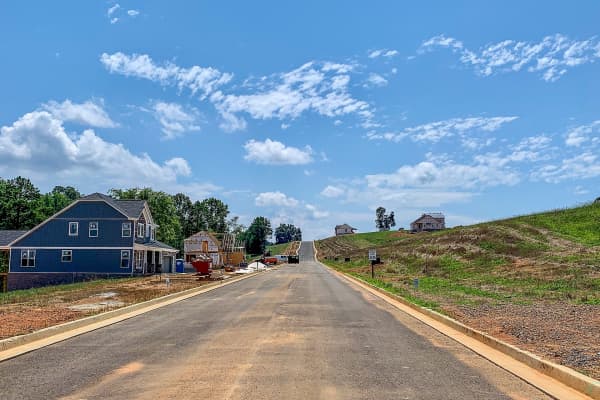
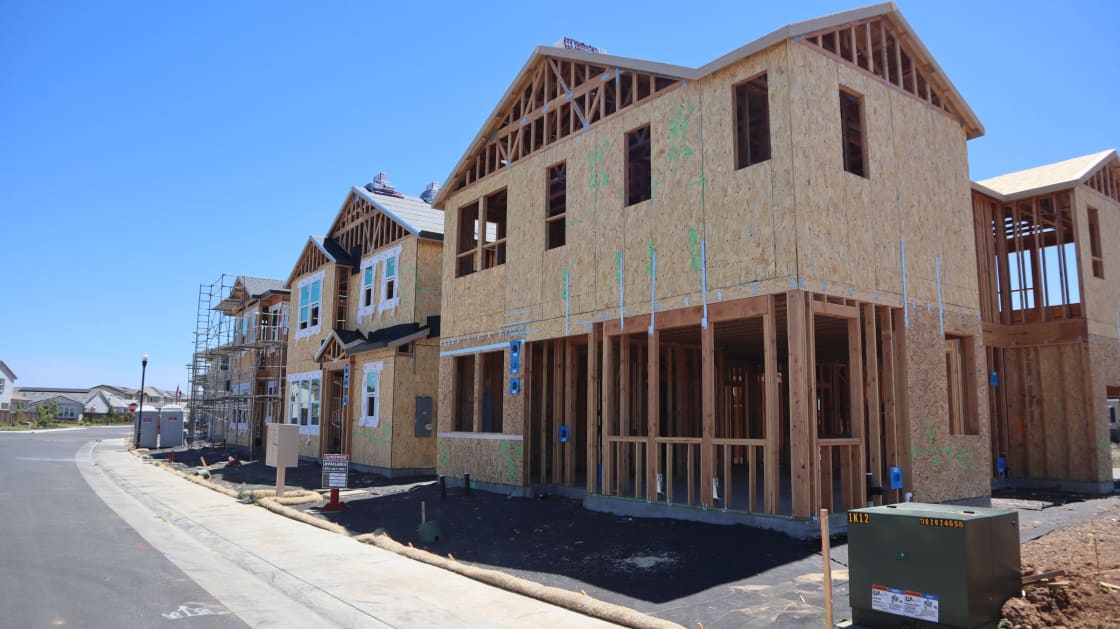
Phasing risk. You may buy in phase two and live beside construction until phase nine. Ask for the phasing schedule in writing and treat it as a forecast, not a promise.
Amenity delivery risk. The clubhouse in the rendering is delivered when the developer chooses, or when a development agreement compels it. Establish which.
Design uniformity. Architectural standards produce coherence and also sameness. Some people find it restful; others find it oppressive.
Restriction density. CC&Rs in these communities are typically more detailed than in older neighborhoods — parking, exterior storage, fencing, colors, business use and lease terms. Read them before, not after.
Rental limits. Many carry minimum lease terms that rule out nightly rental entirely, regardless of what the city permits.
Resale competition. When you sell, you may be competing with the builder still selling new homes in later phases of the same community. That is an unusual dynamic and it does not favor the resale seller.
Questions to ask before you sign
Ask the city, not only the sales office, and get answers in writing where you can.
What is committed in the development agreement, and what is aspirational?
What is the phasing schedule, and which phase am I in?
Which school district and which specific schools, and is the boundary settled?
What are the current HOA dues, what have they been for each of the last five years, and is there a current reserve study?
What are the minimum lease terms in the CC&Rs?
What commercial is funded, as opposed to zoned?
Who maintains the streets — the city or the association?
The water question, which Utah buyers should ask and rarely do
Every large new community in Utah County is being built in a state with a genuine long-term water problem, and the question of where a development's water comes from is a legitimate thing for a buyer to ask.
Utah cities require developers to demonstrate water rights or pay water impact fees as a condition of approval, and secondary water systems — untreated water piped separately for outdoor irrigation — are common in newer Utah County communities. That is why some neighborhoods have a second set of meters and a seasonal irrigation schedule.
Two practical consequences for a household.
Secondary water is usually cheaper per unit than culinary water, which makes large lawns less expensive to run than they would otherwise be. It is also subject to seasonal availability and restriction in dry years.
Metering of secondary water has been expanding across the state, which changes the economics for households that were previously charged a flat rate. If you are buying into a community with generous landscaping standards in the CC&Rs, ask what the irrigation obligation costs to meet.
The broader point: a community whose design assumes abundant outdoor water is making a bet. Ask how the development secured its water and whether secondary supply is metered.
What happens when the developer leaves
Every master-planned community eventually reaches the moment the developer hands the HOA to the homeowners, and that transition is where a lot of unpleasant surprises surface.
While the developer controls the board, dues are often set at a level that helps sell houses rather than at a level that funds the community's long-term costs. Amenities are new, so repairs are minimal and reserves look adequate.
After turnover, the homeowner board inherits the real numbers. Dues frequently rise. Deferred items surface. In some cases the association discovers that construction defects in common areas are its problem now, with a limited window to pursue them.
None of this is unique to Utah, and none of it means the model is bad. But if you are buying in a community where the developer still controls the board, you are buying into a set of numbers that have not yet been tested.
Ask when turnover is expected, whether it has already occurred, and — if it has — what happened to dues in the two years afterward.
The transit angle, which varies enormously
One of the genuine differentiators between these communities is transit access, and it is uneven.
Vineyard has a FrontRunner station, which makes Utah City the only major Utah County master plan built around commuter rail. That is the single strongest structural argument in its favor and the reason its density ambitions are credible rather than fanciful.
Lehi and American Fork have FrontRunner stations serving the north county, so Holbrook Farms and the Lehi corridor communities are within a drive of rail.
The western cities — Eagle Mountain and Saratoga Springs — have no rail at all, and bus service is limited. They are car-dependent by design, and the road network is the constraint. Anyone buying there should drive the actual commute at the actual time before committing.
The southern county has FrontRunner service to Provo and beyond, but the stations are not close to most of the newer developments.
If a low-car or one-car household is the goal, that narrows the list of Utah County master plans considerably — and for now it mostly points at Vineyard.
The short version
Utah County now has genuine master-planned communities rather than just large subdivisions, and Utah City in Vineyard is the most ambitious attempt at building an actual downtown the county has seen.
The category's strengths — coordinated design, real amenities, trails, mixed housing — are real. So are its costs: higher dues, tighter restrictions, construction as a neighbor for years, and a resale market where the developer is also your competitor.
The decisive question is not which community is best. It is which phase you are buying into, what is legally committed rather than illustrated, and which school district you will be in after July 2027.
Related Guides
- Utah City, Explained: How a Vanished Steel Mill Became Utah County's New Downtown
- The Point: What Is Actually Being Built on the Old Prison Site
- Aspen Peaks School District: A Parent's Guide to Utah County's New Largest District
- Timpanogos School District: What Utah Valley Parents Need to Know
- Lake Mountain School District: The West Side Gets Its Own Schools
- Saratoga Springs vs. Eagle Mountain: The Two Fastest-Growing Cities in Utah, Compared for People Deciding Between Them
- Draper, Sandy and South Jordan From Utah County: The Near-North Day
Frequently Asked Questions
What is a master-planned community?
What are the biggest master-planned communities in Utah County?
Is Daybreak in Utah County?
Are HOA fees higher in master-planned communities?
What is the risk of buying in an early phase?
Which school district will a new Utah County community be in?
Do master-planned communities hold value better?
Can you run a short-term rental in a master-planned community?
Sources
The facts in this guide were checked against these sources. Hours, fees and rules change, so confirm anything time-sensitive with the source before you go. How we make Provo.com.
- Prop 11 Media Release, City of Cedar Hills. Checked October 12, 2026.
- Utah County school district officially named Timpanogos, ABC4. Checked October 12, 2026.