
More on Saratoga Springs and Eagle Mountain: every guide we have published there, in one place.
Two cities sit side by side on the west side of Utah Lake, both with populations that were near zero in 1995 and well over 125,000 between them now, both consistently at or near the top of Utah's growth rankings, both full of new houses on land that was ranch and sagebrush a generation ago. People who do not live in either one confuse them constantly. People who live in either one will tell you they are nothing alike.
They are right. Saratoga Springs and Eagle Mountain share a corner of the county, a school district and a commute, and differ on nearly everything else: geography, layout, price, wind, water, the lake, the temple, and the feel of a Saturday. This is a side-by-side for people deciding between them.
The numbers first
The University of Utah's Kem C. Gardner Policy Institute, in its estimates for mid-2025, put the two cities together at more than 125,000. Saratoga Springs led the state in growth for that year by the institute's count, adding 4,682 residents, an 8.4 percent increase; Eagle Mountain was second with 4,169 and 6.8 percent. The Census Bureau's own estimates for the same period gave Eagle Mountain about 8.5 percent growth, the fastest of any Utah city over 50,000.
Two respected sources, two number-one cities. Together they now hold more than 125,000 people, which is more than Provo, and both are fixtures near the top of the state's growth rankings.
Eagle Mountain incorporated in December 1996 on Cedar Valley ranchland with about 250 residents. Saratoga Springs incorporated in the same era around a lakeshore resort and hot springs. Both were, at the start, a few hundred people and a plan.
Geography: the lake and the valley behind it
This is the difference that drives all the others. Saratoga Springs lies along the northwest shore of Utah Lake, between the water and the Lake Mountains, stretching from the Lehi line south toward the lake's west shore. It is long and narrow and every part of it is close to either the lake or the mountain. Its name comes from the hot springs at the shoreline, and its history is a resort history: a bathhouse, a beach, a summer outing for people from around the valley.
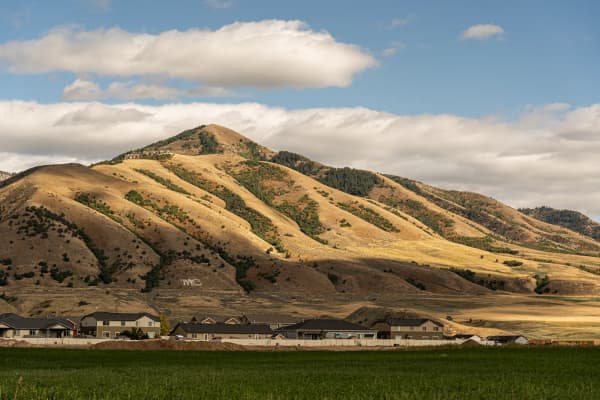
Eagle Mountain is on the other side of the Lake Mountains, in Cedar Valley, a high dry basin that opens west toward the Oquirrh Mountains and the old Pony Express route. The city's limits cover roughly fifty square miles, much of it still open, and its developed areas sit in distinct pockets: the Ranches on the north, City Center in the middle, Silver Lake and the newer neighborhoods spreading between. Getting from one part of Eagle Mountain to another can take longer than getting from Saratoga Springs to Lehi.
The commute
Nearly every household in both cities has at least one person who drives out every morning, to Lehi, to Point of the Mountain, or to Salt Lake County.
From Saratoga Springs the routes are direct. Pioneer Crossing runs east across the lake's north end to Lehi and I-15 in a few miles. Redwood Road runs north along the lake to Bluffdale and Salt Lake County, connecting to the Mountain View Corridor and Bangerter Highway without touching I-15 at all. The Lehi FrontRunner station is fifteen minutes away.
From Eagle Mountain every route first has to leave Cedar Valley. The Cory Wride Memorial Highway, State Route 73, climbs from the city over the low pass north of the Lake Mountains and drops into Saratoga Springs, and from there the routes are the same. Eagle Mountain Boulevard reaches the Ranches, and a second connector, Pony Express Parkway, reaches Saratoga Springs' south side. On a normal morning Eagle Mountain adds ten to twenty minutes to everything Saratoga Springs adds, and on a snowy morning the pass is the first thing to slow. The state has widened SR-73 and plans more; the geography does not change.
If your work is in Lehi or at Point of the Mountain, Saratoga Springs is the shorter drive by a meaningful margin. If it is in Salt Lake City, the difference narrows because Redwood Road and the Mountain View Corridor are the long part either way.
Housing and price
Both cities are built almost entirely since 2000, so both are subdivisions of two-story houses on modest lots, with townhome and apartment pockets increasing every year. The honest generalization is that Eagle Mountain has been the less expensive of the two for most of its history, because it is further out and the land was cheaper, and that Saratoga Springs commands a premium for the lake, the shorter drive and, since 2023, the temple.
Within Saratoga Springs the range is wide: lakefront and hillside neighborhoods near the temple and along the Lake Mountains foothills at the top, older 2000s subdivisions in the middle, dense townhome developments along Redwood Road and Pioneer Crossing at the bottom. Within Eagle Mountain the range is narrower and the lots are often larger; the Ranches on the north side is the most established area with the golf course, City Center has the civic buildings and newer commercial, and the far south neighborhoods are the newest and furthest from everything.
Utah is a non-disclosure state, so sale prices are not public record and any specific figure would be an estimate. Compare current listings in both, and compare them on drive time to your job, not on the price alone.
Schools
Both cities have been part of Alpine School District, which grew into one of the largest districts in the country by absorbing all of this growth. In November 2024 voters approved splitting Alpine into three districts, and the western one, serving Saratoga Springs, Eagle Mountain and the west side, is called Lake Mountain School District. The split is running on a multi-year timeline, with boards elected and boundaries set, and by the time you read this the name on the school may have changed.
What has not changed is the scale: both cities have been building elementary schools nearly every year and still run crowded, and both have a high school of their own, with Westlake High in Saratoga Springs and Cedar Valley High in Eagle Mountain. Charter schools are numerous in both. Ask about boundaries, year-round tracks and busing before choosing a subdivision; in cities growing this fast the school assignment is the thing most likely to change after you move in.
The lake, the trails and the outdoors
Saratoga Springs has the water. Its shoreline parks, the marina, Inlet Park where the Jordan River leaves the lake and the Jordan River Parkway trail begins, and the developed lakefront along its center all put the lake within a walk for much of the city. Utah Lake is a shallow, warm lake with algal-bloom advisories in many summers and it is not a swimming lake in the way a Californian would mean it, but it is a boating, paddling and evening-walk lake, and the sunset view across it to Timpanogos is the reason people pay the Saratoga premium.
Eagle Mountain has the desert. Its trails run into the Lake Mountains to the east and the open Cedar Valley to the west, its Mountain Ranch Bike Park is a regional draw for mountain bikers, and its parks, including the large Cory Wride Memorial Park, are built on the scale of a city with room. Five Mile Pass, the county's off-highway-vehicle area, is just beyond the city's south end. If your outdoors is a mountain bike, a dirt bike or a dog that needs to run, Eagle Mountain is closer to it. If it is a paddleboard or a paved trail, Saratoga Springs is.
The recreation center question
Neither city has one, and both want one. In November 2022 Saratoga Springs asked voters to approve up to $70 million in general obligation bonds for a recreation center and aquatics complex, with an accompanying recreation sales tax; voters rejected it. The city had shown renderings of indoor courts, a leisure pool, a lap pool, a running track and outdoor hot-spring soaking pools fed by the springs the city is named for. Eagle Mountain has discussed a center and has not put one to a vote as of this writing.
In the meantime, residents of both cities drive to Lehi's Legacy Center and pay nonresident rates, or hold commercial gym memberships. For a family that lives at the pool, this is a real cost of both cities compared with Lehi or American Fork, and it is worth pricing before you move.
Water, wind and weather
Both cities are on the dry side of the county, and both have been through the growing pains of water supply: wells, secondary irrigation, watering restrictions in drought years, and the cost of buying water rights for every new subdivision. Both charge for water in ways that reward xeriscaping, and both have residents who learned the hard way that a Kentucky bluegrass lawn on the west side is an expensive habit.
Eagle Mountain is windier. Cedar Valley is more exposed than the lakeshore, and an afternoon wind is a near-daily feature for much of the year, strong enough to matter for trampolines, patio umbrellas and children's bikes. Saratoga Springs gets lake breezes and less of the sustained wind. Both are newer and therefore more treeless than the old east-bench cities, and both are warmer in summer than Provo by a couple of degrees and sit a few hundred feet lower in the winter inversion.
Downtowns, shopping and the errand run
Neither has a downtown in the old sense; both were built as residential subdivisions first and are adding commercial as population justifies it. Saratoga Springs' commercial spine is Redwood Road and Pioneer Crossing, with grocery stores, a hospital emergency center, and a growing strip of restaurants and services, plus Lehi's larger retail a few minutes east. Eagle Mountain's City Center has a grocery store, the civic buildings, a library and a growing set of shops, and the Ranches has its own small commercial node; for anything beyond the basics, the trip is to Saratoga Springs or Lehi.
The practical difference: a Saratoga Springs household can do most errands inside the city or within ten minutes; an Eagle Mountain household in the newer neighborhoods should expect that a hardware store run or a restaurant dinner involves the pass.
The temple and the churches
The Saratoga Springs Utah Temple, dedicated in August 2023 on a hillside above the lake, changed the city's skyline and, by most accounts, its housing market; it is lit at night and visible from much of both cities. Eagle Mountain does not have a temple as of this writing, though the Church of Jesus Christ of Latter-day Saints has announced and built temples across the county at a pace that makes any such statement provisional.
Both cities are heavily Latter-day Saint, with meetinghouses every few blocks and the social calendar organized through wards, as everywhere in the county. Eagle Mountain, being newer, more affordable and further out, has drawn a somewhat more varied population, and both have visible non-member communities that are growing. A newcomer who is not a member will find the same welcome and the same Sunday quiet in either.
The feel of the place
Saratoga Springs feels like a suburb of Lehi that happens to have a lake: closer, denser, more connected, more finished. Its older neighborhoods have trees now. Its newer ones along Redwood Road are dense townhome rows. It has the temple, the marina and the shorter commute, and it charges for all three.
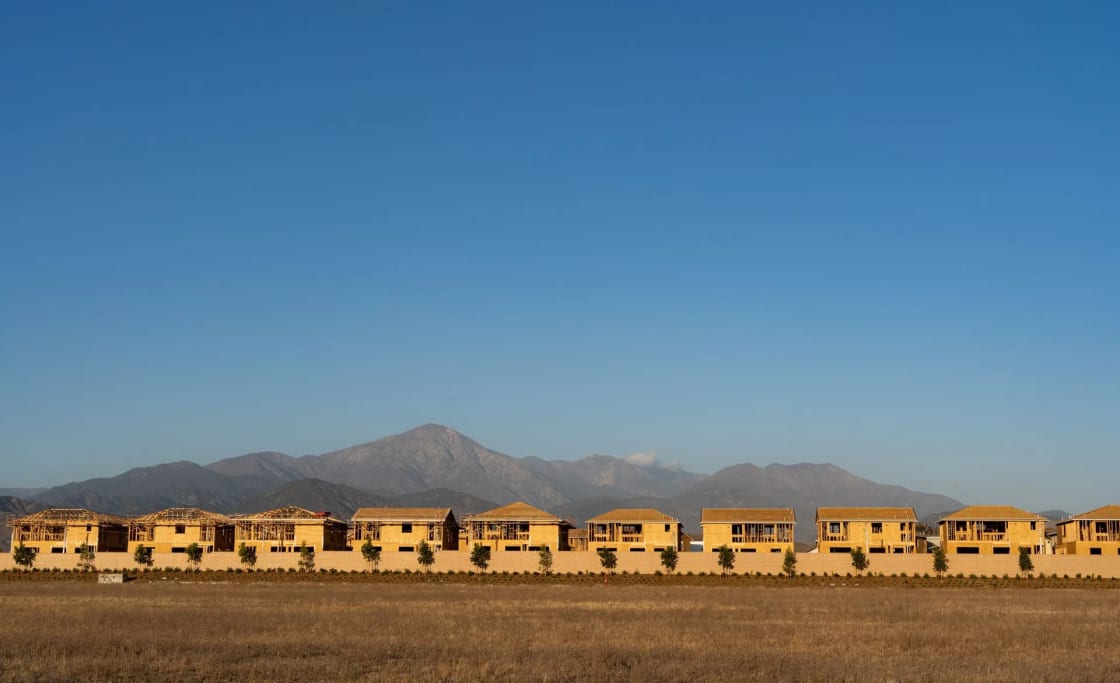
Eagle Mountain feels like a city being built on a frontier, because it is one. The distances are long, the views are wide, the wind is steady and the sky is enormous. Neighborhoods are separated by open land that will not be open in a decade. It has the Pony Express heritage on its street names, a large data center on its edge, a bike park, and a population that chose the space and the price over the drive. It is the more affordable of the two and it knows it.
Who should choose which
Choose Saratoga Springs if your commute is to Lehi or Point of the Mountain and minutes matter; if the lake, the trail system and the temple are part of why you want the west side; if you want to do errands without leaving the city; and if you can absorb the premium.
Choose Eagle Mountain if the extra fifteen minutes buys you the house you want; if your outdoors is dirt rather than water; if you are comfortable in a city that is still assembling its commercial core; and if wind and distance are prices you are willing to pay for space.
Choose neither without driving the commute at the hour you would drive it, both directions, on a weekday. That single drive settles more of these decisions than any comparison.
History in the street names
Both cities wear their pasts on their signs. Saratoga Springs' name was borrowed from the New York resort town by the owners of the lakeshore hot-springs resort that operated on the site through the early twentieth century, when Provo families rode out for a swim in the warm water; the springs still surface near the shore and the resort era survives in a few place names and the temple hillside's view. Eagle Mountain's streets are named for the Pony Express, which ran through Cedar Valley in 1860 and 1861 on its way from the last Wasatch Front station to the desert crossing toward Nevada; the Pony Express Parkway follows the general line of the route, and the old Camp Floyd army post and the Stagecoach Inn at Fairfield, a few miles south of the city, are the surviving buildings from that decade. The Lake Mountains between the two cities carry petroglyph panels, reachable from the Saratoga Springs side, that predate all of it. For a newcomer this is mostly trivia, but it explains the difference in the two cities' self-image: one grew from a resort on the water, the other from a way station in the desert, and each still acts like it.
What is coming for both
Both cities will pass seventy thousand people before the end of the decade at current rates. The Lake Mountain School District will take shape. SR-73 will widen again. Saratoga Springs will almost certainly put another recreation bond to voters; Eagle Mountain may put its first. Commercial will fill in along both cities' spines. And the open land between the two, along the pass and the lake's west shore, will fill with the houses of the next fifty thousand people, at which point the question of which city is which will be harder to answer from the road and no easier to answer from inside them.
Related Guides
- Living in Saratoga Springs, Utah (2026): The Complete Guide
- Living in Eagle Mountain, Utah (2026): The Complete Guide
- Saratoga Springs Neighborhoods Guide: Where to Live (2026)
- Eagle Mountain Neighborhoods Guide: Where to Live (2026)
- Things to Do in Saratoga Springs, Utah (2026)
- Pony Express Days: The Celebration That Spreads Across Three Weekends
Frequently Asked Questions
Which is bigger, Saratoga Springs or Eagle Mountain?
Which one is growing faster?
Which has the shorter commute to Lehi and Salt Lake?
Does either city have a recreation center?
Which one is on the lake?
Which school district serves them?
Is Eagle Mountain windier?
Which has the temple?
Sources
The facts in this guide were checked against these sources. Hours, fees and rules change, so confirm anything time-sensitive with the source before you go. How we make Provo.com.
- Utah City Population Estimates, Utah Department of Workforce Services. Checked October 12, 2026.
- 2022 Election Voter Information Pamphlet, City of Saratoga Springs. Checked October 12, 2026.
- Eagle Mountain City (Unified Fire Authority) / Eagle Mountain PAFR 2016, Unified Fire Authority; Eagle Mountain City. Checked October 12, 2026.
- Saratoga Springs Utah Temple, The Church of Jesus Christ of Latter-day Saints. Checked October 12, 2026.
- These were Utah's fastest-growing cities in 2025, according to the University of Utah, KSL.com. Checked October 12, 2026.