
There is a strange blind spot in how Utah Valley thinks about geography. Anything past the Point of the Mountain becomes "Salt Lake," a single undifferentiated place an hour away that you visit for the airport or a concert.
In fact the first three cities over the hill — Draper, Sandy and South Jordan — sit 25 to 35 miles from Provo and considerably closer than that to Lehi, American Fork or Alpine. For a family in northern Utah County, Draper is nearer than Santaquin.
They also hold a useful set of things: a large aquarium, a brand-new Triple-A ballpark, one of the better trail systems on the Wasatch Front, a professional soccer stadium, and the closest large-scale shopping to Utah Valley.
This guide treats them as what they are — the near-north day, not a Salt Lake trip.
Hours, prices, schedules and seasonal operations change. Verify before you go.
The geography, corrected
The Point of the Mountain is a psychological border more than a physical one. It is a low pass between the Traverse Mountains, and the moment you cross it the Salt Lake Valley opens out.
Draper sits immediately over the top on the east side, tucked against the mountains. From Lehi it is barely a drive at all.
South Jordan is west and north, out toward the Oquirrh Mountains on the valley's far side.
Sandy is north of Draper along the east bench, the largest and longest-established of the three.
All three are within about 45 minutes of most of Utah Valley outside rush hour, and all three are further from downtown Salt Lake City than Utah County residents assume — Sandy is a good 20 minutes south of the city center.
The practical implication: for a family in Lehi, Highland or American Fork, a Draper outing is a shorter drive than going to Provo. Utah Valley routinely drives past better-suited options because of a mental map that stops at the county line.
The traffic reality nobody can plan around
The one genuine obstacle is the I-15 stretch through the Point of the Mountain, which is among the most congested corridors in Utah and has been under sustained construction and expansion pressure for years.
The pattern is predictable. Northbound is slow in the morning; southbound is slow in the late afternoon and evening. Between roughly 9:30 a.m. and 3 p.m., the drive is what the map says it is.
Any family day trip that leaves mid-morning and returns mid-afternoon avoids the problem entirely. Any trip timed around a 7 p.m. event does not, and you should add substantial time in both directions.
Draper: the aquarium and the canyon
The Loveland Living Planet Aquarium is the single biggest draw for Utah Valley families and the reason most Utah County residents have been to Draper at all. It is a large, modern aquarium with themed ecosystem galleries, and we have a full guide to that trip separately.
Corner Canyon is the reason to come back without children. A substantial network of purpose-built trails climbs from Draper's eastern edge into the foothills, used heavily for hiking, trail running and mountain biking. It is well-designed, well-signed and good, and its proximity to a large suburban population means it is busy on weekday evenings and weekends.
For Utah Valley riders, the honest comparison is against Corner Canyon's rivals at home — the Bonneville Shoreline system, Lambert Park in Alpine, and the American Fork Canyon network. Corner Canyon holds up well and is closer than most of them for anyone north of Lehi.
Suncrest sits on top of the Traverse ridge between the two valleys, reached by a climbing road, with views over both. It is a residential area rather than an attraction, but the drive up is worth doing once.
Draper is also the southern anchor of the Silicon Slopes corridor, with a corporate employment base that has grown alongside Lehi's. For working Utah Valley residents that matters more than the recreation does.
The Lone Peak Wilderness trails above Corner Canyon
Corner Canyon is the trail system everyone knows. Directly above it, reached from the same side of Draper, is something entirely different: the Lone Peak Wilderness, established by Congress in 1977, where the Forest Service warns that trails receive little to no maintenance and tells visitors to carry a map and compass and be prepared to be fully self-sufficient. These are among the remotest areas in the Wasatch, and they are twenty minutes from a suburban trailhead.
Three numbered trails climb into it from this side. All three are accessed the same way — east on 12300 South, right on 1300 East, third exit at the traffic circle onto 12400 South/Pioneer Road, right on 2000 East, then in at the Orson Smith trailhead and immediately right onto the dirt Corner Canyon Road, about 2.6 miles to the Ghost Falls trailhead.
Wilderness rules bind on all of them: no mechanized or motorized equipment including mountain bikes, a group size limit of 15 with eight or fewer recommended, no cutting switchbacks, and campfires discouraged.
Jacobs Ladder Trail #187
3.8 miles one way · Lone Peak Cirque and summit · no bikes
The Forest Service's description is four words long and does the job: extremely steep, long, and rugged. This is the trail that accesses the Lone Peak Cirque and the summit of Lone Peak itself, and it is the serious mountaineering approach on this side of the range. The trail begins about 50 yards east of the Ghost Falls trailhead; take the right at the Jacobs Ladder sign at Lone Rock.
Utah County hikers should know this one exists and know what it is. It is not a bigger Corner Canyon ride. It is a full alpine day with real navigation, on tread the agency does not promise to maintain.
First Hamongog Trail #200
3.64 miles one way · meadow access · no bikes
The gentler of the Hamongog approaches, running 3.64 miles to the Second Hamongog trail and its meadow. The Forest Service's own text describes it as reaching the meadow from the Alpine City side of the Wilderness, while its directions route you from Draper — the trail runs along the boundary between the two, which is how both descriptions can be true. Take the Draper access above; that is the one the agency publishes turn by turn.
Second Hamongog Trail #186
5.1 miles one way · Lake Hardy access · no bikes
The long one, and the one the Forest Service flags as difficult to follow. It climbs into a rarely visited and remote corner of the Wilderness that the agency still calls quite beautiful, and it provides access to Lake Hardy and the Deer Creek–Dry Creek area. Treat "difficult to follow" as the operative phrase: this is a route for people comfortable navigating off an indistinct tread, not a signed path to a lake.
South Jordan: Daybreak, the lake and the new ballpark
South Jordan holds the most novel thing in the near-north, and Utah Valley has largely not noticed.
Daybreak is Utah's largest master-planned community, built on former Kennecott mining land — a development of over 4,000 acres with a target of tens of thousands of homes, organized around walkable village centers rather than conventional subdivisions.
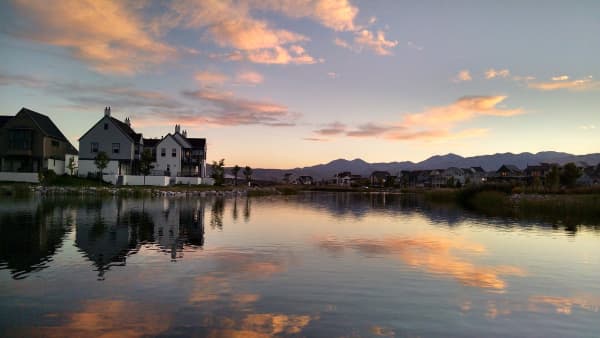
At its heart sits Oquirrh Lake, a man-made lake of roughly 120 acres with trails around it, non-motorized boating and beaches. As a place simply to walk on a summer evening it has no equivalent in Utah County.
SoDa Row and the village commercial districts give it small clusters of restaurants and shops within walking distance of housing, which is the point of the whole design and the thing that makes it feel unlike a Utah suburb.
The ballpark is the newest addition. The Triple-A Salt Lake Bees left their long-time downtown Salt Lake City home and moved to a new stadium in Daybreak, which opened in April 2025. It was privately built as the anchor of a new sports and entertainment district that also includes a cinema, an amphitheater and performing-arts space.
For a Utah Valley family, this is the significant change. Affordable professional-adjacent baseball, in a brand-new park, on a lawn where children can run — about 40 minutes from Provo and less from Lehi. It is a far easier evening than anything in downtown Salt Lake, with parking that works.
Check the Bees' schedule before building a trip around it; the Triple-A season runs spring into early autumn with long home stands and frequent off days.
Sandy: the stadium, the expo center and the bench
Sandy is the oldest and largest of the three and functions as the east bench's commercial center.
America First Field is the home of Real Salt Lake, Major League Soccer's Utah club, and it is the closest professional stadium of any kind to Utah Valley. Match nights are a straightforward drive from Utah County and the stadium is compact enough that the experience is good from most seats. We cover the wider pro-sports picture from Provo separately.
The Mountain America Exposition Center hosts trade shows, conventions, home and garden shows, and large seasonal markets. If you have ever driven north for a gun show, a boat show or a craft fair, it was probably here.
Hale Centre Theatre in Sandy is one of Utah's major producing theaters, running large-scale musicals in the round. It is a substantially bigger operation than its origins suggest and draws audiences from across the Wasatch Front, Utah Valley included.
Sandy also has the closest access to the Cottonwood Canyons of the three cities, sitting near the mouths of both, which makes it the practical staging point for a canyon day from Utah County.
The shopping question, answered honestly
Utah Valley residents drive north to shop, and the near-north is where most of that shopping happens.
The District, on the Draper and South Jordan border around 11400 South, is the closest large mixed-use retail development to Utah County, with warehouse clubs, outdoor retail, restaurants and chain stores clustered together.
Further north, Sandy and Murray hold the larger indoor shopping centers and the density of big-box retail thins out only as you approach downtown.
Whether any of that justifies the drive is a personal calculation. Lehi's retail has expanded enormously in the last decade and Orem's University Place has redeveloped substantially, so the gap that once made a northern shopping trip obviously worthwhile has narrowed. The specialist retailers are the remaining reason — outdoor gear, specific chains, and anything Utah County simply does not have.
Getting there on transit
FrontRunner runs from Utah County north through Salt Lake County, and TRAX light rail serves Sandy, Draper and Daybreak, including stations built specifically to serve the new ballpark district.
That combination makes several of these destinations reachable without a car, and for a stadium event it is attractive — no parking, no post-match traffic.
The catch is transfers. A FrontRunner-to-TRAX journey with children and a stroller is slower and more effortful than driving, and Sunday service is absent. For a single destination close to a station it works well; for a day combining the aquarium, a trail and dinner it does not.
How these three cities got here
The near-north looks like generic suburbia and is not. Each of the three has a specific origin that still shapes it.
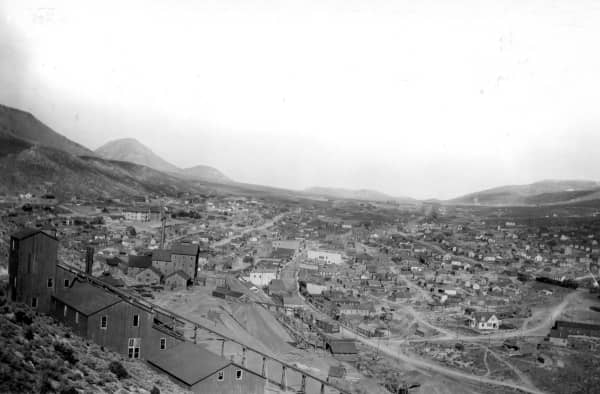
Sandy is the oldest, growing up around smelting and rail in the late nineteenth century as ore came down from the Cottonwood Canyons for processing. It was a working industrial town before it was a bedroom community, and its historic core on the east bench predates almost everything around it.
South Jordan was farmland — irrigated agriculture along the Jordan River — until very recently. Its transformation is the most dramatic of the three, and it happened because of a single landowner decision.
Draper was a farming and dairy settlement that spent much of the twentieth century known statewide for one thing: the Utah State Prison, which sat at the Point of the Mountain from the 1950s until its replacement opened elsewhere.
That prison's departure is the hinge event for the whole corridor, and it explains why so much land at the top of the valley is in play at once.
The Point of the Mountain, which is being rebuilt
The land the prison vacated is now the site of a large state-directed redevelopment, and Utah Valley residents drive past the construction constantly without knowing what it is.
The short version is that a state land authority controls a very large parcel at the top of the valley and is building it out under a long-range framework plan rather than selling it piecemeal. The scale is substantial enough that it will change the corridor between Utah County and Salt Lake County over decades, not years.
We cover that development in detail separately, because it matters more to Utah Valley than most Utah County residents realize — it sits directly against the Lehi tech corridor and shares its transport and housing pressures.
For a day-trip planner the relevance is narrower: expect construction, expect the road layout near the Point to change, and do not rely on a route you drove two years ago.
The Kennecott story behind Daybreak
Daybreak's land was not bought from farmers. It came from Kennecott Utah Copper, whose Bingham Canyon mine on the Oquirrh side of the valley is one of the largest excavations on earth.
The mining company held enormous acreage on the valley's west side and, rather than selling it off, developed it directly into a planned community with village centers, a lake, trails and a deliberate walkability agenda. That single-owner control is why Daybreak looks coherent in a way that piecemeal Utah suburbs do not, and why it could afford to build a lake of roughly 120 acres in the middle of it.
Whether you find the result charming or artificial is a matter of taste. What is not in dispute is that it is the largest planned community in the state and that nothing in Utah County is attempting anything like it at that scale.
For visitors, the practical point is that Daybreak is designed to be walked. Park once and walk; do not drive between its village centers.
The Jordan River Parkway, the connective trail
Running the length of the valley floor is the Jordan River Parkway, a paved multi-use trail following the river north from Utah Lake.
That is the detail Utah Valley riders underuse. The river leaves Utah Lake at the northern end of our valley and the trail follows it through Salt Lake County — meaning there is a long paved corridor linking the two valleys' trail systems.
For a serious cyclist it is a genuine route rather than a novelty. For a family it is a place to ride flat, safe miles with river and wetland scenery, with multiple access points across South Jordan and the western suburbs.
It is not scenic in the way a canyon is. It is useful in a way a canyon is not.
Eating, briefly
The near-north is chain territory, and it is worth being honest about that rather than pretending otherwise.
The District and the Sandy commercial corridors hold the familiar national names, which is exactly what most Utah Valley families driving north want — predictable food between the aquarium and the drive home.
The exceptions are worth knowing. Daybreak's village commercial districts have a cluster of independent restaurants and coffee shops within walking distance of the lake, which is the most pleasant place to eat in the three cities on a summer evening. Sandy's older downtown around Historic Sandy has a handful of independents. Draper has a growing restaurant scene along its main corridors driven by the tech employment base.
Utah alcohol rules apply as everywhere. Sunday closures are widespread, though less absolute than in parts of Utah County.
If you are heading up a canyon afterward from Sandy, eat before you climb — food above the canyon mouths is limited to the resorts and seasonal.
Combining it into one day
The three cities are close enough that pairing works.
The family version. Aquarium in Draper in the morning, lunch at The District, Oquirrh Lake in Daybreak in the afternoon. Home before the southbound rush.
The active version. Corner Canyon in the morning while it is cool, food in Draper, and either a Bees game or an evening walk at Daybreak.
The event version. Pick one — a match at America First Field, a show at Hale Centre Theatre in Sandy, a Bees game — and build a meal around it. Accept the drive home in traffic as the cost.
The errand version. The honest one. Many Utah Valley trips north are for a specific shop, a trade show at the expo center, or a medical appointment. Adding a single attraction turns a chore into a day.
Seasonality
Spring and autumn are the best windows — Corner Canyon is comfortable, the lake is pleasant, and traffic is at its most predictable.
Summer brings baseball, the fullest calendar and the heat. The valley floor here is as hot as Utah Valley.
Winter shifts the appeal indoors — the aquarium, theater, expo center and shopping — and makes Sandy useful as a canyon staging point on ski days.
The short version
Three cities, 30 to 45 minutes from most of Utah Valley, that Utah County mentally files under "Salt Lake" and mostly ignores.
Between them they hold the closest aquarium, the closest professional soccer stadium, a brand-new Triple-A ballpark with a lawn, one of the better trail networks on the front, and the nearest large-scale shopping.
Go mid-morning, come back mid-afternoon, and the Point of the Mountain never becomes part of the story. That timing is most of what separates a good near-north day from a frustrating one.
Related Guides
- Things to Do in South Jordan and Daybreak, From Provo
- Things to Do in Draper, Utah, From Provo
- Things to Do in Sandy, Utah, From Provo
- Loveland Living Planet Aquarium from Provo: The Drive, the Tickets, the Exhibits, and a Plan for the Day
- Utah Valley's Pro Sports Options: Jazz, Mammoth, Real Salt Lake, the Royals, the Bees, and the Rest — What Each One Costs and How Long the Drive Is From Provo (2026)
- The Point: What Is Actually Being Built on the Old Prison Site
- Where to Live in Utah County If You Work in Salt Lake: The Commute Math, City by City
- Big and Little Cottonwood Canyons From Provo: The Summer Edition
- Things to Do in Herriman and Riverton, Utah, From Provo
Frequently Asked Questions
How far is Draper from Provo?
What is there to do in Draper?
Where do the Salt Lake Bees play now?
Is Daybreak worth visiting if you do not live there?
How long does Point of the Mountain traffic add?
Can you get there on transit from Utah County?
Where is the best shopping near Utah County?
Is Corner Canyon good for mountain biking?
Sources
The facts in this guide were checked against these sources. Hours, fees and rules change, so confirm anything time-sensitive with the source before you go. How we make Provo.com.
- South Jordan City: News Flash, South Jordan City. Checked October 12, 2026.
- Urban Center & Bees Stadium Project, South Jordan City. Checked October 12, 2026.