
There is a fair chance your house is connected to two completely separate water systems, that the second one is cheaper by an order of magnitude, and that you have never thought about it once.
Secondary water is the most quietly consequential utility in Utah Valley. It determines whether a yard is affordable to keep alive. It shows up as a line item in real estate transactions that buyers routinely skim past. And attached to it, in some parts of the county, is a form of property that is not on your deed, does not transfer with the house automatically, and can be walked away with by a seller who knows more about it than you do.
This is the guide to the second pipe. Where it came from, how to find out whether you have it, what a water share is, and what changes before 2030.
Two systems, one house
Start with the split, because everything else follows from it.
Culinary water is treated drinking water, delivered by a city or water district to your tap. It is metered, billed monthly, tested, and regulated as a public water system. Our guide to where Provo's water comes from covers the springs, wells and river water behind it, and setting up utilities in Provo covers the account side.
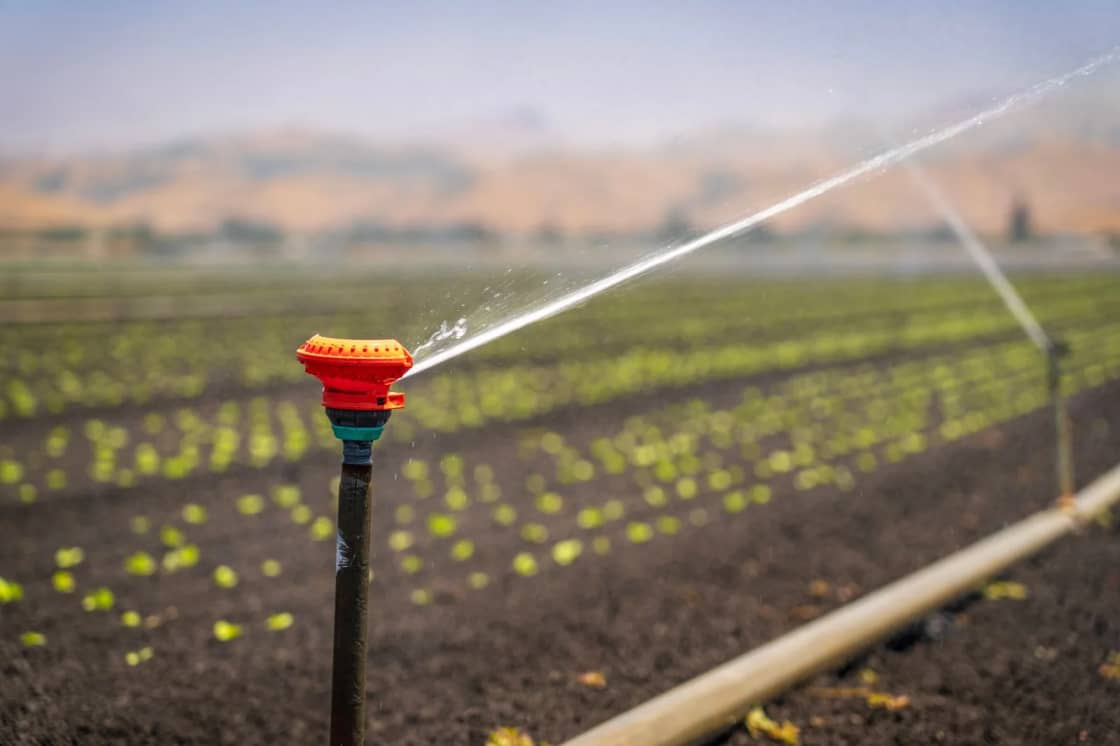
Secondary water, also called pressurized irrigation, is untreated water delivered through an entirely separate network of pipes for outdoor use. Lawns, gardens, landscaping. Not the kitchen, not the bathroom, not the hose your kids drink from.
The historical reason for the split is agricultural. Much of Utah Valley's residential land was farmland, and that farmland already had irrigation infrastructure and irrigation water attached to it. When subdivisions replaced orchards and fields, it was cheaper for everyone to run treated water indoors and keep delivering the existing untreated irrigation water outdoors than to put every drop through a treatment plant.
That decision, made incrementally over decades, is why Utah has so many secondary connections and why the state's largest single category of residential water use went unmeasured for most of a century.
Whether you have it depends on the street, not the city
This is the part that confuses people moving here, and it deserves stating flatly: secondary water availability is a property-by-property fact, not a city-by-city one.
Two houses four blocks apart in the same city can have entirely different answers. One is on a system inherited from the irrigation company that used to water the orchard on that block; the other went in later, under a different arrangement, and irrigates with culinary water off the house meter.
The practical consequence is a real difference in the cost of having a lawn. Untreated irrigation water is dramatically cheaper per gallon than treated culinary water, and outdoor use is by far the largest share of residential consumption in this climate. A quarter-acre of turf grass on secondary water and the same turf on culinary water are two different financial propositions.
So: never infer from a neighbor, a listing, or a city-level statement. Ask about the address.
Water shares: the property nobody tells you about
Here is the section to read twice if you are buying a house anywhere in Utah County outside a fully municipal system.
A water right is a right to divert water and put it to beneficial use. All water in Utah is public property; what a person owns is the right to use some of it. Rights are administered by the Utah Division of Water Rights and carry a priority date, a defined quantity, a specified point of diversion and a specified place of use.
A water share is a different animal. It is stock in a mutual irrigation, canal or ditch company. The company holds the water rights collectively; the share is evidence of your entitlement to a portion of what the company delivers. Shareholders typically pay annual assessments toward operating the canals, headgates and infrastructure.
And then the fact that costs people money:
Shares of stock in a corporation are not a water right appurtenant to the land. They can be severed from the property and sold separately. Transferring them normally requires a new stock certificate issued by the company — it does not happen automatically because you signed a deed.
Advertisement
Sit with that. You can buy a house that has been irrigated from a ditch for sixty years, close on it, and discover that the seller retained the shares. The water was never part of the land in the legal sense. It was a separate asset that happened to be pointed at the land.
This is why the water-rights box on a Utah real estate contract is not boilerplate. A buyer who wants the irrigation water needs the contract to say so, and needs the transfer completed and confirmed at or before closing rather than assumed. Our buying a home in Provo guide and buying a home near Provo cover the wider transaction; this is the piece both of them point at.
Utah County has real named irrigation entities in this space — Provo Reservoir, Provo Bench Canal, Pleasant Grove Irrigation and others appear in city water-share schedules — and different cities accept different companies' shares at different acre-foot quantifications when shares are dedicated to a development. If a transaction turns on shares, that is a question for the specific company, the specific city, and a Utah attorney, not for a general guide.
The buyer's checklist
If secondary water or shares are anywhere near your purchase, do these five things in this order.
1. Ask the provider, by address. City, water district or irrigation company. Does this specific parcel have a pressurized secondary connection? Is it active? Is it metered yet?
2. Get it into the contract. Whatever the answer is, the contract should say what is conveying. Verbal assurances from a seller are worth exactly nothing when the shares turn out to be in a family trust.
3. Call the company secretary. If shares exist, confirm the seller owns them, that the certificate is in good standing, and that assessments are paid current. Unpaid assessments are a live liability and they attach to the shares, not to the seller's good intentions.
4. Confirm the transfer mechanism. Ask what the company requires to reissue the certificate in your name, how long it takes, and who signs. Some companies require board action, and board meetings are not scheduled around your closing date.
5. Ask about the season and the rules. Turn-on and turn-off dates, whether the system is metered, what the water may lawfully be used for, and what happens when the system is down.
None of this is exotic. It is the same due diligence anyone would do on an easement. It gets skipped because water does not look like property to people who moved here from places where it is not.
The 2030 metering law, plainly
Utah is metering all of it, and there is a statutory deadline.
Utah Code 73-10-34 — which came out of H.B. 242 in 2022, sponsored by Rep. Val Peterson of Orem, and was amended by S.B. 251 in 2023 — requires a secondary water supplier to install and maintain a meter on the pressurized secondary water use of every user it serves by no later than January 1, 2030.
The supporting pieces matter as much as the deadline:
- Money came with it. Utah Code 73-10-34.5 appropriated $250 million in federal ARPA funds for purchasing and installing secondary meters, distributed as grants through the Board of Water Resources. Those grant funds have since been exhausted; the Division of Water Resources' own guidance says so.
- Suppliers had to file a plan. Unmetered systems were required to file or update a metering plan with the Division of Water Resources by December 31, 2025, covering costs, financing and timeline.
- There is a rate cap. A supplier may not raise secondary water rates by more than 10% in a calendar year for costs associated with metering, subject to the statute's exceptions. This is the consumer-protection clause almost nobody knows about, and it is worth citing by name if your provider proposes something steeper and attributes it to meters.
- Exemptions exist. A provider can seek exemption status if it meets the requirements in 73-10-34, and water used on land assessed under the Farmland Assessment Act is treated differently.
A caution about sources. Even provider-run websites explaining this law get its history wrong — one industry-facing site describing the metering program states in one place that H.B. 242 passed in 2020 and in another that the mandate came in 2021. It was 2022. When the question has money attached, read the Utah Code section rather than a summary, including this one.
Why the state bothered
The argument for metering is not primarily about billing. It is about measurement.
Utah is the second most arid state in the country. Outdoor irrigation is the largest share of residential water use here. And for most of the history of these systems, that use was invisible — an unmetered connection generates no data at all, so nobody, including the household, knew how much was going onto the grass.
The legislative case made in 2022 was that metering alone, without any mandatory restrictions, produces substantial savings simply by showing people their consumption, with the figures cited in debate running into the tens of percent. Districts elsewhere in Utah that metered early and then gave customers usage reports and portal access have reported exactly that pattern.
The objection raised at the time was also real and worth recording: the cost falls partly on homeowners, and in communities with large lots and small private systems, that burden lands unevenly. Legislators from those districts voted against it for that reason.
The vocabulary, decoded
Half the confusion here is terminology, because four or five different words get used loosely for things that are legally distinct. This is the decoder.
Culinary water. Treated, drinkable, delivered by a city or district, metered and billed. The tap.
Secondary water / pressurized irrigation. Untreated, outdoor-only, delivered through a separate pipe network under pressure. Usually seasonal. These two terms mean the same thing and are used interchangeably in Utah.
Irrigation water. A broader term. It can mean pressurized secondary water, or it can mean water delivered through an open ditch or canal on a turn schedule, which is a different experience entirely — you get water at an assigned time rather than whenever you open a valve.
Water right. A right to divert and beneficially use water, administered by the state, with a priority date and defined quantity, point of diversion and place of use.
Water share. Stock in a company that holds water rights. Not itself a water right. Transfers through the company.
Appurtenant. A right that automatically travels with the land when the land is sold. Some water rights are appurtenant. Shares are not.
Assessment. The annual fee a shareholder pays the company for operating and maintaining the delivery system. Unpaid assessments are a liability that follows the shares.
The turn. In ditch-delivered systems, your scheduled window to take water. If you miss it, you generally do not get it back.
If a seller, agent or listing uses one of these words where another is meant — and it happens constantly, in both directions — that is not necessarily bad faith. It is a vocabulary most people never had to learn. It is also why the answer has to come from the water company rather than from the transaction.
If you rent, or if you have an HOA
Most writing about secondary water addresses owners. Two other situations come up often enough to name.
Renters. You will rarely be billed for secondary water directly, because the connection belongs to the property. What you do need to know is whether the yard you are responsible for is on it, when the system turns on and off, and who to call when a head breaks. A tenant who is told to keep the lawn alive on a property with a secondary system that shuts off in October, and who is not told about the shutdown, is being set up to fail. Ask at signing.
HOAs and shared systems. In some subdivisions the secondary connection or the shares are held at the association level rather than by individual lots, with the cost inside the HOA fee. That arrangement is usually fine and occasionally the source of long-running disputes, particularly where the association is also responsible for meeting the 2030 metering requirement across a private system. If you are buying into an association, the governing documents should say who owns the water and who is paying to meter it. Read that part.
What this means for your yard
The practical connection between all of the above and your Saturday morning is fairly direct.
If you have secondary water, you have cheap outdoor water and a seasonal shutdown you must plan around — the sprinkler winterization guide covers the blowout timing and the specific trap secondary systems create. If you do not, every drop on your lawn is treated drinking water at treated-drinking-water prices, and the case for reducing turf is much stronger.
Either way, metering changes the incentive. A metered secondary connection makes overwatering visible and eventually expensive, which shifts the calculation toward waterwise landscaping and toward watering on the schedule the grass needs rather than the schedule the timer was set to in 2011. Our lawn and yard care guide covers what that looks like in practice, and the vegetable garden guide covers the frost dates that bracket the irrigation season.
One more practical note: because secondary water is untreated surface water, it carries sediment. Filters and screens on drip systems clog in a way they do not on culinary water, and that is a maintenance item rather than a fault.
The short version
Many Utah Valley properties are connected to two water systems: treated culinary water indoors and untreated pressurized secondary water outdoors. Which houses have secondary water is a street-level fact, not a city-level one, and it materially changes what a lawn costs. Where irrigation water comes through a mutual company, the entitlement takes the form of shares — stock in a corporation, not a right attached to the land — which means they do not automatically transfer with a deed and can be retained by a seller. Verify with the provider, put it in the contract, and confirm assessments are current before closing. Utah Code 73-10-34 requires every pressurized secondary connection in the state to be metered by January 1, 2030, caps metering-driven rate increases at 10% a year, and is the reason the meter that appeared in your park strip appeared.
Related Guides
- Where Provo's Water Actually Comes From
- Sprinkler Repair and Winterization in Utah Valley
- Waterwise Landscaping in Utah Valley
- Lawn Mowing and Yard Care in Utah Valley
- Setting Up Utilities in Provo
- Buying a Home in Provo
- Does Provo Have Hard Water?
- Provo's Last Frost Is May 1. It's Also May 21.
- Window Cleaning in Utah Valley: The Hard-Water Problem
- Flood Insurance and FEMA Maps in Utah County
- Utility Rates in Utah Valley
- The Strawberry Valley Project
- Irrigation Canal Safety — the open side of the same water system
Frequently Asked Questions
What is secondary water in Utah?
Do water shares transfer automatically when you buy a house in Utah?
How do I find out whether a house has secondary water?
Is secondary water metered in Utah?
Will secondary water metering raise my bill?
What is the difference between a water right and a water share?
Can I drink secondary water or fill a pool with it?
Does secondary water run all year?
Sources
The facts in this guide were checked against these sources. Hours, fees and rules change, so confirm anything time-sensitive with the source before you go. How we make Provo.com.
- Utah Code 73-10-34, Secondary water metering, Utah Legislature. Checked October 12, 2026.
- Utah Code 73-1-11, Appurtenant water rights, Utah Legislature. Checked October 12, 2026.
- Utah Code 73-1-10, Conveyance of water rights, Utah Legislature. Checked October 12, 2026.
- H.B. 242 Secondary Water Metering Amendments (2022), Utah Legislature. Checked October 12, 2026.
- S.B. 251 Secondary Water Metering Requirements (2023), Utah Legislature. Checked October 12, 2026.