
Turn on a tap in Provo and the water that comes out has a longer and stranger story behind it than almost anything else in the house.
It probably did not come from the reservoir you are picturing. A meaningful share of it came out of the ground rather than off the mountain surface. Some of the water rights that make the whole system work were secured during a Depression-era emergency. And a portion of the water in the river this city is named after started in a different watershed and was moved here through a tunnel bored under the Uinta divide.
None of that is on the bill. Here is how it actually works.
The short answer
Provo's culinary water is primarily groundwater — mountain springs and deep wells — supplemented by surface water from the Provo River system.
The city's water sources operation manages spring collection areas, deep wells, transmission lines, chlorinator stations, booster pumps, pressure-reducing stations and a set of storage reservoirs, delivering into roughly a dozen tanks that hold treated water at elevation above the city. Gravity does the rest.
Surface water enters the picture in two ways: as treated water from a regional treatment plant, and as exchange water for the springs — a mechanism where surface rights are used to offset spring withdrawals rather than being piped to your house directly.
That is the part people find surprising. In a valley defined by a river and a famous reservoir, the everyday tap leans on aquifers.
Why the springs matter more than they look
Spring water arriving under its own pressure from a mountain source is, from a utility's point of view, close to ideal. It requires less treatment than surface water, it needs less pumping, and it is more consistent through the year than a river whose flow swings with the snowpack.
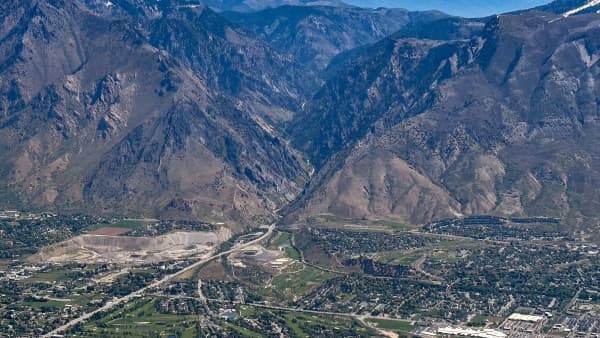
The trade is that springs are finite, they are tied to specific water rights, and they are vulnerable to what happens on the land above them. Much of the watershed feeding this valley's springs sits in the canyons — which is one of the quieter reasons that development proposals in Provo Canyon attract the scrutiny they do. Water quality objections in those fights are not decoration.
Deep wells do the rest, drawing from the aquifer beneath the valley floor, and there is active interest in aquifer storage and recovery — putting surface water underground in wet years and drawing it back in dry ones, using the aquifer as a reservoir that does not evaporate.
The 1930s emergency that built the system
Almost everything about how water works here traces to one crisis.
Through the early 1930s the region ran dangerously short. The scale of it is easier to grasp as a number: storage in Utah Lake fell from around 850,000 acre-feet in 1931 to roughly 20,000 by 1935. Salt Lake City was in serious trouble. Provo and five other Utah County communities needed supply they did not have.
What followed was the Provo River Project — a federal reclamation undertaking initiated under Depression-era recovery legislation and approved in 1935. Construction began in 1938. The first water arrived in 1941.
Its key structure is Deer Creek Dam, about sixteen miles northeast of Provo on the Provo River, an earthfill dam a little over 200 feet high impounding roughly 152,000 acre-feet. Around it sit the supporting works: the Salt Lake Aqueduct running north, the Weber–Provo Diversion Canal bringing surplus water south from the Weber River, the Murdock Diversion Dam downstream, and the Provo Reservoir Canal.
The project supplies irrigation across several counties and domestic water for a string of cities from Provo north to Lehi and on to Salt Lake City. Our Deer Creek and Jordanelle guide covers the recreation side of the same infrastructure.
The tunnel under the divide
This is the detail that reliably surprises people who have lived here for years.
The Duchesne Tunnel runs roughly six miles beneath the Uinta divide, carrying water from the headwaters of the Duchesne River into the Provo River drainage. The Duchesne flows east, ultimately toward the Colorado River system. The Provo flows west into the Great Basin.
So some of the water underpinning this valley's supply began on the other side of a continental drainage divide and was moved across it through a mountain, because a project approved in 1935 decided the Provo River by itself was not enough.
Transbasin diversion is ordinary in the American West and invisible to almost everyone who benefits from it. It is worth knowing about here because it explains why the Provo River carries more water than its own catchment would produce, and because it is a reminder that this valley's supply is a constructed thing rather than a natural endowment.
Water rights, which are the real currency
In Utah, water is not owned with the land. It is held as a right — a legal entitlement to a quantity from a specified source, ranked by seniority, and transferable separately from property.
Provo City holds direct-flow rights in the Provo River and storage rights in reservoirs across the drainage. Yields vary with the water year: a right that produces its full paper quantity in a good year produces less in a poor one, which is why utilities plan against dry-year yield rather than average yield.
This is also why growth arguments in Utah Valley are frequently water arguments wearing different clothes. A development does not simply need land and pipes; it needs water rights, and in a fully appropriated basin those come from somewhere else rather than from nowhere.
Hardness, and why nobody fixes it
The water arrives hard, and it arrives hard for geological reasons that no utility is going to change.
The Wasatch is carbonate rock — limestone and dolomite — and water moving through it dissolves calcium and magnesium on the way. That is hardness. Every community along this front deals with the same thing.
Utilities treat for safety, not for hardness, because hardness is classified as an aesthetic and nuisance characteristic rather than a health-based one. There is no drinking water standard for it in the way there is for lead.
What that means for your water heater, your glassware and your laundry, and what a softener actually does about it, is covered properly in our hard water in Provo guide.
Secondary water: the second pipe
Many Utah Valley properties are connected to two water systems, and a lot of residents do not realize it.
Secondary water, also called pressurized irrigation, is untreated water delivered through a separate network for outdoor use only. It is not drinking water and should never be treated as such. Where it exists it typically runs seasonally, and it is billed differently from culinary water.
Whether you have it depends on the street, not the city. If you are moving here, ask — it changes both your bill and your landscaping options. Our utilities guide covers how the accounts work.
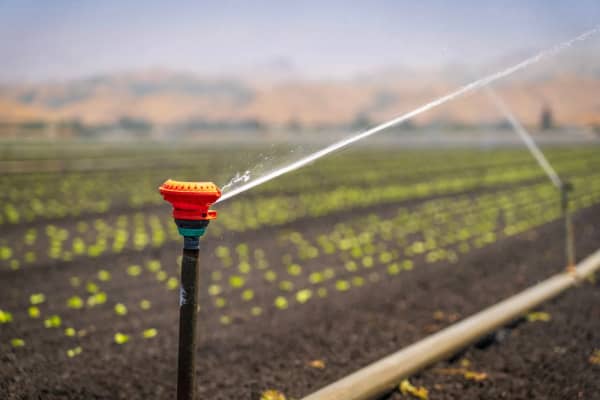
The reason it matters at a regional scale is that outdoor use dominates residential water consumption in this climate. In summer, most of what a household uses goes onto a lawn.
Why Utah uses so much water per person
This comes up constantly and has three real answers rather than one moral one.
Landscaping inherited from wetter places. The turf-grass front lawn is not native to a desert and does not want to be here. Our waterwise landscaping guide covers the alternatives, which have improved enormously.
A weak price signal. Water here has historically been inexpensive at the tap, partly because a share of system cost sits on property tax rather than on usage. When the marginal gallon is nearly free, consumption reflects that.
Unmetered secondary systems. For decades, outdoor water in many areas was delivered without a meter, which meant the largest single use in a household was literally unmeasurable by the person using it. Metering programs have been changing that, and where they have, use has fallen.
None of those are about individual virtue. They are about system design, and system design is what changes them.
The river itself, and what it does in the city
The Provo River is the thread the whole system hangs from, and it is worth understanding as a physical thing rather than as a line on a water-rights schedule.
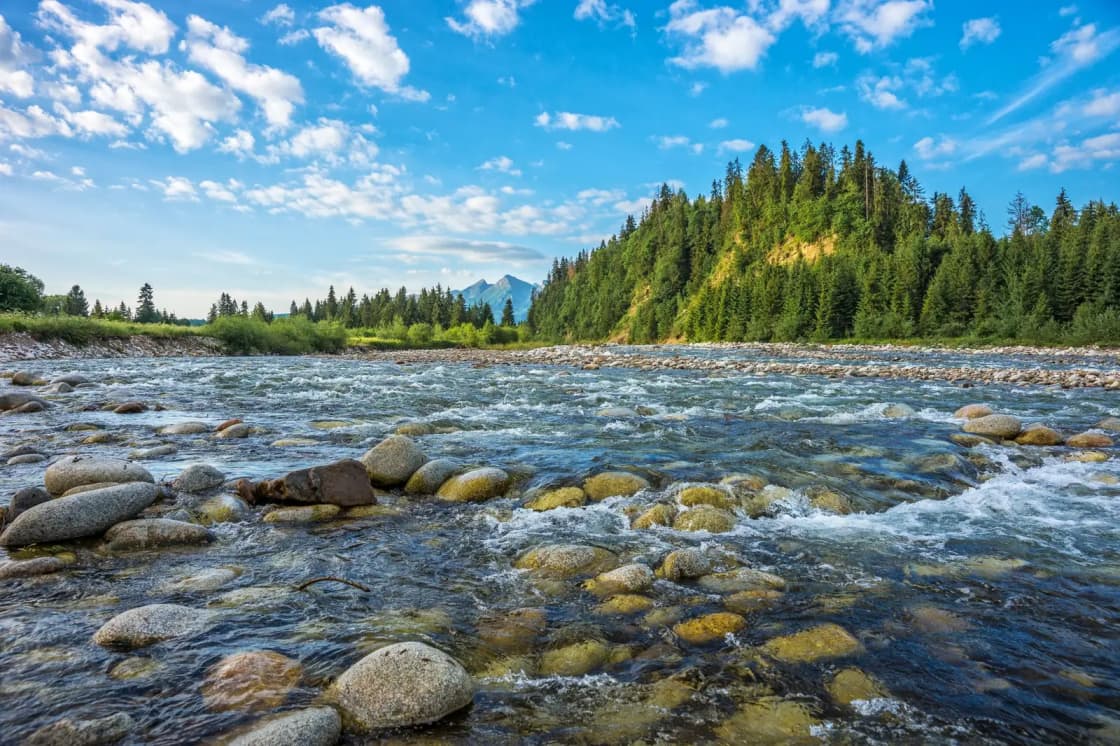
It rises in the Uintas, is impounded twice on its way down — at Jordanelle and then at Deer Creek — and enters the valley through Provo Canyon before crossing the city to Utah Lake. The stretch below Deer Creek is Blue Ribbon fishing water and one of the most heavily used recreational rivers in the state.
Two consequences follow for anyone living here.
The river is managed, not natural. Flow through the canyon and the city is set by reservoir releases. That is why the water can be pushy on a mild day and low on a hot one, and it is why our tubing and rafting guide tells people to check flows rather than the forecast.
The lower river has been substantially reconstructed. The delta restoration at the Utah Lake end is one of the largest river projects in the state, undertaken partly for an endangered fish native to this system. A river that supplies a city, waters farms, carries tubers and hosts a recovery project is doing four jobs at once, and they are not always compatible.
Drought, and how the system absorbs it
Utah runs on snowpack, and snowpack is variable in a way that reservoir capacity is designed to smooth.
The mechanics are worth understanding because they explain why local drought messaging can feel disconnected from what you see out the window. A bad snow year does not become a supply problem immediately. Reservoir storage carries the system through, and the pain arrives in the second or third consecutive dry year when the carryover is gone.
That is also why a single wet winter does not end a drought. It refills storage; it does not restore an aquifer drawn down over years, and groundwater recovery runs on a much slower clock than surface storage does.
For a city leaning heavily on springs and wells, that slower clock is the one that matters. It is the reason aquifer storage and recovery — banking wet-year water underground — has moved from an interesting idea to an active line of work.
Conservation that actually moves the number
If you want to use less water here, the ranking is not intuitive.
Outdoor use is where the water is. Everything indoors combined is a minority of summer household consumption. A shorter shower is a good habit and a rounding error.
Watering schedule beats watering equipment. Deep and infrequent beats brief and daily, and watering in the heat of the afternoon loses a substantial share to evaporation before it reaches a root.
Turf area is the single biggest lever. Reducing the amount of grass, rather than watering the same grass more cleverly, is what produces step changes. Our waterwise landscaping guide covers what grows well here instead.
Fix the leaks you cannot see. A running toilet or a broken sprinkler head on a secondary line can waste more than every conservation habit in the house saves.
Where the water goes afterwards
The other half of the cycle gets far less attention and is arguably more consequential.
Used water goes to the city's reclamation facility, is treated, and moves toward Utah Lake — which drains north through the Jordan River to the Great Salt Lake. Provo is upstream of a lake with a long-running nutrient problem and a shrinking terminal lake beyond it.
That is why the standards applied at a wastewater plant are a civic argument here rather than a purely engineering one. What leaves the plant is an input to the lake, and the lake's condition is a live public issue. Our Utah Lake history covers how that body of water came to be in the state it is in.
Who actually runs all this
Water in Utah Valley is governed by more entities than most residents could name, and knowing the shape of it helps when you are trying to find out who to ask.
Provo City operates the culinary system — sources, treatment, distribution, meters and billing. This is the body responsible for what comes out of your tap.
The Central Utah Water Conservancy District owns and operates regional treatment infrastructure and manages a large share of the wholesale supply picture across several counties.
The Provo River Water Users Association operates and maintains the Provo River Project works on behalf of the federal Bureau of Reclamation, which built them.
The Bureau of Reclamation remains the owner of the original project structures, including Deer Creek Dam.
Private canal and irrigation companies hold their own rights and operate their own delivery systems, which is why an irrigation ditch running past your property may have nothing at all to do with the city.
The practical upshot: a question about your bill goes to the city, a question about reservoir levels goes to the district or Reclamation, and a question about the ditch behind your fence goes to whichever company owns it — and finding out which one that is can take a phone call or two.
What to actually do with this
Read your consumer confidence report. Every public water system publishes one annually with real measured numbers for your system. It takes ten minutes and it beats every general article on the subject, this one included.
Find out whether you have secondary water, and if you do, learn its season and its rules.
Assume the water is hard and plan appliances accordingly.
If you are on a private well, none of the above applies and a laboratory test is the only way to know what you have.
And know where it comes from. In a valley where growth arguments, canyon development fights and lake restoration debates all turn out to be water arguments underneath, understanding the system is not trivia. It is the thing most of the local news is actually about.
Related Guides
- Doing Laundry in Provo When Your Building Has Four Machines for Sixty People
- Provo's Noise Ordinance: What 55 Decibels Actually Sounds Like
- Provo's Elevation: How High It Is and What That Actually Changes
- Provo for Retirees: The Other Demographic in America's Youngest College Town
- The Fault Under Utah Valley: What the Forecast Actually Says, and What It Leaves Out
- What Provo Can Actually Cite You For: Weeds, Junk Vehicles and the Nuisance Code
- How to Actually Follow Provo City Council (and Be Heard at One)
- Who Decides What in Utah Valley — the water and utility boards that meet before a rate changes
- Getting Around Utah Valley in a Wheelchair: What Actually Works
- Secondary Water and Water Shares in Utah Valley
- Spring Runoff and Flood Risk in Utah Valley
- Utility Rates in Utah Valley
- The Strawberry Valley Project
Frequently Asked Questions
Where does Provo's drinking water come from?
Does Provo tap water come from Deer Creek Reservoir?
Is Provo tap water safe to drink?
Why is Provo water so hard?
What is secondary water and do I have it?
Why does Provo use so much water per person?
Where does Provo's water go after I use it?
What is the Duchesne Tunnel?