Utah Valley claims the Osmonds, and Utah Valley is only about half entitled to.
The Osmonds are from Ogden. George and Olive met there, raised the family there, and every reliable account of the group's origin names Weber County rather than Utah County. If you grew up here being told they were a Provo family, that is a local absorption of a story that started ninety miles north.
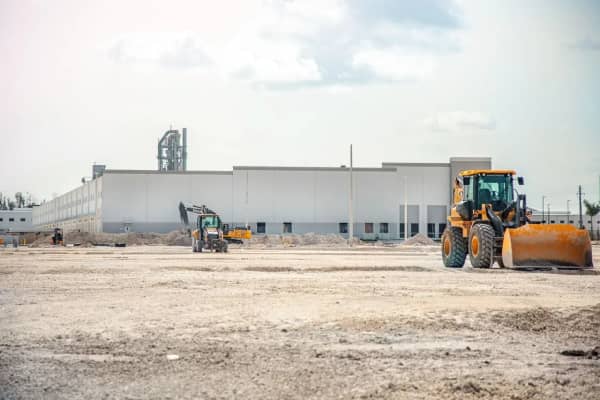
What is true — and considerably more interesting than a birthplace — is that the Osmonds deliberately moved a Hollywood production operation into Orem in the late 1970s, built a studio complex to house it, put their houses on a street that took the family name, and then lost most of it. The building they built is still standing. It is now a drug and alcohol rehabilitation center.
The parents
George Virl Osmond Sr. was born in Etna, Wyoming, in October 1917, the youngest of three sons. His father died 42 days after he was born. Olive May Davis was born in southern Idaho in May 1925 — the sources give her birthplace as Samaria in one account and Malad City in another, two small communities close enough together that the discrepancy is likely a matter of which name the record-keeper used.
They met at Defense Depot Ogden, where George was stationed and Olive worked as a secretary, and married in 1944.
They had nine children: George Virl Jr., Tom, Alan, Wayne, Merrill, Jay, Donny, Marie and Jimmy.
To the family's audience they became Father Osmond and Mother Osmond, which tells you most of what you need to know about how the act was presented.
From a barbershop quartet to a number one record
The performing act began with the older brothers as a barbershop quartet. A family trip to Disneyland produced a meeting with the park's entertainment director and an appearance on a televised Disneyland program — an origin story that sounds apocryphal and is not.
The commercial breakthrough came in early 1971, when "One Bad Apple" reached number one on the Billboard Hot 100. Donny's first solo hit followed that summer. The group had been working since 1962, and would continue in various configurations for decades.
What followed was the wave the family's own materials call Osmondmania, and with it the money that makes the rest of this story possible.
The deal that brought a network show to Orem
This is the pivot, and it is the part with genuine local significance.
When the Donny & Marie variety show was negotiated with ABC, George Osmond secured a term that the show would be produced in Utah — specifically, in a studio the family would build in Orem — rather than in Los Angeles.
That is an extraordinary thing to have extracted from a network in the 1970s. Network variety television was made in Los Angeles. It was made in Los Angeles because that is where the crews, the stages, the guest bookings and the unions were.
The family did not just come home. They brought the production apparatus with them, and with it a working television industry that Utah County had not previously had.
Production moved from Los Angeles to the new Orem facility in the fall of 1977. The complex was dedicated on November 1, 1977, with the president of the Church of Jesus Christ of Latter-day Saints in attendance — a measure of how the project was understood locally at the time.
The building, whose dimensions nobody agrees on
The studio stood at 777 North Palisades Drive in Orem, directly across from the Cascade Golf Course.
Here the record gets genuinely messy, in a way that is characteristic of Utah Valley history generally and worth laying out rather than smoothing over.
The size is published three ways:
- 91,000 square feet in one reference account
- 100,000 square feet in contemporary newspaper coverage of the 1989 sale
- 104,000 square feet in a biographical account of the move
The most detailed breakdown available describes roughly 17,800 square feet of two-story office space plus two major production studios totaling about 21,300 square feet. Those figures do not reconcile neatly with any of the three headline numbers, which suggests the larger figures include support space — carpentry, paint and prop shops, rehearsal studios, post-production areas, all of which the complex had.
The opening year is published two ways. Most accounts, including the city's own historical posts and the family's timeline, give 1977. The 1989 newspaper report of the sale says the facility was built in 1979. The 1977 dedication date is specific enough that we would weight it heavily, but we are not going to pretend the discrepancy does not exist.
Even the name is unstable. The complex appears as Osmond Studios, the Osmond Entertainment Center, the Osmond Media Center, and the George V. Osmond Studios, depending on the source and the year.
What is not in dispute is what it did. It housed Osmond Productions, it produced much of Donny & Marie and The Osmond Family Show, and at its peak it drew tours of nearly five thousand people a week — a tourist attraction in its own right, in a county that did not have many.
There is a detail from 1981 that captures the scale of the operation better than any square footage. The studios hosted an Osmond Family Christmas Festival: ice skating, hot chocolate, visits with Santa. The facility had an in-studio ice rink, and for the festival they moved it out to the parking lot.
Osmond Lane, and what the family owned
The family built houses near the studio, on a street that became Osmond Lane.
At the peak, estimates put the family's worth somewhere between $70 million and $100 million in the late 1970s. The holdings were not modest:
- The Orem studio complex
- The houses on Osmond Lane
- A condominium on Santa Monica Boulevard in Los Angeles
- A ranch in Huntsville, outside Ogden
- An apartment complex across from BYU in Provo
- A family real estate company
- Endorsement deals and record royalties
That is a diversified portfolio, and diversification meant partners. More than one of those business associates would later be imprisoned for fraud or embezzlement.
The unwinding
The decline is documented most directly by the family itself. The 2001 television film Inside the Osmonds, produced by Jimmy Osmond, laid the fall to fiscal mismanagement and to the ambition of building a "new Hollywood" in Utah — the studio itself, in other words, as a contributing cause rather than only a monument.
The formal end of the studio era came in 1989, when the family completed the sale of the facility to Ventura Entertainment Group for $6.6 million. The building was renamed the Ventura Media Center, and Jimmy Osmond was named president of the buyer and a member of its board — an arrangement that reads less like an exit than a negotiated transition.
Then it changed hands again. Jimmy Osmond bought the studio buildings back and refurbished them. For a period they housed the main offices of Osmond Real Estate, until that company moved elsewhere in 1993.
What the building is now
The complex at 777 North Palisades Drive is occupied by Cirque Lodge, a private residential alcohol and drug addiction treatment center.
Sit with that sequence for a moment, because it is one of the more striking building histories in Utah County. A network television studio, built as a condition of a variety-show contract, becomes a real estate headquarters, and then becomes a rehabilitation facility. Three completely different uses, one structure, inside about thirty years.
Where the family ended up
Both parents died in Provo. Olive suffered a stroke in 2001 and died in May 2004, at 79. George died in November 2007, at 90. Both are buried at East Lawn Memorial Hills Cemetery in Provo. At George's death he was survived by his nine children, 55 grandchildren and 48 great-grandchildren.
Several of the children stayed in the valley or nearby. Alan has lived in Orem, after a period in Branson, Missouri. Donny raised five sons in Provo. Jimmy settled in Utah. The working connection outlasted the studio — Merrill and Jay were recording at a Provo studio in the late 2010s, decades after the Orem complex left the family.
The next generation includes a Utah state legislator and a television host, both grandchildren.
Why this story matters locally
It is easy to file the Osmonds as celebrity trivia. The more useful reading is as the first serious attempt to build a media industry in Utah Valley, funded privately, by a family, on the strength of a network contract term.
It did not survive. But the pattern it established — Utah money trying to build a Utah version of an industry that lives somewhere else — is one this valley has repeated several times since, in film, in technology and in direct sales. The Osmonds got there first, and they left a 90-or-100-or-104-thousand-square-foot building to prove it.
For more of the valley's connections to national figures, see famous people from Provo and Utah Valley. For the outdoor venue that has carried a comparable share of the valley's live-performance history, our SCERA Shell guide covers the Orem amphitheater.
What the studio actually meant for the valley economy
It is easy to read this as celebrity history. The more substantive question is what a network television production facility did to a county that had never had one.
It created a skilled workforce that had nowhere else to go. Camera operators, lighting technicians, set carpenters, audio engineers, editors. The complex had carpentry, paint and prop shops, rehearsal studios, a recording studio and post-production areas — the full apparatus. Those are trades, and they were being practiced in Utah County at a professional network standard.
It created a tourism draw. Nearly five thousand people a week touring a working television studio is not a trivial number for the late 1970s in a county of that size.
And it did not last long enough to become self-sustaining. The studio changed hands roughly a decade after it opened. The crews it trained largely dispersed or moved into other work, and Utah's film and television industry would be rebuilt later on a different basis — state incentives, location shooting, and the Sundance festival's gravitational pull — rather than on the foundation the Osmonds laid.
That is the melancholy version of the story, and it is the honest one. The infrastructure outlasted the industry it was built for. The building found other uses. The expertise did not stay concentrated.
What is left to see
For anyone who wants to connect the story to physical places, several remain.
The building itself stands at 777 North Palisades Drive in Orem, across from the Cascade Golf Course, now operating as a private residential treatment facility. It is a working healthcare business rather than a landmark, so it is a thing to note from the road, not to visit.
Osmond Lane in Orem carries the family name from the period when the houses were built near the studio.
East Lawn Memorial Hills Cemetery in Provo holds both parents, buried side by side.
Rock Canyon Studios in Provo represents the continuing thread — a working recording studio where members of the family were still making records in the late 2010s, decades after the Orem complex left their hands.
The Provo apartment complex across from BYU was among the family's holdings at their peak, a reminder that the portfolio was ordinary local real estate as much as it was entertainment.
Getting the record straight
Because so much of this story circulates in compressed form, it is worth listing the claims that are commonly repeated and are wrong or unresolved.
"The Osmonds are from Provo." No. Ogden. The Utah Valley connection is a later relocation, and it is the more interesting fact anyway.
"They built the studio in Provo." No. Orem, on Palisades Drive.
"The studio was 100,000 square feet." Maybe. It is also published as 91,000 and 104,000, and the granular breakdown of office and stage space does not clearly reconcile with any of them.
"It opened in 1979." Probably not. Most sources, including the family's own timeline and the city, give 1977, with a dedication on November 1 of that year. The 1979 figure appears in later newspaper coverage of the sale.
"Osmond Studios is still there." The building is. The studio is not — it has been a treatment facility for years, after an interval as a real estate headquarters.
"They lost everything." Overstated. The family's fortunes fell substantially from a peak estimated between $70 million and $100 million, business partners went to prison, and the studio was sold. Members of the family continued working, recording and living in the valley for decades afterward.
The pattern here is worth noting for its own sake. Nearly every headline number in this story is published more than one way, and the disagreements are not between careful sources and careless ones — they run through newspapers of record, the family's own materials and municipal history posts alike. That is normal for local history and it is the reason we print the range rather than picking a favorite.
The short version
- The Osmonds are from Ogden, not Provo. The Utah Valley chapter was a deliberate relocation.
- George Osmond negotiated a network show into Orem, requiring ABC to accept production in a studio the family would build.
- Osmond Studios opened in Orem in 1977 at 777 North Palisades Drive, across from Cascade Golf Course.
- Its size is published as 91,000, 100,000 and 104,000 square feet, and its name four different ways.
- Sold in 1989 for $6.6 million, bought back in part by Jimmy Osmond, and now occupied by a residential addiction treatment center.
- George and Olive both died in Provo and are buried at East Lawn Memorial Hills.
What the state built after the studio, and what it would cost today
The Osmond operation in Orem was a private answer to a problem Utah later tried to solve with a statute. A family with network money built a facility because there was nowhere else to make the show. Nothing in state law helped them do it and nothing in state law kept them from unwinding it.
Utah now runs a standing incentive instead. The Motion Picture Incentive Account sits in the General Fund under Utah Code Sec. 63N-8-103, is filled by annual legislative appropriation rather than by a dedicated revenue stream, and is administered by the Governor's Office of Economic Opportunity with the advice of the Board of Tourism Development. Money comes out of it two ways: a cash rebate paid from the account, or a refundable tax credit claimed under Sec. 59-7-614.5 or Sec. 59-10-1108 once the office issues a certificate. A company cannot claim the credit without that certificate in hand.
The scale is worth stating plainly, because it is smaller than the phrase "film incentive" suggests. The office may issue $6,793,700 in tax credit certificates in a fiscal year under this part. Unissued room carries forward into later years. Since July 1, 2024 a separate rural allocation is set session by session — the statute says the amount is determined in the immediately preceding legislative session rather than fixing a number in the code, which means the rural figure is a live appropriations question and not something a guide can quote at you with a straight face.
Two conditions in the section say more about how Utah thinks than the dollar figures do. A motion picture company's incentive request must be reviewed by an independent certified public accountant, who reports on the accuracy of the claimed spend. And the company has to sign a document expressly authorizing the State Tax Commission to hand its tax returns to the office, overriding the confidentiality that Sec. 59-1-403 and Section 6103 of the Internal Revenue Code would otherwise provide. The money is post-performance and the books are open. That is close to the opposite of how the studio deal worked, which was a private company building a private asset and disclosing what it chose to.
One caution if you go looking. A large number of production-industry guides still cite Utah's film incentive as Sec. 63M-1-1801 through -1805. That numbering is dead; the provisions were renumbered into Title 63N by Laws of Utah 2015, Chapter 283. It is the same trap Utah's 2025 recodification of county government law set for anyone reading secondary sources — the citation looks authoritative, and the address no longer exists.
What none of this tells you is whether a permanent facility would pencil out in Utah County again. The incentive rewards spend inside the state, not buildings inside a county, and a soundstage is a fixed cost carried year-round against productions that arrive on their own schedule. The Osmonds solved that problem by having a show that never stopped. Nobody has had that particular advantage here since.
Related Guides
- Provo Zoning, Explained: One Family or Three Singles, and the $25 Letter That Settles It
- iProvo: The City That Built Its Own Internet, Sold It Twice, and Kept the Debt
Frequently Asked Questions
Are the Osmonds from Provo?
Where was Osmond Studios in Orem?
What happened to Osmond Studios?
How big was Osmond Studios?
Why did the Osmonds build a studio in Utah instead of Los Angeles?
Did the Osmonds lose their money?
Are any Osmonds still in Utah Valley?
Where are George and Olive Osmond buried?