
There is a category of hazard that is dangerous precisely because it is familiar.
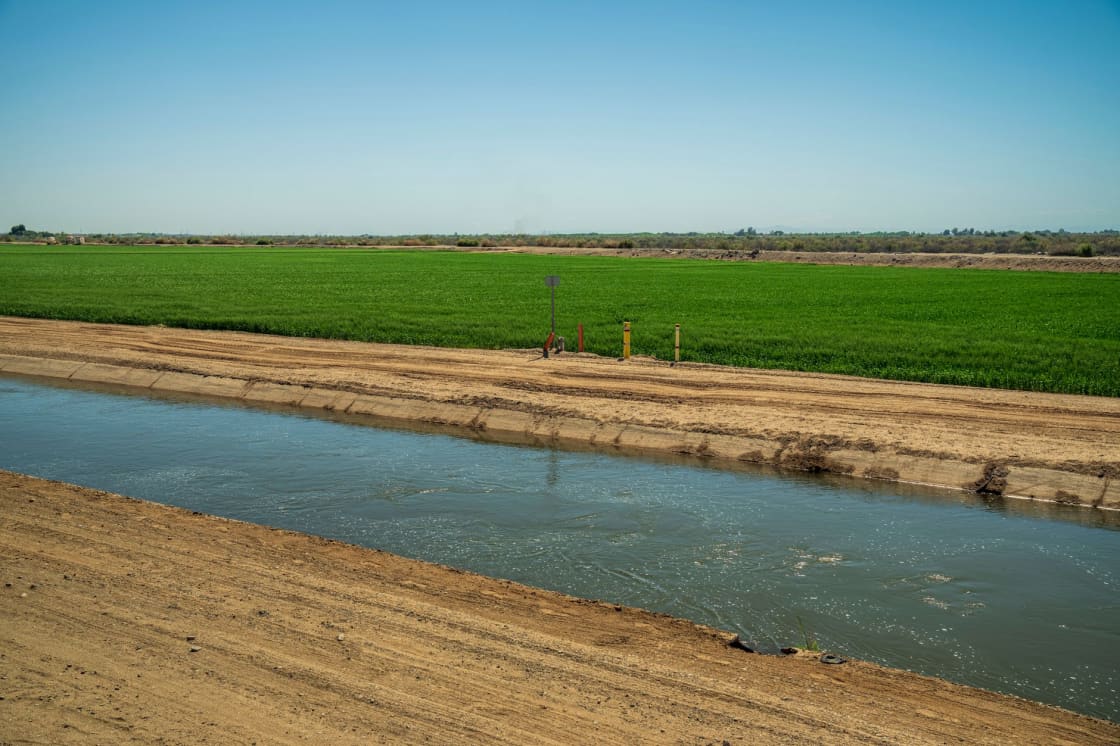
Open irrigation canals run through residential Utah Valley — behind fences, past parks, along the back of subdivisions, across the routes children take to school. They have been there longer than most of the houses. They look, from the bank, like slow water in a ditch.
They are not slow water in a ditch. They are engineered channels built to move large volumes efficiently, and nearly every feature that makes them efficient makes them dangerous to a person who ends up in one.
This guide is written straight. It is not trying to alarm anyone, and it is not going to describe incidents in detail. It exists because open canals are a real and ordinary part of the landscape here, because they are the sort of thing residents stop noticing after a few months, and because the specific reasons they are dangerous are not obvious from looking.
What makes a canal different from a river
People calibrate water risk against rivers, lakes and pools, and a canal breaks that calibration in four separate ways.
The surface lies about the speed. A canal can present a flat, unbroken, almost still-looking surface while the body of water underneath moves fast. There are no rapids, no white water and no visual cue. Irrigation operators warn that current speed varies by location along the same canal, so a stretch that seems manageable tells you nothing about the stretch fifty yards on.
Moving water does not need to be deep. Water only about a foot deep, moving fast enough, will take an adult off their feet. Once you are off your feet in a current, depth stops being the relevant question.
The banks are built to hold water in, not to let people out. Canal sides are steep, frequently near-vertical, and often slippery — concrete-lined in places, smooth earth in others, and slick with algae in the season when the water is running. The asymmetry is the whole problem: falling in is easy and climbing out is not. A person in a canal can be swept a long way looking for a place to get out and not find one.
The water is cold. Much of it comes off mountain snowmelt. Cold water shortens the time anyone has to think, grip or swim, and it does so quickly.
The structures, which are the part nobody sees
This is the section that most distinguishes a canal from any natural water, and it is the reason "just swim to the side" is not advice that works.
A canal is a piece of infrastructure with engineered components along its length:
- Culverts and grates, where the channel passes under a road or into a smaller opening. A grate stops debris. It also stops a person, and the water behind them does not stop pushing.
- Siphons, which pull water down into an enclosed pipe to pass under an obstacle and discharge it further along. Anything drawn into one goes where the pipe goes.
- Spillways and energy-dissipation structures, built to slow water down, often with concrete pillars or baffles.
- Pipelines and sidegates, where water is diverted out of the main channel. These can create a suction effect capable of holding a person underwater.
None of this is visible from the surface. A person in the water cannot see what is ahead of them, cannot assess it, and generally cannot get out of the current before reaching it.
The Murdock Canal Trail guide tells the historical version of this — what happened along one particular canal on the bench over a century, why it was eventually enclosed in a steel pipe, and what the toll had been before that. That is a closed chapter about a canal that no longer runs in the open. The canals this guide is about are the ones that still do.
The rules that matter
Irrigation districts across the West publish canal safety guidance, and the striking thing is how closely the wording converges. When operators in different states independently arrive at the same short list, that list is worth taking seriously.
Stay out of canals. Always, including when they appear empty.
Stay off canal banks and canal roads. They are steep, they are slippery, and the maintenance track beside a canal is working access rather than a path.
Never go in after a pet. This is stated by operator after operator, in near-identical terms, and it is stated that often because it is one of the most common ways an adult drowns. The same applies to a toy, a ball, a hat, a phone. Call 911 and stay on the bank.
Walk bikes and leash pets near canals. A dog that goes in creates the situation above. A bike that slips on a bank puts a person in the water at speed.
Do not drink it and do not swim in it. The water is untreated, moves through agricultural land, and can carry fertilizer and pesticide residue, animal waste and runoff. Submerged debris — glass, wire, metal — is invisible from the surface.
Treat an empty canal as a live one. A canal is operating infrastructure. Water can arrive without local warning, because the person opening a gate several miles upstream is not checking who is standing in the channel.
If you have children, this is the part to read twice
Children are the group most at risk from canals, and for reasons that are specific rather than general.
A canal is interesting to a child — moving water, frogs, floating things, a place adults do not go. On a hot day it looks like relief. It is often on the route to school or the park, on the edge of a subdivision, at the back of a field where children already play. And it is frequently unfenced, because fencing hundreds of miles of canal is not economically or practically achievable, a point irrigation districts make plainly when asked why the fences are not there.
Two things work better than warnings alone.
Be specific rather than general. "Stay away from water" does not survive contact with a hot afternoon. "You do not go past that fence line, ever, and if the ball goes in, you come and get me" is a rule a child can follow. The pet rule in particular should be taught explicitly, because a child's instinct to go after a dog is strong and immediate.
Walk the route. If your child walks or rides to school, walk it once yourself and look for where the route passes water — not just canals but ditches, laterals and headgates. Some of these are small enough to be invisible to an adult on a map and entirely visible to an eight-year-old on foot.
Utah Valley families moving from places without open irrigation infrastructure often have no mental model for this at all. If you have come from a city where all the water is in pipes or in parks, this is a hazard class you have never had to teach.
Who owns it, and how to find out
This is the practical section, and it contains the piece of information most residents do not know exists.
The canal behind your house is probably not the city's. Utah's irrigation network is largely operated by canal companies, irrigation companies and water districts — many of them old, some of them shareholder-owned entities that predate the municipalities around them. That is why questions about a canal frequently bounce when you call city hall.
Utah keeps a public inventory of them. In 2014 the Legislature passed House Bill 370, which directed the Division of Water Rights to create and maintain an inventory of all canals in the state, with a completion date of 1 July 2017. The inventory captures attributes of open flow conveyances with a minimum design capacity of 5 cubic feet per second — which is the threshold that separates a canal in the state's sense from a small ditch.
Alongside the inventory, the Division publishes canal owner and contact information. That is the resource to use if you need to:
- report a hazard, a broken structure or a failed fence
- ask whether a particular stretch is fenced or scheduled to be
- find out who is responsible for a bank behind a school or a park
- ask about operating season and when water will be in the channel
There is also a state safety-plan framework. The same 2014 bill made funding available to help canal owners and irrigation companies develop a safety management plan of the kind described at Utah Code Section 73-10-33, with a certification of compliance issued once a plan is completed. What that means for any specific canal varies, which is one more reason to know which company owns yours.
If you are buying a house with a canal at the back of the lot, add this to the list of things to establish before closing, alongside the parcel-level questions this site raises everywhere: who owns it, whether the corridor carries an easement across your land, who maintains the fence, and when the water runs.
Canals and secondary water are the same system
A point of connection worth making, because many Utah Valley residents interact with this water without realizing it is the same water.
The untreated water in these canals is, in large part, the water that arrives at houses as secondary water — pressurized irrigation delivered through a separate pipe network for outdoor use only. Our guide to secondary water and water shares covers the shares, the billing and the 2030 metering law.
The reason secondary water is stamped outdoor-only on every notice a city sends is the same reason canal water should not be swallowed: it is untreated agricultural water, and it was never intended to meet a drinking standard. If you have a secondary connection, the water in your sprinkler line and the water in the canal down the road are the same substance at different points in the same system.
That also explains the seasonal pattern. Canals are not permanent lakes. They fill for the irrigation season and are drawn down outside it, which is why a channel that is dry in February can be full and fast in May.
Where canal corridors are public
None of this means canal corridors are off-limits everywhere. Some of the best public trail in the county sits on one.
The distinction is straightforward: a public trail is something an agency has built, surfaced, signed and taken responsibility for. The Murdock Canal Trail is the clearest local example — seventeen-odd miles of flat, paved, family-friendly path along the bench, which exists as public space precisely because the canal underneath it was enclosed.
An unsigned dirt maintenance track beside running water is not that. It has not been built for the public, it is frequently on private ground, and the thing running alongside it is open.
If you want the canal-corridor experience — flat, straight, long, good for bikes and strollers — use the trails that were built for it. Our guide to things to do in Utah Valley's outdoors covers what that network connects to.
The short version
- Canals look slower and shallower than they are. The surface tells you nothing.
- A foot of fast water will take an adult off their feet.
- Banks are built to hold water in, not to let people out.
- Culverts, grates, siphons and sidegates are invisible and cannot be swum away from.
- Never go in after a pet, a child's toy, or anything else. Call 911.
- Treat an empty canal as a canal that is about to have water in it.
- The water is untreated. It is not for drinking or swimming.
- The owner is usually a canal or irrigation company, and the Utah Division of Water Rights publishes the inventory and the contact information.
Open canals are part of what makes this a valley where things grow. They are also the reason this guide exists, and the reason the rules above are short, blunt and worth teaching to a child directly.
The season, and why risk is not constant
Canal risk in this valley is strongly seasonal, and understanding the pattern is more useful than a general warning.
Canals fill for the irrigation season. Broadly, pressurized irrigation and the canal system that feeds it run from spring into autumn, with providers setting and announcing their own dates. Outside that window many channels carry little or no water.
That produces two distinct hazards at opposite ends of the year.
In late spring and early summer the water is at its most dangerous. Flows are high, the water is coming off snowmelt and is cold, and — critically — this coincides with the first warm weather, school ending, and children being outdoors and unsupervised for longer stretches. High flow and high exposure arrive in the same few weeks.
In the shoulder seasons the danger is that the channel looks safe. A dry or near-dry canal in March invites people into it, and a canal is operating infrastructure: water can arrive because somebody opened a gate several miles upstream, and that person is not checking who is standing in the channel. This is why operators say to stay out of canals even when they appear empty, and they mean it literally.
If someone goes in
The instinct to enter the water is strong and it is usually wrong. What actually helps is unglamorous.
Call 911 first, not after trying something. Emergency services in canal country have dealt with this before and some agencies pre-plan access points and downstream interception. Minutes spent on a failed personal rescue are minutes they do not get.
Stay on the bank and keep sight of the person. Moving with them along the bank while staying out of the water is more useful than almost anything else, because the single hardest problem for responders is knowing where someone is now rather than where they went in.
Reach or throw rather than enter. Anything that extends your reach or floats is better than your body. A person in cold, fast water cannot help themselves much, and a second person in the water is a second casualty rather than a rescuer.
Do not follow into a culvert, siphon or grate under any circumstances.
And tell responders where the person entered, not just where you are. Water moves; a description of the entry point and the elapsed time is what lets them work out where to go.
Why there is not more fencing
Residents who live beside an open canal reasonably ask why it is not fenced, and the answer is worth understanding because it explains why the responsibility lands where it does.
Irrigation operators across the West give consistent reasons. Scale is the first: a district may run hundreds of miles of canals and drains, and fencing and then maintaining fence along all of it is not achievable on the revenue an irrigation system generates. Maintenance is the second: fences built by volunteer or donation-funded efforts around specific schools and parks have a history of falling into disrepair once the initial effort passes.
There is also a liability argument that surprises people: some operators note that building a fence can be read as an assertion that the operator has taken on a duty to keep people away, which changes their legal exposure in ways that selective fencing makes worse rather than better.
The practical upshot for a resident is that fencing decisions sit with the canal owner, are made stretch by stretch, and are usually driven by proximity to schools and parks. If you think a specific stretch needs attention, the canal company is the body to ask — which is why knowing who owns it, and using the state's published owner information to find them, is the most actionable thing in this guide.
Related Guides
- Secondary Water and Water Shares — the same water, delivered to your yard
- The Murdock Canal Trail — what happened to one canal, and the trail on top of it
- Sprinkler Repair and Winterization — the seasonal irrigation calendar
- The Strawberry Valley Project — the water that made the valley farmable
- Utah Lake Guide — where much of this water ends up
Frequently Asked Questions
Why are irrigation canals more dangerous than they look?
What structures in a canal are dangerous?
My dog went into the canal. What should I do?
Are canals safe when the water is off?
Who owns the canal behind my house?
Does Utah require canal owners to have a safety plan?
Can I walk or ride along a canal bank?
Is canal water safe to drink or swim in?
Sources
The facts in this guide were checked against these sources. Hours, fees and rules change, so confirm anything time-sensitive with the source before you go. How we make Provo.com.
- Canal Safety Program and Canal Inventory, Utah Division of Water Rights. Checked October 12, 2026.
- H.B. 370 Canal Safety Amendments (2014), Utah State Legislature. Checked October 12, 2026.