
Every spring, in a valley where a great many people garden, the same conversation happens twice.
The first time, someone says the last frost in Provo is around the first of May, and plants accordingly. The second time — usually around the eighteenth of May, usually with a tarp involved — someone else says the last frost in Provo is closer to the twenty-first, and that everyone who planted three weeks ago has just learned something.
They are both quoting Utah State University Extension. They are both correct. And the reason is the single most useful thing a Utah Valley gardener can know.
Two Provos, three weeks apart
USU Extension publishes suggested vegetable planting dates for the Wasatch Front, a peer-reviewed fact sheet built on thirty-year averages. Rather than giving one date per city, it gives dates per station. Two of them are in Provo:
| Station | 30-year average last frost |
|---|---|
| Provo – BYU | May 1 |
| Provo – Airport | May 21 |
For context, the same table places Salt Lake City–Airport at April 26, Ogden at May 3, Farmington at May 5, Tooele at May 7, and Midvale — inconveniently for anyone who assumes valley floors are interchangeable — at May 13.
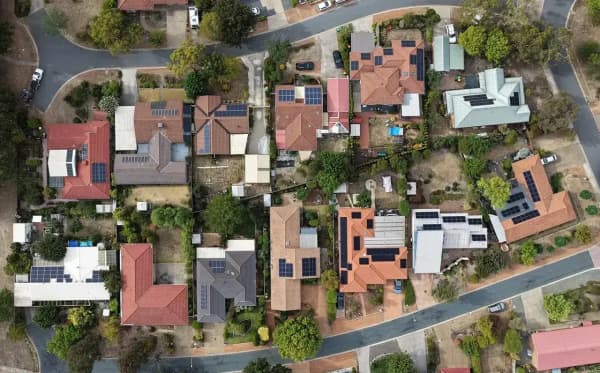
Three weeks separate one side of Provo from the other. That is not measurement noise. It is topography doing exactly what topography does: the bench land rising toward the mountains sheds cold air downhill, and the low, flat ground out toward Utah Lake collects it. Cold air is dense. It pools. On a still, clear night in early May, the temperature at the airport can sit several degrees below the temperature at a house four miles east and two hundred feet higher.
USU states the principle plainly: the occurrence of frost can vary over a short distance due to changes in elevation and topography.
So the practical instruction is not "learn Provo's frost date." It is learn which Provo you are in — and then adjust, because even the station nearest you is an average across thirty years, and half of all years will run later than an average.
The four groups the whole calendar hangs on
USU sorts vegetables into four groups by cold tolerance, with a fifth for fall planting. Once you know the groups, you do not need a per-crop calendar — you need one date and four offsets from it.
Group A — Hardy. Plant as soon as the soil dries out in spring. Suggested Wasatch Front window: roughly March 1 to April 15. Artichoke, asparagus, broccoli, Brussels sprouts, cabbage, kohlrabi, onions, peas, radish, rhubarb, spinach, turnip.
Group B — Semi-Hardy. A week or two after Group A, or about two weeks before the average last frost. Window: roughly March 20 to May 1. Beet, carrot, cauliflower, endive, lettuce, parsley, parsnip, potato, salsify, Swiss chard.
Group C — Tender. Plant on the average last frost date. USU offers a lovely piece of phenology here: about when the first apples reach full bloom. Window: May 5 to June 1. Celery, cucumber, dry bean, snap bean, spinach, summer squash, sweet corn.
Group D — Very Tender. Plant when the soil is warm, about two weeks after Group C. Window: May 20 to June 10. Cantaloupe, eggplant, lima bean, sweet and hot peppers, pumpkin, tomato, watermelon, winter squash.
Two things fall out of this structure immediately.
The first is that "soil dries out" and "soil is warm" are not calendar events. Group A's trigger is workability — soil that crumbles rather than smearing when squeezed. Group D's trigger is soil temperature. Both are conditions you can check, and both beat a date in a table during an unusual year.
The second is that Group D is where impatience costs you. A tomato set out into 50-degree soil in early May does not grow faster than one set out into 60-degree soil three weeks later. It sits, it yellows slightly, it puts on almost nothing, and it is frequently overtaken by the later plant by the end of June. The heat-loving crops are waiting for the ground, not the air.
Starting indoors: the working backwards
Extension guidance describes tomatoes as generally started indoors in early April and planted outside mid to late May. Artichokes are the extreme case — seeded indoors in early January and grown two to three months to be large enough to set out three to four weeks before the frost-free date.
The useful generalization: for Group C and D crops in Utah Valley, count back six to eight weeks from your intended set-out date to find your indoor sowing date. Working from a Provo–BYU last frost of May 1, a tomato goes under lights in early to mid March. Working from Provo–Airport's May 21, the same tomato waits until early April.
And for some crops the whole exercise is unnecessary. As USU notes, summer squash seed sown directly into warm soil germinates in about three days. Starting squash indoors is a way of making a plant that resents transplanting resent you specifically.
The fall planting almost nobody does
This is the most underused section of the Extension guidance, and it is a genuine second season.
| Crop | Fall-harvest planting window |
|---|---|
| Cabbage | May 1 – July 15 |
| Lettuce | June 1 – August 1 |
| Rutabaga | June 15 – July 1 |
| Beets | July 1 – August 1 |
| Turnip | July 1 – August 1 |
| Kale | July 1 – August 15 |
| Spinach | July 1 – August 15 |
| Onion | August 1 – August 10 |
Sowing spinach on the fifth of August, when it is ninety-six degrees and the tomatoes are finally producing, feels like an error. It is not. Those crops germinate in the warm soil, size up through the shortening days of September, and hit their best flavor after the first light frosts of October — brassicas and spinach both sweeten measurably when chilled.
The main obstacle is not agronomy. It is that August is when the spring garden is at maximum output and nobody wants to think about starting over. Anyone who overcomes that gets a second harvest running well into autumn.
The hardiness zone question, and why the answer is contested
Ask what USDA hardiness zone Provo is in and you will get three answers.
Some references place it in zone 6b. Others place it in 7a. Regional summaries describe the Ogden–Salt Lake–Orem–Provo corridor as generally 6b to 7b.
This is not carelessness. Three things are happening at once.
The map moved. The USDA revised its Plant Hardiness Zone Map in 2023, using 1991–2020 climate normals. A great deal of the country shifted half a zone warmer, and older sources describing the previous map are not wrong so much as superseded.
Zones are drawn at a resolution the valley defeats. A hardiness zone reflects average extreme winter minimum temperature. Utah Valley has a lake, a bench, a canyon-mouth cold-air drainage and roughly a thousand feet of elevation range within its populated area. A single zone label per city cannot carry that.
Hardiness zones do not describe the growing season anyway. This is the part that trips up transplants from milder places. A zone tells you what a perennial can survive in winter. It says nothing about last frost, first frost, summer heat or season length — which are the four numbers that determine whether your melons ripen.
The practical rule: for perennials, shrubs and fruit trees near the edge of hardiness, buy to the colder end of the published range. A plant rated to 6b will survive a 7a winter. The reverse fails once, in a hard year, permanently.
For annual vegetables, ignore the zone entirely and use the frost dates and the planting groups above. That is what they are for.
Soil: the local complaint
New gardeners here consistently run into two things at once, and it is worth naming them so the response is targeted rather than panicked.
Alkalinity. Soils across much of the region trend alkaline. The consequence that shows up in a backyard bed is not obvious from the pH number itself: at high pH, certain nutrients become chemically less available to plants even when the soil contains plenty. Iron is the classic case here, and the classic symptom is iron chlorosis — new leaves yellowing while the veins stay green. It shows up in raspberries, maples, roses and plenty of vegetables, and the instinct to add more fertilizer generally does not help, because availability rather than quantity is the constraint.
Texture. Heavy, clay-leaning soils are common on the valley floor, a legacy of the lakebed the valley sits in. They hold water and nutrients well and drain slowly, which is a mixed blessing in a place that irrigates.
The correct first move for both is the same and it is unglamorous: get a soil test. USU Extension runs soil testing, and a test costs a fraction of a season's worth of guessed-at amendments. Organic matter — compost, worked in consistently over several seasons rather than dumped once — improves clay structure and buffers a great deal else. Raised beds are the shortcut where the native soil is difficult, and they warm earlier in spring as a bonus, which for Group D crops in a cold pocket is worth real days.
Water, which is the other half of the problem
Utah Valley gardens on a limited water supply, and much of the valley irrigates from secondary systems that run seasonally rather than year-round. Two consequences for a vegetable garden.
The season has ends. Secondary water is turned on in spring and off in autumn on a schedule set by the provider, not by your garden. Fall crops planted in August will likely need a plan for the weeks after the secondary system shuts down, which usually means culinary water and a hose.
Deep and infrequent beats shallow and daily. Frequent light watering trains roots to stay near the surface, where they are most vulnerable to the heat that arrives in July. Fewer, longer soakings push roots down. Mulch — several inches of it — does more for water retention in a Utah Valley summer than almost any other single intervention, and it suppresses the weeds that a code compliance officer would otherwise eventually notice.
What this valley grows unreasonably well
Every climate has crops it flatters, and it is worth knowing which ones here rather than fighting the place.
Tomatoes and peppers, once they are in warm soil. The intense high-elevation sun and the wide day-to-night temperature swing are good for fruit development, and the dry air suppresses the fungal diseases that plague tomatoes in humid regions. Blight is not the constant threat here that it is in the eastern states.
Stone fruit. This is the valley's real horticultural signature and the reason orchards ringed the benches long before subdivisions did. Peaches, apricots, cherries and plums all do well when the site avoids a frost pocket — and the frost pocket caveat is the whole game, because a bloom lost to a late April freeze is the year's crop. Bench sites, with their cold-air drainage, are historically where the orchards went, and for exactly this reason.
Alliums and brassicas. Onions, garlic, cabbage, kale and their relatives thrive in the cool ends of the season, and the fall-harvest window above is largely built around them.
Winter squash and melons work, but they are the crops where season length binds. Choose shorter-maturity varieties, start them under cover, and count the days to maturity on the packet against your own frost dates rather than against an average.
What struggles: anything wanting consistent humidity and acid soil. Blueberries are the standard heartbreak here — they want a soil pH far below what most Utah Valley ground offers, and growing them well means containers and a deliberate growing medium rather than an amended bed. That is a project, not a plant.
What to do in your first season
If you are starting from nothing this year, the shortest useful path:
- Find your station. Bench-side and east: use the May 1 figure. Low, flat, west toward the lake: use May 21. Somewhere between: split it and lean late.
- Start with Group A and B. They go in early, they tolerate mistakes, and they produce before the heat arrives. Peas, spinach, radish, lettuce, carrots.
- Buy transplants for Group C and D in year one. Growing tomatoes from seed under lights is a rewarding project and an unnecessary variable in a first season.
- Keep a notebook. Date of first planting, date of last frost as it happened in your yard, what failed. USU's own advice is to keep records for your own location — and after three or four seasons those notes are worth more than any published average, including the two at the top of this page.
The valley is a good place to grow things. It has intense sun, warm days, cool nights that do wonderful things to fruit sugars, and a season long enough for nearly everything. It also has a lake that keeps one side of Provo three weeks behind the other, and nobody tells you that at the garden center. Learn your own corner of it, write down what happened, and the second season is a completely different experience from the first.
The nursery calendar is not the planting calendar, and that gap is where most losses happen
The two-Provos section above explains why last frost is a contested date here. There is a practical consequence that follows from it and catches people every single year: garden centers stock warm-season transplants weeks before it is safe to put them in the ground.
This is not a trick. Retail nurseries stock to demand, demand arrives with the first warm weekend, and the first warm weekend in this valley routinely lands well before the frost risk has actually passed. The tomato plants on the rack in April are real, healthy plants. The problem is that the rack is not making a claim about your yard.
The failure is usually not a single freeze. People imagine the loss as a dramatic overnight event, and sometimes it is. More often it is subtler and more expensive in aggregate: warm-season crops set out into cold soil sit there, sulk, fail to establish, and are then permanently outpaced by plants set out two or three weeks later into warm soil. The early planting does not die. It simply never catches up, which is harder to notice and easier to repeat next year.
Soil temperature is the number that matters, not air temperature and not the calendar. Warm-season crops want soil that has warmed through, and soil warms much more slowly than air — especially on a north-facing slope, in a bed that stays shaded until mid-morning, or anywhere the ground stayed saturated late. A cheap soil thermometer removes the guesswork entirely and is the single highest-value tool in this argument.
How to buy without being caught by it
- Buy transplants when you intend to plant them, not when they first appear. If you must buy early because a variety you want will sell out, plan to hold the plants — which means somewhere bright, and moving them in and out, and accepting that a held plant deteriorates.
- Prefer a stocky, slightly smaller transplant to a tall one in flower. Early-season racks accumulate plants that have been in their pots too long. A leggy plant already carrying fruit is usually a worse buy than a compact one that has not started.
- Split your planting. Put a portion in at your earliest defensible date and the rest a fortnight later. This is the cheapest insurance available: one date will be better, and you find out which without betting the whole bed on it.
- Have the covering ready before you need it, because the night you need it is the night you find out you do not own any. Row cover, a sheet, or an upturned bucket all work.
- Buy cool-season starts early and warm-season starts late. The same rack in the same week is right for one and wrong for the other, which is exactly why a single visit produces mixed results.
The general rule that follows from the whole page: the calendar on the rack belongs to the store, and the calendar that matters belongs to your specific yard, its aspect, and its soil.
Related reading
- Lawn Mowing & Yard Care in Utah Valley — the timing side of the rest of the yard
- What Provo Can Actually Cite You For — including the xeriscape rules and the weed standard
- Backyard Chickens in Provo — the other backyard food project, and its very specific setbacks
- Building Permits in Provo: When You Need One and When You Don't
- Housing Assistance in Utah County: Two Housing Authorities, Both in Provo, and the One You Need
- Does Provo Have Hard Water? Yes — Here's What It Costs You & What Helps
- HOAs in Utah Valley: What You're Actually Signing Up For
- Burning Anything in Utah Valley: Two Windows a Year, and a Number Called the Clearing Index
Frequently Asked Questions
What is the last frost date in Provo?
What USDA hardiness zone is Provo in?
What is the growing season length in Utah Valley?
When should I plant tomatoes in Utah Valley?
What are the four planting groups?
Can I get a second planting in for fall?
Why is my Utah Valley soil so hard to work with?
Is the frost date a guarantee?
Why do my tomatoes fail when I plant them as soon as they appear in stores?