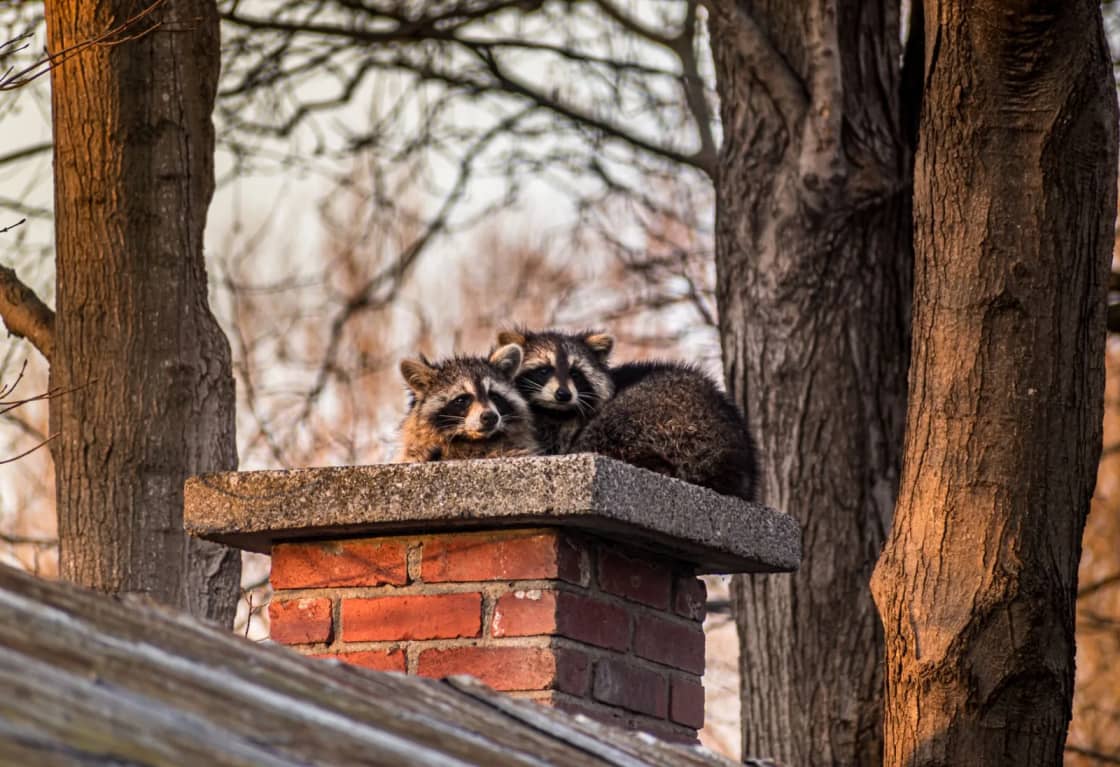

The call usually comes in the first cold week of autumn. Something is moving in the attic at night. Something has been under the deck for a while and now the whole yard smells like it. Something tipped the garbage can over again, and it was not the wind.
Utah Valley sits against the mountains with open ground on three sides, and the animals that live in that transition zone are not shy about the neighborhoods. Raccoons work the storm drains and the fruit trees. Striped skunks den under decks and sheds. Squirrels find soffit gaps. Bats use attics as maternity roosts. And every autumn a fresh set of homeowners discovers that the internet's advice — live-trap it and let it go somewhere nice — is the one thing Utah does not permit.
Here is what the rules are, which animal belongs in which category, and how to get the problem solved without creating a second one.
The rule that surprises everyone
Start with the part people get right. Utah's approach to common nuisance animals is unusually permissive on the question of taking them.
A substantial list of species may be taken without a hunting or trapping license. The Division of Wildlife Resources rule R657-3 lists coyote, field mouse, gopher, ground squirrel, jackrabbit, muskrat and raccoon among the animals that may be killed at any time; check the current rule for others. Coyotes carry an additional classification as a predatory animal. The administrative rules allow these animals to be taken at any time, without a license, and homeowners are within their rights to deal with them directly.
Now the part people get wrong, and it is the whole ballgame:
Relocation is not permitted.
DWR guidance and USU Extension materials both state it. The mechanism is worth understanding, because it explains an apparent contradiction. A trapped animal may be euthanized, or, for species where DWR and USU guidance allow it, released unharmed where it was caught. Release on site is allowed because the animal has not been moved or transported; the moment it goes in the car, the situation changes. Raccoons and coyotes are different: under Utah Department of Agriculture and Food rule R58-14-3, a captured nuisance raccoon or coyote must be euthanized and may not be relocated.
So the mental model most homeowners bring to this — a humane live-trap, a drive up Provo Canyon, a dignified release at the treeline — describes an act Utah does not allow. And it does not allow it for reasons that survive scrutiny, which is worth knowing if you are inclined to argue with the rule rather than follow it.
Why relocation is prohibited, and why the reasons hold up
Three arguments, all of them practical.
Disease movement. A raccoon carrying canine distemper, or roundworm, or any of the other things raccoons carry, is a local problem until someone drives it fifteen miles and makes it a new local problem. Relocation is, epidemiologically, a delivery service.
It usually does not work for the animal. A relocated adult is dropped into occupied territory with no knowledge of the water, the food or the cover, and generally into competition it loses. The humane framing of relocation tends not to survive contact with what happens next.
It usually does not work for you either. This is the one that persuades people. If your soffit has a four-inch gap, the animal in your attic is a symptom. Remove it and the gap remains, and Utah Valley has no shortage of raccoons prepared to notice a vacancy. Homeowners who relocate without excluding often do it three or four times before concluding the trap was never the solution.
Which is the real lesson underneath the regulation: wildlife control is a building repair problem that happens to involve an animal.
Bats are a different animal, legally and practically
If there is one distinction to carry away from this article, it is this one.
Bats are nongame wildlife in Utah. They are not on the take-at-any-time list, and dealing with them needs DWR authorization. A raccoon in your attic and a bat in your attic are not the same legal situation, and treating them the same way is how people get into trouble.
They are also not the same practical situation. Bat work is a specialty:
- The method is exclusion, not trapping and not extermination. One-way devices at the entry points let bats leave and prevent return; the building is then sealed.
- Timing is the whole job. Doing exclusion during the maternity season risks sealing flightless pups inside the structure, which is both inhumane and creates an odor problem in a wall cavity that is far worse than the original complaint. Reputable operators schedule around it.
- Guano accumulation is a separate remediation. Cleanup of an established roost is its own scope of work.
Several of the companies on the DWR's public list name bat colony removal, bat-proofing and guano cleanup as distinct specialties. If bats are your problem, hire for that specifically rather than calling whoever answers first.
The rabies question, answered properly
Bats are the animal most associated with rabies in Utah, and the guidance around them is stricter than the raw statistics suggest, for a reason worth understanding.
The concern is not the bat swooping around your yard at dusk. It is unwitnessed contact. A bat found inside a room where someone was sleeping, or in a room with a young child or someone unable to report a bite, is treated as a possible exposure — because bat teeth are fine enough that a bite may leave no mark the person notices.
In that situation, the standard guidance is: do not release the bat, if it can be safely contained, because testing may be the only way to resolve the question without a course of post-exposure treatment. Contact your health department. In Utah County, that is the county health department, and it is the right first call rather than a general practitioner.
Two absolutes. Do not handle a bat with bare hands. Do not let a child or a pet near one, alive or dead. Beyond that, a bat seen outside, at a distance, with no contact, is not a health event.
Skunks, and the thing that makes them different
Striped skunks are on the no-license list, which makes them legally simple and practically miserable.
They den under decks, sheds, porches and outbuildings, and the failure mode is specific: a homeowner seals the opening while the skunk is inside, or during the spring when kits are present. What follows is either a spray in an enclosed space beneath a structure you have to live above, or a mortality event in the same place. Both are worse than the skunk.
The correct sequence is the same one that applies to every burrowing or denning animal:
- Confirm the den is empty before sealing. A common field method is loosely packing the opening with something the animal will push through — the standard trick is crumpled newspaper — and checking over a couple of nights for disturbance. Undisturbed for several nights in a row means empty.
- Do the work outside the season when young are present, or accept that you will need a professional to handle the young.
- Then exclude properly — buried hardware cloth or a solid skirt, not lattice, which stops nothing.
If a skunk has already sprayed a pet, the effective remedy is a hydrogen peroxide, baking soda and dish soap mixture rather than tomato juice, which is folklore. Mix it fresh, use it immediately, and keep it out of the animal's eyes.
What the law says about the animals you cannot touch
The no-license list is broad, and its edges matter.
Deer are big game and protected. They are not on the list, and no amount of damage to a garden changes that. Deer pressure is handled by exclusion — fence height is the variable that matters — and by planting species deer are less inclined to browse.
Migratory birds are federally protected, independently of anything Utah does. This catches people with nests in vents and eaves. The timing question, again, is the whole question.
The Utah prairie dog is federally threatened, and is specifically distinguished from other prairie dogs in the state's own guidance.
Keeping the pelt changes the analysis. An animal that is both a nuisance species and a classified furbearer can be taken without a license, but using or keeping the fur can bring furbearer licensing requirements into play. If that is your intention, verify it with a DWR regional office first.
Night hunting with a light is regulated separately; check DWR rules before anyone tries it.
Who is licensed, and how to check
Two separate registries matter here, and they do different things.
Urban wildlife nuisance control businesses. A business conducting nuisance wildlife control or carcass removal for hire does so under a Certificate of Registration issued by the DWR. The division maintains a public list of these companies on its website, including their service areas and, for some, the species they handle. Several list Utah County explicitly in their coverage.
The DWR attaches a clear disclaimer to that list: it provides the information as a public service, is not affiliated with the companies, and makes no endorsements. Read that as intended. The list tells you who is registered. It does not tell you who is competent. Use it as a starting set, then evaluate the way you would evaluate any contractor — references, a written scope, and a clear statement of what exclusion work is included.
Wildlife rehabilitators. These are separately licensed individuals and organizations, authorized under the DWR's rehabilitation rule to take in and care for injured animals with the goal of release. For Utah Valley, Great Basin Wildlife Rehabilitation and Education in Mapleton appears on the state list, accepting raptors and some small mammals.
Two things to know before you drive anywhere with a box. Rehabilitators are independent operators and may accept or decline animals at their discretion. And species limits are real — several rehabilitators on the state list specifically exclude raccoons, red foxes and striped skunks, which are exactly the animals a homeowner is most likely to find in trouble. Call first.
Snakes, and the one that matters
Utah Valley has snakes, most of them harmless, and one worth identifying correctly.
The Great Basin rattlesnake is present in the region, generally in rocky, dry, brushy terrain on the benches and in the canyons rather than in irrigated residential yards. Encounters happen most often on trails, at trailheads, and on properties that back directly onto undeveloped foothill ground.
The snakes you are far more likely to find in a Provo or Orem yard are gopher snakes, garter snakes and racers — all non-venomous, all beneficial, and all frequently killed by mistake. The gopher snake is the specific identification problem: it is large, patterned in a way that reads as rattlesnake to a startled person, and it defends itself by flattening its head, hissing loudly and vibrating its tail against dry vegetation, which produces a convincingly rattle-like sound. It is doing an impression, and it works.
The reliable distinctions are the tail — an actual rattle versus a tapered point — and the head shape and pupil, though nobody should be close enough to assess a pupil. In practice: if you cannot identify it confidently from a safe distance, treat it as venomous and leave it alone.
What to do either way is the same. Do not attempt to handle, kill or move it. Give it distance and time; a snake in the open is usually passing through and will leave. Keep pets and children away. If it is in a garage, shed or window well and will not leave, that is a call for a removal operator — the DWR's published list includes companies that specialize in snake identification and removal and cover Utah Valley.
Prevention is habitat management: keep rock piles, woodpiles and dense ground cover away from the foundation, control the rodent population that draws snakes in, and cover window wells. Window wells in particular are a passive trap — snakes, and also toads, mice and the occasional skunk, fall in and cannot climb out.
The hiring conversation that separates the good from the rest
When you call a wildlife company, the questions that reveal competence are not about price.
"What is your plan for the entry point?" If the answer is vague, or if exclusion is quoted as an optional add-on, you are being sold a trapping service that will bring you back next season. The entry point is the job.
"What do you do with the animal?" A registered operator will give you a clear, lawful answer. An operator who tells you they will release it somewhere nice up the canyon has just told you something important about how they work.
"Do you warranty the exclusion?" Good operators warranty the seal, because the seal is the deliverable. Ask for the term in writing.
"Is the damage repair included?" Torn soffit, chewed fascia, compressed insulation and contaminated attic material are frequently separate line items. Get them itemized before, not after.
"Are you doing bat work under the right timing?" If bats are involved and the company does not raise seasonality before you do, call someone else.
The prevention list that makes all of this unnecessary
Almost every wildlife call in Utah Valley traces back to a short list of conditions.
- Fruit on the ground. The valley's backyard apple, apricot and plum trees are a raccoon buffet. Pick up windfall.
- Unsecured garbage. Latching lids or a garage until collection morning.
- Pet food outdoors, and open bags in an unsealed garage or shed.
- Gaps at the roofline. Soffit and fascia junctions, gable vents with failed screening, and the gap where a roof plane meets a wall. Inspect from the ground with binoculars in daylight; you will find more than you expect.
- Open crawlspace and deck skirting. Buried hardware cloth is the durable fix.
- Bird and animal access at the roofline generally. Damaged or aging roof coverings create gaps that did not exist when the roof was new; see roofing in Utah Valley.
- Uncapped chimneys. A proper chimney cap solves raccoons, birds and a great deal else at once — and it belongs on the same maintenance visit as your annual flue inspection.
- Bird feeders. They feed more than birds. If you have recurring rodent or raccoon activity, the feeder is a suspect.
If your problem is insects, mice or voles rather than something larger, that is a different trade with a different set of answers — our guide to pest control in Utah Valley covers the boxelder bugs, wasps, spiders and rodents that turn up here, and what is worth paying for.
The short version
Utah gives homeowners real latitude with raccoons, skunks, foxes and the rest of the nuisance list — more than most states. What it withholds is the specific step almost everyone reaches for first. You may deal with the animal. You may not put it in the car.
And if the animal in question is a bat, stop, and treat it as its own problem: different legal category, different health considerations, different specialists, different season. Getting that one distinction right is most of what this subject asks of you.
Wildlife classifications and licensing requirements in this guide are drawn from Utah Division of Wildlife Resources materials and Utah State University Extension summaries of Utah's administrative rules, and from DWR's published lists of registered nuisance control operators and licensed rehabilitators. Rules change between guidebook years — confirm current requirements with a DWR regional office before acting.
Related Guides
- Tree Removal in Utah Valley: The Tree Out Front Probably Isn't Yours
- Getting Rid of the Big Stuff in Utah Valley: Mattresses, Paint, TVs and the Couch
- Locksmiths in Provo: The City License Almost Nobody Asks to See
- Appliance Repair in Utah Valley: Utah Deliberately Does Not License the Person Fixing Your Dryer
- Finding an Electrician in Provo: The Supervision Rule Nobody Explains
- Hiring Home Pros in Utah Valley: How to Vet Anyone Who Works on Your House
- Asbestos and Lead in Older Utah Valley Homes: The Exemption Turns on Whether You Live There
- Garage Doors in Utah Valley: Two Federal Dates, One Spring, and the Test You Should Run Tonight
Frequently Asked Questions
Can I trap a raccoon in my yard in Utah?
Is it legal to relocate a raccoon or skunk in Utah?
What do I do about bats in my attic?
Do I need to worry about rabies from a bat in Utah?
Can I shoot a deer that is eating my garden in Utah?
Who is licensed to do wildlife removal in Utah?
What is the difference between a pest control company and a wildlife removal company?
Where do I take an injured wild animal in Utah County?
Sources
The facts in this guide were checked against these sources. Hours, fees and rules change, so confirm anything time-sensitive with the source before you go. How we make Provo.com.
- Wildlife rehabilitators, nuisance control and rattlesnake aversion training for dogs, Utah Division of Wildlife Resources. Checked October 12, 2026.
- R58-14. Exceptions for Holding Live Raccoons or Coyotes (Utah Admin. Code), Utah Department of Agriculture and Food / Utah Office of Administrative Rules. Checked October 12, 2026.
- R657-3: Collection, importation, possession (Utah Admin. Code), Utah Division of Wildlife Resources. Checked October 12, 2026.