
Most advice about hiring a roofer is the same advice you would get about hiring anyone: check references, get three bids, do not pay everything up front. Fine, and true, and available everywhere.
This page is about the parts that are specific to Utah, and to this valley. There are three of them that homeowners routinely get wrong, and the first is a license code.
The classification is S280, and this matters
Utah does not issue a generic contractor license. It licenses by classification — a code that defines the work a contractor is authorized to do — through the Division of Professional Licensing (DOPL), part of the Utah Department of Commerce, under the Utah Construction Trades Licensing Act (Title 58, Chapter 55).
The roofing classification is S280 — Roofing Contractor.
It is worth being emphatic about that number, because the wrong one circulates. Several guidance pages online state that roofing is S330. S330 is the Landscape and Recreation classification. Anyone verifying a roofer against S330 is checking the wrong thing entirely, and would either reject a properly licensed roofer or accept a landscaper.
The scopes of practice for every classification are set out in the Utah administrative rules, and DOPL publishes a public license lookup. Both are free. Verifying a license takes about ninety seconds and is the single highest-value thing on this page.
Your gutters are probably a different license
Here is the second thing people get wrong, and it is more subtle.
Utah's S230 classification — masonry, siding, stucco, glass and rain gutter — explicitly covers rain gutters, roof flashings, gravel stops and metal ridges.
Read that list again. Flashings. Those are the metal pieces that seal the joints where a roof meets a wall, a chimney, or a valley. They are the single most common point of roof leaks, they are unquestionably part of a roof in any normal sense of the word, and they sit under a different classification from the shingles around them.
This is not a trap, and it is not a reason to panic. A contractor may hold up to three specialty classifications, and roofing companies commonly hold the relevant ones. The point is narrower: do not assume that "licensed roofer" means every line item on the estimate is covered by that license. If the scope includes gutters or extensive flashing work, ask which classification covers it.
The dollar threshold, and why this page will not print one
Utah's statute exempts building work below a certain contracted value from the license requirement, with a middle band that requires the person to file an affirmation with the division showing liability and workers' compensation coverage.
The figures have been amended, and the sources disagree.
The current administrative rule text in circulation describes one set of numbers. DOPL's own handyman application implies a different filing trigger. The statute itself, Utah Code 58-55-305(1)(h) as published in October 2026, sets the top threshold at a contracted value under $7,000 and the affirmation trigger at $3,000. And DOPL's contractor application form, in a version dated early 2025, still printed general liability minimums that other sources say were raised afterward.
That is not a criticism of anyone — statutes get amended, rules and forms lag behind them, and every layer takes time to catch up. But it means that any specific dollar figure printed in an article like this one has a real chance of being wrong by the time you read it, and being wrong about this one has consequences.
So: confirm the current threshold with DOPL directly. The phone number and the license lookup are both on their site. If a contractor tells you the job falls under the exemption, that is a claim you can check in one call.
The trades where the threshold does not apply at all
There is a category of work that requires an appropriately licensed person regardless of project value. Utah's exemption does not reach it. That list covers plumbing, electrical, gas appliance and combustion system work, water-based fire protection systems, HVAC, and radon mitigation.
Roofing is not on that list.
That is a useful thing to know, and it cuts both ways. It means the dollar threshold is live for roofing work in a way it is not for a water heater — a small repair may legitimately fall below the line. It also means the protection of a mandatory license does not automatically attach to work on your roof the way it does to work on your furnace.
If your roofing job involves any of those other trades — a bathroom vent, a gas appliance flue, solar — that portion needs its own licensed person no matter how minor it looks on the estimate.
The registry proves nothing by its silence
DOPL operates a Construction Business Registry, and contractors can list public contact information in it.
Participation is optional. It is an explicit opt-in on the application form, with a checkbox and an acknowledgment.
So a contractor's absence from the registry tells you nothing about whether they are licensed. Plenty of legitimate, fully licensed contractors simply declined to opt in — often for the entirely reasonable reason that publishing a phone number invites sales calls.
Use the license verification lookup, not the registry, to answer the question "is this person licensed." They are different tools and only one of them answers it.
What Utah Valley does to a roof
The local conditions are not the same as the national averages that manufacturer warranties are written against.
Altitude and ultraviolet exposure. Utah Valley sits high, and the air is thin and frequently clear. Ultraviolet radiation degrades the asphalt binder in shingles, drying it out and making it brittle. A shingle rated for a long life in a cloudy lowland climate does not necessarily deliver that life here.
Temperature swing. A high-desert climate can move thirty or forty degrees between afternoon and dawn. Materials expand and contract through that cycle daily, and every joint and fastener works slightly with it.
Snow load and ice dams. This is the big one. Snow accumulates on the roof, heat escaping from the living space melts the underside of it, the meltwater runs down to the cold eave and refreezes there. The resulting ridge of ice backs water up under the shingles, where it does not belong and where gravity no longer helps you. Ice damming is fundamentally an insulation and ventilation problem that presents as a roofing problem, which is why a good roofer will ask about your attic.
Wind. The canyon geography channels it, and wind finds shingles whose seal strip never bonded properly.
Hail. Less frequent than in the plains states, but it happens, and hail damage to asphalt shingles can be hard to identify from the ground. Bruising that will shorten a roof's life by years is often invisible from the driveway.
Storm chasers, and how to tell them apart
After any significant weather event, canvassers appear.
Some of them are local roofers doing exactly what local roofers reasonably do after a hailstorm. Others are transient operations that follow weather across states, work fast, take deposits, and are unreachable when a problem shows up two winters later.
Practical filters, in order of usefulness:
- Verify the license and classification with DOPL while they are standing there. It is a phone screen away.
- Ask for a physical local address, not a P.O. box and not a truck.
- Ask for the insurance certificate and check that it is current.
- Do not sign anything on the doorstep. In particular, be extremely careful with any document that assigns your insurance claim benefits to the contractor — that is a real arrangement with real consequences and it is not something to agree to in a driveway conversation.
- Be suspicious of urgency. A roof that has survived the storm will survive the week it takes you to get three bids.
None of this requires you to be rude. "Give me your license number and I'll call you tomorrow" is a complete and polite answer.
Making three bids comparable
Three bids is standard advice that fails constantly, because homeowners collect three numbers for three different jobs and then compare the numbers.
Specify the scope yourself, in writing, and ask every bidder to price the same thing:
- Tear-off or overlay, and how many existing layers are being removed
- Deck inspection — what happens, and at what price, if rotten sheathing is found underneath
- Underlayment type
- Ice and water shield, and specifically where it is being placed
- Flashing — replaced or reused, and around what
- Ventilation — intake and exhaust, and whether it is being changed
- Disposal of the old material
- Warranty, separated into the manufacturer's material warranty and the contractor's own workmanship warranty, which are not the same thing and rarely run for the same length of time
The deck inspection line is the one that catches people. Rotten sheathing is only discoverable once the old roof is off, so it is priced as a contingency. A bid that omits it is not cheaper; it is incomplete, and the number will change once the tear-off starts.
Repair or replace
The question every homeowner wants answered, and the one where a contractor's incentives and yours are least aligned.
Some rough guidance that does not depend on anyone's sales pitch:
Age against expected life. Asphalt shingles are sold with lifespans that assume conditions milder than Utah Valley's. A roof in the last few years of its rated life is usually not worth a significant repair, because you are spending real money to defer a replacement by a short period.
One leak or many. A single failure at a known point — a flashing, a boot around a vent pipe, storm damage to a defined area — is a repair. Leaks appearing in unrelated places over a couple of seasons are the roof telling you the material has reached the end.
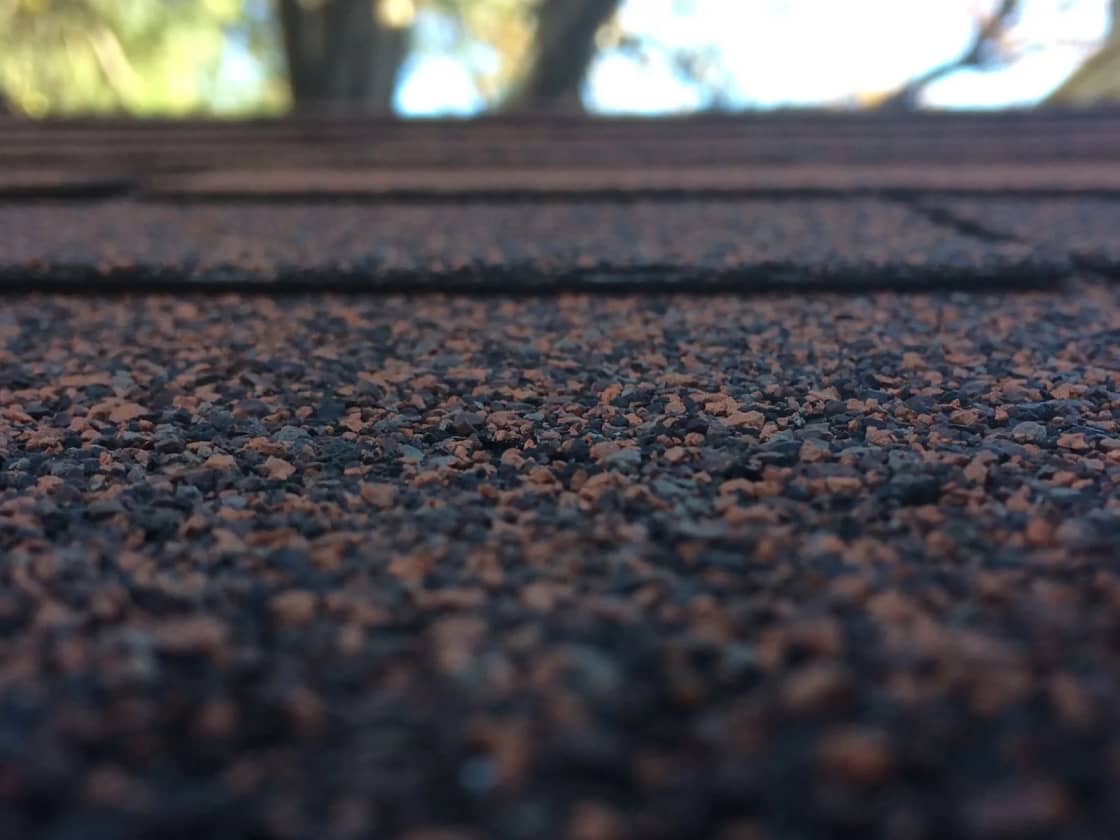
What the granules say. Asphalt shingles shed their mineral granules as they age. Finding significant quantities in the gutters, and shingles that look bare and shiny in patches, indicates a surface that has lost its ultraviolet protection. In this climate that matters more than it would elsewhere.
Curling and cracking. Edges lifting or corners curling means the shingle has dried and is no longer lying flat, which means wind can get under it.
What is underneath. If sheathing is soft, the conversation has moved past shingles.
A contractor recommending replacement is not necessarily upselling — sometimes it is simply the right answer. But you are entitled to ask them to show you what they are seeing, in photographs if not from a ladder, and a good one will.
A word on materials
Asphalt shingles dominate here for the same reasons they dominate everywhere: cost, availability and a large pool of installers who know them well. Within that category, the heavier architectural or dimensional shingles generally weather this climate better than the thin three-tab product, and the price difference is usually smaller than people expect once labor is in the total.
Metal roofing appears in the valley, particularly at higher elevations and on mountain properties. It sheds snow effectively and lasts a long time. The trade-offs are cost, and the fact that shedding snow effectively means snow arrives at the ground below in sudden quantities — which matters if that ground contains a walkway, a doorway or a parked car. Snow retention hardware exists for exactly this reason and should be part of the conversation rather than an afterthought.
Tile and synthetic products exist and are less common. If you are considering one, weight is the question to raise early, because not every existing structure is built to carry it without reinforcement.
Whatever the material, ventilation is the part that gets shortchanged, and it is the part that drives ice damming and shortens shingle life from underneath. A bid that says nothing about intake and exhaust ventilation is not a complete bid.
Payment, and not paying for a roof you do not have
A deposit is normal. Paying for the entire job before it is finished is not.
Utah has a mechanic's lien framework, which means that if your roofer does not pay their suppliers or subcontractors, those parties may have a claim against your property even though you paid the roofer in full. Lien waivers are the mechanism that protects you from that, and the time to discuss them is before the work starts.
Our guide to hiring home professionals in Utah Valley covers lien waivers, bid comparison and payment protocol in more depth across all trades, and the general principles there apply here.
If the work needs a permit, that is a municipal question rather than a state one, and it varies by city. Our building permits guide covers how Provo handles it.
When to schedule
Late spring through early autumn is the working season, and there is a reason beyond installer comfort.
Asphalt shingles carry an adhesive strip that bonds each course to the one below. That strip is activated by heat. Install shingles in cold weather and the seal may not set until the following spring, leaving the roof vulnerable to wind lift over the winter — the exact season you least want that.
Good roofers can and do work in cold conditions with the right techniques, and emergency repairs cannot wait for July. But for a planned replacement, warm settled weather is the better choice, and late summer into early fall is often the sweet spot.
The corollary is that everyone else wants those months too. Booking a replacement in high season means joining a queue, and the contractor with immediate availability in September is worth a second look — sometimes it means a cancellation, and sometimes it means something else.
The tree over the roof
Overhanging limbs abrade shingles, drop debris into valleys and gutters, and give squirrels a bridge to the roofline. Removing them is not always your decision to make: in Provo, the tree in the planting strip is city property and pruning it without written consent is a code violation. Our guide to tree removal in Utah Valley sets out which trees are yours, what the City Forester has to approve, and what an appraisal costs when someone gets it wrong.
The short version
Verify S280 in DOPL's lookup, not S330 and not the opt-in registry. Ask which classification covers the gutter and flashing work. Confirm the current licensing threshold with DOPL rather than trusting a number online, including this one. Specify your own scope before collecting bids. Do not sign in the driveway.
Licensing thresholds, insurance minimums and administrative rules change. This page describes the structure of Utah's system; confirm current figures with the Division of Professional Licensing before relying on them. Nothing here is legal advice.
Last updated: August 2026.
Related Guides
- Hiring Movers in Utah Valley: How to Vet One, What Protects You, and the Two-Week August Crunch
- House Cleaning in Provo: The Turnover Calendar, the Hard Water, and the Cleaning Check
- Lawn Mowing and Yard Care in Utah Valley: Timing, Hiring, and the Secondary Water Trap
- Wildlife Removal in Utah Valley: You Can Kill the Raccoon. You Can't Drive It Up the Canyon.
- Appliance Repair in Utah Valley: Utah Deliberately Does Not License the Person Fixing Your Dryer
- Locksmiths in Provo: The City License Almost Nobody Asks to See
- Asbestos and Lead in Older Utah Valley Homes: The Exemption Turns on Whether You Live There
- Finding an Electrician in Provo: The Supervision Rule Nobody Explains
- Chimneys and Fireplaces in Utah Valley: Even an EPA-Certified Stove Is Illegal on a Mandatory Day
- House Painters in Utah Valley: Why Exterior Paint Fails Faster Here
Frequently Asked Questions
What license does a roofer need in Utah?
Does the same roofing license cover my rain gutters?
Is there a dollar amount below which a Utah contractor does not need a license?
Which trades always require a license regardless of project size?
When is the best time of year to replace a roof in Utah Valley?
What causes most roof damage in Utah Valley?
Should I use a roofer who knocks on my door after a storm?
How many bids should I get for a roof replacement?
Sources
The facts in this guide were checked against these sources. Hours, fees and rules change, so confirm anything time-sensitive with the source before you go. How we make Provo.com.
- Utah Code 58-55-305 Exemptions from licensure, Utah Legislature. Checked October 12, 2026.
- Utah Construction Trades Licensing Act Rule (R156-55a), Utah Office of Administrative Rules. Checked October 12, 2026.
- DAR File No. 43279 (Rule R156-55a), Utah State Bulletin 11/15/2018, Utah Office of Administrative Rules. Checked October 12, 2026.