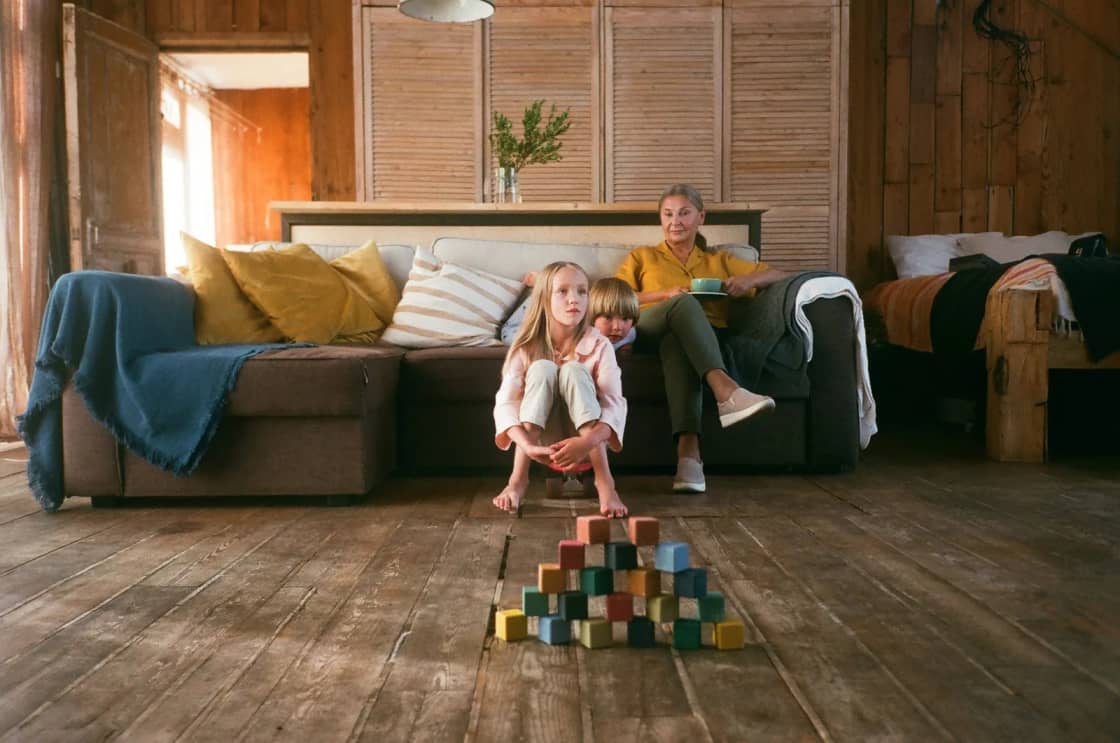

Provo runs on informal childcare to a degree that visitors find slightly startling.
A city with two large universities, a young median age, large families, and dense congregational networks produces an enormous supply of teenagers and students who babysit, and an enormous demand from parents who need two hours on a Thursday. Most of it is arranged by text message. Almost none of it involves a contract, an agency, or a government form.
That system works well, and the reason it is legal is more interesting than most parents realize. Utah did not overlook this arrangement. It wrote a rule that puts it deliberately outside the licensing system — and knowing exactly where that line sits tells you precisely how much oversight exists behind any given arrangement.
Spoiler: for the sitter coming to your house on Friday, the answer is none. That is fine. It just means the checking is your job.
Where the line is
Utah's child care licensing exemptions live in Utah Administrative Code R430-8, and the relevant provisions are unusually readable for administrative law.
Care provided in the home of the provider does not require a license or certificate when it is:
- for less than four hours a day, or
- for fewer than five unrelated children in the home at one time.
The rule adds a third clause that catches most babysitting outright: the Department does not issue licenses or certificates for care provided in the provider's home on a sporadic basis only.
And separately, under the relative care provision, the Department does not issue licenses or certificates to persons who care only for related children.
Read those together and the architecture is clear. Licensing is aimed at ongoing programs operating at scale. Guidance from the licensing program has framed the threshold plainly: a license is only required when a provider cares for five or more qualifying children, and people caring for children less than four hours per day are not required to be licensed.
The teenager down the street is not slipping through a gap. She is standing in a space the rule drew around her on purpose.
The distinction that matters: exempt is not vetted
Here is where parents get the wrong idea, usually because "exempt" sounds like a determination somebody made.
Being exempt means no one has looked. Not that someone looked and approved. There is no application, no inspection, no background check, and no file. For a sporadic in-home sitter, the state has no record that the arrangement exists.
That is not an argument against informal care, which is normal, legal, and the way most childcare in this country has always worked. It is an argument for understanding what you are and are not getting:
- Licensed programs meet state health and safety standards set by the Division of Licensing and Background Checks and are monitored for ongoing compliance. Background checks are required for covered individuals, including staff, volunteers, and household members.
- Exempt providers fall outside that because of size, duration, or family relationship. Some exempt programs are required to apply for a formal exemption; the sporadic evening sitter is not.
- Approved providers sit between. An exempt provider can seek an approval in order to receive Department of Workforce Services child care subsidy payments, and those approvals require meeting a basic standard based on licensed-program requirements.
That third category is the one almost nobody knows about, and for some families it is the answer.
The FFN option most Provo families have never heard of
Utah formally recognizes family, friend, and neighbor care — the arrangement where someone already known to the family provides childcare — and has a specific approval pathway for it, referred to as a DWS FFN approval for residential providers.
Why it matters: an FFN approval requires the provider to meet a basic standard and to clear background checks, and it makes the provider eligible for subsidy payments. So a grandmother, a neighbor, or a family friend already watching your children can, if both sides want it, move from a wholly informal arrangement into one with a background check and a basic standard behind it — and potentially with public support attached.
For a family on a tight budget using a trusted neighbor, that is a useful piece of information, and it is almost never mentioned in ordinary conversation about babysitting. Eligibility rules and program details change, so start with Workforce Services and the Division of Licensing and Background Checks rather than with secondhand accounts.
A note on names, because stale information circulates: this function used to sit with the Utah Department of Health's Child Care Licensing program, and now sits with the Utah Department of Health and Human Services through its Division of Licensing and Background Checks. If you find a page referring to the older structure, check its date.
Where Provo families find sitters
The formal market matters less here than the informal one, and the informal one has a specific shape.
Congregational networks are the dominant channel. Utah Valley's ward structure produces geographically tight groups of families who know each other, and the practical effect is a referral network with reputational accountability built in — a sitter's performance is known to people the family will see on Sunday. That is not a background check, but it is not nothing either. Our guide to how LDS wards work explains the structure for newcomers.
Student supply is unusually strong. Two large universities put thousands of people near campus who want a few hours of flexible work, many of whom grew up in large families and have been caring for children since they were eleven. That is a deep talent pool, better than most cities of comparable size. See student jobs in Provo for the other side of that market.
Neighborhood groups and parent networks — school and preschool circles, apartment complex groups, local social media — fill the gaps.
National platforms operate here and offer their own screening. Read carefully what a given platform's background check covers and how recent it is, because the term is used loosely across services and does not mean the same thing everywhere.
Babysitting co-ops — groups of families trading hours on a points system rather than cash — are common in Utah Valley and worth knowing about. They are cheap, they build reciprocal relationships, and the people watching your children are parents you know. The overhead is that you owe hours back, which is a real cost when your own week is full.
The student sitter problem nobody warns you about
There is one Provo-specific complication worth planning around, and it catches families every year.
Student sitters leave. Not because they are unreliable, but because the academic calendar is not a household calendar. Your excellent sitter graduates in April, leaves for a summer internship in May, departs on a mission in August, or gets married and moves to Phoenix. This is not unusual here; it is the default.
Two practical responses. First, maintain more than one sitter — three names is not paranoid, it is the minimum viable roster in a student town. Second, ask about their timeline early, ideally in the first conversation. "Are you planning to be in Provo through the spring?" is not a rude question and it will save you finding out in a crisis.
The corollary is that the busiest times for sitter demand — the start of semesters, holiday weeks, and graduation season — are exactly when supply is most disrupted. Book early around those, and expect August and December to be difficult.
Vetting, when nobody else is doing it
Since the state is not checking for informal arrangements, this is the part that matters. None of it is complicated.
Call the references. Actually call them, and ask an open question rather than a yes-or-no one. "How did she handle bedtime?" produces information; "Was she good?" does not.
Do a trial while you are home. An hour of the sitter with your children while you work in another room tells you more than any conversation. Watch how they respond when a child is difficult, which is the only part that is hard.
Ask about training. Basic first aid and infant or child CPR training is a reasonable question, and courses are widely available locally. A sitter who has taken one has told you something about how seriously they take the role. Many older teenagers have completed a formal babysitter training course, which typically covers basic safety, emergencies, and age-appropriate care.
Write the essentials down. Allergies, medications and doses, emergency contacts, your address written out for a 911 call, the pediatrician's number, and what to do if they cannot reach you. A sitter under stress should not be reconstructing this from memory, and a teenager may not know your street address by heart.
Be explicit about the rules you care about. Screens, food, whether anyone else may come over, whether the children may leave the house, and driving. If your sitter will transport your children, discuss the vehicle, the license, and insurance directly — it is awkward for ninety seconds and consequential for years.
Agree the money in advance. Rate, how hours are counted, rounding, and how you will pay. Ambiguity about pay is the most common cause of a good arrangement quietly ending.
At what age can a child be left alone, or watch siblings?
This question comes up constantly and has a less satisfying answer than parents expect.
Utah does not set a specific minimum age in statute for leaving a child home alone. There is no line where it becomes legal at eleven and illegal at ten. What exists instead is a general standard: parents are responsible for providing adequate supervision and care, and whether a particular arrangement was reasonable is judged on the circumstances — the child's maturity, how long, what time of day, how reachable you are, what the child is expected to handle, and whether any younger children are also in their care.
That means the same arrangement can be entirely fine for one twelve-year-old and unreasonable for another, which is unhelpful if you wanted a number and honest if you wanted the truth.
The practical questions that predict readiness: Does the child want the responsibility, or are they enduring it? Do they know what to do if the smoke alarm sounds, if someone knocks, if a sibling is hurt? Can they reach you, and do they know your address? Have you tested it with a short absence before attempting a long one?
The sibling version deserves its own thought. A capable twelve-year-old watching one settled eight-year-old for ninety minutes is a different proposition from the same twelve-year-old managing a toddler through bedtime. Older siblings in large families here often carry real childcare load, and it is worth being deliberate rather than defaulting — both because of the safety question and because a child who is functionally unpaid staff will eventually notice.
If in doubt, a formal babysitter training course is a reasonable investment for a young teenager who is going to be doing this anyway, whether for your family or someone else's.
Date night logistics, which is what most of this is for
Most babysitting bookings in Provo are for a few hours in the evening, and a few local realities make those hours run better.
Book earlier than feels necessary on peak nights. Friday and Saturday evenings, and anything near a holiday, clear out fast in a town where a large share of sitters are students with their own social calendars. A standing arrangement — the same sitter, the same night each week or fortnight — solves this more reliably than repeated scrambling and is worth more to the sitter as well.
Mind the Sunday problem. A great deal of Utah Valley closes on Sunday, and both the activities you might go out for and the sitter's own availability are affected. Our guide to restaurants open on Sunday in Provo covers the going-out half of that.
Sort the return time honestly. Telling a sitter you will be back at ten and arriving at eleven-thirty is the fastest way to lose a good one, particularly a student with an eight o'clock class. If you are running late, message early.
Feed people. It is a small thing and it is near-universal expectation for an evening booking, and leaving something obvious and permitted saves an awkward negotiation with your own refrigerator.
The scale question, and when to be concerned
Everything above assumes an ordinary sitter. There is one situation that deserves a harder look.
If a provider is caring for children in their own home, regularly, for full days, for several unrelated families, that is a different activity from babysitting. Depending on the number of children and the hours, it may be an operation that requires a license or certificate. Utah's residential certificate and licensed family child care categories exist precisely for home-based providers operating at that scale, and licensed family providers can care for children across the full zero-to-twelve age range under monitored standards.
A provider operating at licensable scale without licensing is a legitimate concern — not because the paperwork is magic, but because the standards attached to it cover ratios, safe sleep, background checks on everyone in the household, and emergency preparedness, and those things matter more as the number of children rises.
The question to ask is simple and not confrontational: "Are you licensed, certificated, or exempt?" A provider running a real home-based program will have a ready answer and, if licensed or certificated, a document posted where you can see it. Exempt programs that have applied for an exemption receive a letter and are directed to post it as well.
What this costs, and why no number is given here
Rates move, vary by circumstance, and go stale in print faster than almost any other figure, so a specific dollar amount in a guide like this would mislead more people than it helped.
The variables that move the price are worth knowing: the number of children, their ages — infants cost more everywhere — the time of day, whether the sitter drives, whether any household tasks are included, and the sitter's experience and training. Holiday and New Year's Eve rates are their own category.
The reliable method is to ask two or three local families with children of similar ages what they currently pay, and to settle the rate explicitly before the first booking. In a market this informal, the going rate is known by the people in it and unpublished.
For families budgeting childcare as an ongoing line rather than an occasional one, our guide to the cost of living in Provo puts it alongside the rest.
The bottom line
Utah drew a deliberate line around informal childcare. Care in the provider's home for fewer than five unrelated children, or under four hours a day, or on a merely sporadic basis, sits outside licensing — and care for related children sits outside it entirely. Almost every babysitter in Provo is on the far side of that line, lawfully and by design.
What follows is not alarm. It is a division of labor. Nobody is checking, so you check: call the references, run a trial hour, write down the medical and emergency details, agree the money, and ask about training. If your arrangement is with a neighbor or family friend and money is tight, ask Workforce Services about an FFN approval, which adds a background check and a basic standard to something you were doing anyway.
And keep three names, not one. In a town where your best sitter may leave on a mission in August, the roster is the real safeguard.
Related Guides
- Cost of Living in Provo
- Moving to Provo
- How LDS Wards Work
- Student Jobs in Provo
- Living in Provo When You Are Not LDS
Frequently Asked Questions
Does a babysitter in Utah need a license?
Does someone need a license to babysit at my house?
What is the difference between licensed, exempt, and approved?
Can family members provide childcare without a license?
How much do babysitters charge in Provo?
What is FFN care?
How do I find a babysitter in Provo?
Should I be worried that my sitter is unlicensed?
Sources
The facts in this guide were checked against these sources. Hours, fees and rules change, so confirm anything time-sensitive with the source before you go. How we make Provo.com.
- Request FDCH Licensing Waiver, Utah State Board of Education. Checked October 12, 2026.
- R430-8 Exemptions from Child Care Licensing (2020 text), U.S. Administration for Children and Families, National Database of Child Care Licensing Regulations. Checked October 12, 2026.