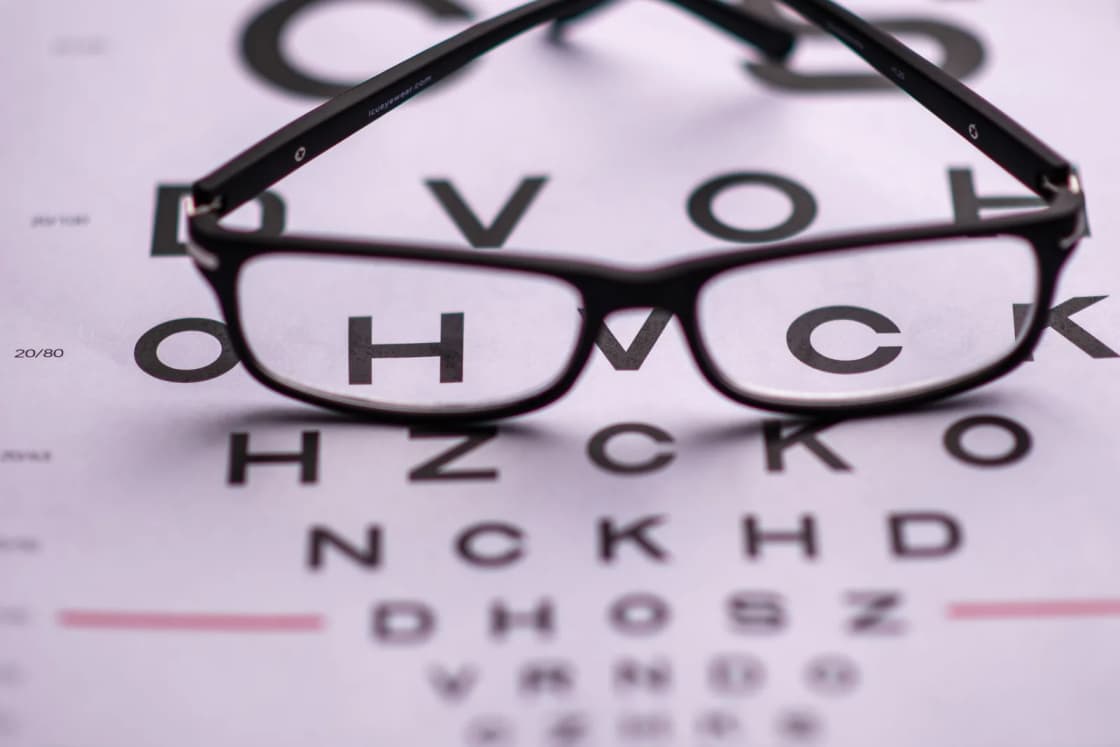
Most Utah kids get their eyes checked at school every couple of years, on a chart across the room with a nurse and a few parent volunteers. The rules behind it come from state law, a state health department policy and a 2026 bill that changed what schools have to do after a child fails.
This guide uses Utah Code 53G-9-404 (effective July 1, 2026), the Utah Department of Health and Human Services' 2026 school vision screening policy and the enrolled text of H.B. 351 (2026), all checked Nov. 24, 2026. For a child's regular doctor, see finding a pediatrician in Utah Valley.
Who gets screened
The state policy calls for basic (tier one) screening, free at school, for:
| Grade | Screened |
|---|---|
| Pre-kindergarten and kindergarten | Yes |
| Grade 1 | Yes |
| Grade 3 | Yes |
| Grade 5 | Yes |
| Grade 7 or 8 | Yes |
| Grade 9 or 10 | Yes (driver education can count) |
Plus any student under 9 in their first year in a Utah public school, and any student a parent, guardian or school staff member refers.
Starting school: the under-9 rule
Under Utah Code 53G-9-404, a child under 9 who hasn't attended a Utah public school must, before starting, bring either:
- a vision screening form signed by a health care professional (an optometrist, physician, PA, nurse practitioner or occupational therapist), or
- a parent's signed statement that the child won't be screened.
The state policy also accepts written proof of a complete eye exam within the past year. Without one of these, the school screens the child.
What counts as passing
Basic screening checks distance vision, one eye at a time, on a standard 10-foot chart using symbols or letters. To pass, a child must correctly read 3 of 5 symbols on the passing line with each eye:
| Age | Passing line |
|---|---|
| 3 | 20/50 |
| 4 | 20/40 |
| 5 and older | 20/32 |
A two-line difference between the eyes means a referral even if both eyes pass. Photo-based (instrument) screening is limited to ages 3 to 5 or children who can't do the chart.
If your child doesn't pass
- Rescreen. The school should rescreen as soon as possible, ideally the same day and no later than 14 days.
- Written referral. If the child doesn't pass, parents must get a written referral within 30 days.
- A follow-up contact. Under H.B. 351, passed in 2026, the school must also contact the parent separately, to confirm they received the referral, explain how to get care and share resources. The bill also lets certain outside groups reach out to parents after a failed screening.
Every referral form carries the same line, required by law: "A screening is not a substitute for a complete eye exam and vision evaluation by an eye doctor."
The questionnaire for struggling readers
A Vision Symptoms Questionnaire can lead to a more detailed tier two screening of near vision, focusing, eye tracking, color vision and convergence. Teachers must fill one out within 45 days for students in grades 1 to 3 who don't meet the reading benchmark, and for special education evaluations where vision is a concern. Any parent or staff member can submit one. The school's designated vision professional reviews it within 30 days and decides on a tier two screening, a referral or no action. Tier two isn't automatic after a failed basic screening, and if no trained screener is available, the child is referred straight to an eye doctor.
Opting out
Parents can opt out of basic or tier two screening with a written refusal each school year. Schools must notify parents before screening.
Related guides
- Finding a pediatrician in Utah Valley
- Kindergarten registration 2027-28
- Early intervention (Baby Watch) in Utah County
- WIC, Medicaid and Baby Your Baby in Utah County
- Preschool in Provo
- Autism resources in Utah County
Frequently Asked Questions
What grades get vision screening in Utah schools?
Does my child need a vision screening to start school in Utah?
What is a passing vision screening in Utah schools?
What happens if my child fails a school vision screening in Utah?
Is a school vision screening the same as an eye exam?
Can I opt my child out of school vision screening in Utah?
What is the Vision Symptoms Questionnaire?
Who does the screening at school?
Sources
The facts in this guide were checked against these sources. Hours, fees and rules change, so confirm anything time-sensitive with the source before you go. How we make Provo.com.
- Utah Code 53G-9-404: Public education vision screening (effective July 1, 2026), Utah State Legislature. Checked November 24, 2026.
- Utah School Vision Screening Policy (2026), Utah Department of Health and Human Services. Checked November 24, 2026.
- H.B. 351 (2026), School Vision Screening Amendments, enrolled, Utah State Legislature. Checked November 24, 2026.