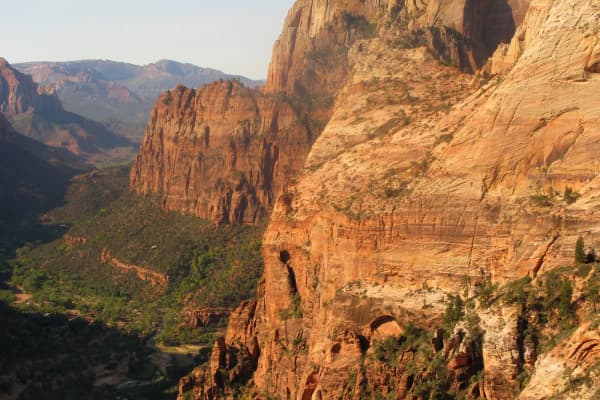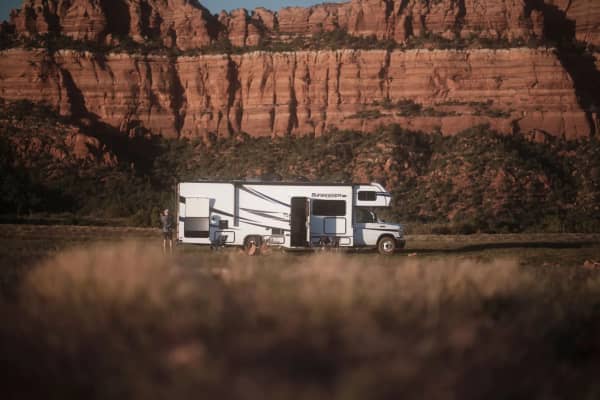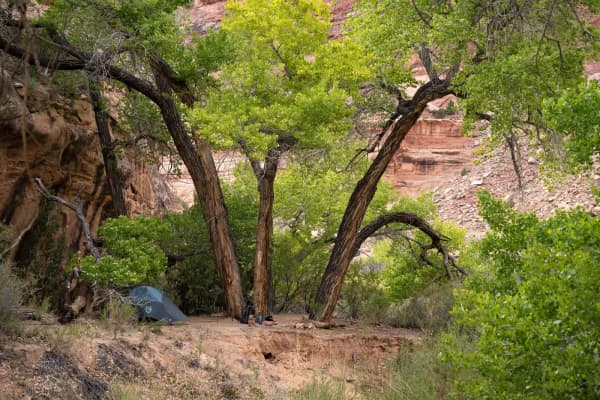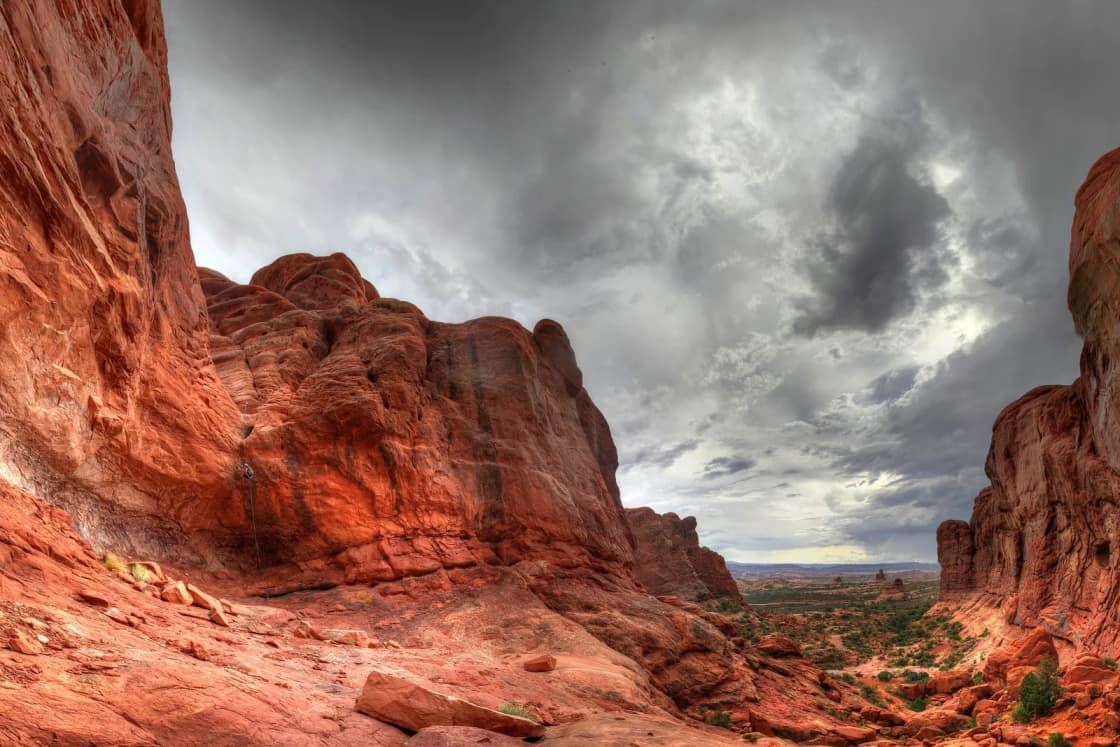
Canyoneering is the sport behind the photos of people rappelling into red rock slots, and southern Utah has more of those canyons than almost anywhere. It can also kill people who go in without the skills or the weather sense. This overview covers what the sport is, the gear, how canyons are rated, the rules in the national parks and when a guide makes sense, from the National Park Service, Visit Utah and KSL. It is an introduction, not instruction: rope skills come from a course or an experienced partner, not an article.
Quick facts
| Question | Answer | Source |
|---|---|---|
| Core gear | Helmet, harness, rappel device | Visit Utah |
| Zion permit | Required for all technical canyoneering | NPS |
| Arches permit | One per route; free in person, $6 online | NPS |
| Capitol Reef permit | Free, by email, one per route | NPS |
| Guides in Zion and Arches | Not allowed in the wilderness or on canyoneering routes | NPS |
| Biggest hazard | Flash floods | Visit Utah; NPS |
What canyoneering is
Canyoneers "explore a canyon by engaging in hiking, climbing, scrambling, swimming, jumping, and rappelling," KSL's beginner's guide says. Some canyons need nothing more than good shoes, such as the Little Wild Horse slot in the San Rafael Swell or the lower end of Zion's Narrows, which the Park Service calls "an outstanding way to receive an introduction" to slot canyons "without ropes or other special equipment." Technical canyons are the ones with drops you can't downclimb, where you set or use an anchor and rappel. "Canyoneering requires a lot of problem solving," Visit Utah says.
The gear
"The core equipment is your helmet, your harness and your rappel device," Christopher Hagedorn, who owns and guides for Get In The Wild Adventures in Hanksville, told Visit Utah. He adds the 10 Essentials, one-inch tubular webbing, locking carabiners in several sizes and gloves for rappelling. KSL's guide recommends a harness with reinforced gear loops, a figure 8 or canyoneering-specific descender, a personal anchor system and static canyoneering rope: "Leave your dynamic climbing ropes at home," because static rope resists abrasion and is less likely to bounce or cut over edges.
In wet canyons, the water is the other gear question. "Water can be fast, cold, and deep," Zion says of the Narrows.
How canyons are rated
Route descriptions use a three-part rating, KSL explains:
- A number from 1 to 4 for terrain and ropework. Class 4 canyons can include rappels of 300 feet or more.
- A letter for water. A is dry, B has still pools, C has current. R or X flags "extraordinary risk factors, not for beginners."
- A Roman numeral from I to IV for time, from a couple of hours to a day that runs past sunrise or sunset.
KSL suggests starting with 3A canyons, moving to 3B, and staying out of C, R and X canyons until your skills are strong.
Permits in the national parks
Zion. "A Wilderness Permit is required for all technical canyoneering trips," the Park Service says, and every hiker needs one for the Left Fork of North Creek, the Subway. Groups are limited to 12 in the Subway, Orderville, Keyhole, Pine Creek and the Narrows and to 6 in all other canyons, and "group size limits are strictly enforced." Fixed ropes can't be left behind, power drills are prohibited, and human waste must be packed out of narrow canyons. The park recommends at least two people for any roped canyon, and says everyone should be able to "belay, ascend, create extra friction, and evaluate anchors." See our Zion permits guide.
Arches. "Canyoneers must obtain a permit for each route and carry it with them," the Park Service says. Permits open on Recreation.gov at 8 a.m. the day before a trip and cost $6 online; in person they are free. Groups are limited to 10, or 6 in the Fiery Furnace and Lost Spring Canyon. Fiery Furnace routes also need a $10-per-person Fiery Furnace permit, released seven days ahead. Deadman anchors, pitons and homemade hardware are banned, and so is rappelling off an arch with an opening over three feet. The park's established routes include Elephant Butte in the Windows section and Dragonfly in the Petrified Dunes; it warns that Dragonfly is harder than descriptions suggest when its potholes are low.
Capitol Reef. Free day-use permits are requested by email, one per route, and groups are limited to eight, the Park Service says. New bolts and power drills are prohibited, and some routes close from April through August; check with the visitor center. Our Capitol Reef guide covers the park's day hikes.
When to hire a guide, and where
Visit Utah's canyoneering advice runs under the heading "Go with a Guide." KSL's guide assumes that anyone new will have "gone with somebody a time or two" and has had "adequate training in rope work, rescue work, anchor building techniques." For a first technical canyon, that means a guided trip or a course.
Not in Zion or Arches. Zion says structured or formally guided activities run by commercial or educational groups "are authorized to occur only on frontcountry trails," not in its wilderness, and Arches lists guided canyoneering services as prohibited. In 2009, Zion said commercial operations "are not permitted through most of the park's backcountry including all canyoneering routes," after an operator was fined $1,000 and banned from the park for two years for guiding illegally.
On other public land. Guide companies run trips on land outside the parks, much of it managed by the Bureau of Land Management, where commercial outfitters and guides need a Special Recreation Permit, the BLM says. The BLM publishes a list of approved outfitters and guides for Grand Staircase-Escalante National Monument and the Kanab Field Office; ask any company which agency permits its trips.
Flash floods
"Flash floods are one of the single biggest hazards in canyoneering," Visit Utah says. Zion posts the National Weather Service's flash flood potential rating: Not Expected, Possible, Probable or Expected. The Park Service says to treat the last three as serious warnings and choose routes away from narrow canyons, but also that floods can come when none is forecast.
The warning signs it lists: building clouds, thunder, water turning from clear to muddy, floating debris, rising water and a growing roar upstream. If you see them, climb to high ground immediately and don't stop to pack gear. "If bad weather threatens, do not enter a narrow canyon," Zion says. Leave your itinerary with someone before you go in, and remember that, in the park's words, "rescue is not a certainty."
Related reading
- The Narrows in Zion
- Little Wild Horse and Bell canyons
- Which Utah national parks need a reservation or permit
- Capitol Reef: Hickman Bridge, Cassidy Arch and Grand Wash
Frequently Asked Questions
What is canyoneering?
Do you need a permit to go canyoneering in Zion?
Can you hire a canyoneering guide in Zion or Arches?
What gear do you need for canyoneering?
How are canyoneering routes rated?
How big can a canyoneering group be?
Sources
The facts in this guide were checked against these sources. Hours, fees and rules change, so confirm anything time-sensitive with the source before you go. How we make Provo.com.
- Zion National Park (NPS): Canyoneering, Zion National Park (NPS). Checked November 27, 2026.
- Canyoneering Regulations, Zion National Park (NPS). Checked November 27, 2026.
- Zion National Park (NPS): Flash Floods, Zion National Park (NPS). Checked November 27, 2026.
- Conviction for Illegal Guiding in Zion National Park, Zion National Park (NPS). Checked November 27, 2026.
- Arches National Park (NPS): Canyoneering, Arches National Park (NPS). Checked November 27, 2026.
- Capitol Reef National Park (NPS): Canyoneering, Capitol Reef National Park (NPS). Checked November 27, 2026.
- Utah Special Recreation Permits Program, Bureau of Land Management. Checked November 27, 2026.
- 2025 Approved GSENM & KFO Outfitters & Guides, Bureau of Land Management. Checked November 27, 2026.
- Canyoneering How-to, Visit Utah. Checked November 27, 2026.
- A beginner's guide to canyoneering, KSL. Checked November 27, 2026.