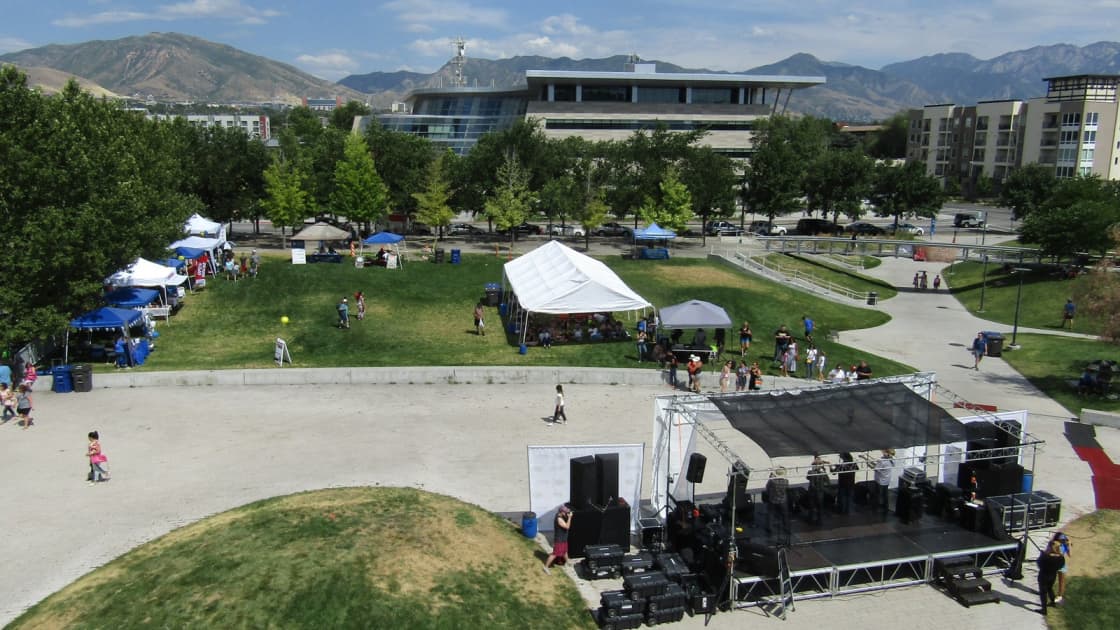

The Utah Arts Festival is Salt Lake City's big June weekend of art: four days at Library Square with more than 800 visual and performing artists, musicians and filmmakers, a marketplace of artist booths, live painting and demonstrations, dance and music on several stages, and a nightly headliner. It turned 50 in 2026. The festival itself puts attendance at about 42,000 people over its four days. From Utah Valley it is an easy trip, by car or by train, and for families with young children it is one of the better-value days out of the summer, because children 12 and under get in free.
The tickets
The 2026 prices, from the festival's own site:
- Thursday evening: $18
- Friday, Saturday or Sunday: $22 a day
- Four-day pack: $70
- VIP: $85
- Children 12 and under: free
Tickets are sold online before and during the festival, and at three box offices on the grounds while it runs. The festival's own advice is that children being free and the four-day pack are the best values. For a family of two adults and young children, the math is simple: two adult tickets, and the children come along at no cost.
A general admission ticket covers everything on the grounds. There is no separate charge for the headliners, the film program, the workshops or the children's projects; food, drink and anything you buy from the artists are extra.
What to see
The artist marketplace. More than 170 artist booths, selling original work directly from the artists who made it. It is the heart of the festival.
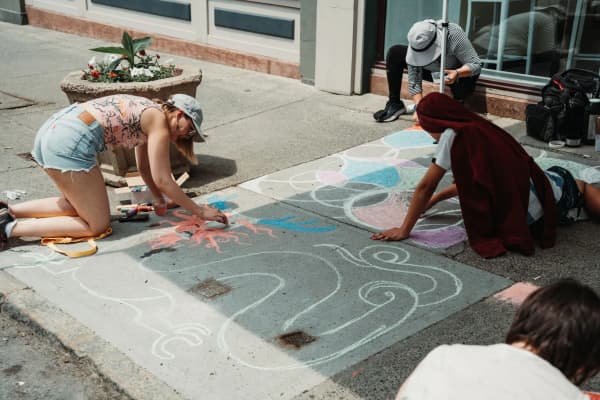
Art being made. More than 20 demonstrating artists work live on the grounds, and graffiti and mural artists paint as part of the festival's urban arts program.
The headliners. Each night ends with a headline act on the main stage. In 2026 they were Digable Planets on Thursday, Yola on Friday, Shakey Graves on Saturday and Rubblebucket on Sunday, with BANDALOOP, the vertical dance company that performs on the sides of buildings, performing daily.
Fear No Film. The festival's short-film program is internationally recognized, and it runs through the weekend.
The smaller stages. Music, dance, DJ sets, literary readings and street theater run across the grounds all day.
The Art Yard. Children's make-and-take art projects, free with admission, plus free hands-on art workshops.
The festival publishes a free app with the full schedule, artists by genre, food vendors, deals and a scavenger hunt, and it is the easiest way to plan around a performance you do not want to miss.
The trip from Utah Valley
By train. For a Thursday, Friday or Saturday, FrontRunner is the relaxed option: it runs from Provo and Orem to Salt Lake Central in roughly an hour to an hour and a half, and TRAX connects from there to Library Square. Two cautions: FrontRunner does not run on Sundays, and evening service has a last train, so check the final southbound departure before you commit to a late headliner. In 2026 the festival ticket did not count as free transit fare, though the festival encouraged riders to use transit to ease parking.
By car. OpenStreetMap routing puts Library Square, at 200 East 400 South, about 45 miles and 53 minutes from downtown Provo without traffic. Downtown parking can fill on festival evenings, so arrive early or park farther out and walk.
When to go. Thursday evening is the cheapest ticket and the shortest day. Friday through Sunday run from noon, and the afternoons of a late-June weekend are hot; arriving in the late afternoon and staying for the headliner avoids the worst of the heat.
Practical notes
- Children 12 and under are free. It is one of the cheapest big festival days for families.
- Mind the Sunday train gap. FrontRunner does not run on Sundays.
- Check the last train. Headliners play late, and the last FrontRunner south does not wait.
- Download the app. The schedule changes, and the app is where it is current.
Related Guides
- Things to Do in Salt Lake City From Provo
- Wasatch Front Annual Events From Provo
- Salt Lake County From Utah Valley
- Sandy's Balloon Festival and Heritage Festival
- Midvale Harvest Days
- Taylorsville Dayzz
Frequently Asked Questions
When is the Utah Arts Festival?
How much are Utah Arts Festival tickets?
Where is the Utah Arts Festival?
What does a Utah Arts Festival ticket include?
Can I take the train to the Utah Arts Festival from Provo?
How far is the Utah Arts Festival from Provo by car?
Is the Utah Arts Festival good for children?
How many artists are at the Utah Arts Festival?
Sources
The facts in this guide were checked against these sources. Hours, fees and rules change, so confirm anything time-sensitive with the source before you go. How we make Provo.com.
- Utah Arts Festival | Celebrating 50 Years | June 18-21, 2026, Utah Arts Festival. Checked October 12, 2026.
- Utah Arts Festival - Buy Tickets & Plan Your Festival, Utah Arts Festival. Checked October 12, 2026.