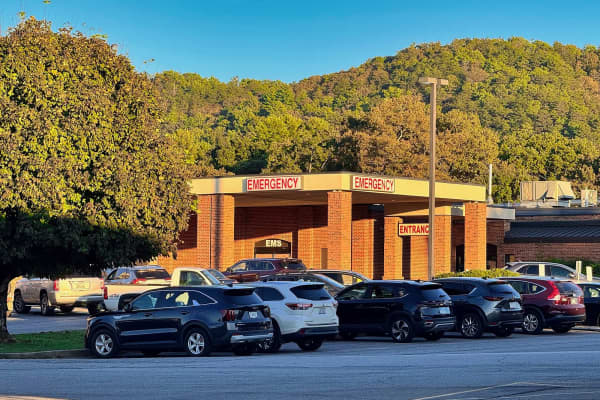
A hospital bill isn't always the final number. Both hospital systems in Utah County, Intermountain Health and MountainStar Healthcare, have financial assistance programs that can cut a bill to zero for lower-income patients, and both discount bills for the uninsured. Utah law also requires notice before most medical debt can hurt your credit.
This guide uses Intermountain's 2025 financial assistance policy and patient page, MountainStar's financial assistance page, Utah Code 31A-26-313 and Consumers' Checkbook reporting on the federal medical debt rule, checked Nov. 18, 2026. It's general information, not legal or financial advice.
Which hospital system
| System | Utah County hospitals |
|---|---|
| Intermountain Health | Utah Valley Hospital (Provo), American Fork Hospital, Orem Community Hospital, Spanish Fork Hospital |
| MountainStar Healthcare (HCA) | Timpanogos Regional Hospital (Orem), Mountain View Hospital (Payson) |
Each system's policy covers its own hospitals and, at Intermountain, its employed providers. Bills from outside doctors, such as some ER physicians, anesthesiologists or labs, may come separately and need their own request.
Intermountain Health
| Family income, as a share of the federal poverty guidelines | What Intermountain's policy offers |
|---|---|
| Up to 250% | Fully discounted care, after other payment options are used |
| Over 250% up to 500% | Discounted care |
| Over 500%, with out-of-pocket costs above 25% of income | Medical hardship: charges limited to 25% of annual family income |
Patients who qualify aren't charged more than the amounts generally billed to insured patients for emergency or medically necessary care.
Uninsured? Uninsured hospital patients who don't qualify for Medicaid or other programs get an automatic discount; contact the hospital where you got care.
Applying:
- Apply as early as you can, but you can also apply after the bill arrives, and even after it's gone to collections.
- Expect to provide recent pay stubs, your latest tax return, bank statements and monthly expenses, plus a Medicaid denial letter if you have one.
- Can't document it? The policy allows presumptive eligibility for people who are homeless or receive benefits such as SNAP, WIC, subsidized school lunch or subsidized housing.
- Approval lasts 12 months. You can appeal within 90 days of a decision.
- If you get partial help and can't pay the rest at once, Intermountain says it will work out a reasonable payment plan.
The policy also says Intermountain won't pursue extraordinary collection actions without first trying to find out whether you qualify, and won't attempt collection while that's being decided.
MountainStar: Timpanogos Regional and Mountain View
- Free care generally applies at 0 to 200% of the federal poverty level, with documented income.
- Balances over $1,500 with income from 201% to 400% may qualify for an expanded policy; ask the hospital.
- Self-pay patients get a discount similar to managed care rates if they have no insurance and don't qualify for Medicaid or charity care. Elective cosmetic procedures and flat-rate self-pay procedures are excluded.
- Medicare patients' preferred income proof is the most recent federal tax return; otherwise two items such as a state tax return, recent pay stubs or three months of bank statements.
Some locations add their own criteria, so confirm with the hospital. Uninsured and self-pay patients are also entitled to a separate Good Faith Estimate under federal law.
Before a bill goes to collections
Utah law, Utah Code 31A-26-313, says a health care provider must send a notice before a collection action that leads to a credit bureau report, including handing the debt to a collection agency:
- The notice states the amount owed, a payment deadline, and that not paying may lead to a credit report or a collection agency and may hurt your credit score.
- The deadline must be at least 45 days after the notice, or 60 days for Medicare beneficiaries and retirees 65 and older.
- It can come by certified, priority or first-class mail, email or text (no email for Medicare and 65-plus patients).
The exception: providers that follow the federal 501(r) collection rules for nonprofit hospitals aren't subject to the notice requirement, because those rules carry their own protections. So use the time a bill gives you to apply for assistance.
Medical debt and your credit
In January 2025, the Consumer Financial Protection Bureau finalized a rule to remove medical bills from credit reports. In mid-July 2025, a federal judge in Texas vacated it, Consumers' Checkbook reported.
What still applies: since 2023, Equifax, Experian and TransUnion say they:
- Don't report medical debts under $500
- Wait one year before reporting larger unpaid medical debt
- Remove medical debt once it's paid
Step by step
- Get an itemized bill and check it for errors or duplicate charges.
- Check your insurance explanation of benefits; a denied claim may be fixable.
- Apply for financial assistance with the hospital, even if the bill is already in collections.
- Ask about an interest-free payment plan for what's left.
- See if you qualify for Medicaid; our health insurance guide explains it.
- If it's already with a collector, consider negotiating, or get free help from a nonprofit credit counselor.
Related guides
- Health insurance in Utah, explained
- Healthcare in Provo
- Small claims court in Utah County
- Free and low-cost legal help in Utah County
Frequently Asked Questions
Does Intermountain Health offer free care?
Does Timpanogos Regional Hospital have charity care?
Can I apply for hospital financial assistance after I get the bill?
Do uninsured patients get a discount at Utah County hospitals?
What documents do I need for hospital financial assistance?
How much notice does Utah require before medical debt goes to collections?
Does medical debt show up on my credit report?
What should I do first with a big hospital bill?
Sources
The facts in this guide were checked against these sources. Hours, fees and rules change, so confirm anything time-sensitive with the source before you go. How we make Provo.com.
- Financial Assistance Policy (2025), Intermountain Health. Checked November 18, 2026.
- Financial Assistance, Intermountain Health. Checked November 18, 2026.
- Financial Assistance, MountainStar Healthcare. Checked November 18, 2026.
- Patient Financial Resources, MountainStar Healthcare. Checked November 18, 2026.
- Federal Judge Kills CFPB Rule that Banned Medical Debt in Credit Reports (updated Aug. 8, 2025), Consumers' Checkbook. Checked November 18, 2026.
- Intermountain Utah County hospitals announce contributions to nonprofit groups (Aug. 30, 2022), Intermountain Health. Checked November 18, 2026.
- Utah Code 31A-26-313, Health care provider collection notice, FindLaw (Utah Code, current as of Jan. 1, 2025). Checked November 18, 2026.