The gap this guide is about is a specific one. It is not for people with good insurance, and it is not really for people on Medicaid, who have a clear route into care. It is for the substantial number of Utah County residents who earn too much to qualify for public coverage and too little to absorb what a clinic visit costs — the self-employed contractor, the family between jobs, the student aged off a parent's plan, the worker whose employer offers a plan with a deductible high enough to be theoretical.
Utah County has more infrastructure for those people than most of them know about, and one significant piece of it opened in 2026. This is what exists, what each door does, and which one to try first.
A standing caution: eligibility rules, hours, prices and locations in this corner of the health system change often, and several of the organizations here have moved or reorganized in recent years. Every figure below should be confirmed by phone before you rely on it.
Start here if you are in a hurry
If you have no insurance and need to be seen soon, try the Bingham Family Clinic at UVU or the Volunteer Care Clinic in Provo. Both are free at the point of care.
If you need ongoing primary care and can pay something, Mountainlands is the sliding-scale option and takes patients regardless of insurance status.
If you need a specialist, dental work, or help getting covered at all, Community Health Connect has been the county's coordinator rather than a clinic, but its website has lapsed, so confirm by phone that it is still operating before you count on it.
The Bingham Family Clinic: the newest and least known
Utah Valley University and the Marc C. and Deborah H. Bingham Foundation opened the Bingham Family Clinic on April 17, 2026, in the Health Professions Building on UVU's West Campus, on the west side of I-15 across from the main Orem campus. It sits at 987 S. Geneva Road, near the Orem FrontRunner station.
It is free, and it is for people without insurance: the clinic serves uninsured patients with total household income below 300% of the federal poverty level, weekdays from 10 a.m. to 6 p.m. That is a different model from a sliding scale, which still bills something. UVU has described services including medical exams, chronic care management, preventive care, dental hygiene and on-site pharmacy services.
Why the Bingham clinic matters structurally
Utah County had walk-in charity sessions before this. What it did not have was a full-time free clinic of the kind Salt Lake County has had for years, which is how the project was described when it was announced in 2025.
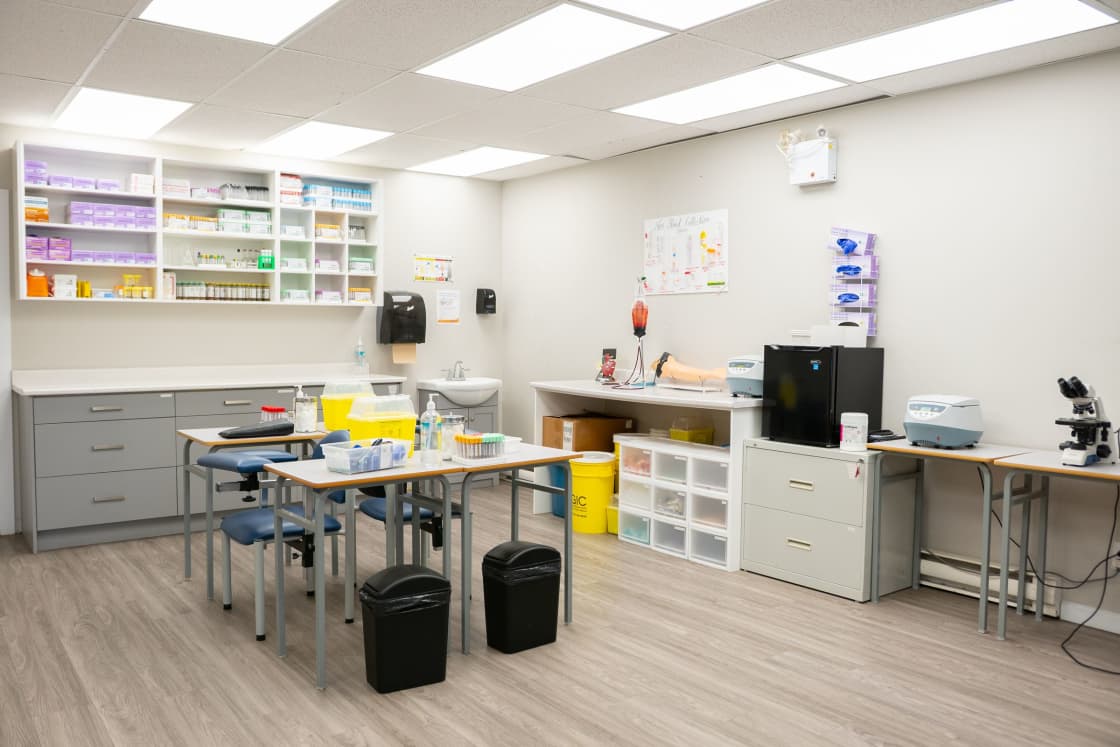
The clinic is also a teaching site. It draws on UVU's nursing and physician assistant programs and has partnered with Noorda College of Osteopathic Medicine for clinical rotations, with BYU's School of Medicine and Rocky Mountain University's PA program also named in the planning. That matters for capacity: a clinic staffed substantially by supervised students and volunteer clinicians can see patients at a cost structure a conventional practice cannot match.
Call the clinic or check UVU's clinic page for how to book.
Mountainlands: the backbone
Mountainlands Community Health Center is the federally qualified health center for this area, and it is the closest thing Utah County has to a default answer. An FQHC receives federal funding on the condition that it serves everyone regardless of ability to pay, which is why it can run a sliding scale at all.
Mountainlands offers comprehensive primary care on a sliding fee scale based on income and family size. The main Provo site is on South State Street, with additional Provo locations including an East Bay clinic on East 900 South and a site on North Freedom Boulevard, plus locations further south in the county. The general number is (801) 429-2000.
What Mountainlands covers
More than people expect. Across its sites the organization lists primary care, dental, behavioral health, obstetric and maternal health, substance-use treatment, on-site pharmacy, and what the sector calls enabling services — the interpretation, transport help and paperwork assistance that determine whether care happens.
The behavioral health piece is worth flagging separately, because the usual assumption is that free and low-cost clinics do bodies and not minds. Mountainlands does both, on the same scale.
How a sliding scale really works
The scale is set against federal poverty guidelines and your household size, and you have to document income to be placed on it. Bring pay stubs, a tax return, or whatever evidence of household income you have; going in with nothing will slow the process down more than the visit itself.
Sliding scale does not mean free. At the lowest bands the charge can be very small, and at higher incomes you may find the scale is not much better than paying a cash-pay practice directly. It is worth asking what your band is rather than assuming, and worth asking about payment plans, which several providers here offer interest-free.
The Volunteer Care Clinic
The Volunteer Care Clinic was founded in 2006 to serve Utah County residents living below 150% of the federal poverty level with no health insurance. It has operated out of the east side of the Mountainlands building on South State Street in Provo, historically as a walk-in on Tuesday and Thursday evenings beginning at 5 p.m., no appointment, first come first served.
Its sponsors are a coalition rather than a single owner: Mountainlands, Community Health Connect, The Church of Jesus Christ of Latter-day Saints, Intermountain Health, the Utah County Health Department and United Way, each with a board seat.
What the Volunteer Care Clinic will and will not do
It is an acute care clinic. It exists for short-term illness — the infection, the injury, the thing that has gone wrong this week.
It is explicitly not equipped for chronic illness management, major trauma, or psychological disorders. What it does in those cases is screen and refer, which is useful if you do not know where to start, but it is not a substitute for a primary care relationship. If you have diabetes or high blood pressure, the clinic is not your answer; Mountainlands or the Bingham clinic is.
Community Health Connect: the coordinator
Community Health Connect is the one people most often miss, because it is not a clinic and there is nothing to walk into. It is a matching service: it screens patients for eligibility, then places them with doctors and dentists who have agreed to see charity patients in their own offices.
That model unlocks something the clinics cannot. A walk-in clinic cannot give you a neurologist. A volunteer provider network can, and the organization has listed medical care, dental, eye care, OB/GYN, specialty care including neurology and urology, physical therapy and pediatric care among what it coordinates.
Working with Community Health Connect
The organization's website, communityhealthconnect.org, now points to a domain-for-sale page, so call to confirm it is still operating and what its current hours are. Eligibility has been set at Utah County residency with income at or below 150% of federal poverty guidelines. Services are listed in English and Spanish.
Beyond appointments it handles the surrounding logistics — interpretation, coordinating hospital or surgical center costs, anesthesia and lab arrangements, and advocating on billing. It also employs a navigator to help people enroll in Medicaid, CHIP or a Marketplace plan, which is frequently the better long-term outcome than repeat charity care.
Dental, which is the hardest thing to find
Dental is where the county's gap is widest, because dental sits outside most coverage even for insured people.
Three routes exist. Mountainlands offers dental on the sliding scale, with services including cleanings, exams, x-rays, fillings, crowns, bridges, root canals and prosthetics, and has historically asked for a down payment followed by interest-free monthly payments. Community Health Connect places qualifying patients with volunteer dentists. And UVU runs a dental hygiene clinic in the Health Professions Building on Geneva Road in Orem, where students provide cleanings, x-rays and exams at low cost under supervision.
The UVU clinic is a teaching clinic, which means appointments run long and availability follows the academic calendar. It is cleaning and prevention, not restorative work.
If you have no permanent housing
The Food & Care Coalition works with Mountainlands' East Bay Health Center, which provides medical and dental services to people without permanent housing on a weekday schedule.
This is worth knowing about even if it does not apply to you, because it is the piece of the network most likely to be relevant to someone you are trying to help.
Prescriptions, which are their own problem
Being seen is half the transaction. Filling what you are prescribed is the other half, and it is where a free visit can still turn into an unaffordable week.
Two of the doors here address it directly. Mountainlands operates on-site pharmacy services at its main site, and the Bingham clinic was planned around a Class A retail pharmacy intended to fill prescriptions free of charge, stocking a broad formulary while excluding scheduled narcotics. Organizers also described a patient assistance program for conditions needing longer-term medication management.
If you are choosing between doors and you know you will leave with a prescription, that is a reason to weight a clinic that can fill it in the building.
The county health department does things people forget
The Utah County Health Department is not a primary care clinic and will not manage your diabetes, but it handles a specific set of services at low or no cost that people routinely pay retail for elsewhere — immunizations among them, along with communicable disease services and a range of public health programs.
It is worth a call before paying full price for something preventive, particularly for children's vaccinations and travel-related shots.
What to bring to a first visit
Bring photo identification, whatever proof of Utah County residency you have, and documentation of household income — pay stubs, a recent tax return, or a benefits letter. Bring a list of every medication you take, including doses, and the name of anywhere you have been seen before.
If English is not your first language, say so when you book rather than on arrival. Interpretation is available through several of these organizations but often has to be arranged in advance, and an appointment without it can turn into a wasted trip.
Expect the first visit to take longer than a normal appointment. Income screening, eligibility paperwork and enrollment all happen before anyone examines you.
Children have their own routes
Children are frequently eligible when adults in the same household are not. Utah's Children's Health Insurance Program covers kids in families earning too much for Medicaid but not enough for private coverage, and the income ceilings are higher than most parents assume.
Community Health Connect co-organizes a school-based dental campaign reaching Title I schools in the county, and pediatric care sits inside its volunteer network. Before paying cash for a child's care, check eligibility — the answer is different for them.
Getting covered instead
For many people reading this, the better outcome is not a cheaper clinic visit but coverage. Utah expanded Medicaid, and the income thresholds catch more working people than most assume — a large number of uninsured Utahns are eligible for something and have never applied.
Community Health Connect's navigator does this work, as do Mountainlands' enabling services staff. Our guide to health insurance in Utah covers the Marketplace, Medicaid and the student plans in more detail. Open enrollment dates move and have recently been subject to legal dispute, so check current dates rather than working from memory.
Your right to a price before you agree
If you are uninsured or paying cash, you are generally entitled to a written good-faith estimate of what a scheduled service will cost before you receive it. This is a federal protection, not a courtesy, and it applies well beyond the clinics in this guide.
Use it. Ask for the estimate in writing when you book anything scheduled, and keep it. It converts an open-ended obligation into a number you can plan around, and it gives you something concrete to point at if the bill arrives materially higher.
The same instinct applies before any procedure a clinic refers you out for. The referral is free; the imaging, the lab work and the anesthesia are usually not, and those are the charges that surprise people. Ask who is billing, and ask what it will be, before the appointment rather than after.
Where this network is thin
An honest guide should say what is missing. Specialty care depends on volunteer capacity, which means waits vary with how many providers have said yes that quarter. Restorative dental work — root canals, crowns, dentures — is harder to access than cleanings and remains the most common unmet need. Vision beyond a basic exam is limited.
None of that is a reason to skip the phone call. It is a reason to make it early, because the constrained resources here are allocated by queue, and the queue rewards the person who started it in March rather than the person who started it the week the tooth broke.
The emergency room is not the answer, and also is
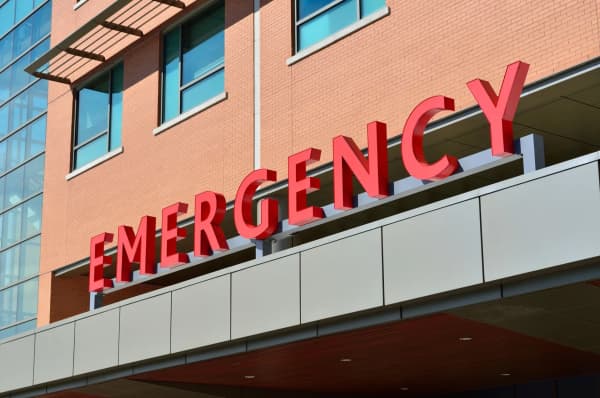
Two things are true at once. An emergency room will see you regardless of ability to pay and is the correct destination for an emergency. And an emergency room visit for something a clinic could have handled generates a bill that follows people for years.
Much of the network in this guide exists specifically to intercept that second case. When Wasatch Behavioral Health describes its Receiving Center, it counts avoided ER visits as the metric. The same logic runs through the Bingham clinic's stated aims.
If it is an emergency, go. If it is not, one of the doors above is almost certainly cheaper, and several are free.
A practical order of operations
If your need is a specialist, dental work, or coverage, try Community Health Connect if it is still operating, and Mountainlands' enabling services staff either way.
Try the Bingham clinic or the Volunteer Care Clinic if you are uninsured and need to be seen.
Establish with Mountainlands if you need somewhere to belong long-term, especially with a chronic condition or a need that spans medical, dental and behavioral care.
And confirm everything by phone. This is the part of the health system that changes most and advertises least. Our overview of healthcare in Provo sets out the wider landscape of hospitals and practices around these clinics.
Related Guides
- Weight management clinics in Utah Valley: how the system works — the four different things sold under that name, and the questions that tell them apart
- Dental Care on a Budget in Utah Valley — where the dental side of low-cost care is, including the sliding-scale clinics
- Healthcare in Provo: The Complete Guide
- Health Insurance in Utah: Marketplace, Medicaid, PCN and Student Plans
- Finding a Therapist in Utah Valley
- Student Health and Wellness at BYU and UVU
- UTA Fares and Passes Explained for Utah County
- Mental-Health Crisis Resources in Utah Valley: 988, SafeUT and the Receiving Center
Frequently Asked Questions
Is there a free clinic in Utah County?
What is a sliding scale, and does it mean free?
Where can I go without insurance and without an appointment?
How do I see a specialist if I have no insurance?
What are the options for dental care?
Do these clinics serve people who are not U.S. citizens?
Is help available in Spanish?
What if the problem is mental health rather than physical?
Sources
The facts in this guide were checked against these sources. Hours, fees and rules change, so confirm anything time-sensitive with the source before you go. How we make Provo.com.
- Utah Valley University and Bingham Foundation Open Free Healthcare Clinic for the Orem Community, Utah Valley University. Checked October 12, 2026.
- Mountainlands Community Health Center (home page), Mountainlands Community Health Center. Checked October 12, 2026.
- Filling a gap: UVU opens new health clinic to serve community, Daily Herald. Checked October 12, 2026.
- Making a Difference: Volunteer Care Clinic serves underserved, keeps Utah County healthy, Daily Herald. Checked October 12, 2026.