In the fall of 1856, two companies of emigrants pulling handcarts toward Salt Lake City were caught by early snow in what is now Wyoming. Hundreds died before rescue wagons from Utah reached them and brought the survivors in. The Willie and Martin handcart companies are central to Latter-day Saint memory, and to the youth treks many Utah Valley families take part in, so the story is told often. This account sticks to what the record supports, names its sources and notes where they disagree.
Quick facts
| Question | Answer | Source |
|---|---|---|
| Handcart era | 1856 to 1860; 10 companies, nearly 3,000 people | Utah History Encyclopedia; Church History Topics |
| Willie company | Left Iowa City July 15, 1856; about 500 people, 120 handcarts, 5 wagons | Utah History Encyclopedia |
| Martin company | Left Iowa City July 28, 1856; 575 people, 146 handcarts, 7 wagons | Utah History Encyclopedia |
| Storm | Oct. 19, 1856 | WyoHistory.org |
| Call for rescue | Oct. 5, 1856, in Salt Lake City | Ensign; church history |
| Arrivals | Willie Nov. 9; Martin Nov. 30 | Utah History Encyclopedia; WyoHistory.org |
| Deaths | About 200 to 250, depending on the source and on whether two wagon companies are counted | See below |
| Rescuers | 363 identified; possibly over 400 | Church history |
Why handcarts
From 1856 to 1860, 10 of the more than 350 Latter-day Saint emigrating companies crossed the plains with handcarts, the church's history topic says, because handcarts cost less than wagons and could move faster. The Perpetual Emigrating Fund lent money to those who could not afford the journey. Utah's History Encyclopedia counts nearly 3,000 people and about 650 handcarts across those 10 companies, and quotes historian LeRoy Hafen calling it "the most remarkable travel experiment in the history of Western America." The church notes that the death rate in the other handcart companies did not exceed that of wagon companies.
A late start
The two 1856 companies left late. Historian William G. Hartley, writing in Utah's History Encyclopedia, explains that more people arrived than expected, which delayed assembling handcarts and tents, and that repairs at Florence, Nebraska, slowed them further. The Willie company left Iowa City on July 15 and the Martin company on July 28. WyoHistory.org, an online encyclopedia of Wyoming history, dates their departures from Florence to Aug. 17 and Aug. 27, with roughly 1,100 people between them, and records that luggage was cut from 17 to 10 pounds a person.
There were warnings. Levi Savage, a sub-captain in the Willie company, warned of the danger of leaving so late in the season, WyoHistory.org notes, and was reprimanded for speaking so freely.
Hartley lists what went wrong on the way: extra flour loaded onto the carts slowed and damaged them, flour expected at Fort Laramie never arrived, rations ran short and the travelers lacked warm clothing. "Food ran out; cattle died; rescue trains from Utah had difficulty reaching the exposed and hungry sufferers," he writes.
The call from Salt Lake City
Franklin D. Richards reached Salt Lake City on Oct. 4, 1856, with word that companies were still on the trail, the church's Ensign magazine recounted in 2006. The next morning, Sunday, Oct. 5, Brigham Young told the congregation: "Many of our brethren and sisters are on the plains with hand-carts, ... and they must be brought here." He added, "Go and bring in those people now on the plains."
The first rescue party, with 16 supply wagons, assembled at Big Mountain on Oct. 7, the Ensign says. The church's history department estimates that more than 200 wagons went out over the following weeks, about 300 wagon trips in all, and that its biographical database identifies 363 rescuers on the trail, with the total possibly over 400. Relief Society women in Utah's wards shared the work, helping provide food, medical attention and, later, work for the newcomers.
The storms and the rescue
The timeline, from WyoHistory.org:
| Date, 1856 | What happened |
|---|---|
| Oct. 19 | A winter storm hits the Martin company as it crosses the North Platte near present Casper. The same day, rescuers find the stalled Willie company on the Sweetwater near South Pass. |
| Oct. 28 | Three scouts find the Martin company about 100 miles east, at Red Buttes on the North Platte. |
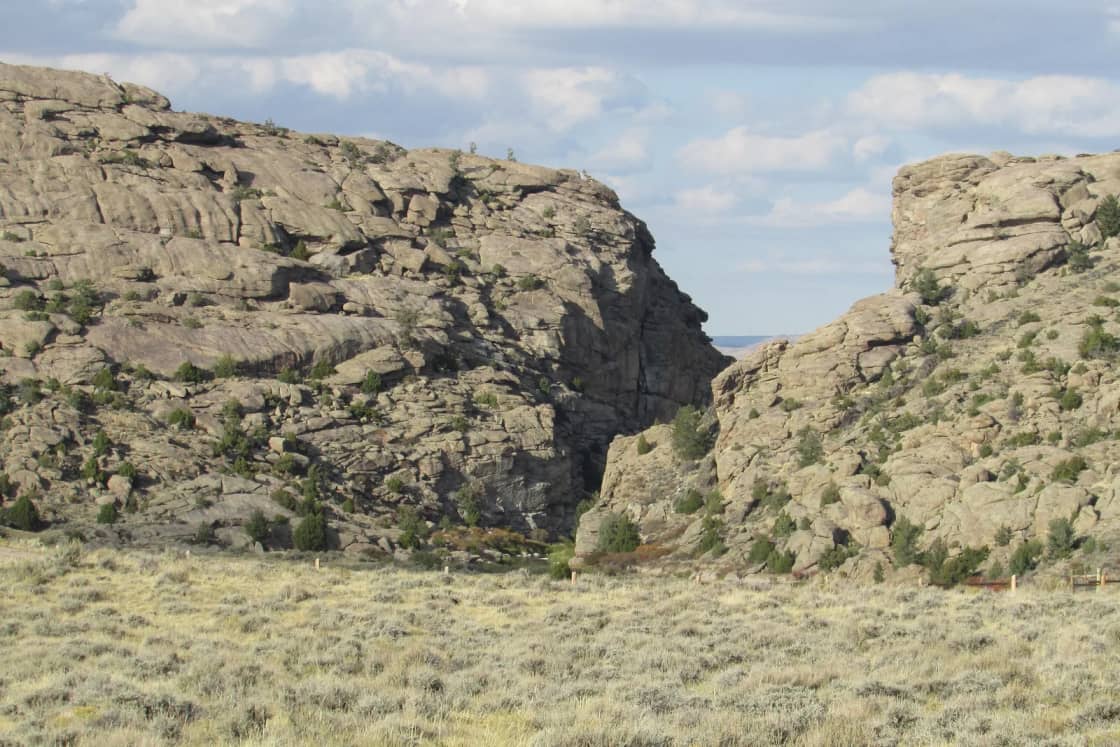
| Nov. 4 | About 500 members of the Martin company shelter in the rocks near Devil's Gate, the place later called Martin's Cove. |
| Nov. 9 | The Willie company reaches Salt Lake City. |
| Nov. 30 | The Martin company reaches Salt Lake City. |
Fifty-six members of the Martin company died in the nine days after the North Platte crossing, WyoHistory.org says. Rescuers moved people onto wagons, and the handcarts were left behind. Hartley describes teamsters driving wagons back and forth to pack the snow and keep the roads to Utah open.
The diaries carry the rest. Patience Loader of the Martin company wrote of being soaked and freezing after the river crossing, with no wood and no ground soft enough for tent pins. Ephraim Hanks, one of the scouts, described starving, shivering emigrants with "only one day's quarter rations" left.
How many died
The sources give different totals:
- Utah's History Encyclopedia: "about 200, or one-sixth of the companies."
- WyoHistory.org: 67 deaths in the Willie company (about 14 percent) and 135 to 150 in the Martin company (about 25 percent).
- The church's Sweetwater Valley history page: over 200 deaths in the two companies, a mortality rate of 16.5 percent against a trail average of 3.4 percent.
- The church's history topic: about 1,500 people stranded, counting the Hunt and Hodgetts wagon companies traveling with them, and approximately 250 deaths from exposure, frostbite and starvation. It credits over 300 rescuers with saving over 1,200 lives.
The difference is mostly what is counted: the two handcart companies alone, or the two wagon companies behind them as well.
What the record does not support
Some well-known details have grown in the telling. The church's own history topic says the tradition of three young rescuers carrying an entire company across the Sweetwater River "appears to have been embellished," citing historian Chad M. Orton. It is still a story many Latter-day Saints know well; the point is that the documented rescue was larger than any single crossing, with hundreds of rescuers and weeks of wagon trips.
The sites today
The church maintains three historic sites along the trail in Wyoming, which church leader Gordon B. Hinckley dedicated between 1992 and 1997, the church's Sweetwater Valley page says.
- Martin's Cove, at the Mormon Handcart Historic Site on Wyoming Highway 220 near Devil's Gate, about 55 miles southwest of Casper by the church's count (WyoHistory.org says about 60). Visitors can pull handcarts there. A monument on Bureau of Land Management land was dedicated on Aug. 15, 1992, and a BLM turnout near mile marker 57 offers views of the visitor center and Fort Seminoe.
- Sixth Crossing, a second site where visitors can pull handcarts. The church says a visitors' center near the Willie rescue site has exhibits honoring the rescuers.
- Rock Creek Hollow, where the Willie company camped. A monument placed in 1933 honors a mass grave of 13 people, though the church notes the grave's exact location is unknown. Hinckley dedicated the site on July 23, 1994.
From Provo, the Mormon Handcart Historic Site is about 365 miles and 6 hours 30 minutes by an OpenStreetMap (OSRM) routing estimate without traffic, and Rock Creek Hollow, reached by a back road, about 283 miles and 6 hours. For how stake youth treks to these sites work, what to pack and the trail loops, see our pioneer trek guide.
Related reading
- The Mormon Trail through Utah: sites from Echo Canyon to Emigration Canyon
- Emigration Canyon and the pioneer trail route
- This Is the Place Heritage Park
- Pioneer Day explained
- Provo history
Frequently Asked Questions
What were the Willie and Martin handcart companies?
How many people died in the Willie and Martin handcart companies?
Why did the handcart companies leave so late?
When did Brigham Young call for the rescue?
How many rescuers went out from Utah?
When did the companies reach Salt Lake City?
Is the story of three young men carrying the company across the Sweetwater true?
Where is Martin's Cove?
Sources
The facts in this guide were checked against these sources. Hours, fees and rules change, so confirm anything time-sensitive with the source before you go. How we make Provo.com.
- Handcart Companies (Church History Topics), The Church of Jesus Christ of Latter-day Saints. Checked November 27, 2026.
- Handcart Companies (William G. Hartley), Utah History Encyclopedia (Utah Education Network). Checked November 27, 2026.
- The Journey to Martin's Cove: The Mormon Handcart Tragedy of 1856 (Annette Hein, 2014), WyoHistory.org. Checked November 27, 2026.
- Go and Bring Them In (Ensign, December 2006), The Church of Jesus Christ of Latter-day Saints. Checked November 27, 2026.
- Five Things You Might Not Know about the Handcart Rescue (2019), Church History Department. Checked November 27, 2026.
- Remembering Handcart Pioneers in the Sweetwater Valley, The Church of Jesus Christ of Latter-day Saints. Checked November 27, 2026.
- Martin's Cove (trek history), Church History Department. Checked November 27, 2026.