
If you are new to Utah, July 24 will confuse you at least once. The courthouse is closed, the liquor store is closed, there are parades in three towns you drove through, and the post office is open as though nothing is happening.
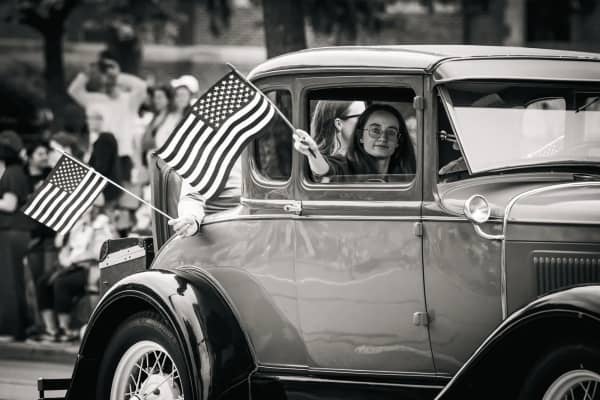
Pioneer Day is a Utah state holiday, and outside Utah almost nobody has heard of it. Inside Utah it is, in many towns, a bigger day than the Fourth of July — same fireworks, same parades, three weeks later, and with a specific thing being remembered.
This is the explainer. For which parades are running in a given year, see our current Pioneer Day coverage.
What it commemorates
On July 24, 1847, Brigham Young and the first company of pioneers entered the Salt Lake Valley after months crossing the plains, having left Illinois under sustained persecution. The valley became the settlement from which most of the Intermountain West was subsequently colonized, including this one — Provo was settled less than two years later.
The first celebration was held in 1848, one year after the arrival, and it has continued since. That makes Pioneer Day one of the oldest continuously observed pioneer holidays in the United States, older than most of the state holidays it now sits alongside.
It goes by several names locally: Pioneer Day, Days of '47, or simply the 24th.
What the first celebration actually looked like
The 1848 observance was not a parade. Held a year after the arrival, it centered on a bowery — a rough open-sided shelter of poles and branches, the settlement's first meeting place — where Brigham Young presided over a devotional, and it closed with a thanksgiving feast for the harvest. A community that had spent a year finding out whether it could feed itself was marking the fact that it could.
Everything the holiday later became — the parade, the rodeo, the fireworks — was built on top of that. The name moved too: it has been called Covered Wagon Days, the Days of '47, and simply the 24th. The sociologist Thomas O'Dea once described it as the greatest holiday of the Latter-day Saint calendar, and in terms of scale within Utah that is still roughly right.
Why it can feel bigger than the Fourth of July
Visitors consistently underestimate this, so it is worth stating directly: in many Utah towns, July 24 is the larger of the two July holidays. Same fireworks, same parades, bigger crowds, and three weeks later.
The reason is not that Utah is indifferent to Independence Day — the Fourth is celebrated thoroughly here, and Provo's Freedom Festival is one of the largest in the country. It is that Pioneer Day is specifically about this place. The Fourth belongs to every town in America equally. The 24th belongs to Utah, and a good deal of the state can name an ancestor who was in one of those companies.
The practical upshot for anyone planning a July visit to Utah Valley: the month has two peak weekends, not one, and hotel availability, canyon traffic and restaurant waits reflect both.
The Salt Lake side, if you want the big version
Utah Valley's celebrations are local and scattered. If you want the full-scale version, it is forty-five minutes north, run largely by Days of '47, Inc., a non-profit that exists to organize the commemoration:
- The Days of '47 Parade — one of the largest parades in the United States, stepping off on the morning of the 24th and televised statewide.
- The Days of '47 Rodeo, held over several nights at the Utah State Fairpark, with a cattle drive through downtown Salt Lake streets to open the week.
- The Deseret News Marathon, the longest-operating marathon in Utah, which starts before dawn on the 24th.
- A drone show at Liberty Park, which in recent years has replaced or supplemented the traditional fireworks.
- This Is The Place Heritage Park, at the mouth of Emigration Canyon — the spot the pioneer company came through — which runs pioneer-themed activities across the holiday period.
Festivities in Salt Lake generally run for a week to ten days around the date rather than on the day itself, so the 24th is the peak of a season rather than the whole of it.
Why it is a state holiday, and what that actually means for your week
This is where planning goes wrong, so it is worth being precise.
Pioneer Day is a Utah state holiday, not a federal one. Utah state employees receive twelve paid holidays: the eleven federal holidays plus Pioneer Day.
What closes:
- State government offices and courts
- County and most city offices
- Public libraries
- State liquor stores — Utah's are state-run, so they close with the state
- Most banks
What does not close:
- The post office. Not a federal holiday, so mail runs normally.
- Federal offices generally
- Grocery stores, and most chains
- A great many restaurants and shops
Private employers are not required to observe it. Utah law does not compel private businesses to close or to give paid time off, which is why the day looks so uneven: one street will be shut and the next will be trading normally.
The practical rule: treat July 24 like a bank holiday for anything governmental, and like an ordinary summer Friday for anything commercial — but ring ahead if it matters.
The date moves in weekday, not in date
Pioneer Day is fixed to July 24, so the day of the week changes annually. It falls on a Friday in 2026, a Saturday in 2027, and a Monday in 2028. When it lands on a weekend, state offices observe it on an adjacent weekday, so confirm the observed date rather than counting on the 24th itself. Any year it lands adjacent to a weekend, expect the whole valley to treat it as a long one.
How Utah Valley does it, and why it looks scattered
Salt Lake City concentrates the holiday: the Days of '47 Parade, one of the largest in the country, a rodeo, and the Deseret News Marathon, the longest-running marathon in Utah, which starts in the dark on the morning of the 24th.
Utah Valley does the opposite — it distributes it. There is no single county-wide event, and newcomers looking for "the" Pioneer Day celebration will not find one. Instead:
-
Provo has run a Pioneer Day Extravaganza at North Park (500 North 500 West) through Parks and Recreation, with games, crafts, entertainment and pie-eating contests, alongside the Temple to Temple Run, a 5K from the Provo Utah Temple past BYU campus to the Provo City Center Temple, in which participants are invited to run on behalf of an ancestor.
-
Several cities fold the date into a larger multi-day celebration rather than staging a separate one, which is why the county's July calendar can look like it skips the holiday when in fact three towns are in the middle of week-long festivals.
-
Spanish Fork's Fiesta Days is the county's anchor event, and it is where the 24th is biggest in Utah Valley: a roughly ten-day celebration in mid-to-late July built around Pioneer Day, carrying the largest 24th of July parade in Utah County, a PRCA rodeo that has been running for more than eighty years, concerts, a carnival and fireworks.
Because these dates shift annually, this page deliberately does not print them; our current Pioneer Day coverage carries the year's schedule.
One thing worth untangling, because visitors mix them up constantly. Not every big Utah County city festival is a Pioneer Day festival. Fiesta Days is genuinely built around the 24th. Pleasant Grove's Strawberry Days runs in June. American Fork's Steel Days and Payson's Golden Onion Days sit elsewhere on the calendar entirely — Golden Onion Days is a Labor Day event. A single county summer produces several week-long city celebrations, and only some of them are about July 24.
The local history the holiday runs straight into
Pioneer Day is a Salt Lake holiday by origin, but Utah Valley is downstream of it in a very literal way.
The 1847 company arrived in the Salt Lake Valley in July. Settlers built Fort Utah on the Provo River in the spring of 1849 — less than two years later — and that is the founding date Provo uses. The fort was renamed Provo and the settlement incorporated in 1851. In other words, the thing Pioneer Day commemorates is the direct cause of this city existing, on a timescale of months rather than generations. Our Provo history guide covers what followed.
And the same history has a second side that belongs in an honest explainer rather than in a footnote. Utah Valley was Timpanogos territory, and the arrival of settlers here produced conflict quickly — including the 1850 fighting at Fort Utah, sometimes called the Battle of Provo River, between settlers and Timpanogos Utes. The valley still carries Timpanogos names on its largest features: Mount Timpanogos, and Peteetneet in Payson, from Pah-ti't-ni't, a clan leader whose name comes from the Timpanogos dialect.
For descendants of pioneer families, July 24 is a family holiday with reunions and cemetery visits attached. For Utah's Indigenous communities, the same date marks the beginning of dispossession. Both of those are true at once, and a visitor who understands that will read the parades more accurately than one who does not.
If you see teenagers pulling handcarts in July, this is why
One sight genuinely bewilders newcomers. Somewhere in a canyon or on a dirt road in mid-summer, a column of teenagers in bonnets, long skirts and braces will be hauling wooden handcarts through the heat, usually with adults in period clothing walking alongside.
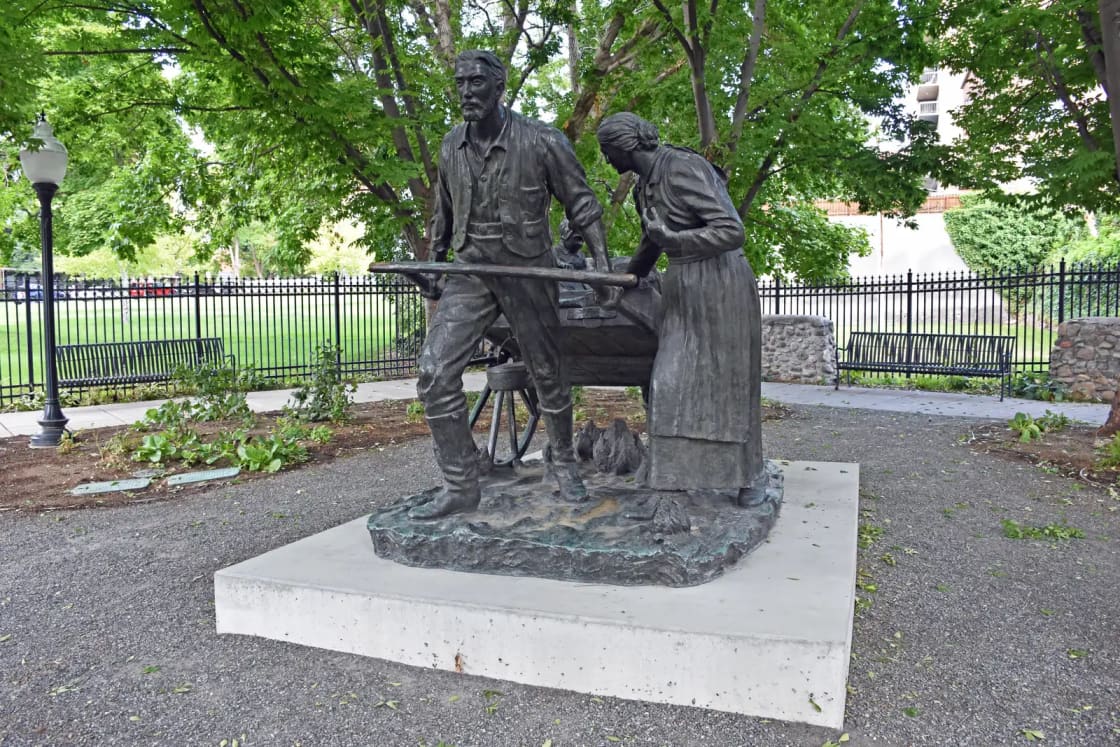
This is a trek — a multi-day reenactment in which youth groups pull handcarts over a set route, sleeping outdoors, as a way of encountering the pioneer journey physically rather than reading about it. The handcart detail is historically specific: some companies crossed the plains without wagons or livestock, pulling their belongings themselves, and two late-departing companies were caught by early snow in Wyoming in 1856 with heavy loss of life. That episode is why the handcart, rather than the covered wagon, became the emblem of the harder version of the story.
Treks are organized locally and run through the summer rather than only on the 24th, which is why you may see one weeks either side of the holiday. If you pass one on a canyon road, the courteous thing is simply to slow down and give them room.
Practical notes for the day itself
- Parades start early. July mornings are the only comfortable part of the day here, so small-city parades commonly step off between 8 and 10 a.m. People set out chairs the night before, and in some towns that is an accepted local convention rather than queue-jumping. Arrive at noon and you will find a street being swept.
- Heat is the real constraint. Valley temperatures in late July routinely run into the upper nineties and past 100°F. Shade along a parade route is scarce and largely claimed by 8 a.m. Bring water, and see our Provo weather guide for what the month actually does.
- Parking and road closures. A small-city parade closes its main street for hours. If you live on the route, move the car the night before.
- Sunday adjacency. When the 24th falls next to a Sunday, expect a distinctly quiet valley on one side of the holiday and a busy one on the other. Our Sunday dining guide covers what stays open.
- It is a genuinely good weekend to be a visitor. Small-town American parades of this scale are rare, they are free, and nobody minds an outsider turning up.
The fireworks question, which is not a formality
Both July holidays are fireworks holidays in Utah, and the rules are genuinely restrictive and genuinely local.
Utah sets discharge windows around July 4 and July 24 rather than allowing fireworks through the month. On top of that, individual cities and counties impose their own restrictions, and in a dry year those routinely include outright bans on personal fireworks in areas near the foothills and canyons — which in Utah Valley is a large share of the residential map.
Two things follow. First, the ban is on personal fireworks; professional displays generally go ahead. Second, the boundary is drawn by your city, not by the state, so the answer for your street can differ from your neighbor's a mile west. Check your own city's current map before buying anything, every year.
Pie and Beer Day
Somewhere along the way, "Pioneer" became "Pie 'n' Beer," and a secular counter-observance grew up around the pun — pie and beer specials at bars, restaurants and bakeries, concentrated in Salt Lake City and thinner here.
It is worth knowing for two reasons. It explains signage you may see in late July, and it illustrates something real about how the holiday sits in modern Utah: a state holiday with religious origins that a substantial non-member population also has a relationship with, sometimes reverent, sometimes wry, often both.
One practical note: state liquor stores are closed on the holiday itself. Anyone planning around Pie and Beer Day buys the beer the day before.
If you are new here, three things worth knowing
It is not only for members of the Church. Plenty of people at a Pioneer Day parade have no connection to The Church of Jesus Christ of Latter-day Saints. The holiday functions locally the way a founding day functions anywhere — it belongs to the place.
Not everyone experiences it the same way. For descendants of pioneer families it is genuinely a family holiday, with reunions and cemetery visits. For Utah's Indigenous communities the 1847 arrival is the beginning of a very different history, and that is part of the honest picture of the date rather than a footnote to it.
The parades start early. July mornings here are the only comfortable part of the day, so small-city parades commonly step off between 8 and 10 a.m., and people set out chairs the night before. If you turn up at noon expecting a parade, you will find a street being swept.
The fireworks windows, which are set by statute and not by your city
A great deal of Pioneer Day confusion is really fireworks confusion, and it comes from a single misconception: that each city decides when its residents may light fireworks. It does not. The dates and hours are set in state statute, they are the same everywhere in Utah, and a city's power to depart from them is narrow and specific.
The statute, and the term nobody uses correctly
The controlling section is Utah Code § 53-7-225, part of the Utah Fireworks Act at §§ 53-7-220 through 53-7-225. Subsection (1) is emphatic about its own status: except as provided in § 53-7-221, this section supersedes any other code provision regarding the sale or discharge of fireworks.
The statute does not use "class C," which is the phrase almost every consumer-facing article reaches for. The category you can legally buy at a roadside stand is a "division 1.4G common state approved explosive," defined at § 53-7-202(5) as a firework purchased at retail for use by a consumer that is not a division 1.4G dangerous explosive. The dangerous list at § 53-7-202(6) is where the things people assume are legal actually sit: firecrackers, M-80s, cherry bombs, bottle rockets, roman candles, skyrockets, single-shot and reloadable aerial shells, and any cake containing more than 500 grams of pyrotechnic composition. Those may not be possessed, discharged, sold or offered for retail sale at all under § 53-7-222(1)(a), outside the licensed-operator exceptions.
The two windows, and why they explain the retail season
Sale, under § 53-7-225(2)(a), is permitted June 24 through July 25; December 29 through December 31; and the two days before and the day of Chinese New Year's eve.
That first window is a single continuous stretch covering both July holidays, which is why the stands appear before the Fourth and are still there for the Twenty-Fourth. There is one retail season, not two.
Discharge, under § 53-7-225(3), is narrower and split:
- July 2 through July 5, and July 22 through July 25, between 11 a.m. and 11 p.m. — except on July 4 and July 24, when the window extends to midnight.
- From 11 a.m. on December 31 until 1 a.m. on January 1, with a provision at (3)(b)(ii) for the case where New Year's eve falls on a Sunday and a county or municipality decides to celebrate on the prior Saturday.
- 11 a.m. to 11 p.m. on January 1.
- From 11 a.m. on Chinese New Year's eve until 1 a.m. the following day.
So Pioneer Day gets a four-day discharge window running July 22 through July 25, with the extra hour to midnight on the Twenty-Fourth itself. The evening of the 25th is legal; the evening of the 26th is not.
The penalty, and the limits on what a city may do
§ 53-7-225(4) makes discharge outside those dates and times an infraction punishable by a fine of up to $1,000 — and the same penalty applies to discharge in an area where fireworks are prohibited under § 15A-5-202.5(1)(b).
The provision that surprises people is § 53-7-225(5)(a): a county, a municipality, or the state forester may not prohibit a person from discharging a common state approved explosive during the permitted periods, except as allowed in subsections (5)(b) and (5)(c).
Those exceptions are real but bounded. Under (5)(b)(ii) a municipality may prohibit discharge in certain areas with hazardous environmental conditions in accordance with § 15A-5-202.5(1)(b), and may prohibit negligent discharge — defined at (5)(b)(i) as improper use and discharge, expressly not including the date, the location, or the type of explosive used. Under (5)(b)(iii) a county may prohibit negligent discharge only. Under (5)(c) the state forester may prohibit discharge as provided in § 15A-5-202.5(1)(b) or § 65A-8-212.
The practical translation: a city can close a mapped hazardous area, and it can punish reckless use anywhere. It cannot shorten the calendar.
What to actually do with this on the Twenty-Fourth
Check the map, not the rumor. Because closures are geographic rather than municipal, "are fireworks banned in my city" is usually the wrong question. The county map described in the next paragraph is the right one.
Expect the noise to run to midnight on the 24th and to 11 p.m. on the 22nd, 23rd and 25th. That is the statute rather than local custom, and it is the same everywhere in the state.
Assume nothing about aerials. Anything that leaves the ground on its own propulsion is almost certainly a division 1.4G dangerous explosive and unlawful for consumers regardless of the date.
For the fire-closure machinery and the liability that attaches to starting one, see our Mt. Nebo lavender farm guide; for how a professional municipal display is licensed, see Spanish Fork Fiesta Days.
Related guides
- Pioneer Day in Utah Valley: This Year's Parades and Fireworks
- Best Things to Do in Utah Valley
- How LDS Wards Work
- Summer Activities in Provo
- Provo History
- Payson Scottish Festival & Highland Games: The Complete Guide
- Utah County Fair & Rodeo: The Complete Guide
- Christmas in Provo: Holiday Events & Lights Guide (2026)
- Fourth of July in Provo 2026: An Hour-by-Hour Guide to the Big Day
- Stadium of Fire: How Provo's Fourth of July Actually Works
- The Timpanogos of Utah Valley
- Mapleton Pioneer Days
Frequently Asked Questions
What is Pioneer Day?
Is Pioneer Day a religious holiday or a state holiday?
What closes on July 24 in Utah?
Is the mail delivered on Pioneer Day?
What day of the week does Pioneer Day fall on?
How is Pioneer Day celebrated in Utah Valley?
What is Pie and Beer Day?
Do fireworks rules apply on Pioneer Day?