An SR-22 sounds like a kind of insurance, and plenty of drivers search for "SR-22 insurance," but in Utah it's a certificate: a form your insurance company files with the state's Driver License Division to prove you carry at least the minimum liability coverage. You need one after certain violations, usually for about three years, and keeping it continuous is what keeps your license valid.
Everything here is from the Driver License Division's SR-22 page, the Utah DMV's insurance requirements page and Utah Code Title 41, Chapter 12a and Title 31A, read November 28, 2026. This is a summary, not legal advice; the letter the division mails you controls your specific case.
The quick version
| What it is | proof of insurance, filed by your insurer with the Driver License Division |
| Main trigger | conviction for driving uninsured or without proof of insurance |
| How long | typically 3 years from the conviction |
| Form | AAMVA "Financial Responsibility Form," signed within 30 days |
| Minimum coverage | 30/65/25 for policies from Jan. 1, 2025 |
| If the policy ends | insurer must notify the state within 10 days |
| No car? | a non-owner SR-22 policy works |
Why Utah requires one
The Driver License Division lists these triggers:
- A conviction for driving without insurance or without proof of insurance. That conviction brings both a license suspension and the SR-22 requirement.
- Any other Financial Responsibility Act violation that ends in a court conviction.
- An uninsured vehicle registered in your name that is involved in an accident.
- A court order to pay damages from an uninsured accident.
- A Driving Privilege Card holder who can't show satisfactory proof of security.
The division notifies you by mail, so keep your address current with it.
Driving uninsured is expensive before the SR-22 even starts. The Utah DMV lists failure to insure as a Class B misdemeanor with a fine of at least $400 for a first offense and $1,000 for a second within three years, plus a $100 registration reinstatement fee if your registration was revoked.
How long it lasts
The division says the requirement "typically extends for a period of three years from the date of conviction," but varies by the reason. Utah Code 41-12a-411 keeps proof on file for three years from the date filing was last requested. Your official letter states your period; trust that over any general rule, including this one.
Getting one filed
- Call an auto insurer licensed in Utah and say you need an SR-22. Ask each insurer whether it files SR-22s, and compare quotes, since the violation on your record affects the price.
- Buy a policy at or above Utah's minimums. For policies issued or renewed on or after January 1, 2025, Utah Code 31A-22-304 requires $30,000 for bodily injury to one person, $65,000 for two or more people and $25,000 for property damage (30/65/25), or a single limit of $90,000 per accident. Our Utah car insurance guide covers the rest of a Utah policy, including no-fault PIP.
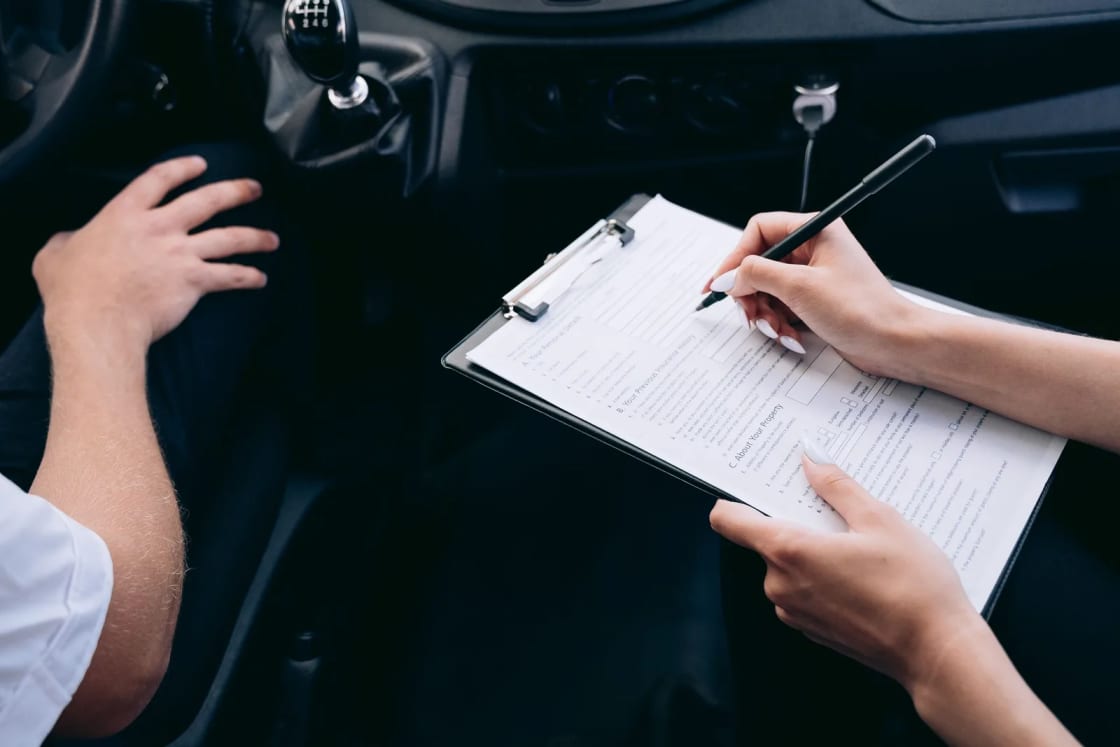
- The insurer files the form. The division accepts only an AAMVA-approved form titled "Financial Responsibility Form" from a Utah-licensed insurer, with a signature date no more than 30 days old. Your insurer or agent submits it; you can also email it, fax it to 801-965-4844 or bring it to a Driver License office.
- Reinstate your license if it was suspended. Proof of security and a reinstatement fee are part of that, according to the DMV. The division's reinstatement page lists the steps for your situation.
If you don't own a car
Utah Code 41-12a-402 lets an insurer certify a policy issued to a non-owner, without listing a vehicle. A non-owner policy covers you when you drive a car you don't own, and it can satisfy the SR-22 if you've sold your car or never had one.
If you're moving to or from Utah
A nonresident can file a certificate from an insurer licensed in the state where the vehicle is registered, or where they live if they own no vehicle, as long as the insurer agrees to Utah's terms (Utah Code 41-12a-403). If you're moving here with an SR-22 from another state, ask your insurer whether it can file in Utah or whether you need a Utah policy.
Keeping it in force
This is where most SR-22 problems happen. Under Utah Code 41-12a-404, a certified policy can't be terminated unless the insurer files notice with the state no later than 10 days after it ends. That notice can put you back into suspension.
- Pay on autopay. A missed payment that cancels the policy triggers the notice.
- Switch insurers carefully. Get the new company's SR-22 filed before the old policy ends.
- Don't drop it early. Wait until the end date in your letter.
- Keep your address current with the Driver License Division, since that's where its notices go.
Questions for the state
The Driver License Division's financial responsibility line is 801-965-4437, or toll-free 888-353-4224.
Related guides
- Car insurance in Utah: minimums and what drives your rate
- Utah's 0.05 DUI limit
- After a car accident in Utah: the claim
- Buying a used car in Utah Valley
Frequently Asked Questions
What is an SR-22 in Utah?
Why would Utah require me to have an SR-22?
How long do you need an SR-22 in Utah?
What happens if my SR-22 insurance lapses?
What are Utah's minimum liability limits for an SR-22 policy?
Can I get an SR-22 if I don't own a car?
How does the SR-22 get to the Driver License Division?
Sources
The facts in this guide were checked against these sources. Hours, fees and rules change, so confirm anything time-sensitive with the source before you go. How we make Provo.com.
- Why might I be required to have an SR22?, Utah Driver License Division. Checked November 28, 2026.
- Vehicle Insurance Requirements, Utah Division of Motor Vehicles. Checked November 28, 2026.
- Utah Code Title 41, Chapter 12a, Part 4: Proof of owner's or operator's security, Utah State Legislature. Checked November 28, 2026.
- Utah Code 31A-22-304, Motor vehicle liability policy minimum limits, Utah State Legislature. Checked November 28, 2026.