Upcoming dates

There is a specific way to waste money at a tasting festival, and almost everybody does it the first time. You arrive without tickets, buy a small number at the gate at the worst rate, spend them on the first three booths you walk past because you are hungry, and then discover that the thing you actually wanted was at the far end and you are out of currency. Meanwhile the family behind you bought a full sheet online on Thursday, walked the whole loop before buying anything, and is eating better for less.
Taste of Orem is a ticket-sheet festival, and the ticket sheet is the whole game. This page explains how it works, what the numbers actually are, and the order to do things in — checked on 17 September 2026 against the City of Orem's own published rules rather than against a listings site.
The basics
Saturday 19 September 2026, City Center Park, 300 East Center Street, Orem. Food from noon to 8 p.m. Stage from noon to 7:30 p.m. Free to enter.
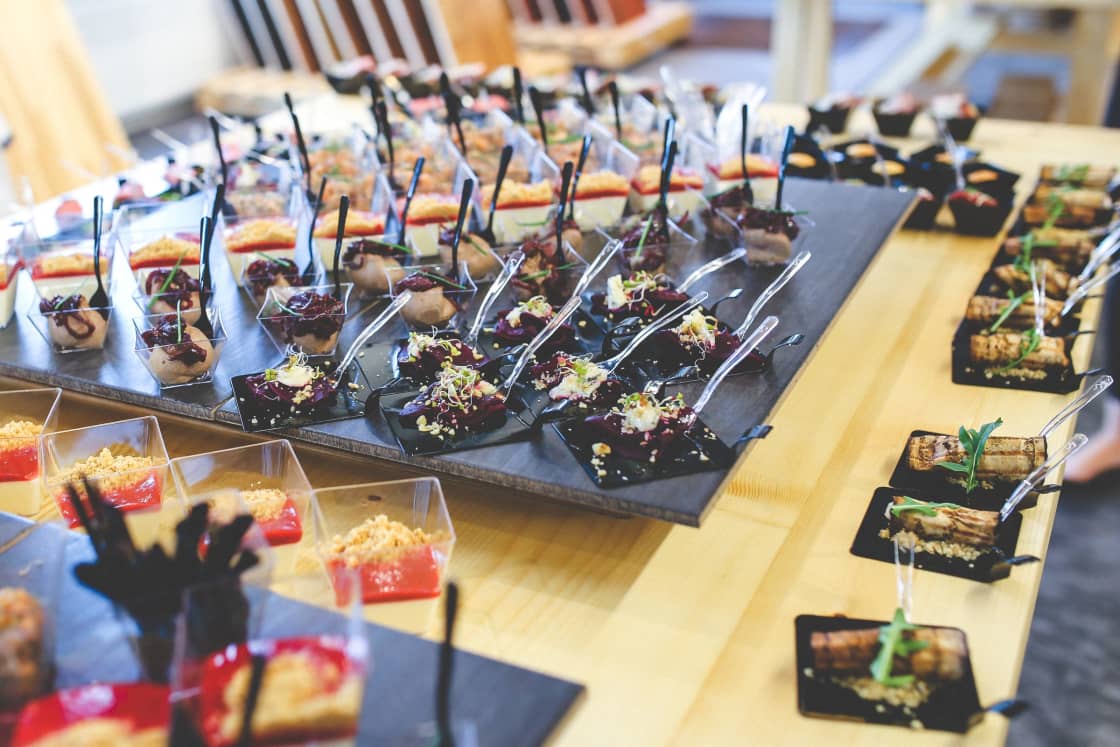
More than twenty Orem restaurants set up booths and serve mini entrées — not tasting spoons, but small versions of things off their actual menus. The stage runs live bands and cultural dance performances more or less continuously for the whole festival. The park has a playground. You pay for food and nothing else.
One change worth flagging if you went last year: 2026 is a single Saturday. The festival debuted in 2025 as a two-day event, with a Friday-evening kickoff concert and food trucks on the Friday and the full food festival on the Saturday. The city's published 2026 schedule is Saturday only. If your memory says "the Friday concert," that was the first year's shape.
How the ticket system works, which is the part people get wrong
You do not hand money to a restaurant. Not cash, not a card, not Venmo — no booth at Taste of Orem takes any form of payment. You buy a sheet of tickets, and each mini entrée costs somewhere between one and five tickets depending on what it is.
This is a completely ordinary arrangement at food festivals and it is completely baffling the first time you meet it, mostly because the consequence is invisible until you are standing at a booth with a wallet in your hand. Two practical results follow.
You have to buy tickets before you buy food, which means either buying online beforehand or queuing at the info booth when you arrive. Sheets bought in the presale are collected at that same info booth in City Center Park on the day, so the presale saves you money but not the trip to the booth.
You have to guess your total appetite in advance, in a currency you have never used, before you have seen a single menu. That is the actual difficulty of the format, and the section below is about solving it.
The numbers, and the 43 percent
Presale, online:
- Half sheet, 20 tickets — $31
- Full sheet, 40 tickets — $56
On the day, at the park, card only:
- 40 tickets — $65
- 20 tickets — $35
- 10 tickets — $18
- 5 tickets — $10
- 1 ticket — $2
Now convert those to a per-ticket rate, which is the only way to compare them, and the structure jumps out.
A presale full sheet works out at $1.40 a ticket. A presale half sheet is $1.55. On the day, a full sheet is $1.63, a half sheet $1.75, ten tickets $1.80, and buying them one at a time is $2.00 a ticket.
So the same mini entrée costs 43 percent more if you buy your tickets singly at the park than if you bought a full sheet online in advance. Nothing about the food changes. The gap is entirely a function of when and how much you bought.
Two rules fall straight out of that:
Buy in advance. The presale is 11 to 14 percent cheaper than the equivalent day-of sheet, and enormously cheaper than topping up in small amounts.
Buy in the largest sheet you will genuinely use. One full sheet split between two adults is cheaper per ticket than two half sheets, and substantially cheaper than a half sheet plus a top-up later in the afternoon, which is the pattern most families actually fall into.
When the presale ends, which the city's own page disagrees with itself about
This one needs saying plainly. The City of Orem's ticket page carries two different presale deadlines in the same block of text. One line says discounted presale prices run online until Saturday 19 September at 11:59 p.m. Another, a few lines later, says presale pricing is available online until Friday 18 September at 11:59 p.m. The published event rules point to the eighteenth.
We are not going to pretend to resolve a contradiction on somebody else's website. What we will say is what to do about it: buy by Thursday. If the earlier reading is right you have lost nothing, and if you gamble on the later one and it is wrong you pay day-of pricing, which is up to 43 percent more per ticket for exactly the same plate of food.
How many tickets you actually need
The city's own guidance is that 20 tickets per adult is enough for a very enjoyable and full experience, and having watched how these things go, that is an honest number rather than an upsell.
Here is the shape of it. With samples priced between one and five tickets, twenty tickets buys you roughly four generous plates at the top of the range, or up to a dozen small ones at the bottom, or — realistically — six to eight things of mixed size, which is a proper meal plus dessert plus something you tried because the queue looked interesting.
Some working numbers for a group:
Two adults, no children. One full sheet, 40 tickets, $56 presale. That is 20 each at the best rate available.
Two adults, two small children. Still one full sheet. Small children at a tasting festival eat perhaps three tickets' worth each and then want to be on the playground. Buying a second sheet for them is how people end up donating tickets at the end of the night.
One adult, going to try things. A half sheet, 20 tickets, $31. Resist the full sheet unless somebody is sharing it.
A group of six or more. Full sheets, one per two adults, and pool them. The per-ticket rate is the lowest available and pooling solves the appetite-estimation problem outright, because somebody always wants what somebody else cannot finish.
And if you get it wrong in the generous direction, the leftovers are not simply lost: unused tickets can be donated to the Orem Community Fund or left with a vendor as a tip. They are non-refundable either way, so the choice is between those two and the bin.
The order to walk it in
This is the advice that costs nothing and improves the day more than anything else on this page.
Walk the whole loop before you buy anything. Twenty-plus booths is fifteen minutes of walking. Do that first, with the tickets already in your pocket, and decide what you want before you spend. Almost everybody who leaves a tasting festival disappointed spent their first third on the first third of the booths.
Eat the thing that does not travel first. Anything fried, anything that arrives hot and crisp, anything with a sauce that will separate. Save the things that are as good at room temperature for later in the afternoon.
Split everything. Two people buying two different samples and halving both eat twice the variety for the same tickets. This is the entire technique and it is astonishing how few people do it.
Do the stage in the middle. The music runs noon to half past seven and the food runs to eight, so there is no point standing in a food queue during the set you wanted to see. Eat early, sit for a set, eat again.
Go back for the one you liked. The final hour is the quietest at any festival that runs to eight, because the families with young children left at six. If something was outstanding, that is when you get it without a queue.
Why a city runs a festival like this at all
It is worth understanding what Taste of Orem is for, because it explains the shape of it and it is not purely commercial.
Orem has a genuinely good and genuinely unshowy restaurant scene, and it has a structural problem: it is a long city strung along State Street with no obvious center of gravity for eating, so its restaurants are spread across strip malls and side streets where you find them only if you already know. A resident can live in Orem for a decade and never encounter half of them. Gathering twenty of them into one park for one afternoon solves in six hours a discovery problem that marketing does not.
The other half of the stated purpose is cultural. The festival's own framing is food and cultures — the stage carries cultural dance performances alongside the bands, and the restaurant roster in its first year spanned Korean, Italian, Hawaiian barbecue and Brazilian among others. That is a truer picture of who cooks in this city than a list of the best-known names would be, and it is the reason the festival sits alongside the Orem Asian Festival and the Colonial Heritage Festival in the city's year rather than competing with them.
The venue choice does the same work. City Center Park is the civic block — the library, the city offices and the stage all on the same ground — and putting the festival there rather than in a parking lot is a statement about where the middle of Orem is meant to be.
Eating a tasting festival with a dietary restriction
This is the part of the format nobody writes about, and it is the difference between a good afternoon and a frustrating one.
A tasting festival is harder than a restaurant for anybody avoiding something, and easier than you would expect, for opposite reasons. Harder, because there is no printed menu with allergens, no server to consult at length, and a queue of people behind you. Easier, because the person handing you the plate is frequently the person who cooked it, and because portions are small enough that you can afford to skip half the booths and still eat well.
Four things make it work.
Do the reconnaissance lap with the question in mind. The same loop that tells you what you want tells you which booths are viable. Ask at each one as you pass rather than when you are at the front of a queue holding tickets. Nobody minds a question from somebody who is not currently ordering.
Ask about the specific thing, not the category. "Is this vegetarian" is a harder question for a booth cook than "does this have chicken stock in it," and it gets a vaguer answer. The narrow question gets the accurate one.
Accept that cross-contact is real at a festival. Shared fryers, shared tongs, one prep table. For a preference this does not matter. For a serious allergy it matters a great deal, and a booth in a park cannot give you the assurances a kitchen can. That is not a failing of the festival; it is the nature of twenty kitchens working out of pop-up tents.
Plan for the children separately. A small child with a restriction at a festival where everything is unfamiliar will frequently eat nothing at all. Bring something they already like, and spend the tickets on yourself.
What to bring, and the mid-September weather problem
Mid-September in Utah Valley is genuinely two climates in one day. The afternoon can sit in the eighties with the sun straight overhead and no shade in the middle of a park, and by eight in the evening, after the sun has gone behind the west side of the valley, it can be twenty-five degrees cooler. A festival that runs noon to eight crosses that whole range.
So: water, because a tasting festival is salty food in the sun and the tickets do not buy drinks from a tap; a hat for the middle of the day, because the park's shade is at the edges and the booths are not; a layer for the last two hours, which is the thing everybody forgets; and something to sit on if you intend to watch more than one set, because seating at the stage is finite and the grass is the overflow.
Two more, both learned the hard way. Wet wipes, since mini entrées are eaten standing up with a plastic fork and no table. And a small bag rather than a big one, because you will be carrying a plate in one hand and a ticket sheet in the other for four hours and anything on your shoulder is one thing too many.
Getting there, and the playground question
City Center Park is at 300 East Center Street, one block off State Street, in the middle of Orem's civic block. It is surrounded by public buildings with their own parking, and the residential streets north and south of Center absorb what those cannot.
The timing advice for parking is the same as for any downtown event in this valley: arrive before two and park once, or arrive after six, when the early families have gone home and spaces reappear. The middle of the afternoon is the worst of both.
The playground matters more than it sounds. City Center Park has a large one, and at a festival where the adults want to spend four hours walking slowly between food booths, a playground is the difference between a family staying and a family leaving after ninety minutes. If you are bringing children, plan to be near it and plan for them to eat less than you think and run more.
What it is not
A couple of expectations worth correcting before you drive over.
It is not a farmers' market. Nobody is selling produce. This is prepared food from restaurants, in small portions, in exchange for tickets. For the produce version, Orem's Sunset Market runs on Wednesday evenings through the season and our guide to every farmers' market by day of the week covers the rest of the county.
It is not a food-truck rally. The 2025 edition had food trucks on the Friday evening for the concert, but the Saturday festival is restaurant booths — kitchens with premises, serving off their own menus.
It is not cheap dinner. It is not expensive either, but twenty tickets at $1.55 is $31 of food per adult, which is a restaurant meal. What you are buying is variety and discovery, not a discount.
The short version
Buy a full sheet online by Thursday. Walk the entire loop before you spend a ticket. Split every plate with somebody. Eat the fried things first, sit down for a set in the middle, and go back for your favorite in the last hour when the queues have gone. Twenty tickets per adult. Donate what you do not use.
Related Guides
- The best restaurants in Orem — the year-round version of what the festival gathers into one afternoon
- The Orem Asian Festival — the city's other big food-and-culture event
- The Colonial Heritage Festival — Orem's living-history weekend
- The Orem Sunset Market — the produce half of Orem's food year
- Every farmers' market in Utah Valley, by day
- Living in Orem — the city guide
- Festivals and celebrations in Utah Valley — the whole year, month by month
Dates, times and prices are set by the City of Orem and change without notice. Everything on this page was read from the city's own Taste of Orem page and published event rules on 17 September 2026, including the presale-deadline contradiction, which is reported rather than resolved. Confirm at orem.gov before you buy.
Frequently Asked Questions
When and where is Taste of Orem?
How do the tickets work?
What do the ticket sheets cost?
How many tickets do I need?
When does the presale actually end?
Is there anything to do besides eat?
Is it free to get in?
Where do I park?