
Utah County has reached the point where you can shop a farmers market almost any day of the week from midsummer to October, and almost nobody uses the schedule that way. Most people know their own city's market and are vaguely aware of Provo's, which means they are shopping one day a week in a valley that offers six.
This is the schedule laid out by day, with what distinguishes each market, because they are different from one another — a Wednesday evening in Orem and a Saturday morning in Spanish Fork have almost nothing in common except the word "market."
Dates and hours in this category move every single year. Everything below reflects what the markets and their operators published for the 2026 season, and every one of them should be confirmed against the market's own page or social feed before you drive.
The week at a glance
Monday — Springville, Saratoga Springs, Salem (late season), Mapleton Wednesday — Orem Thursday — Lindon Saturday — Provo, Spanish Fork, Lehi, plus Thanksgiving Point and Eagle Mountain Fall weekends — Sundance Harvest Market
Tuesday and Friday are the thin days in Utah County, and both have carried markets in past seasons, so they are worth checking rather than writing off.
Monday: Springville
The Springville Sunset Farmers Market runs Monday evenings at the Civic Center on South Main Street, next to the splash pad, published for 2026 as June 22 through October 26. Hours are 5 to 9 p.m. through September, shortening to 5 to 8 p.m. in October as the light goes.
The operator describes over a hundred small businesses weekly. It runs alongside a food truck roundup, which sets the tone — this is an evening out that happens to sell vegetables, not a grocery errand. The splash pad next door is the reason it works so well for families with small children.
Monday: Saratoga Springs
Saratoga Springs runs Mondays at Neptune Park on West 400 North, published for 2026 as June 15 to September 28, 5 to 9 p.m. For the rest of a Monday evening, our guide to Monday in Provo covers what stays open.
It is the newest market of any size in the county, in its third season in 2026, and it is bundled into the city's Monday Funday programming with food trucks and free entertainment. The city has also offered free booths to residents wanting to sell surplus garden produce late in the season, which is an unusually direct version of what a farmers market is supposed to be.
Monday: Salem, and the produce-only rule
Salem's market has run Monday evenings from 5 p.m. to dusk at 173 East 750 North, next to the fire station, published for 2026 as August 3 through October 12 and organized through the Spanish Fork and Salem Chamber of Commerce.
Salem is the market to know if the craft-fair drift of the category annoys you. It has explicitly limited itself to Utah produce, eggs, professionally packaged meats and prepackaged foods from licensed commercial and cottage kitchens, with no craft booths. Its August start reflects the same philosophy: it opens when the harvest is real.
Monday: Mapleton
Mapleton has run a Monday evening market at the city park, historically in a roughly 6 to 8:30 p.m. window. It is the smallest of the Monday options and the one whose details are hardest to pin down from year to year.
Treat it as a pleasant local addition rather than a destination, and check the city's channels before making the drive from elsewhere in the county.
Wednesday: Orem, the biggest of them all
The Orem Sunset Farmers Market at City Center Park, 293 East Center Street, is the valley's flagship weeknight market. It runs Wednesdays from 5 to 9 p.m., opening earliest in the season of any market here — early May — and running through October.
The operators describe around 200 small local businesses participating weekly, which makes it the largest in the county by vendor count and, on a warm evening in August, one of the busiest public gatherings in Utah Valley. Admission is free and leashed dogs have been welcome.
What Orem is like
It is worth setting expectations, because Orem is not a produce market with some food trucks attached. It is closer to a weekly street festival with a substantial produce component.
That is a feature if you want dinner, live music and a wander. It is a drawback if you want to buy a week of vegetables efficiently, because the crowds are real and the aisles are slow. Locals who want both tend to do Orem for the evening and Provo on Saturday for the shopping.
The company behind several of them
Orem, Springville and Lindon are all run by Sunset Farmers Markets, a company started in 2018 by Kelly and Jess Carter to connect local growers and food artisans with Utah Valley communities. They also operate in Draper.
This is useful to know for practical reasons: the three markets share conventions, a vendor pool and a house style, so if you like one you will probably like the others. It also means their published details tend to be updated in one place rather than scattered across city websites.
Thursday: Lindon
The Lindon Sunset Farmers Market runs Thursday evenings at Lindon City Center Park on North State Street, published for 2026 as July 16 through October 8, 5 to 9 p.m. through September and 5 to 8 p.m. in October.
With over 60 businesses weekly it is the smallest of the three Sunset markets, and that is the reason to go. It has the same character as Orem at a scale you can walk in half an hour, which for a lot of shoppers is the better trade.
Saturday: Provo, the institution
The Provo Farmers Market has run at Pioneer Park, 500 West Center Street, since 2002, and it is the market most people mean when they say "the farmers market."
For 2026 it published Saturdays from June 6, 9 a.m. to 2 p.m., shifting to a 10 a.m. start for the October dates. It sits in downtown Provo, which means you can fold it into the rest of the neighborhood rather than treating it as a standalone trip.
Timing the Provo market
Selection is best between opening and about 11 a.m. By midday popular vendors are running low, and by 1 p.m. some stalls are packing up. July and August are peak — tomatoes, peaches, corn, peppers and berries — and also the busiest.
If you want the best produce, come early. If you want the atmosphere and do not care what is left, come late and enjoy a quieter park.
Saturday: Spanish Fork
Spanish Fork runs Saturdays on West Center Street with an early 8 a.m. start, wrapping around 1 p.m., and a season that begins in late July and runs into October.
The 8 a.m. opening is the point. This is a south-county agricultural market with a rural character, strong on locally grown produce and eggs, and the early start means you can be home with the week's vegetables before the rest of the valley has finished breakfast. It is the quietest of the big Saturday options.
Saturday: Lehi and the north county
Lehi has run a Saturday market on West Main Street, published in recent seasons as mid-June through late September, roughly 9 a.m. to 1 p.m. North-county residents also have Thanksgiving Point and, further west, a Saturday market in Eagle Mountain on Pony Express Parkway.
North county schedules have moved around more than the south end's over recent seasons, with venues and dates changing between years, so verification matters more here than anywhere else in this guide.
Tuesday and Friday, the thin days
Both have carried Utah County markets in past seasons and neither reliably does now. Riverwoods in Provo has hosted a Friday evening market, and various one-off and short-run markets have appeared on both days.
If you are building a week around this, treat Tuesday and Friday as bonus days to check rather than fixtures to plan on. The five days covered above are the ones that have proved durable across seasons.
Fall: the Sundance Harvest Market
Sundance runs a harvest market for a short window in the fall — published for 2026 as roughly mid-September into mid-October.
It is the least practical market in this guide and the most enjoyable. Nobody drives up Provo Canyon to do efficient grocery shopping. You go for the setting, the fall color on the mountain and the excuse to make a day of it, and you come home with something nice rather than a full week's produce.
What is in season, and when
The reason several markets do not open until July or August is that Utah County's growing season is short and the early weeks are thin. Knowing the rough shape of it saves disappointment.
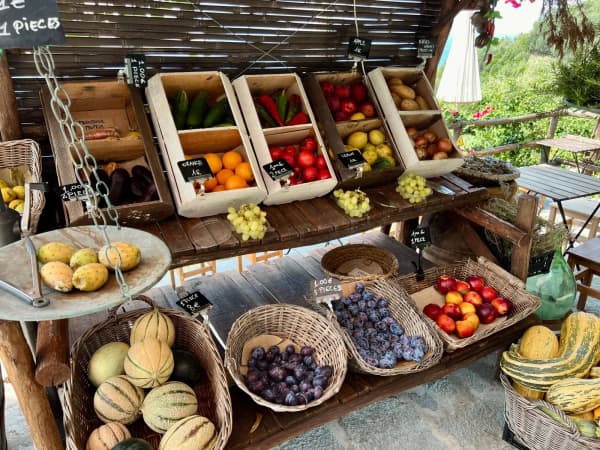
Late spring and early June bring greens, radishes, herbs, early berries and whatever came out of a greenhouse. By late June and into July the stone fruit starts and the first tomatoes appear. July and August are the peak — tomatoes, peaches, corn, peppers, cucumbers, melons and berries all at once, which is when the markets are largest and busiest.
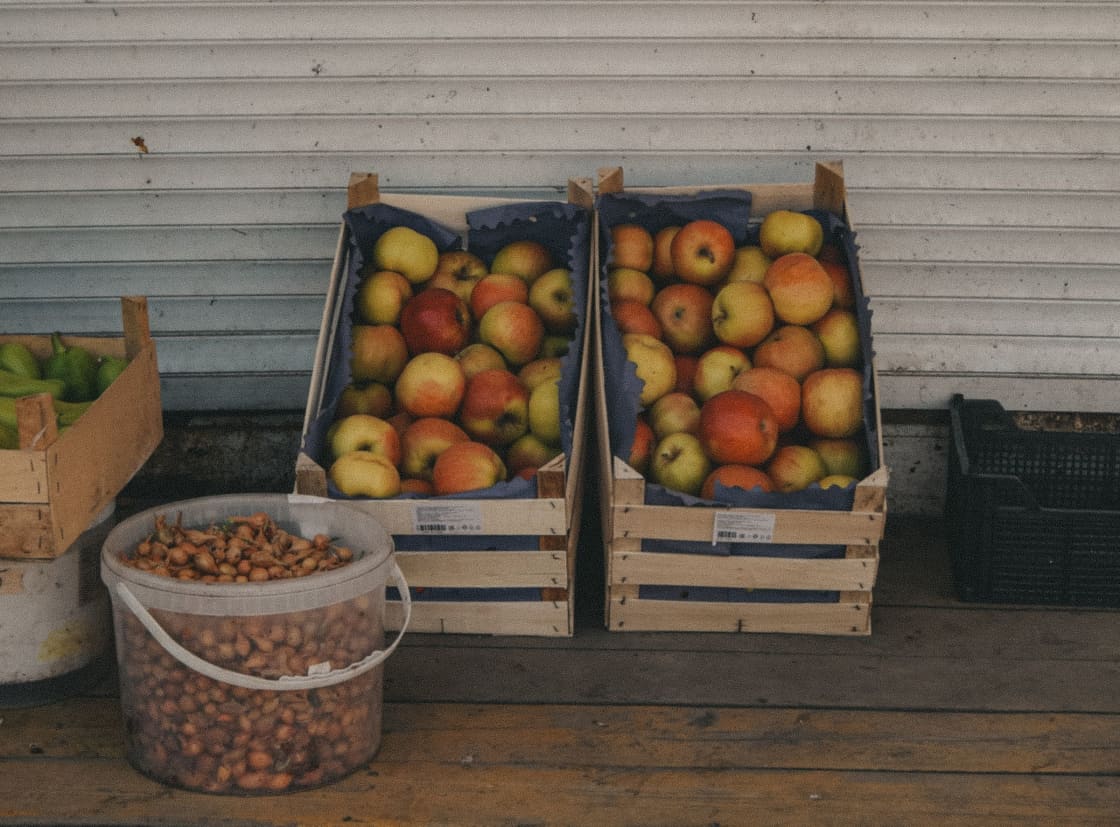
September shifts toward apples, squash, pumpkins and the last of the tomatoes. October is root vegetables, winter squash, apples and cider, in shorter hours and colder evenings.
If you want peaches, go in August. If you want the market at its most abundant, go in August. Almost every question of timing has the same answer.
Grower or reseller
Not every stall at a farmers market grew what it is selling, and there is nothing sinister about that — some markets permit resellers, and a reseller bringing in produce from elsewhere in the state extends what is available.
But if buying direct from the grower matters to you, ask. "Did you grow this?" is a completely normal question at a market and no honest vendor minds it. The markets with the strictest rules about it tend to be the smallest and most agricultural, which is part of why Salem and Spanish Fork have the reputation they do.
Paying with SNAP
Farmers markets in Utah have participated in SNAP acceptance and in nutrition-incentive programs that match SNAP dollars spent on fruit and vegetables, which can meaningfully change what a market costs a household.
Participation varies by market and by year, and the mechanics usually involve visiting an information booth to swap benefits for tokens rather than paying stall by stall. Ask at the market's central booth on arrival — the staff there will know exactly how it works that season, and it is worth the two minutes.
Parking, honestly
Pioneer Park in Provo sits in a downtown grid, which means street parking that fills steadily through the morning. Arriving early solves the produce problem and the parking problem in one move.
The evening markets at Orem City Center Park, Springville Civic Center and Lindon City Center Park all have municipal lots that get full at peak, with residential streets nearby taking the overflow. Saratoga Springs at Neptune Park and Spanish Fork have the easiest parking of the group, mostly because they are less crowded.
Taking children
Most of these markets are actively good with children, and the evening ones are designed for it. Springville's position next to a splash pad is the strongest single feature for families with small kids in the whole valley. Saratoga Springs bundles free entertainment into its Monday programming.
The trade-off is crowds. A packed Orem market on an August evening is a lot of stroller navigation. If that sounds unappealing, Lindon on a Thursday gives you the same atmosphere at a manageable scale.
How to choose
If you want to shop, go Saturday morning: Provo for range, Spanish Fork for straightforward produce and an early finish.
If you want an evening out, go Wednesday to Orem, or Monday to Springville if you have small children and want the splash pad.
If you want a market you can get around, go Thursday to Lindon or Monday to Saratoga Springs.
And if you want the thing farmers markets are nominally about — food grown near where you are standing, sold by the person who grew it — go to Salem in August, where the rules make that the only thing on offer.
Why Monday, of all days
It looks like an accident that Utah County's markets cluster on Monday, a day most of the country treats as impossible for retail. It is not.
Monday is the day a grower has stock left from a weekend of markets elsewhere on the Wasatch Front and nothing scheduled to sell it at. A Monday evening market in Springville or Saratoga Springs catches that supply. It is also the emptiest night in a valley whose social calendar is heavily loaded toward Friday and Saturday, and where Sunday is a non-starter for public events for reasons anyone who lives here understands.
The result is useful: the beginning of the week, when a household is planning meals rather than recovering from the weekend, is when this county is best supplied.
Markets are not a cheaper grocery store
It is worth saying plainly, because people are sometimes disappointed. On a per-pound basis, a farmers market will frequently cost more than a supermarket, particularly for staples.
What you are buying instead is freshness, varieties that do not ship well and therefore never reach a chain, and a direct line to the person who grew the thing. Peaches picked ripe two days ago are a different product from peaches picked hard and trucked. If you go expecting a discount you will feel misled; if you go expecting quality and a pleasant hour, you will not.
The exception is the end of the day at the end of the season, when vendors would rather sell cheap than pack up. October, late in the afternoon, is when the bargains are.
Practical notes
Bring cash as well as a card. Bring your own bags, and a cooler in August if you are buying anything that will sit in a hot car. Arrive early at morning markets and late at evening ones if crowds bother you.
Above all, check before you go. This is the single most schedule-volatile category on this site — opening dates shift by a week or two annually, hours shorten in October as the evenings draw in, and small markets appear and disappear between seasons.
One market that is not a farmers market
Worth flagging so you are not caught out: the Makers Market at the Utah County Fair, held at the Spanish Fork Fairgrounds in high summer, is a craft and small-maker event rather than a produce market. It is a good day out and it draws over a hundred vendors, but do not go there expecting to fill a vegetable box.
The same caution applies to several seasonal boutiques and holiday markets that use the word market. If produce is the goal, stick to the list above.
Related Guides
- Provo Farmers Market: Everything You Need to Know
- Orem Farmers Market: The Valley's Big Weeknight Market
- Things to Do in Orem
- The Best Parks in Provo
- UTA Fares and Passes Explained for Utah County
- Farm Stands, CSAs and Local Produce in Utah County
- The Utah Flower Market at Grove Station: Utah-grown flowers direct, Wednesdays
Frequently Asked Questions
Which day has the biggest farmers market in Utah Valley?
Is there a farmers market on Monday?
When does farmers market season start?
Which market is best for actual produce rather than crafts?
Do I need cash?
What time should I arrive?
Are dogs allowed?
Is there anything in winter?
Sources
The facts in this guide were checked against these sources. Hours, fees and rules change, so confirm anything time-sensitive with the source before you go. How we make Provo.com.
- Provo Farmers Market. Checked October 12, 2026.
- Orem's Sunset Farmers Market 2026, KSL.com. Checked October 12, 2026.
- Utah County farmers markets near close, The Daily Universe. Checked October 12, 2026.