Utah dropped routine safety inspections for most passenger vehicles, so nobody checks a lift kit or an exhaust once a year anymore. The equipment laws didn't go away, though. They're enforced at traffic stops and at registration, and the Motor Vehicle Division can refuse to register a vehicle altered in violation of them.
This guide uses the current text of Utah Code 41-6a-1626 and 41-6a-1629 through 1636, 41-6a-1616 and 53-8-205, the state's safety inspection rule for altered vehicles (R714-160-11, effective Sept. 27, 2016) and the Utah Highway Patrol's equipment FAQ, all checked Nov. 24, 2026. For window tint, see our Utah window tint law guide.
Lifted and lowered vehicles
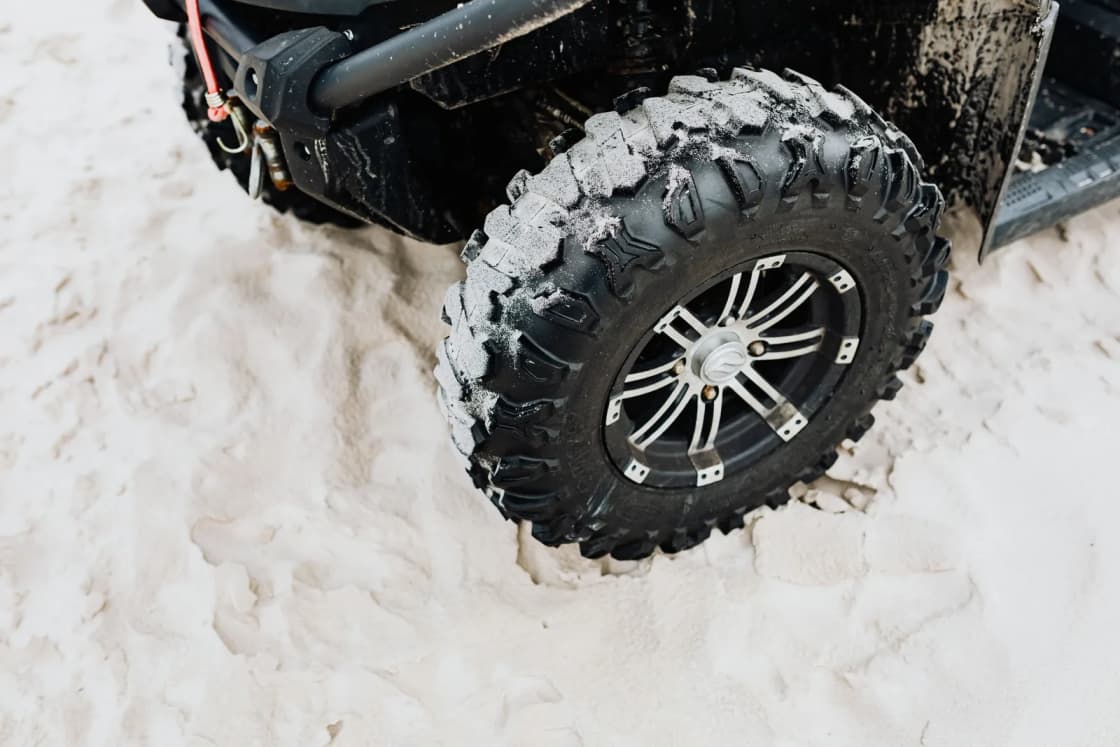
Utah regulates lifts by frame height: the distance from the ground to the lowest point on the frame, measured with the vehicle unladen on a level surface. The inspection rule measures it on the left side, under the driver's seat. A "mechanical lift" includes anything that changes frame height, including bigger tires and wheels.
| Gross vehicle weight rating | Maximum frame height |
|---|---|
| Under 4,500 lbs. | 24 inches |
| 4,500 to under 7,500 lbs. | 26 inches |
| 7,500 lbs. and up | 28 inches |
The weight rating is on the sticker in the driver's door jamb. Under the inspection rule, if that plate is missing the vehicle is treated as 4,500 pounds, which puts it in the 26-inch row.
Also under 41-6a-1630 and 1631:
- Body lifts: the lowest part of the body floor can't sit more than 3 inches above the top of the frame.
- No spacers to widen the wheel track, unless they came from the factory.
- No axle blocks on the front axle, and no stacked blocks anywhere.
- No stacked frames.
- Replacement parts must be at least as strong as the originals.
- If the wheel track is wider than factory spec, the top half of the tires must be covered by the fenders or flexible fender extenders.
- Lowered vehicles: nothing but tires, rims and mudguards can be closer than 3 inches to the ground, and the vehicle can't scrape, expose the fuel tank or let the wheels hit the body. The inspection rule also rejects headlamps lower than 22 inches.
Mud flaps: a vehicle altered from its factory frame height needs mudguards or flaps behind the rear wheels, as wide as the tires, in line with them and hanging no higher than half the wheel's diameter (41-6a-1633).
Bumpers: front and rear, at least 4.5 inches tall, centered and at least as wide as the wheel track, mounted to the frame (41-6a-1632). Vehicles never built with bumpers are exempt.
In "doubtful or unusual cases," the Highway Patrol can inspect a vehicle and issue a permit that rides in the vehicle (41-6a-1630).
One caution about the Highway Patrol FAQ: its undated equipment page still describes lifts by wheelbase (up to 4 inches of mechanical lift plus 4 inches of tire on wheelbases over 100 inches) and gives a 43% front-window tint limit, while the current statute says 35%. The statute measures frame height, and it's what a court applies. The Highway Patrol's Safety Inspection Section answers questions at 801-965-4889, option 1.
Exhaust, noise and smoke
Under 41-6a-1626:
- A vehicle must be equipped, maintained and operated to prevent excessive or unusual noise.
- It must have a muffler or other noise-suppressing system in good working order and constant operation.
- Muffler cut-outs and bypasses are banned.
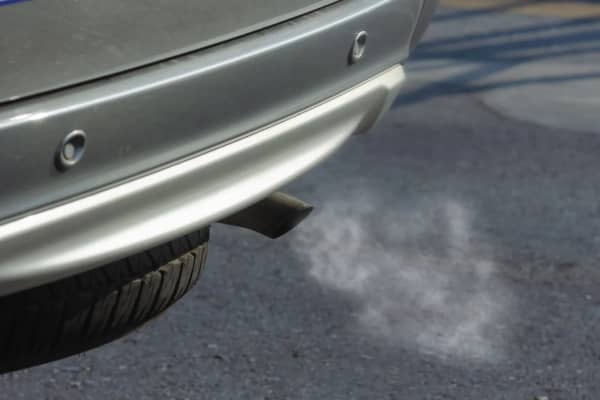
- Gas engines can't emit visible smoke except while warming up (or if the vehicle is exempt from emissions testing). Fine: at least $50, or $100 for a repeat within three years.
- Diesels made on or after Jan. 1, 2008 can't emit visible smoke except while warming up or towing beyond the rated maximum, unless the vehicle is rated over 26,000 pounds. Fine: at least $100, or $500 for a repeat within three years. Older diesels can't obscure the background by more than 20% for more than five seconds.
- Emissions equipment installed at the factory must be kept working. Disabling it is an infraction.
In areas that exceed federal fine-particulate standards, courts report repeat smoke violations to the local health department, which can notify the Motor Vehicle Division if a vehicle can't meet emissions standards. Registration and emissions testing are covered in our registration renewal guide.
Lights
Under 41-6a-1616:
- No red light visible from directly ahead, except on emergency vehicles and school buses, and no blue light visible from the front except on police vehicles.
- No flashing lights except turn signals, hazards, bicycle taillights and authorized vehicles, and no rotating lights on ordinary vehicles.
- No more than four lamps brighter than 300 candlepower lit on the front at once, counting headlights, light bars and spotlights.
A video screen the driver can see is illegal unless it's for navigation, vehicle monitoring or safety (41-6a-1641).
Tires
Under 41-6a-1636:
- Studded tires: legal Oct. 15 through March 31. Studs can stick out no more than 0.050 inch, and they're barred on vehicles rated over 9,000 pounds, except emergency vehicles and school buses.
- Chains: allowed whenever snow or ice calls for them.
- Tread depth: at least 2/32 inch in any two adjacent grooves, measured at three points around the tire. Tire shops can't sell tires below that for highway use.
For canyon driving, our winter driving and traction law guide covers the separate rules for Big and Little Cottonwood, which since a 2025 law (H.B. 196) require 5/32 inch of tread when the traction law is on, KSL reported.
Who still gets inspected
Under 53-8-205, a safety inspection is required only for:
- a salvage vehicle, when it's first registered as salvage;
- a street-legal ATV or novel vehicle, at first registration;
- commercial vehicles, taxis, buses or vans for hire, ground transportation vehicles, and vehicles with three or more axles or pulling multi-axle trailers, every year.
Everyone else is on the honor system, and on the roadside. Each equipment violation above is an infraction.
Related guides
- Utah window tint law
- Vehicle registration renewal and emissions in Utah County
- Utah winter driving and the traction law
- Traffic tickets in Utah County
- Utah's seat belt law
Frequently Asked Questions
How high can you lift a truck in Utah?
Are wheel spacers legal in Utah?
Do lifted trucks need mud flaps in Utah?
Are loud exhausts illegal in Utah?
Is rolling coal illegal in Utah?
When are studded tires legal in Utah?
What is the minimum tire tread depth in Utah?
Does Utah still require safety inspections?
Sources
The facts in this guide were checked against these sources. Hours, fees and rules change, so confirm anything time-sensitive with the source before you go. How we make Provo.com.
- Utah Code 41-6a-1631: Prohibitions (altered vehicles), Utah State Legislature. Checked November 24, 2026.
- Utah Code 41-6a-1626: Mufflers, noise, smoke and air pollution control devices, Utah State Legislature. Checked November 24, 2026.
- Utah Code 41-6a-1636: Tires, winter use of studs, tread depth (effective May 6, 2026), Utah State Legislature. Checked November 24, 2026.
- Utah Code 41-6a-1616: Red or blue lights, flashing lights, Utah State Legislature. Checked November 24, 2026.
- Utah Code 53-8-205: Safety inspection required for certain vehicles, Utah State Legislature. Checked November 24, 2026.
- Utah Admin. Code R714-160-11: Altered Vehicles (effective Sept. 27, 2016), Cornell Law School Legal Information Institute. Checked November 24, 2026.
- FAQ: Equipment Issues, Utah Highway Patrol. Checked November 24, 2026.
- Utah has changed its canyons traction law. What you need to know this winter (Nov. 13, 2025), KSL.com. Checked November 24, 2026.