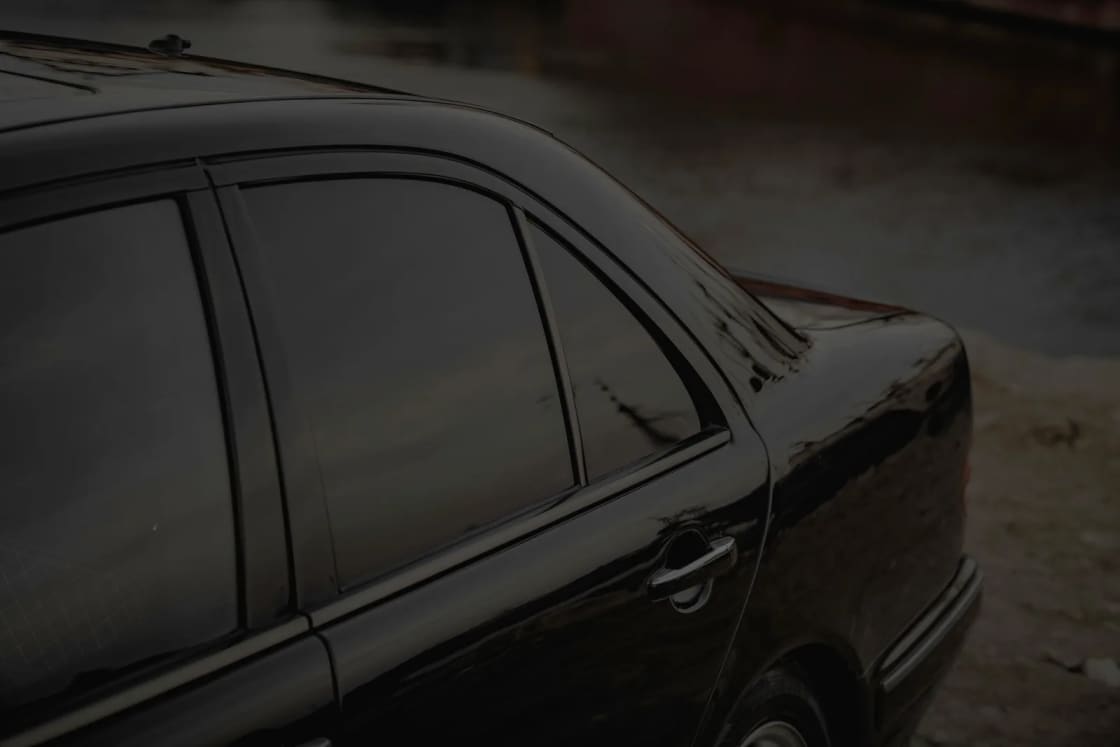
Utah's tint rule comes down to three numbers and one finish. The windshield must let in at least 70% of light. The front side windows must let in at least 35%, with a 5% allowance on an officer's meter. The rear side windows and back window can be as dark as you like. And no window may look metallic or mirrored.
This guide uses Utah Code 41-6a-1635 (in effect since May 7, 2025), the 2025 bill that last changed it (H.B. 112), the Utah Highway Patrol's window tint page and the 2017 bill that ended safety inspections for most cars (H.B. 265), all checked Nov. 21, 2026, plus KSL's report on the 2022 change (Carter Williams, March 9, 2022).
The limits
| Window | Minimum light let through | Notes |
|---|---|---|
| Windshield | 70% | A strip across the top and a small lower-left area are allowed |
| Front side windows | 35% | 5% variance on an officer's meter |
| Rear side windows | No limit | The car needs left and right side mirrors |
| Back window | No limit | Same mirror rule |
| Every window | No metallic or mirrored appearance |
How the 35% is measured
The number is light transmittance, the share of light that passes through. The law measures the window an officer meters, glass and film together, and allows "no more than a 5% variance." When the limit was set, KSL reported that a car measuring 30% would not get a ticket.
So the percentage printed on a roll of film is only part of the answer. Glass doesn't pass all the light that hits it on its own, which means film sold as 35% will meter lower once it's on a window. If you're tinting the front sides, ask the shop to meter the finished window. Shops are bound by the same section: it bars selling, installing or treating a window in violation of it.
The windshield
The windshield needs at least 70% light transmittance, with two places where nontransparent material is allowed:
- Across the top, down to 4 inches from the top edge or the windshield's AS-1 line, whichever is lower.
- The lower-left corner, no more than 3 inches in from the left edge and 4 inches up from the bottom.
Otherwise, signs, posters and other nontransparent material can't go on the windshield or side windows, except a certificate or paper the law requires you to display and an etched vehicle identification number. Objects hanging or mounted so that they materially block the driver's view are barred too. The same section covers cracks, frost and wipers; our windshield crack guide explains that part.
Rear windows and the mirror rule
Nontransparent material is allowed on "the rear windows including rear side windows located behind the vehicle operator," so the back half of the car has no darkness limit. The trade-off: any car with tint or nontransparent material on a window, other than the windshield's strip and corner, must have rear-view mirrors on both the left and right sides.
Factory glass
A window that meets federal standards for composition, covering, light transmittance and treatment counts as compliant with Utah's limits. Manufacturers, dealers, importers and repair businesses must follow the federal standards on window tinting.
The penalty, and what changed
A tint violation is an infraction. Since May 7, 2025, under H.B. 112, sponsored by Rep. Karianne Lisonbee and Sen. Daniel McCay, a peace officer may not ask the Motor Vehicle Division or the Driver License Division to revoke or suspend your registration or license over a windshield or front-side tint violation, or over several of them.
The front-side limit itself changed in 2022, when the Legislature lowered it from 43% to 35%. KSL reported that Utah Highway Patrol testing found the change made little difference to officers' ability to see into vehicles.
Most cars no longer go through a safety inspection where tint could be caught: H.B. 265, effective Jan. 1, 2018, limited the inspection requirement to commercial vehicles and the first registration of salvage vehicles and street-legal ATVs. For everyone else, tint gets checked at traffic stops. Our traffic ticket guide covers what happens after a citation.
If you're moving here
The section covers anyone operating a vehicle on a Utah highway, with no exception for out-of-state plates, so a car tinted to another state's rules can be cited here. It also has no medical exemption. Darker film on the front side windows would need to come off to comply. Registering the car is a separate errand; see our Provo DMV guide.
Related guides
- Buying a used car in Utah Valley
- Utah driving rules that surprise newcomers
- Renewing vehicle registration in Utah County
- Car washes and detailing in Utah Valley
Frequently Asked Questions
What is the legal tint limit in Utah?
Is 20% tint legal in Utah?
Can I tint my windshield in Utah?
What does the 5% variance mean?
What's the penalty for illegal window tint in Utah?
Does Utah have a medical exemption for window tint?
Do out-of-state cars have to follow Utah's tint law?
Why does a tinted car need two side mirrors in Utah?
Sources
The facts in this guide were checked against these sources. Hours, fees and rules change, so confirm anything time-sensitive with the source before you go. How we make Provo.com.
- Window Tint Requirements, Utah Highway Patrol. Checked November 21, 2026.
- Utah Code 41-6a-1635, Utah State Legislature. Checked November 21, 2026.
- H.B. 112 Motor Vehicle Safety Inspection Modifications (2025), Utah State Legislature. Checked November 21, 2026.
- H.B. 265 Safety Inspection Amendments (2017), Utah State Legislature. Checked November 21, 2026.
- Utah passes change to window tinting law after gaining support from law enforcement, KSL.com. Checked November 21, 2026.