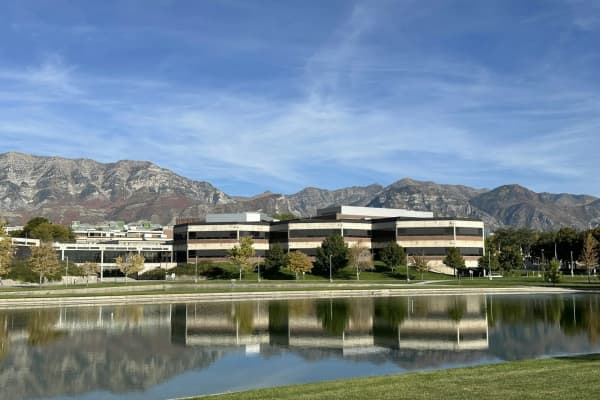

Two universities sit a few miles apart in Utah Valley, and between them they employ a sizable slice of the county. For anyone living here who wants stable work, good benefits and a commute measured in minutes, they are the obvious place to look.
They are also two different employers, in ways that go far beyond one being private and one public. The hiring processes are different, the conditions of employment are different, the pace is different, and the thing that trips up most applicants — the extra step that applies at one and not the other — is not visible on the job posting.
This guide is about non-faculty staff work: the jobs that keep the institutions running rather than the ones that teach. That is where most of the openings are.
The Short Answer
BYU is a private university owned and operated by the Church of Jesus Christ of Latter-day Saints, and employment carries religious conditions. For members of the Church, that means ecclesiastical clearance and, for new hires, a current temple recommend. For non-members, it means agreeing to abide by the university's standards and going through additional internal steps in the hiring process.
UVU is a public institution. Hiring is a competitive public process with no religious condition, state-employee benefits and participation in the state retirement system. The trade-off is formality and pace.
On size: both are among Utah's largest employers. The state's list puts BYU in the 15,000 to 19,999 range and UVU in the 5,000 to 6,999 range, alongside health care and public school districts.
What These Places Actually Are, in Workforce Terms
Job seekers consistently underestimate the scale and misjudge the shape.
BYU appears on the state's list of largest employers in the 15,000 to 19,999 band. That figure needs an asterisk that matters enormously for anyone reading it as a jobs number: a very large share of it is student employment. BYU employs students at scale, in food service, custodial work, libraries, labs, call centers and offices. Those jobs are real, but they are not the benefited staff positions this guide is about, and the headline employment number is not a headline count of staff openings.
UVU appears in the 5,000 to 6,999 band. At both universities, many positions are part-time, seasonal or student roles, and the benefited full-time jobs are the smaller and more competitive category.
Neither is the county's whole story. Utah County's employment is dominated by health care, public education and a large tech and direct-sales corridor. If your search is "large stable employer in Utah County," the universities are two options among several rather than the only two.
BYU: How the Process Actually Runs
BYU publishes its hiring guidance, and reading it before applying is worth more than any amount of speculation.
The sequence. Applications and interviews proceed as they would anywhere. Then, after a finalist is selected, the university moves to clearances: an ecclesiastical clearance, a background check, and at least two employment references. Only once those come back does compensation get determined and an offer follow.
The important structural point is that the religious check comes at the end, not the beginning. You are not screened on it at application. That means an applicant can go through a full interview process before the step that most differentiates BYU from other employers even arises.
Ecclesiastical clearance, in practice. For applicants who are members of the Church, clearance means confirming standing with ecclesiastical leaders. The mechanism changed a few years ago: the Church established a central Ecclesiastical Clearance Office to process these, and BYU stopped contacting local bishops directly. A university spokeswoman confirmed to a state newspaper that before that change, BYU had checked directly with bishops on temple-recommend status, and where someone did not hold a recommend the university verified the conduct standard instead.
The temple-recommend standard. The Church Educational System adopted a standard under which new hires who are members must hold and be worthy to hold a current temple recommend. This applies across faculty, staff, administrators and coaches. Employees already working at the institutions when the standard came in were invited to adopt it rather than required to, and those who declined remained subject to the pre-existing conduct standard. A temple recommend runs for two years, and the "be worthy to hold" language refers to maintaining that standard between interviews rather than only at the moment of issue.
If you are not a member. This is the part worth being direct about, because the internet is full of both overstatement and wishful thinking.
BYU does hire non-members, and says so plainly. It continues to hire faculty, staff, administrators and coaches who are not members of the Church.
As a religious institution, BYU may give hiring preference to members of its own faith, which federal law allows for religious schools. Non-member applicants should expect to confirm that they will abide by the university's expectations and conditions, and to go through additional internal steps; ask the hiring department for the current procedure.
None of that is hidden, and none of it is a prohibition. What it is, practically, is friction: an internal approval a hiring manager must obtain that they do not need for a member applicant. A non-member candidate should assume the process may take longer and that the hiring manager will need to be actively motivated to pursue it. That is worth knowing before you invest in a long process, and it is worth asking about directly.
The Honor Code applies to employees. Standards around dress and grooming, substance use and conduct are conditions of employment, not just student rules. Anyone weighing a BYU job should read the current standards rather than assume they know them.
Student employment is a separate track. Students working on campus are covered by the annual ecclesiastical endorsement required for enrollment rather than by the employee standard, with narrow exceptions for particular programs. Our guide to student jobs in Provo covers that side.
UVU: How the Process Actually Runs
UVU is a public institution, and essentially every difference follows from that one fact.
Openings are posted publicly and competitively. Public employers operate under expectations about advertising positions, documenting selection criteria and keeping records of the process. In practice that means a more structured application — often with supplemental questions tied directly to the posted qualifications — and a selection process that is documented as it goes.
There is no religious condition of employment, and no clearance step. The checks are the ordinary ones: references, and background screening appropriate to the role.
Benefits follow the public-employee pattern, including participation in the state retirement system for benefited positions. For anyone comparing a university job against a private-sector one, the retirement and leave structure is a substantial part of the real compensation and is often worth more than the salary line suggests.
Pace is the trade-off. Public processes tend to be slower and more formal than private ones. A posting that closes on a fixed date and then goes quiet for weeks is normal rather than a bad sign.
The part-time reality. Given UVU's own full-time to part-time split, a job seeker should expect a great many postings to be part-time, hourly, adjunct or temporary. That is not a knock on the institution; it is how universities staff. But it means filtering postings by employment type before getting attached to one.
The Jobs Nobody Pictures
Ask someone what jobs a university has and they will say professor. The staff reality is that a university is a small city, and the openings reflect that.
Facilities and grounds. Custodial, maintenance, landscaping, HVAC, electrical, plumbing, carpentry. Skilled trades at both institutions are steady work with benefits and no requirement for an advanced degree.
Food service. Dining halls, catering, retail food operations, a creamery in BYU's case. Large operations with supervisory paths.
IT. Help desk, systems, networking, security, application support, instructional technology. Universities run complex environments and hire across the whole stack.
Business operations. Accounting, payroll, purchasing, contracts, budget analysis, HR, institutional research.
Student-facing administration. Admissions, registrar, advising, financial aid, career services, housing, disability services, international student support.
Libraries. Not only librarians — circulation, archives, digitization, systems, collection management.
Athletics operations. Equipment, facilities, event management, compliance, marketing, ticketing.
Health and safety. Campus police or security, health center staff, emergency management, environmental health.
Communications. Marketing, web, video, photography, publications, media relations, social.
Events. Both campuses host many public events, which requires production, scheduling and venue staff year-round.
How to Read a Posting Before You Apply
Five things to check that save wasted applications.
Employment type. Full-time benefited, part-time, temporary, seasonal, on-call, student. This is the first filter and the one people skip.
Whether the posting closes. Some run until filled; some close hard on a date. Public postings more often have a firm close.
The stated qualifications, minimum versus preferred. In a documented public process, the minimums are screening criteria. Applications that do not demonstrate them on paper get filtered before a human forms an opinion. Address them explicitly and in the posting's own language.
Conditions of employment. This is where religious conditions, background check requirements, driving records or physical requirements appear. Read this section on any BYU posting.
Internal-only language. Universities sometimes post positions open only to current employees. It is usually stated, and it is easy to miss.
Getting In: What Actually Works
Start part-time or temporary. This is the most effective and least discussed route at both institutions. Internal candidates have real advantages, internal postings exist, and a temporary or part-time role is the cheapest way to become one. People routinely convert.
Apply to the department, not the university. A university is a federation. Hiring managers are department-level, and the culture, workload and quality of a job vary enormously between two units on the same campus.
Use the network, because in this valley it works. Both institutions are woven through the community, and someone in your ward, neighborhood or extended family works at one of them. A conversation with someone inside the department beats a cold application decisively.
Be honest early about conditions. If you are a non-member applying to BYU, raising it early is better than late. A hiring manager who needs extra approvals would rather know at the start than at the offer stage, and the ones who are motivated to do it will say so.
Expect a slow process and do not read silence as rejection. Weeks between steps is normal at both places.
Salary, Benefits and the Thing People Miss
Salaries are generally moderate rather than competitive with the Utah County tech corridor, particularly in IT and business operations where private employers pay more. Nobody should take a university staff job expecting to be paid at market for a comparable private role.
The benefits are where the value sits. Health coverage, retirement, generous leave and a working calendar that follows the academic year. For a public institution, the state retirement structure is a genuine long-term asset.
Tuition benefits are the underweighted one. Both institutions have historically offered education benefits for employees and, in some form, dependents. For a household with children approaching college age, that can dwarf a salary difference — and it is the single most common reason people take and keep university staff jobs here. Terms, eligibility and vesting vary and change, so verify current details with the employer rather than relying on what a neighbor got years ago.
The calendar is a real benefit. Campuses slow down between terms in ways most workplaces do not, and for parents that alignment with school schedules has value that does not appear on a pay stub.
Why a Private University Can Do This
People arriving from outside Utah often ask how a religious condition of employment is lawful, and the answer is straightforward enough to state neutrally.
Federal employment law contains a religious-organization exemption. Religious institutions — including religiously affiliated schools and universities — are permitted to prefer members of their own faith in employment in a way that a secular employer could not. That exemption is narrow in one important respect: it covers religious preference, not the other protected categories. A religious employer remains subject to the rest of the framework.
The practical shape of that at BYU is what the published guidance describes: a stated preference for members in good standing, a defined process for hiring non-members, and conduct standards applied as conditions of employment to everyone.
Whether the arrangement is a good one is a question people in this valley hold strong and differing views about, and it is not this guide's business to settle. What matters for a job seeker is that the arrangement is explicit, documented and long-standing rather than informal. You can read the policy before you apply, which is more than can be said for the unwritten cultural preferences at plenty of employers that have no religious affiliation at all.
UVU, as a public institution, has no equivalent provision and could not adopt one. That distinction is the clearest way to understand why two universities a few miles apart hire so differently.
Moving Between the Two
A pattern worth naming because it is common here: people build a career across both institutions rather than at one.
The skills transfer almost completely. Student information systems, advising structures, facilities operations, athletics compliance and university accounting all work in recognizably similar ways, and an experienced hand at one is legible to the other. The valley is small enough that hiring managers at each know people at the other.
Two frictions to expect. Retirement does not travel. UVU participates in the state system; BYU does not, and moving between them means leaving one structure and starting in another, which matters enormously if you are close to vesting. Get specific advice before a mid-career move.
And the conditions of employment run one direction more easily than the other. Moving from UVU to BYU means entering the clearance and standards process for the first time; moving the other way does not. That asymmetry is worth planning around rather than discovering at the offer stage.
Preparing for the Interview
University staff interviews have a texture of their own.
Expect a panel. Committee interviews are the norm, particularly at the public institution, and questions are often asked from a fixed list so that candidates are compared on the same basis. Answer the question asked rather than the one you prepared.
Expect service questions. Both institutions are organized around students, and interviewers want evidence you can handle an anxious eighteen-year-old, a frustrated parent and a faculty member with a deadline, sometimes in the same hour.
Expect to be asked about the mission. At BYU this will be explicit and religious. At UVU it will be about access, open enrollment and serving a student body that is older, more likely to work full-time and more likely to be the first in a family to attend than the national average. Knowing that about UVU before you walk in signals more than any amount of polish.
Ask about the department's stability and workload. Universities have units that are comfortable and units that are chronically short-staffed, and the posting will not tell you which one you are looking at.
Practical Notes
Both universities post on their own sites, and those are the authoritative source. Aggregator listings for university jobs are frequently stale, duplicated or mis-titled.
Read the conditions of employment section on every BYU posting. It is the single most consequential paragraph for an applicant.
Verify benefits with HR, not with the internet. Education benefits in particular have changed over time and are commonly misdescribed secondhand.
If you are moving here for one of these jobs, our guide to out-of-state paperwork in Utah covers the licensing, registration and residency mechanics, which apply to staff arrivals as much as to students.
The Short Version
BYU and UVU are two large, stable Utah Valley employers with fundamentally different hiring regimes. BYU is private and church-owned: clearance and references come after a finalist is chosen, member hires face a temple-recommend standard, and non-member applicants — who are hired, and whom the university says it continues to hire — face additional internal steps that members do not. UVU is public: competitive posting, documented selection, no religious condition, state benefits and retirement, and a slower, more formal pace. For Church employment beyond BYU, see working for the Church.
On scale, be accurate: BYU is in the state's 15,000 to 19,999 employer band, and a large part of that number is student employment. UVU is in the 5,000 to 6,999 band, with many part-time roles. That mix should shape where you look.
The jobs themselves are far broader than anyone pictures — trades, IT, food service, business operations, libraries, athletics, events — and the way in, at both places, is usually a part-time or temporary role plus a real conversation with someone in the department.
Related Guides
- Student Jobs in Provo
- Winter and Ski-Season Jobs for Students
- The Out-of-State Student's Paperwork
- BYU Campus Visitor Guide
- UVU Student Housing
Frequently Asked Questions
Do I have to be a member of the Church to work at BYU?
What is ecclesiastical clearance and when does it happen?
Do BYU staff need a temple recommend?
Is UVU's hiring different?
Are BYU and UVU the two largest employers in Utah County?
How big is UVU's workforce?
What kinds of staff jobs do universities have?
Is a university job worth it for the benefits?
Sources
The facts in this guide were checked against these sources. Hours, fees and rules change, so confirm anything time-sensitive with the source before you go. How we make Provo.com.
- Utah's Largest Employers, Utah Department of Workforce Services. Checked October 12, 2026.
- Fall 2025 enrollment, Utah Valley University. Checked October 12, 2026.
- Hiring Decisions Based on Religion, U.S. Equal Employment Opportunity Commission. Checked October 12, 2026.
- OCR response to Brigham Young University (Title IX religious exemption), U.S. Department of Education. Checked October 12, 2026.