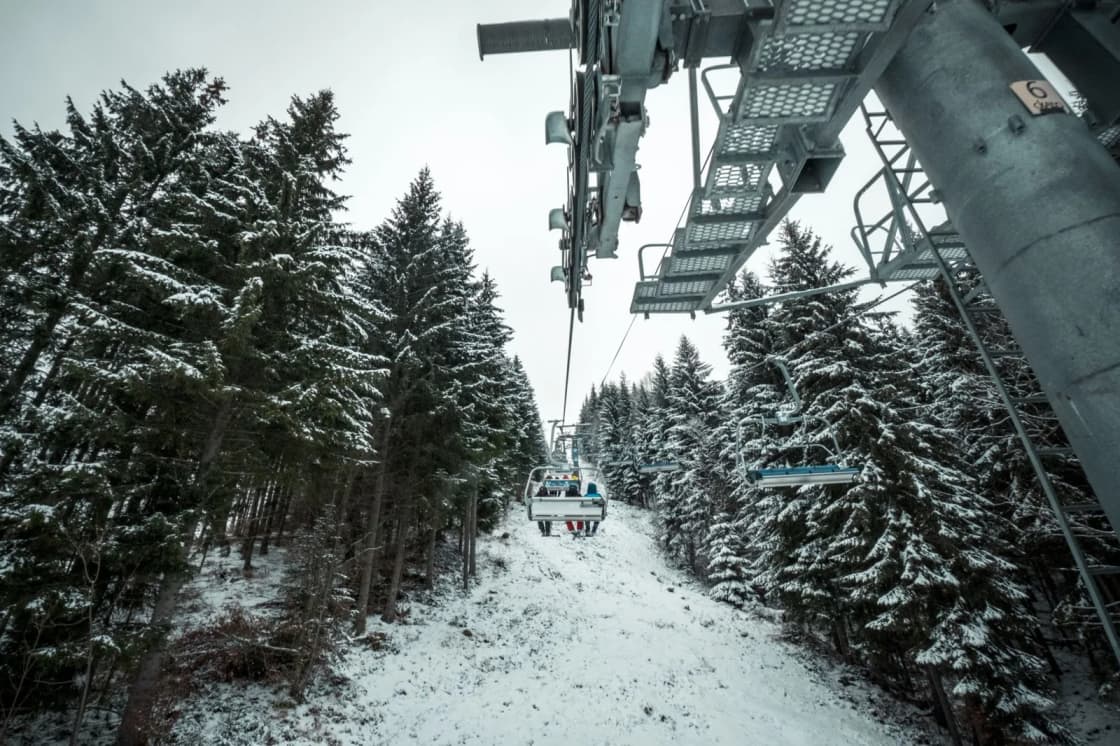

Every October, a certain kind of student in Provo starts checking the weather in the canyon. It is the student who realizes that a season pass costs more than a month's rent, that the resorts are hiring, and that the two facts might solve each other.
They do, mostly. Ski-season jobs are one of the classic Utah Valley student moves: seasonal, weekend-heavy, paid in a currency of hourly wages and a free pass, and available in a window that opens in September and closes around Thanksgiving. This guide covers who hires, when, what it pays, what the pass perk is actually worth, and — the part every guide skips — the commute math and the class-schedule math that decide whether a given job is a good idea from Provo.
It is the winter sibling of our summer jobs guide. The difference is that summer jobs are everywhere and winter resort jobs are in exactly a handful of places, most of them up a canyon.
Who Hires, Where, and How Far
Start with geography, because it decides everything.
Sundance Mountain Resort is the only ski resort in Utah County. It sits at the base of Mount Timpanogos, about 13 miles from Provo up U.S. 189 and the Alpine Loop road, roughly 25 to 35 minutes from campus in dry conditions. It is a small resort with a big lodging and dining operation — the Tree Room, the Foundry Grill, the Owl Bar, the Inn, the spa, the Springs pool — which means it hires far more hospitality staff than mountain staff. It is the realistic winter job for a student living in Provo.
Soldier Hollow, in Midway, is about 45 minutes from Provo up Provo Canyon and over into the Heber Valley. Its winter business is the tubing hill, the Nordic center, and the lodge, and it is run by the Utah Olympic Legacy Foundation, which also hires for Utah Olympic Park and the Oval. It is a good weekend job with an easier drive than the Wasatch resorts.
Park City Mountain and Deer Valley are about an hour from Provo through Heber. Park City Mountain is owned by Vail Resorts and hires through Vail's careers site; Deer Valley is Alterra and hires directly. Both are enormous operations with hundreds of seasonal roles, employee housing for some, and a full-time-seasonal culture that suits a student taking a semester off better than one taking 15 credits.
The Cottonwood resorts — Snowbird, Alta, Brighton, Solitude — are 60 to 90 minutes from Provo, and the canyon roads are the most weather-dependent in the state. They hire heavily and pay competitively, but from Provo they are a full-time-with-housing proposition, not a weekend gig.
Woodward Park City, Vail's tubing-and-terrain-park property near Kimball Junction, posts winter tubing operator jobs each fall, and it is a real option for a student who wants outdoor work without ski skills.
If you want the resorts themselves explained — terrain, passes, how to get there — our skiing near Provo guide and the Sundance resort guide are the companions to this one.
The Hiring Calendar
Resort hiring runs on a clock, and the clock is earlier than students expect.
Sundance's own applicant page says it plainly: the resort has year-round positions that open at any time, its main seasons are summer (May to October) and winter (December to April), and winter seasonal jobs are posted between September and November. It also holds a mini job fair at the end of the ski season for winter staff who want to stay through summer, which is how a December hire becomes a year-round employee.
Vail Resorts posts Park City's winter jobs as "Winter Seasonal 2026/2027" on its careers site, and the postings appear through late summer and fall. Vail runs hiring events and virtual sessions; Deer Valley lists in-person and virtual hiring events on its employment page as it schedules them, and as of early September 2026 shows none scheduled, which means the calendar there had not been set yet, not that it will not hire. Soldier Hollow and the Cottonwoods follow the same arc.
The consequence: the good schedules go to people who apply in September and October. By mid-November, resorts are filling in gaps, and by the time Sundance opens for the season in December, a late applicant is competing for whatever shifts nobody wanted. Apply before fall break.
What the Jobs Are
A resort is a small town with a hotel, several restaurants, a shop, a school, a transit system, and a mountain. The jobs sort accordingly.
Lodging. Front desk, bell and valet, housekeeping, public-area attendants, night audit. Sundance's Inn and its lodging department are steady student employers; recent postings list bell and valet at $14 an hour (with a 25-and-over requirement for valet, because of driving), housekeeping room attendants at $17, public-area attendants at $18, and a pool attendant at the Springs at $18 for Saturday and Sunday shifts. These are year-round-ish operations that swell in winter.
Food and beverage. The largest category at Sundance by headcount. Dishwashers (recently posted at $19 an hour plus a season pass), deli and café clerks ($13 to $14), concessions at the Lookout ($13), entry-level and experienced line cooks ($22 to $23 for experienced), pastry cooks ($22), backservers and servers at the Tree Room and Foundry Grill (low base plus tips), bartenders at the Owl Bar. Food-service roles have the most evening and weekend hours and are the easiest fit for a class schedule.
Mountain operations. Lift operators, lift maintenance, snowmaking, grooming, terrain park, ski patrol, mountain safety, dispatch, parking. These are the outdoor jobs, the ones with the early mornings and the best stories. Vail's Park City postings list lead snowmakers at $25 to $30.60 an hour with full-time hours and an 18-and-over requirement; lift operations and parking are lower. Sundance's lift maintenance apprentice posting ran $25 to $28.
Ski and snowboard school. Instructors and ski-school desk staff. Instruction pays per lesson hour with tips, requires ability and certification (PSIA-AASI, which resorts help new hires get), and is feast-or-famine: great on holiday weeks, empty on a Tuesday in January.
Retail and rentals. The shop, the rental counter, the tune bench. Rental technicians are in demand on weekends and holiday mornings and do not need to ski.
Tubing and activities. Soldier Hollow's tubing hill and Woodward's tubing operation are staffed by lift attendants, lane monitors, and ticket staff. No skills required; be willing to stand in the cold and be cheerful for six hours.
Spa, retail, and guest services round it out, and the resorts' year-round departments — accounting, HR, marketing, events — occasionally post seasonal assistant roles.
The Pass, and What It Is Worth
The reason a dishwasher will drive up Provo Canyon for $19 an hour is the pass, so it is worth being precise about it.
A Sundance adult season pass listed at $799 for 2026-27 as of early June (young adults 18 to 26 at $669), per Ski Utah's pass roundup; those prices step up as the season approaches. Sundance's postings list a season pass among employee benefits across a range of roles, and several supervisory postings extend it to a plus-one and dependents. That is the equivalent of a raise of several dollars an hour for a student who would otherwise buy the pass.
At Park City Mountain, Vail's employee benefit is an Epic pass, unlimited at Park City with access across Vail's network, worth $1,119 at the June adult price. Deer Valley, Snowbird, Alta, Brighton, and Solitude offer pass privileges to seasonal staff, with the Ikon pass or resort-specific passes depending on ownership. Employee passes usually come with conditions — a minimum number of hours or shifts, staying through a date, or forfeiture if you quit early. Read the fine print before you count the pass as compensation; a job that gives you a pass you lose in January was not the deal it looked like.
Beyond the pass, the standard perks are discounts on food, retail, rentals, and lessons, and occasionally free or reduced lift tickets for friends. A resort employee who cannot ski and takes the employee-rate lesson program is getting one of the cheapest learn-to-ski packages in the state. If you are pricing out the pass decision without a job, our ski pass math guide lays out the whole menu.
Fitting It Around Classes
This is where most student resort jobs succeed or fail.
Resorts are busiest on exactly the days students are free — Friday, Saturday, Sunday, and the holiday weeks around Christmas, New Year's, Martin Luther King Day, and Presidents' Day. Sundance also runs weekend brunches, holiday dinners, and events that need extra hands. So a student who can give a resort Friday through Sunday plus the two holiday weeks is a valuable hire, and food service, lodging, and tubing operations will schedule around that.
The jobs that do not fit are the weekday-heavy ones: full-time lift ops, snowmaking, grooming, and instruction, which need people on Tuesday mornings. A student who signs up for those and then discovers a Tuesday-Thursday lab will not last.
The students who make resort work sustainable tend to do one of three things. They stack classes Monday through Thursday, ideally mornings, and give the resort the rest. They take a lighter winter semester on purpose. Or they take the semester off entirely and work full-time seasonal with housing at Park City or the Cottonwoods, which is a different life and a fine one.
Be specific about availability on the application. Resorts hire against a schedule grid, and a candidate who says "weekends and holidays, no weekdays" is easier to place than one who says "flexible" and then is not. Also flag the dates you cannot work — finals week, a family Christmas out of state — up front; the holiday weeks are when the resort most needs you and least wants to hear you are gone.
The Commute
From Provo, Sundance is 25 to 35 minutes up U.S. 189 and the Alpine Loop road in dry conditions, and noticeably longer in snow; the last few miles are a mountain road, and the resort's lower lots fill on powder days. There is no UTA route to Sundance. Students without cars carpool with coworkers on the same shift, and the housekeeping and food-service departments tend to have several BYU and UVU students on matching schedules for that reason. If you are considering a winter of canyon driving in a car with all-season tires, read our winter tires and canyon driving guide first; it is the difference between a job and a tow.
Soldier Hollow is about 45 minutes via Provo Canyon and Heber, over a summit that is plowed and generally forgiving. Park City and Deer Valley are an hour plus through Heber on U.S. 40, a real commute for a two-shift week but workable for full-time seasonal, and Vail lists housing availability for some Park City roles. The Cottonwoods are 60 to 90 minutes and canyon roads that close for avalanche control; from Provo they are a move-there job, not a drive-there job.
One more piece of commute math. A student working Friday and Saturday at Sundance for 16 hours at $17 earns about $270 before taxes, spends maybe $15 in gas, and gets a pass worth a few hundred dollars over the season. The same student driving to Park City for the same shifts spends an hour each way, twice, and $40 in gas. The Park City wage would have to be meaningfully higher to win, and for entry-level roles it usually is not.
Applying
Sundance hires through an applicant-tracking site linked from its careers page; postings list the rate, the shift pattern, and the season. Park City Mountain hires through Vail's careers site, where you can filter to "Winter Seasonal 2026/2027" and Park City. Deer Valley hires through its own employment page. Soldier Hollow, Utah Olympic Park, and the Oval hire through the Utah Olympic Legacy Foundation. Woodward Park City posts through POWDR's careers site. Ski Utah maintains a resort careers page that links to all fifteen resorts' hiring pages, which is the fastest way to see everything at once.
The application itself is a standard hospitality application: availability, prior experience, references, and for some roles a driving record or age minimum. Resorts do background checks for roles with guest and financial access. A prior food-service or retail job is the most useful thing on the résumé; if you have neither, our first job guide covers the basics, and the student jobs guide is the year-round version of this article.
What a Resort Week Actually Looks Like
Here is a composite of how the job runs for a Provo student on a food-and-beverage schedule at Sundance, drawn from the shift patterns in the resort's postings and from students who have done it.
Friday: last class ends at 1 p.m., drive up the canyon by 2:30, clock in at 3 for a dinner shift that runs until the last table leaves — 10 or 11 on a busy night. Saturday: an early breakfast shift or a late lunch-into-dinner shift, depending on how the manager built the grid; on a powder Saturday the lodge is full by 10 a.m. and the day is loud. Sunday: brunch is the big service, and it ends mid-afternoon, which leaves the late afternoon to ski before the lifts close if you have the energy. Monday through Thursday: campus, homework, and the one thing every resort worker learns to do, which is sleep.
Holiday weeks change the grid entirely. Between Christmas and New Year's the resort runs at capacity every day, and a student who is home for the break can pick up 40 hours. Presidents' Day weekend is the other reliable spike. Note one change worth planning around: the Sundance Film Festival, which for four decades filled Park City's lodging and dining operations in late January, held its final Utah edition in early 2026 and relocates to Boulder, Colorado from 2027. Students who have heard about festival-week hours from older siblings should not count on them.
Gear and Small Costs
The resort provides the uniform for most roles, but the outdoor jobs assume you show up with your own base layers, gloves, and boots that can stand in snow for a shift. Budget for that before the first paycheck: a lift operator's first week in cotton socks is an education. Food service needs non-slip shoes. Anyone driving the canyon needs the tires discussed above, an ice scraper, and a habit of leaving fifteen minutes earlier than the app says.
Parking at Sundance is in the resort's lots, and employee parking is designated; ask at orientation where it is and how early the lower lots fill on weekends, because arriving late to a full lot is a real way to be late to a shift. Bring food for the drive down; the resort's employee meal policy varies by department, and the canyon has no drive-through.
The Case Against
Resort work is not for every student. The hours are real, the drives are real, the pay is modest, and the pass is only valuable if you actually use it — a student who works 20 hours a week and takes 15 credits may find the pass gets used four times. Resort jobs also end: the season closes in April, and a student who needs income through spring semester needs a plan for it. Sundance's end-of-season job fair for summer staff is that plan for some.
But for a student who skis, or wants to, and who has weekends free, it is one of the few jobs in Utah Valley where the fringe benefit is the point and the paycheck is the bonus. Apply in September.
Related Guides
Frequently Asked Questions
When do ski resorts near Provo hire for winter?
Do ski resort employees really get a free season pass?
What do ski-season jobs pay?
Can I work at Sundance without a car?
How do students fit resort shifts around classes?
Is Soldier Hollow a realistic winter job from Provo?
What about jobs at Park City or Deer Valley — is the commute from Provo doable?
Do I need to know how to ski to work at a resort?