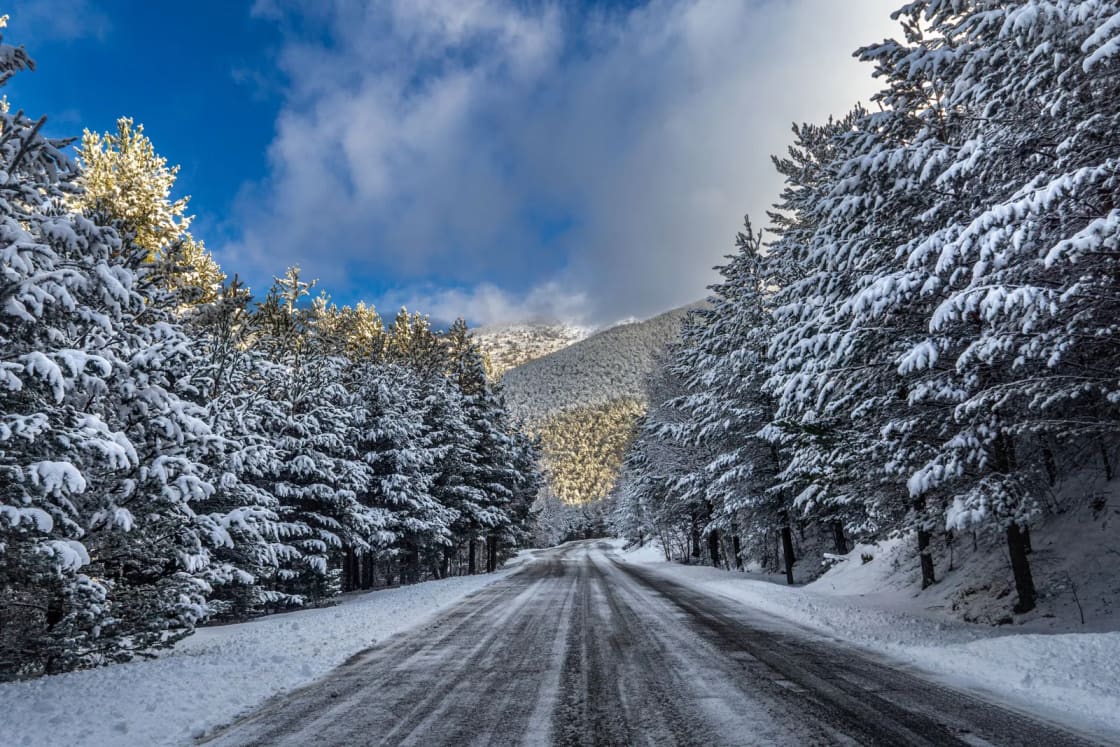
Little Cottonwood Canyon is the road to Alta and Snowbird, and in winter it is one of the most closely managed roads in Utah. Avalanche paths cross State Route 210 from both sides, the road can close for hours or days during a storm, and a set of tire rules made stricter in 2025 decides who is allowed up when the lights at the canyon mouth are flashing.
For a Utah Valley skier, the canyon mouth is roughly an hour from Provo. Getting there and being turned around is the most avoidable way to lose a ski day. This guide explains the rules and what to check before you leave.
| Road | State Route 210, from the canyon mouth near Sandy to Alta |
| From Provo to the canyon mouth | About 44 miles, roughly an hour without traffic |
| Rule | UDOT traction law (Utah rule R920-6), Class 3 in the Cottonwoods |
| When lights flash | 5/32-inch tread minimum, plus the right tires for your drive type |
| Status | UDOT Cottonwood Canyons site and @UDOTCottonwoods |
Rules from UDOT's Cottonwood Canyons traction law page, read Nov. 1, 2026. Drive distance and time from OpenStreetMap routing, without traffic or snow.
The traction law, in plain terms
Utah's traction law is a state administrative rule, R920-6, that UDOT and police use during severe winter driving conditions. It applies when road conditions warrant, as determined by UDOT, the Utah Highway Patrol or a designated local agency.
In 2025 UDOT made two changes that matter in the Cottonwood Canyons:
- A new Class 3 designation with stricter requirements for Big and Little Cottonwood Canyons.
- Requirements can start 24 hours before a storm, so a forecast storm can put the rule in place on a dry morning.
When the beacons outside the canyon are flashing, the Class 3 rule requires:
| Vehicle | Minimum to comply | Also acceptable |
|---|---|---|
| All-wheel or four-wheel drive | M+S or snow tires on all wheels, 5/32-inch tread | Chains, snow socks or 3PMSF tires on all wheels |
| Two-wheel drive | 3PMSF tires on all wheels, 5/32-inch tread | Chains or snow socks on at least two drive wheels |
Heavy vehicles of 12,000 pounds or more have additional rules under R920-6.
What the tire markings mean
- M+S (mud and snow) means the tire meets an industry guideline for mud and snow. UDOT points out that it says nothing about traction on ice, fresh snow or cold, dry pavement. Many all-season tires carry it.
- 3PMSF (the three-peak mountain snowflake symbol) means the tire is rated for severe snow service, with a compound that grips better in snow and on cold pavement. UDOT says most all-season tires do not qualify.
- 5/32 inch is the tread depth. A tire shop can measure it in seconds, and UDOT's voluntary sticker program inspects tires for free.
The upshot for Utah Valley drivers: an all-wheel drive SUV on decent all-season M+S tires usually complies if the tread is deep enough. A front-wheel drive sedan on all-seasons does not, unless you carry chains or snow socks and put them on before the checkpoint.
Chains, socks and where to put them on
Chains and snow socks count as traction devices. Alta's advice is to install them in the designated chain-up areas before the checkpoints, not on the shoulder in traffic. UDOT warns that chains on dry pavement can damage the vehicle and the road and make steering harder, so put them on only where you need them.
Enforcement
UDOT lists who enforces the rule:
- Sandy City police at the mouth of Little Cottonwood Canyon.
- Cottonwood Heights police at the mouth of Big Cottonwood.
- Salt Lake County Sheriff's Office at the Snowbird Entry 1 merge and in both canyons.
Enforcement focuses on the morning uphill and evening downhill traffic. There are turnaround points at the canyon entrances for vehicles that do not comply. On avalanche-closure days, officers may check tires while cars are staged waiting for the road to open.
The sticker. UDOT's sticker program issues a windshield sticker to vehicles whose tires meet the rule with at least 5/32-inch tread. It speeds up the check at the canyon mouth. It does not guarantee you get up the canyon when the road is closed.
Avalanche closures
The road crosses avalanche paths, and UDOT closes SR-210 for avalanche-control work and when danger is high. Closures can be:
- Short, while crews do control work and clear the road. News outlets regularly report closures of a few hours for mitigation.
- Long, during big storm cycles. In April 2023 the Town of Alta posted that SR-210 was "closed to all travel" with no estimated time of opening after natural avalanches blocked the mid-canyon road.
When the road reopens after a closure, traffic heading up can back up badly, so a closure at dawn can cost far more than the closure itself.
Interlodge
Interlodge is the next step beyond a road closure. During high avalanche danger, people in the upper canyon, at Alta and Snowbird, are required to stay inside buildings until it is lifted. The Town of Alta says interlodge restrictions may be ordered in advance or without warning and can be in place for extended periods.
For day visitors from Utah Valley, interlodge mostly means: if the road is closed and interlodge is likely, don't go up that day. If you are staying overnight in the canyon, follow the lodge's instructions.
What to check before you leave Provo
- UDOT's Cottonwood Canyons road information page and @UDOTCottonwoods on X, Instagram or Facebook.
- Whether the traction lights are on, and whether your tires comply. Our canyon and road status board links each official source.
- The resort's own road and parking information. Our Alta from Utah Valley guide covers parking at the top of the canyon.
- A plan B. If Little Cottonwood is closed or you lack the tires, Brighton is up Big Cottonwood, which has the same Class 3 rule, and Sundance is up Provo Canyon.
The bus is the low-stress option
The UTA ski bus runs up both Cottonwood Canyons in ski season, and riding it means someone else worries about tires and parking. Our guide to ski buses and carpooling from Utah Valley has the routes and park-and-ride lots that work for Provo and Orem.
Who should skip driving it
- Drivers with two-wheel drive cars on all-season tires and no chains.
- Anyone uncomfortable with mountain driving in snow. Alta's own advice to inexperienced winter drivers is to carpool or take the ski bus.
- Anyone on a tight schedule on a storm day. Closures don't run on your timetable.
Related guides
- Cottonwood Canyon hikes for Utah Valley families
- Alta from Utah Valley
- Brighton from Utah Valley
- Ski buses and carpooling from Utah Valley
- Canyon and road status board
Frequently Asked Questions
What tires do I need for Little Cottonwood Canyon?
Is my all-wheel drive car enough for the traction law?
Are all-season tires good enough?
When is the traction law in effect?
Where is the traction law enforced?
What is interlodge?
How do I find out if Little Cottonwood Canyon is closed?
What is the UDOT tire sticker?
Sources
The facts in this guide were checked against these sources. Hours, fees and rules change, so confirm anything time-sensitive with the source before you go. How we make Provo.com.
- UDOT Traction Law, Utah Department of Transportation. Checked November 1, 2026.
- Emergency planning notice, April 10, 2023, Town of Alta. Checked November 1, 2026.
- Winter driving tips, Alta Ski Area. Checked November 1, 2026.
- New Utah traction law tightens winter driving requirements in Cottonwood Canyons, TownLift. Checked November 1, 2026.