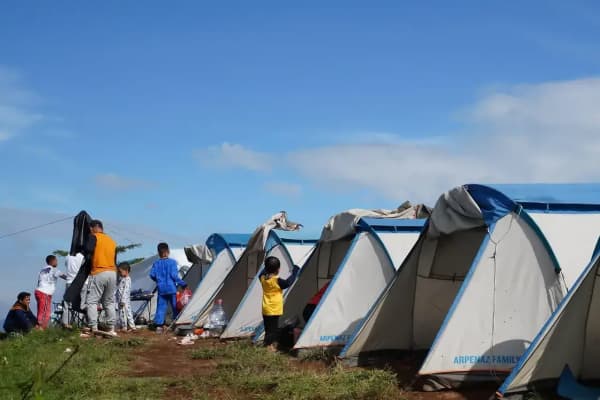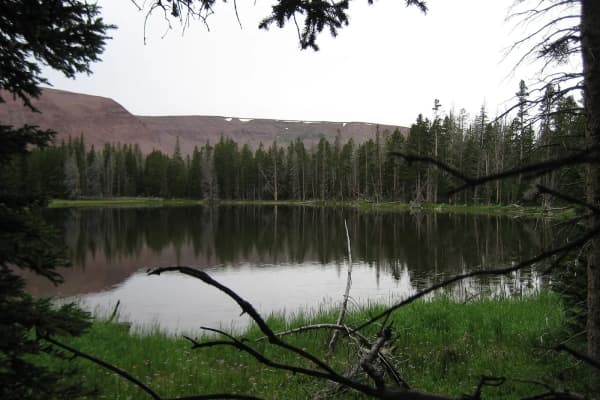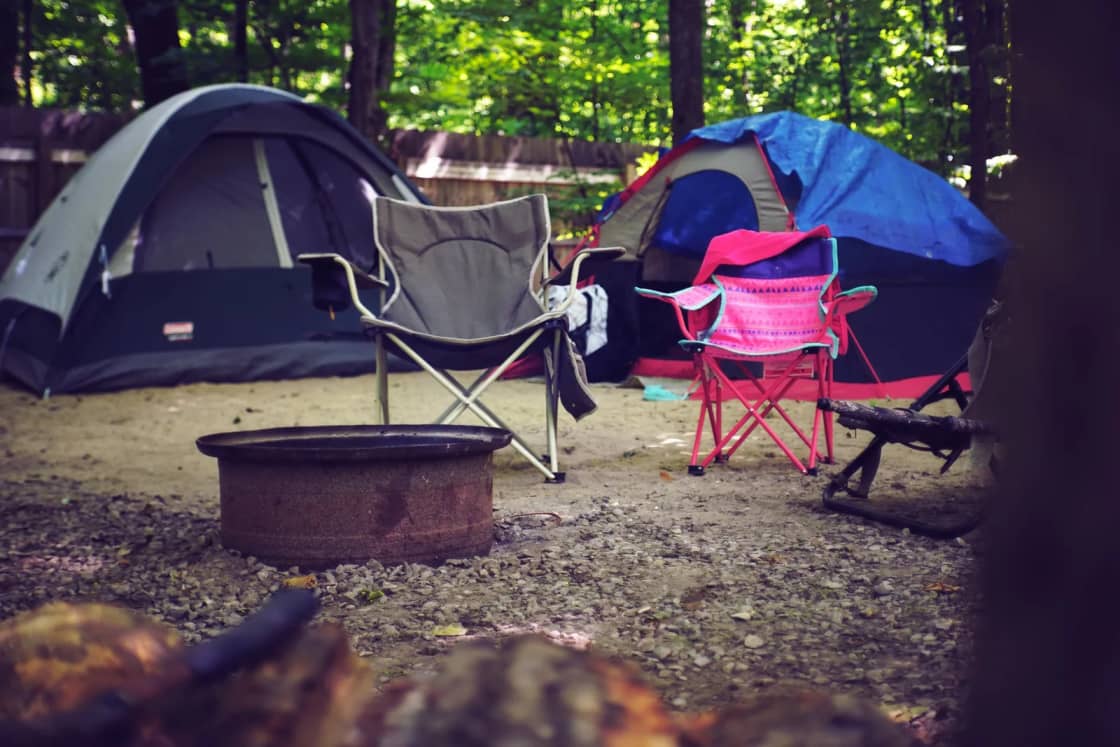
Utah camping is not one booking system. It is at least four: Recreation.gov, which handles most federal campgrounds; the Utah Division of State Parks, which runs its own reservation system; first-come sites that you can only claim by driving there; and dispersed camping on public land, where nothing is booked at all. Each has a different window, different fees and a different way of failing you at 8 a.m. on a Saturday in June. This guide explains how each one works, with the numbers the agencies publish, so a Utah Valley family or BYU and UVU student can pick the right system for the trip instead of discovering the rules at the gate.
How this guide was checked. Booking windows, fees and cancellation rules below come from pages we opened on November 9, 2026: Recreation.gov's rules and tips pages, the Utah State Parks rules page and individual park fee pages, the National Park Service pages for Arches and Capitol Reef, and Uinta-Wasatch-Cache National Forest campground pages. Where a page did not state something, we say "check the official page" rather than guess. Agencies change fees and windows, and individual campgrounds can differ from the general rule, so treat this as a map and confirm the exact campground before paying anyone.
Quick facts
| System | Booking window | Main fee facts |
|---|---|---|
| Recreation.gov (federal campgrounds) | Most sites open six months ahead; some places have shorter windows | $8 online reservation fee; $10 cancellation service fee |
| Utah State Parks (ReserveAmerica) | Rolling four months for individual sites; 11 months for groups | $8 reservation fee; $8 cancellation; $5 change |
| First-come sites | None; you claim the site in person | Fees vary by campground; paid on arrival |
| BLM dispersed camping | None; no booking | No fees or permits per BLM's Utah sheet; 14-day limit |
Who this is for
This is for anyone in Provo, Orem, Lehi or the rest of Utah Valley who is planning a camping weekend and wants to know where to look and when. That includes a family trying to land a Fourth of July or Pioneer Day weekend, a student with a free Friday and no plan, and a ward or scout group looking at a group site. It is also for people heading south to national parks, where the camping decision usually comes before the rest of the itinerary. If you already know your destination, skip to the section for that system. If you do not, start with the comparison below.
The four systems in plain terms
Recreation.gov is the federal reservation platform. In the Provo area you will meet it for Forest Service campgrounds in Provo Canyon, American Fork Canyon and the Uintas, and for many national park campgrounds. The Park Service's Fruita Campground at Capitol Reef, for example, is booked there.
Utah State Parks run their own campgrounds at places like Utah Lake, Deer Creek, Jordanelle, Wasatch Mountain and Antelope Island. Bookings go through the division's reservation system, which the division links from stateparks.utah.gov, or by phone at 1-800-322-3770.
First-come, first-served sites are not a system so much as an absence of one. Some campgrounds hold some or all sites for people who show up, claim a site and pay on the spot.
Dispersed camping is camping outside developed campgrounds on public land, mostly BLM and national forest ground. There is nothing to reserve and nothing provided.
Recreation.gov: how the six-month window works
Recreation.gov's own tips page says most campsites can be booked six months before your arrival date, and that some locations also have shorter windows listed on the campground's Seasons and Fees tab. Individual facilities set their own booking windows, so one campground may open six months ahead while the one down the road behaves differently. The platform's help material describes examples elsewhere in the country that release sites in monthly batches, and that is exactly why the page for your specific campground matters more than any general rule.
Release day
The tips page says sales usually open at 7 a.m. Pacific, 8 a.m. Mountain or 10 a.m. Eastern, but that times vary and the campground's Seasons and Fees tab gives the specific time. For Utah campers, 8 a.m. Mountain is the common case, and you should confirm it for your campground. The same page gives several release-day habits worth copying:
- Log in before the sale starts and load the campground page, then refresh at release time.
- Do not log in to the same account in several browsers, tabs or windows, because Recreation.gov says that can trigger a reCAPTCHA challenge that slows you down.
- Once you click Add to Cart, the site is held for 15 minutes. If you do not finish checkout in that time, it goes back to other campers.
- A digital wallet can speed checkout.
- If your full dates are not open, you may need to combine more than one campsite.
- The page tells people to sync to the Recreation.gov clock, which it identifies as Coordinated Universal Time, so convert the listed time carefully.
Date math helps. If you want a particular weekend, count back six months on the calendar and treat that day, at the posted time, as your deadline. For a Utah Valley family that wants a mid-July Provo Canyon weekend, that means a reminder in January, not in June.
Fees
Recreation.gov's rules page lists an $8 reservation fee for camping booked online, $9 through the call center and $3 in person, and says these fees are non-refundable. The campground's nightly rate is separate and is set by the facility, so check the campground page. The Forest Service pages we opened for Hope and Lower Provo River campgrounds did not list prices and sent visitors to Recreation.gov for current pricing and availability.
Changing and canceling
The rules page lays out the costs:
- Canceling: a $10 service fee is withheld from any refund.
- Late cancellation of an individual site: if you cancel the day before or the day of arrival, you pay the $10 service fee and forfeit the first night's fee. For a one-night stay you forfeit the full amount with no extra service fee.
- Changing dates: a $10 fee applies when you switch to dates entirely outside your original reservation. Extending or shortening a stay that includes your original dates has no change fee, and swapping to a same-priced site in the same facility on the same dates is free.
- Cut-off: online and call-center changes are not allowed once the reservation date has begun. The cut-off window is typically 0 to 4 days before arrival, depending on the facility.
- No-shows: you are a no-show if you do not arrive and do not cancel by check-out time the day after your scheduled arrival. The page lists a $20 service fee and loss of the first night's fee.
The practical lesson is that canceling early is cheap and canceling late is not, which is also why sites reappear in the weeks before a weekend. Recreation.gov asks people to cancel when plans change so others can use the site.
Last-minute strategies
The tips page does not promise last-minute availability, but it suggests an Availability Alert for a booked site, with the caveat that everyone with an alert for the same date is notified, so it is not guaranteed. It also suggests checking nearby campgrounds and considering weekdays or shoulder seasons, since weekends book up quickly. Our guide to camping when everything is booked goes through the cutoffs and the first-come campgrounds near Provo in more detail.
Forest Service campgrounds near Provo
Two Uinta-Wasatch-Cache pages we opened show how different neighboring campgrounds can be.
Lower Provo River Campground is booked through Recreation.gov, with a season listed as May 15 to September 13. The page lists vault toilets, picnic tables, no potable water and no hookups, and says a concessionaire runs the campground. The listing does not give a price or a stay limit, so check Recreation.gov.
Hope Campground, reached from Provo Canyon by way of Kyhv Peak Road, is listed as first come, first served with a season of May 22 to September 27. The page lists vault restrooms, grills and picnic tables and says potable water is not available. It also shows a "Site Closed" label that conflicts with the seasonal dates, so confirm its status before driving up. Our dispersed camping guide and camping near Provo guide cover more of the canyon options.
The Forest Service's pages direct visitors to Recreation.gov for the most current information, and that includes closures. In practice, treat any Forest Service page, including this one, as the starting point and Recreation.gov as the tiebreaker.
Utah State Parks: how the four-month window works
The division's rules page says individual campsites open on a rolling basis about four months ahead, and group sites open 11 months ahead. It adds that you can book a maximum of 13 days beyond the last date of the window. Reservations less than two days ahead are not made through the online system, and the page tells people to contact the park.
That four-month number is shorter than Recreation.gov's six, and it changes the planning calendar. For a July weekend at a lakeside park, look in March. For a September weekend with the family, look in May. The division does not publish how fast any park fills, so we will not claim a number.
Fees and rules
- Reservation fee: $8 per individual reservation, and $10.25 for group reservations.
- Cancellation, individual sites: four or more days ahead costs an $8 cancellation fee plus the reservation fee; later cancellations also forfeit one night's fee.
- Cancellation, group sites: 14 or more days ahead costs an $8 cancellation fee plus the reservation fee; later cancellations also forfeit one night's fee.
- Changes: $5 per site, made through the reservation call center up to two days before arrival.
- Check-in: 3 p.m. to 10 p.m. at most parks, with Sand Hollow listed at 2 p.m.
- Check-out: generally 2 p.m., or noon at several parks, including Bear Lake, Dead Horse Point and Goblin Valley.
- Stay limit: generally 14 days within any 30-day period, and the park manager can approve an extension.
- No-show: if you have not occupied your site by 10 a.m. the day after your scheduled arrival, the site may be released.
Nightly rates are separate and set per park. The pages we opened list Utah Lake State Park's Lakeshore Campground at $50 per night for the first vehicle, including water and 30-amp electric, with $40 for one extra vehicle. Antelope Island lists Bridger Bay at $30 without hookups and $40 with hookups, and Ladyfinger at $20. Our state parks pass and reservations explainer compares the parks nearest Provo, and Utah State Parks within two hours of Provo covers where to go.
Walk-up rules vary
The division's general rules page we opened did not describe first-come policy, so we cannot give you a single statewide rule. What we can report is park-specific. Antelope Island says reservations must be made at least two days ahead and that the day before and the day of arrival are first come, first served, but notes weekend reservations are strongly recommended and that the Split Rock Bay backcountry sites have no walk-up option. Other parks may differ, so ask the park or check its camping page before relying on a walk-up.
National park campgrounds
If your trip is built around a national park, the camping decision may be the hardest part, and the Park Service pages show two different models. For the parks themselves, see our ranking of Utah's national parks from Provo.
Capitol Reef. The Park Service says Fruita Campground has 71 sites and a 100 percent reservation system through Recreation.gov, with reservations accepted six months ahead. The fee is $25 per night, with a 50 percent discount for Senior and Access pass holders. The campground is open year-round, with a busy season from mid-March through October when it is typically fully booked. Canceled sites return to the system even the same day, and the page says WiFi at the campground and visitor center lets you book an available site on the spot. Stays are capped at 14 days from March 1 to November 30 and 30 days from December 1 to February 28. For the rest of the trip, see Capitol Reef from Provo.
Arches. The Park Service says Devils Garden Campground sites can be reserved for nights between March 1 and October 31, and that the campground is usually full every night in the busy season. From November through February, sites are first come, first served. The page does not state the booking window or fee in the content we read, so use the park's own pages for those. Entry to the park is a separate question from camping, and our Arches entry reservations explainer covers that.
The takeaway for a Provo family is that "reserved in advance" is the rule at the busiest national park campgrounds, and the alternative is to sleep outside the park.
First-come, first-served sites
First-come sites are real, and they are the best fallback in this guide, but they carry risk that reservations do not.
- You have to be there. A first-come site is claimed in person, usually by occupying the site and paying. Phone apps generally cannot tell you whether one is open.
- Listings can be wrong. The Hope Campground page shows both a seasonal listing and a closed label, which is a reminder to check the status before you drive.
- Seasons matter. Arches switches to first come in winter, while some state park walk-up rules apply only the day before and the day of.
- Arrive early. Check-out time is typically the late morning or early afternoon, and the people who leave are who opens your site. Arriving on a Thursday or Friday morning improves your odds over a Friday evening.
For the specific first-come campgrounds in the Provo area, including where a walk-up usually will not work, use our camping when everything is booked guide.
Dispersed camping on public land
BLM's Utah dispersed camping sheet says free dispersed camping is allowed throughout BLM Utah-managed lands except where posted, and that there are no fees, permits or passes associated with it. The same sheet lists these rules:
- a 14-day camping limit while occupying any campsite on BLM-managed lands;
- travel only on designated routes;
- camp only in previously disturbed sites, and not near developed recreation sites such as picnic areas, campgrounds or trailheads;
- camp at least 300 feet from range improvements such as corrals, gates, livestock waters and pens;
- do not trench, dig or level your site, and do not cut tree limbs;
- pack out all trash;
- use existing fire rings or a fire pan, collect only dead and down wood, never leave a fire unattended, and drown and stir the fire before bed or leaving;
- check current fire restrictions at utahfireinfo.gov.
Some BLM field offices and special areas apply stricter or different rules, including permit requirements and designated-site-only camping, so check the local office for the area you plan to use. We did not open those local pages, so we do not summarize them here.
"Free" does not mean "easy." There is no water, no trash service and often no cell signal. Our dispersed camping guide explains the land-ownership and fire issues west of Utah Lake and in the canyons.
Costs at a glance
Using only the figures from pages we opened:
| Item | Amount | Where it applies |
|---|---|---|
| Online reservation fee | $8 | Recreation.gov camping and Utah State Parks individual sites |
| Group reservation fee | $10.25 | Utah State Parks group sites |
| Cancellation | $10 service fee | Recreation.gov |
| Cancellation | $8 plus reservation fee | Utah State Parks, 4 or more days out |
| No-show | $20 service fee plus first night | Recreation.gov |
| Fruita Campground | $25 per night | Capitol Reef |
| Lakeshore Campground | $50 per night, first vehicle | Utah Lake State Park |
| BLM dispersed camping | No fee, per BLM's Utah sheet | Most BLM land |
Nightly rates for Forest Service campgrounds were not listed on the pages we opened, so check Recreation.gov.
Timing: a planning calendar
- Six months out: Recreation.gov campsites, including Fruita at Capitol Reef, open at the standard window. Set a calendar reminder for the release day and time.
- Four months out: Utah State Parks individual sites open on a rolling basis. Group sites open at 11 months.
- A few weeks out: Check daily for cancellations and set Availability Alerts.
- The week of: Check the forest and park pages for closures, fire restrictions and road conditions, then decide between a first-come fallback and a BLM site.
- Winter: Some campgrounds close or change systems. Arches' Devils Garden goes first come from November through February so check each park's season before you plan.
If you are camping in cold months, also read our Utah winter driving and traction law guide, because canyon roads can require traction devices.
What to bring
- A printed or screenshotted reservation confirmation, since cell signal is unreliable in canyons.
- Cash or a card, depending on the campground, plus a backup plan in case a fee station is cash only.
- Water. Several campgrounds listed above, including Hope and Lower Provo River, have no potable water.
- A fire pan or confirmation that the campground has a fire ring, and a shovel and water for putting a fire out.
- Extra layers. Canyon and mountain nights are cold even after hot days.
- A paper map or downloaded offline map for dispersed camping.
- Trash bags, since some places have no trash service.
- A second campground on your list in case the first is full or closed.
Who should skip it
Skip a first-come strategy if you are arriving late on a holiday weekend with small children and no fallback. Skip dispersed camping if you need water, toilets or a guaranteed spot, or if you are unsure you can drive the road your vehicle needs. Skip the six-month scramble if your dates are flexible; a weekday or shoulder-season trip can make the whole problem smaller. And skip trusting this article for exact prices on the day you book, because the official page is the source of record.
Safety and conditions
Fire is the variable that changes fastest. Check current restrictions with the managing agency before you leave, because rules differ by land manager and change with conditions. Campfires should be fully out before you leave, and the BLM says never to leave a fire unattended. Mountain weather can turn quickly, so pack for rain and cold. Where there is no potable water, bring or treat your own. In the canyons, Provo River and American Fork Canyon campers should expect little or no cell coverage in places, so tell someone your plan. In winter, traction rules and snow can close roads and campgrounds.
What to check before you go
- The managing agency's page for your exact campground, for season dates, closures and any alerts.
- The Recreation.gov Seasons and Fees tab for the booking window and release time.
- Whether your site is reservable, first come or both, and whether the rule changes by season.
- Cancellation and change rules, so you know what you will lose if plans shift.
- Fire restrictions and weather for your dates.
- Road access, especially for dispersed sites and winter trips.
- Check-in and check-out times so you arrive in the allowed window.
- A backup campground, in case yours is full.
Related Guides
- Utah's National Parks From Provo, Ranked by Drive and by Season
- Camping Near Provo: Best Campgrounds and Tips
- Camping When Everything Is Booked
- Dispersed Camping Near Provo
- The Utah State Parks Pass and Reservations
- Utah State Parks Within Two Hours of Provo
Frequently Asked Questions
How far ahead can I book a campsite on Recreation.gov?
How far ahead can I book a Utah State Parks campsite?
What time do Recreation.gov campsites go on sale?
What does it cost to cancel a campsite?
Can I just show up at a Utah campground without a reservation?
Is dispersed camping on BLM land free in Utah?
Do I need a reservation to camp at Arches or Capitol Reef?
What should I do if every campground near Provo is full?
Sources
The facts in this guide were checked against these sources. Hours, fees and rules change, so confirm anything time-sensitive with the source before you go. How we make Provo.com.
- Tips for Making Campsite Reservations at Popular Locations, Recreation.gov. Checked November 9, 2026.
- Rules and Reservation Policies, Recreation.gov. Checked November 9, 2026.
- Utah Division of State Parks: Park Rules, Utah Division of State Parks. Checked November 9, 2026.
- Fruita Campground, National Park Service. Checked November 9, 2026.
- Camping at Arches National Park, National Park Service. Checked November 9, 2026.
- BLM Utah: Dispersed Camping, Bureau of Land Management. Checked November 9, 2026.
- Hope Campground, USDA Forest Service, Uinta-Wasatch-Cache National Forest. Checked November 9, 2026.