
Search for jobs at Provo Airport and you will find a scattering of listings that do not add up to a picture. That is not a failure of the search. It is an accurate reflection of how airports are staffed, and once you understand the structure the search becomes straightforward.
Nobody works for "the airport"
An airport is a place where several unrelated employers happen to share a building. At PVU there are four distinct categories, and each has its own hiring process, pay structure and application portal.
Provo City. The airport is municipally owned, and the city employs the airport director, operations staff, maintenance, administration and the police and fire personnel assigned to the facility. These are municipal jobs with municipal benefits and municipal hiring timelines, posted through the city's careers system alongside every other Provo City position. Our guide to government jobs in Utah County covers how that process runs, because it is slower and more structured than private hiring.
The airlines. Three carriers serve PVU: Allegiant Air, American Airlines operated by SkyWest, and Breeze Airways. Each hires its own customer service agents and crew, through its own national careers site, on its own schedule. Three carriers means three pipelines. It also means a rejection from one tells you nothing about the others.
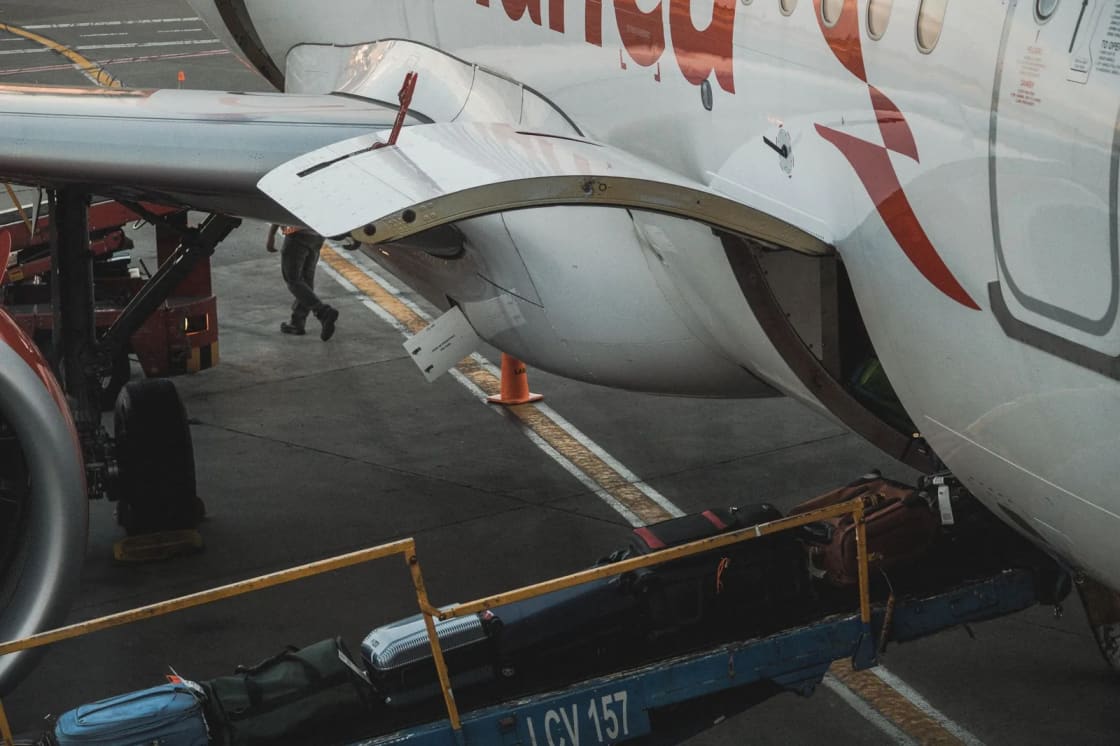
Ground handling contractors. This is the category most applicants miss entirely. The people loading bags, marshalling aircraft, operating the belt loaders and cleaning cabins between flights frequently do not work for the airline whose logo is on the plane. They work for a contracted ground handling company. These are among the most consistently available entry-level jobs at any airport, and they are almost never found by searching the airline's name.
Concessions, rental cars and services. Food and retail inside the terminal, rental car counters, parking operations, fuel services. Independent employers, independent hiring.
The practical instruction: do not search "Provo Airport jobs" once. Search four times, once per category.
What the roles are
Ramp agent / ground handler. Loading and unloading baggage and cargo, marshalling aircraft, operating ground equipment, servicing the plane between flights. Physically demanding, outdoors in Utah weather, and the shifts follow the flight schedule, meaning very early mornings and late evenings. Usually entry-level with on-the-job training. Requires a driver's license and the ability to be credentialed. This is the highest-volume entry point at most airports.
Customer service agent. Check-in, bag drop, boarding, gate announcements, rebooking passengers when a flight goes wrong. Hired by the airline. Service experience helps; composure under pressure matters more, because the job is largely about managing people on the worst travel day of their year.
Aircraft cleaning. Fast turnaround work between flights, often on split or overnight shifts. Genuinely entry-level.
Airport operations. Airfield inspections, wildlife management, coordination with air traffic, compliance with federal requirements. Municipal, more technical, and usually requiring some relevant background.
Maintenance and facilities. Municipal, covering the terminal and grounds.
Public safety. Provo's own police and fire personnel serve the airport; these are city positions with the corresponding training requirements.
Security screening. Federal, hired through the federal process rather than through the city or the airlines.
Concessions and rental cars. Retail and food service hours, terminal-based, hired by the individual operators.
The badge, and what it means for who gets hired
Every airside role requires airport credentials. You do not obtain these yourself — your employer sponsors the application after hiring you, and the process involves a criminal history records check and a security threat assessment.
Two consequences worth stating plainly.
The badge is a consequence of the job, not a prerequisite. Applicants sometimes assume they need credentials before applying. They do not.
A history that blocks credentialing blocks the job. This is the real filter on airside work, and it applies regardless of how well the interview goes. If this is a concern, it is worth understanding before investing in the application — and the Department of Workforce Services offices in the county have staff who work specifically with people navigating employment with a record. We cover that in job help in Utah Valley that costs nothing.
What the expansion changes
PVU is in the middle of the largest change in its history, and the hiring implications are widely misread.
The publicly stated shape of the project: the terminal goes from four gates to ten, with three new gates on each of the north and south sides, expected to open by late 2028. Apron expansion — the aircraft parking and servicing area — began construction in 2025. The plan also covers expanded ticketing and baggage handling areas and provision for customs facilities that would enable international service.
The airport has described dramatic traffic growth in recent years, and the current terminal itself only opened in July 2022. This is an airport that has outgrown a facility that is barely four years old.
Now the part that matters for a job search.
Construction jobs are happening now and are not airport jobs. They are contracted through builders. If you want that work, you are looking for the general contractor, not the airport.
Operational jobs scale with flights, not with construction. More gates eventually means more aircraft movements, which means more ramp staff, more gate agents, more concessions and more screening. But that hiring follows the flight schedule. The signal to watch is carrier route announcements and schedule expansions, not the construction timeline.
Customs capability is the interesting one. International service, if and when it arrives, brings federal staffing and a different operational profile. That is a different airport from the one operating today.
Our news coverage of the airport's expansion tracks the project as it develops, and flying from Provo Airport covers the passenger side of the same facility.
Shifts, and the honest version of the commute
Airport work runs on the flight schedule, and the flight schedule at a leisure-weighted airport is not a nine-to-five.
Expect early starts — ramp and customer service shifts commonly begin before dawn to service the first departures. Expect late finishes on the other end. Expect split shifts in some roles, where you work a morning bank of flights and an evening one with an unpaid gap between. Expect weekend and holiday work, because that is when leisure travel peaks.
That schedule has one advantage worth naming: it is almost entirely incompatible with being a full-time student, which means airport work sits outside the most crowded part of the Utah Valley labor market. The competition is thinner than for a comparable retail job.
It also creates a real transportation problem. PVU sits in southwest Provo, off the main UVX corridor, and a shift that starts at 4:30 in the morning is not a transit commute. Assume you need a car unless you have verified a specific route for a specific shift. Our comparison of PVU and Salt Lake City International covers the geography from the traveler's side, and the same distances apply to workers.
Applying, in order
- Provo City careers portal for municipal roles — operations, maintenance, administration, public safety.
- Each airline's careers site individually — Allegiant, American, Breeze. Filter by the PVU or Provo location.
- Ground handling contractors. Identify who holds the handling contracts for each carrier and apply to them directly. This is the step most applicants skip and the one with the most volume behind it.
- Concessions and rental car operators — apply to the business, not the airport.
- Federal screening positions through the federal hiring process.
For any of the entry-level airside roles, availability is your strongest card. Say that you can work early mornings, weekends and holidays if you can, because a large share of applicants cannot and the schedule is the hardest part of the job to staff.
Whether it is worth it
Airport work is not the highest-paying entry-level option in Utah Valley — the trades and licensed healthcare roles both pay better, as the Provo salary guide lays out. What it offers instead is a specific and unusual combination: entry-level access with a credential attached, an industry with genuine internal mobility, travel benefits in most airline and handling roles, and a workplace in the middle of a documented multi-year expansion.
That last point is the real argument. Most people looking for entry-level work in this valley are joining organizations that are the same size they were last year. PVU is not.
How PVU compares to working at Salt Lake City International
Anyone in Utah Valley considering airport work has two airports within reach, and they are very different workplaces.
Salt Lake City International is a hub. It runs a far larger operation, employs vastly more people, offers more role variety and more internal movement, and has union representation in parts of its workforce that PVU does not. It also sits roughly 45 miles north of Provo, which for a shift starting at five in the morning is a serious commitment. FrontRunner covers part of that corridor but not on a schedule that matches early airline shifts.
PVU is small, and small cuts both ways. Fewer positions exist, and the ones that do are less specialized — people wear more hats, which is either an advantage or an irritation depending on temperament. The commute for a Utah County resident is trivial by comparison. And the growth trajectory is the genuine differentiator: a facility going from four gates to ten is going to need people it does not currently employ.
The practical read: if you want the widest selection of airport roles available today, look north. If you want to be inside a small operation while it doubles, PVU is the more interesting bet, and being early at a growing facility has historically been worth more than joining a large stable one at the bottom.
What the work is like on the ramp
Since ramp work is the highest-volume entry point, it deserves an honest description rather than a job title.
You are outdoors, in Utah's weather, for the whole shift. That means January mornings on an open apron and July afternoons on asphalt reflecting full sun. The valley's inversion season adds air quality to the list of things you are working through.
The work is physical in a specific, repetitive way — lifting bags, many of them, at awkward angles, on a clock. Turnaround times are tight and the pressure to hit them is constant, because a late departure cascades through the rest of the aircraft's day.
It is also loud, which is why hearing protection is standard, and it happens around moving aircraft and vehicles, which is why the safety training is serious rather than a formality.
What people who stay in it tend to say they like: the shift ends when it ends, the work is visible and finite, there is no email, and the team dynamic on a ramp crew is unusually tight. What drives people out: the weather, the early alarms, and the bags.
Knowing which of those descriptions sounds like you is worth more than any amount of interview preparation.
Travel benefits, and how much they are worth
Most airline and ground handling roles carry flight privileges of some form, and this is frequently the single largest non-wage component of the compensation.
The honest version: these are usually standby privileges, meaning you fly if there is a seat. On a leisure-heavy network during a school holiday, there is often not a seat. The benefit is real and it is best understood as excellent for flexible off-peak travel and unreliable for anything with a fixed date.
The value also depends heavily on which employer you work for and what network they reach. A role with a carrier flying a broad domestic network is worth substantially more in this respect than one serving a handful of leisure destinations.
Ask specifically: which airlines are covered, is it standby or confirmed, does it extend to family, and what does it cost per trip in taxes and fees. Those four answers turn a vague perk into a number you can compare.
Getting hired, in practical order
A few things consistently separate applicants who get airside jobs at a small airport from those who do not.
Apply to the handler, not just the airline. Worth repeating because it is the single most common miss. The logo on the aircraft is frequently not the employer of the person loading it.
Name your availability in the first line. Early mornings, weekends, holidays. If you can do all three, you are in a small minority of applicants and it should not be buried on page two.
Do not overstate the physical side, and do not undersell it either. Hiring managers for ramp roles have seen many people quit in week three. Evidence that you understand what you are signing up for carries weight.
Have a driver's license in order. Most airside roles require operating vehicles on the apron, and a license problem is a hard stop rather than a negotiation.
Be straightforward about the background check. It is coming regardless, and surprises discovered late waste everyone's time.
Follow up. Small operations at growing airports are frequently short-staffed in their hiring functions too, and an applicant who calls once, politely, a few days later is often simply remembered.
Drug and alcohol testing, and the rules that apply on the ramp
Aviation is a testing environment, and an applicant for ramp, fuel, maintenance or flight-adjacent work at PVU should expect screening. Two separate rule sets sit on top of each other here, and they behave differently.
The federal layer is the one people expect. Safety-sensitive aviation functions are covered by federal Department of Transportation testing rules administered through the FAA, which reach specified categories of work regardless of what the employer would otherwise prefer. Whether a given role at Provo is safety-sensitive in the federal sense depends on the job, not the airport, and the hiring employer is the one who can tell you. Ask directly during the badge conversation rather than assuming — the answer determines whether you are subject to random testing for as long as you hold the role.
The state layer is the one that surprises people. For work that is not federally covered, Utah's Drug and Alcohol Testing Act, Utah Code § 34-38-1 through 34-38-15, governs private employer testing. It applies to private employers of any size, and it does not require anyone to test — testing is voluntary, and an employer who chooses to do it gets liability protection in exchange for following the chapter.
The conditions of that bargain are worth knowing as an applicant:
- A written policy has to exist first. Under Utah Code § 34-38-7, testing must be carried out within the terms of a written policy that has been distributed to employees and is available for review by prospective employees. You are entitled to read it before you are tested. Asking for it is a normal request, not a red flag.
- Testing is paid time. Utah Code § 34-38-5 requires that testing occur during or immediately after the regular work period, that it be deemed work time for compensation purposes, and that the employer pay the costs — including transportation if a current employee is sent off-site. An employer who sends you across the valley to a collection site on your own clock and your own gas has that backwards.
- Management is not exempt. To keep the liability protection, an employer that tests employees must also periodically test management. The statute does not specify how often, which is a real gap, but the principle is that the program cannot run in one direction only.
- A positive result gets a confirmation test. The chapter requires confirmation by gas chromatography, gas chromatography-mass spectroscopy or a comparably reliable method, and urine samples must go to a laboratory certified under the federal National Laboratory Certification Program.
One thing the chapter does not do. Utah does not require private employers to accommodate medical marijuana use, and a valid Utah medical cannabis card does not override an employer's policy. For federally regulated aviation roles the question does not arise at all, because federal law does not recognize the card.
This is a general description of Utah and federal rules rather than legal advice, and testing regulations are amended periodically. The employer's own written policy is the document that governs your situation, which is exactly why you should read it.
Start here
- The parent guide: Jobs in Provo and Utah Valley
- No degree required: jobs in Provo with no degree or experience
- Municipal hiring explained: government jobs in Utah County
- The passenger's guide: flying from Provo Airport
Expansion details reflect publicly announced plans and timelines, which shift. Carriers, routes and construction schedules should be confirmed with the airport directly before you rely on them, and the ground handling contracts in particular change hands periodically.
Related Guides
- Provo Airport expansion timeline update — the phase dates the hiring follows
- Teen Jobs in Provo: The Utah Rules, and Who Actually Hires at 14, 15 and 16
- Getting Your First Provo Job: Applications That Actually Work Here
- Part-Time Jobs in Provo: Who Hires, When They Hire, and What the Shifts Are Really Like
- Summer Jobs in Utah Valley That Are Not Door-to-Door Sales
- Direct Sales in Utah Valley: Why the Industry's Capital Is Here
- Job Fairs & Hiring Events in Utah Valley: Who Runs Them and When
Frequently Asked Questions
Who hires at Provo Airport?
Is Provo Airport hiring right now?
What airlines fly out of Provo Airport?
Do you need experience to work at an airport?
How big is the Provo Airport expansion?
Will the expansion create jobs at PVU?
How do I get an airport security badge?
Is Provo Airport a good place to work without a car?
Sources
The facts in this guide were checked against these sources. Hours, fees and rules change, so confirm anything time-sensitive with the source before you go. How we make Provo.com.
- Provo Airport Breaks Ground on Three Year Expansion (April 14, 2025), Provo Airport / Provo City. Checked October 12, 2026.
- About the Airport | Provo Airport, Provo Airport. Checked October 12, 2026.