
Provo's job market has a shape that is not obvious from the outside, and applying without understanding it is the main reason capable people spend six weeks getting nowhere.
Two things drive it. The city loses and regains a substantial share of its workforce twice a year on an academic calendar. And an unusual amount of hiring happens through personal networks rather than through the listings you can see.
Neither of those appears on a job board. Both determine whether your application gets read.
This is how first-time hiring actually works here, and what to do about it.
The calendar is the single biggest lever
Provo employers do not hire evenly through the year. They hire in two concentrated pushes and then mostly stop.
Mid-July through early September is the strongest window by a wide margin. Students leave for the summer, employers run short-handed, and then everybody rebuilds staffing simultaneously in the weeks before fall semester. Managers who ignored applications in June are actively looking in August.
Late April into May is the second window. The school year ends, students who were working during the year leave, and replacements are needed for the summer.
October through February is the dead zone. Positions are filled, turnover is low, and applications sit.
If you have any flexibility about when you search, use it. The same application submitted in August and in November produces different outcomes, and the difference has nothing to do with the application.
Why the referral culture matters more here
Utah Valley runs on personal networks to an extent that surprises people who have job-hunted elsewhere. Congregational networks, extended family, mission connections, neighborhood ties — a meaningful share of local openings are filled by somebody who knew somebody before the listing went up, or instead of it going up at all.
This is worth stating plainly rather than dancing around, because it has a practical consequence for anybody new: the listings you can see are not the whole market, and if you have no local network yet you are competing only in the visible portion of it.
That is not a reason for despair. It is a reason to build the network deliberately rather than waiting for it to happen, and to lean harder on the channels that are genuinely open to outsiders.
What to do if you have no local network
Tell people you are looking, specifically. Not "I need a job" but "I'm looking for something part-time with morning hours, ideally retail or food." Specific requests get referred; vague ones get sympathy.
Use the free infrastructure. Workforce Services and the community employment offices covered in our free job help guide exist precisely to substitute for a network you do not have, and they are open to anybody.
Go to a hiring event. A job fair puts you in front of people who would otherwise never see your application, which is exactly the gap a network fills.
Say yes to the first thing. A job you did not especially want, worked well for four months, produces a manager who will vouch for you. That is a network, built from nothing, on purpose.
Apply online, then turn up
Nearly every employer of any size requires an online application, and a resume handed across a counter often cannot be entered into their system at all. So the application has to happen online.
But the follow-up visit is what actually distinguishes you.
A few days after applying, go in during a genuinely slow hour — mid-afternoon on a weekday, not the lunch rush — ask for the hiring manager by name if you know it, and say briefly that you applied and wanted to introduce yourself.
That is it. Sixty seconds. It converts you from a row in a database into a person the manager has met, and at independent local businesses in particular it works remarkably often.
What "a slow hour" means by sector
Timing the follow-up visit badly is worse than not going.
- Restaurants and cafes: mid-afternoon, roughly between the lunch and dinner rushes. Never between eleven and two.
- Retail: weekday mornings shortly after opening.
- Grocery: weekday mid-morning. Avoid evenings and all of Saturday.
- Warehouse and logistics: early morning, and ask when shift change happens so you avoid it.
- Offices: mid-morning, and call ahead rather than arriving unannounced.
Walking into a full dining room asking about a job tells a manager you cannot read a room, which is exactly the thing they are screening for.
The application itself
Entry-level applications are screened fast, often in under a minute. A few things reliably matter.
Complete every field. Blank fields read as carelessness and some systems rank on completion.
Availability is the most important box on the form. Managers are solving a scheduling puzzle. Someone available for the shifts nobody wants — early mornings, closing, weekends — is more valuable than someone with a better history and impossible availability. Be honest about it, because getting hired on availability you cannot deliver ends badly within a month.
Use the same name everywhere. Application, resume, email address, and the name you give at the counter.
Get an email address that is your name. This is small and it is real.
The experience section when you have no experience
The most common first-job mistake is leaving this section empty because nothing was paid.
Things that count and should be listed:
- Volunteer work of any kind, with the hours and what you did
- Church callings that carried actual responsibility — organizing, teaching, coordinating people
- Coaching, refereeing, tutoring, babysitting on a regular arrangement
- Family business work, even unpaid
- School leadership, clubs, team roles
- Projects you completed and can describe
A manager hiring for an entry-level role is answering one question: will this person show up and be reasonable with customers? Evidence of reliability is evidence, regardless of whether anyone issued a paycheck for it.
References, and the mistake that quietly kills applications
Because local managers genuinely call references here rather than outsourcing the check, references carry more weight in Provo than the national norm.
That makes the standard mistake more expensive: listing somebody without asking them first. A reference caught unprepared gives a lukewarm answer, and lukewarm is worse than no reference at all.
Ask permission. Then tell them where you have listed them and what the job is, so they can be specific rather than generic. A reference who says "she covered every shift she was asked to for two years" is doing something a reference who says "he's a nice young man" is not.
Good first-job references: a teacher, a coach, a volunteer supervisor, an ecclesiastical leader, a family friend who employed you for anything. Not a relative.
The Utah rules worth knowing before you sign anything
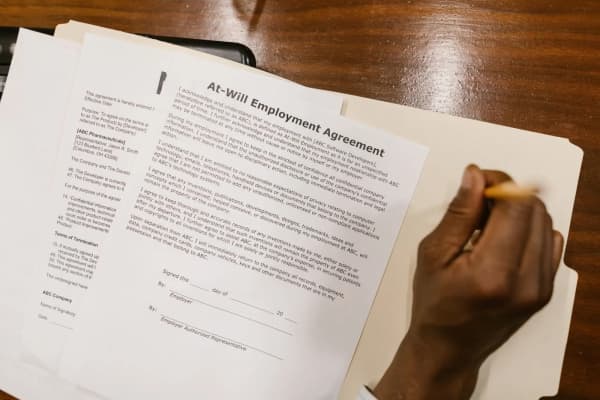
At-will employment. Utah is an at-will state. Either side can end the relationship at any time, without notice, for any reason that is not specifically illegal. There are genuine protections — you cannot be fired for a legally protected characteristic or for certain protected activities — but there is no general fairness requirement and no notice period.
Minimum wage. Utah follows the federal minimum. Most Provo employers pay above it because the local labor market is competitive, particularly during the August hiring push, but the legal floor is what it is.
Paperwork on day one. You will complete an I-9 with identity and work authorization documents, and a W-4. Bring documents to the first day rather than promising to bring them later — it is a common reason a start date slips.
Minors. Utah permits employment from fourteen with restrictions on hours and permitted work, tightening during school terms. Our teen jobs guide covers the detail.
Where to actually look
The chains post everywhere and hire constantly. Grocery, fast food, big-box retail. These are the highest-volume entry points and the fastest to hire during a push.
The universities employ enormous numbers of people, and not only students. Dining, custodial, grounds, facilities and administrative roles at BYU and UVU are real jobs with real schedules.
Warehouse and logistics along the I-15 corridor and toward the north end of the valley hire year-round and care more about reliability than experience.
Local independents — restaurants, shops, service businesses — rarely advertise widely and respond disproportionately well to somebody turning up. This is where the follow-up visit pays.
Seasonal employers run on a completely different calendar. Recreation, camps, landscaping and event work hire in spring for summer.
The interview, at this level
First-job interviews are short and they are not testing your knowledge.
Three questions decide most of them, whether or not they are asked directly: Will you show up? Can you be pleasant to customers? Will you still be here in three months?
Answer those. Have one specific example of being reliable when it was inconvenient. Have a straight answer about your availability that matches what you put on the application. And have one question ready about the job itself — what a typical shift looks like, or what the training period involves.
Arrive ten minutes early. Put the phone away entirely, not face-down on the table.
Following up without becoming a problem
One follow-up, about a week after applying. Brief, polite, and naming the specific role.
A second one only if you were given a timeline that has passed.
After that, stop. Continued messages move you from keen to difficult, and the reputational cost travels in a valley this size.
Silence is not usually a judgment on you. Most postings receive far more applications than anyone reads, and a large share of applicants never hear anything. Keep applying rather than waiting on any single one — volume and timing beat perfecting one application every time.
The August window, in more detail
Because the timing advice above is the single highest-value thing on this page, it is worth being concrete about how the window actually behaves.
Mid-July is when managers start posting, because they can see the gap coming and the summer staff is already thinning.
Early to mid-August is the peak. Fall semester has not started, returning students have not all arrived, and employers are competing for a labor pool that has not refilled yet. This is the two-week stretch where an average applicant gets treated like a good one.
Late August into early September the pool refills as students return, and the advantage swings back to employers.
By October most positions are filled and the market goes quiet until spring.
If you are moving to Provo and have any control over when, arriving in the first half of August rather than the first week of September changes your job search materially. It is also the worst time to find housing, which is the trade.
What Provo employers are actually short of
Entry-level hiring here is not uniformly competitive. Some shifts are oversubscribed and some go begging, and knowing which is which is worth more than a better resume.
Chronically hard to fill: early mornings, closing shifts, Sunday coverage where a business operates then, and anything during the weeks students are away.
Heavily oversubscribed: weekday afternoons and mid-day shifts, which is exactly when students are free.
The implication is direct. An applicant who offers 5 a.m. availability, or who will still be in town over Christmas and in May, is solving a problem the manager actually has. An applicant offering weekday afternoons is one of forty.
If you have any flexibility, put it where the shortage is. It is the fastest way to convert an ordinary application into a hire.
What actually gets somebody hired here
Having watched this market for a while, the pattern is consistent and it is not subtle.
The people who get hired quickly in Provo are the ones who applied during a hiring window, applied to a lot of places rather than a few, followed up in person once, and had honest, flexible availability.
The people who struggle are usually doing one of three things: searching in the dead months, applying only to jobs they actively want, or waiting for responses instead of continuing to apply.
None of that is about talent, and almost all of it is fixable in a week.
The first ninety days matter more than the hire
Getting the job is the smaller half. In a valley where hiring runs on personal networks, the first job's real value is the manager who will vouch for you afterward.
That reference is built in the first three months and it is built by unremarkable things: turning up on time, picking up a shift when somebody calls out, and giving notice properly whenever you eventually leave.
Provo is small enough that this travels. Managers in the same sector know each other, and a reputation for reliability circulates faster here than it would in a larger market — as does the other kind.
Work the first job like it is the reference for the second one, because that is what it is.
Quitting: the one deadline that changes depending on how you leave
Nobody thinks about the end of a job while accepting it, which is why this is the part people get wrong. Utah treats a resignation and a firing as two completely different events for pay purposes, and the gap between them is not small.
If the employer ends it, the clock is 24 hours. Under Utah Code § 34-28-5, when an employer separates an employee from the payroll, the unpaid wages become due immediately and must be paid within 24 hours of separation. A layoff counts. A seasonal cut counts. The employer can satisfy it by hand delivery, by initiating a direct deposit within 24 hours, or by mailing with a postmark no more than one day after the separation.
If you quit, it is the next regular payday. The same section provides that an employee without a written contract for a definite period who resigns is due the earned and unpaid wages, plus any deposit the employer holds, on the next regular payday. Not immediately, and not within a day. If you resign the morning after a payday, on a semi-monthly cycle, you may be waiting most of a month — which is a genuinely useful thing to know before you time a resignation around a rent payment.
The penalty has a step almost nobody takes. If wages are not paid within 24 hours of a written demand, the statute continues the employee's wages from the date of the demand until paid, capped at 60 days at the rate you were earning at separation. Read that carefully: the penalty runs from the demand, not from the separation, and the statute is explicit that an employee who has not made a written demand is not entitled to the penalty at all. So if a final check does not arrive, the effective move is a short dated written request — email is fine, and email timestamps itself — rather than a fortnight of phone calls. Any related civil action for that penalty has to be commenced within 60 days of separation, which is a genuinely tight window.
What has to be in the final check, and what does not. Earned wages, including commissions already earned. Accrued paid time off is not automatically owed under the statute — it is governed by the employer's own written policy, which cuts both ways: a handbook that promises payout is enforceable, and one that clearly states forfeiture generally holds. Read the handbook before you give notice, not after.
How to quit without any of this mattering, which is the better outcome: give notice in writing even where none is required, work the notice, return anything of theirs, and ask in the same message when the final payment will be issued and to which account. That last question is the whole trick — it puts the date in writing, from them, before there is anything to argue about.
Two weeks is a courtesy here, not a rule. Utah is an at-will state, and neither side owes notice absent a contract. But Provo's job market runs heavily on referral and reputation, as this guide has already argued, and in a market this interconnected the manager you leave badly is likely to know the manager you apply to next.
This describes the general rules and is not legal advice; the Utah Labor Commission publishes current requirements, and the job resources guide covers where to take a dispute that does not resolve.
The short version
Time it if you can — August and May are the windows. Apply online because you have to, then go in once during a quiet hour and introduce yourself, because almost nobody does.
Fill in every field, be honest about availability, count your unpaid work as work, and ask your references before you list them.
Then keep applying while you wait. The job you get will very likely be the one you applied to in week three, not the one you were hoping for in week one — and four months of doing it well is what makes the next application easy.
Related guides
- Jobs with no degree or experience in Provo
- Part-time jobs in Provo
- Teen jobs and Utah's rules for minors
- Free job help in Provo
- Job fairs in Utah Valley
- Jobs in Provo and Utah Valley
- Food Handler Cards & Health Permits in Utah County — the card most food jobs expect before your first shift
- Gig Work in Provo: The Honest Math on Delivery, Rideshare and Side Apps
- Working at Provo Airport: Who Actually Hires There, and What the Expansion Changes
- Direct Sales in Utah Valley: Why the Industry's Capital Is Here
- Government Jobs in Utah County: How Civil-Service Hiring Actually Works Here
- What Jobs Actually Pay in Provo: A Sector-by-Sector Wage Guide
- Vivint: Provo's Smart-Home Giant
- LGCY Power: Lehi's Homegrown Solar Company
Frequently Asked Questions
When is the best time to apply for a job in Provo?
Do I need a resume for an entry-level job in Provo?
How old do you have to be to work in Utah?
Do employers in Provo check references?
What do I do if I have no work experience at all?
Is it better to apply online or in person in Provo?
What is at-will employment and does it apply in Utah?
How long does it take to hear back from a Provo employer?