Upcoming dates

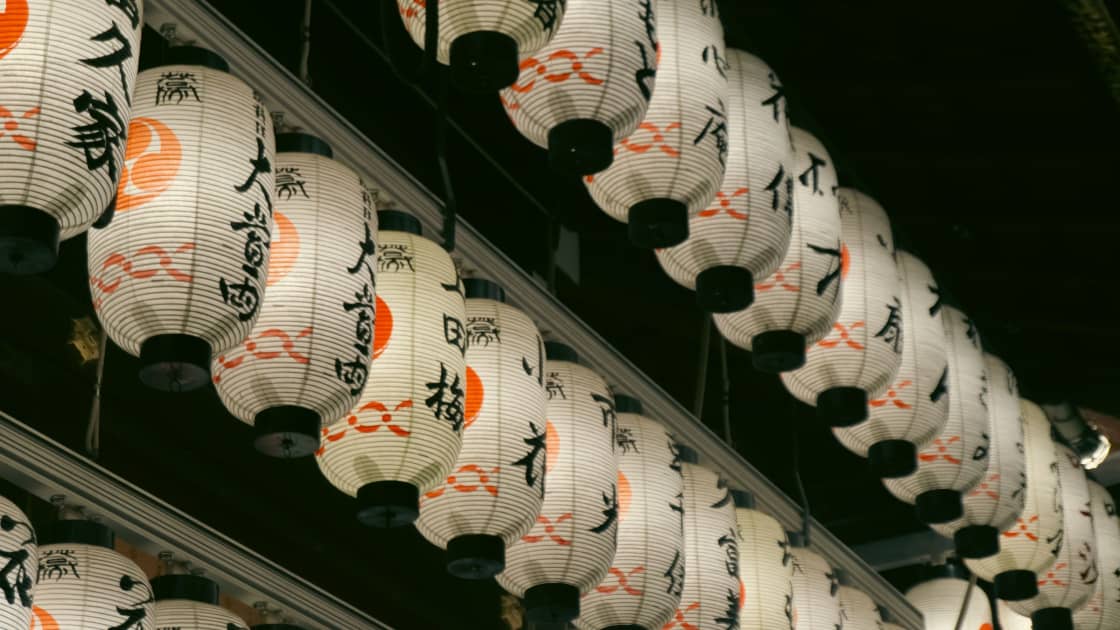
On one Saturday in July, a block of 100 South in downtown Salt Lake City gets closed to traffic. Tables go out. From three in the afternoon there is teriyaki and cold noodles and sushi and a long queue. At seven the taiko drums start, and they are loud enough that you feel them in the pavement. At eight, people in kimono and happi coats form a circle in the street and begin a dance that has been performed in this city since 1936, and in Japan for centuries before that, for the specific purpose of welcoming back the dead.
Then, at ten, it stops, and the block goes back to being what it is the other 364 days: two old buildings and a convention center.
The Salt Lake Obon Festival is free, ninety years old, and almost entirely unknown in Utah Valley, which is a shame twice over — once because it is a genuinely good night out, and once because it is the most visible surviving piece of a neighborhood this state built and then knocked down.
What Obon is
Obon is a Japanese Buddhist observance for the spirits of ancestors. The belief at its root is that during Obon the spirits of the dead return to visit the living, and the observance is how they are welcomed, honored and seen off again. In Japan it typically runs about a week in August and is one of the year's major family occasions — people travel home for it the way people elsewhere travel home at Christmas.
The dance is the oldest and strangest part of it, and it is worth knowing the story because it explains why a memorial looks like a party.
The tradition traces to an account in the Ullambana Sutra concerning Mogallana, one of the Buddha's ten principal disciples. Mogallana comes to understand the true nature of gratitude through his mother's life and death and through the Buddha's help — and at the moment of that realization, his joy is so overwhelming that he dances. Bon Odori, the Obon dance, is that dance. It has been repeated every year for centuries by people remembering their own dead.
This is the thing that makes Obon different from every other memorial tradition most Americans have encountered. It is not solemn. The correct response to remembering the people you have lost, in this tradition, is to eat well, drum hard and dance in the street. A visitor who arrives expecting a vigil will be confused for about four minutes and then will stop being confused.
The evening, hour by hour
The shape has held steady for years and it is worth planning against, because the festival's two halves are quite different.
From 3 p.m. — food, tours and the store. Food service opens and this is when the queues are shortest. The traditional dishes have included teriyaki chicken and beef, cold somen noodles, sushi, musubi, grilled eggplant, beef bowls, limeade and beer, priced from a few dollars to around fifteen for a bento box. Temple chapel tours run through the afternoon, are free, air conditioned and hourly, and are one of the genuinely interesting things on offer — most people in this state have never been inside a Buddhist temple. The temple's dry-goods store opens at the same time, selling Japanese items, novelties and books.
From 7 p.m. — the drums. Taiko drumming opens the entertainment, usually alongside Hawaiian dancing. Taiko in a closed street between buildings is a physical experience rather than a musical one; it is the moment the festival changes gear.
From 8 p.m. — the street dancing. The Bon Odori. Dancers in kimono and happi coats in a circle in the road, working through thirteen to fifteen traditional dances. There is usually an intermission around nine, a raffle and a silent auction somewhere in the evening, and audience-participation dances mixed in deliberately.
10 p.m. — it ends. Firmly.
The practical read: if you want the food, come at three. If you want the spectacle, come at half past six. If you have small children, three to seven is your window and you will miss the dancing, which is a real trade-off and there is no way around it.
You can learn the dances, and almost nobody knows this
For about two weeks before the festival the temple runs open Bon Odori practices on weeknights, in the gymnasium, typically from seven to nine in the evening, with a snack bar opening at half past six. They are open to anyone. In 2026 they ran across nine evenings from the end of June into the second week of July.
Dancers turn up night after night to learn thirteen to fifteen dances. Some have been doing it for decades; some are there for the first time. The temple's framing is simply that everybody can dance.
If the idea of being in the circle rather than on the pavement appeals — and it is a completely different experience of the evening — that is the door, and it is wide open. It is also, incidentally, the single best way to understand what the festival is actually for, because the practices are where you meet the people whose grandparents started it.
Japantown, and the two buildings
Now the harder half of the story, which is the reason this festival happens on this particular street.
From the late 1800s, Japanese immigrants came to Utah to work the railroads, the mines and the farms. They settled, as immigrant communities do, in one place: the block of 100 South between 200 West and 300 West in downtown Salt Lake City. It became Nihonmachi — Japantown — and for the better part of a century it was the center of a community of more than two thousand people.
It had what a neighborhood has. Noodle houses. Laundries. Fish and tofu shops. A pool hall. Tailors, cafes, a service station, apartments. A Buddhist temple, established in 1912. A Christian congregation, in a Late Gothic Revival building put up in 1924. It was a place where people met each other, and a great many Utah families' origin stories run through it.
In the mid-1960s most of it was demolished. The city was pursuing a bid for the 1972 Winter Olympics and needed a convention and exhibition venue, and Japantown was where it went. The Dawn Noodle House went. The tailors went. The laundry, the service station, the apartments. The Salt Palace opened at the end of the decade on top of the block.
Two buildings survived: the Salt Lake Buddhist Temple on the south side of the street, and the Japanese Church of Christ on the north. That is what is left.
There is a detail about the temple that is worth sitting with. The current building went up in the early 1960s, replacing an older one — that is, immediately before the demolition of the neighborhood around it. It was designed in a mid-century modern idiom with pews and a pulpit, deliberately made to read as a Protestant church rather than as a Japanese temple, as an act of assimilation. A community that had been incarcerated by its own government two decades earlier, in camps including one in Utah's west desert, built a temple designed not to look foreign. Then the neighborhood was flattened anyway.
What is happening to the street now
Japantown Street is not a settled question, and anyone visiting for Obon is walking through an argument in progress.
The block of 100 South was given the honorary name Japantown Street after a council decision in the 2000s, which the community treated as a first step rather than a resolution. The Salt Palace expanded again in 2006. A memorial garden designed by a University of Utah professor sits on the convention center's west side, buffering its loading docks from the Japanese Church of Christ, and honors the Issei — the first generation of immigrants — and the Nisei, their American-born children.
Since 2018, a series of large downtown developments have proposed frontage on or near the street, and a set of community organizations have been formed or reactivated to respond — advocacy groups run substantially by younger Japanese Americans alongside the elders who remember the neighborhood.
Where it stands, as of a 2024 preservation assessment: the two buildings are classed as endangered and under monitoring. The Japanese Church of Christ has been on the National Register since 1982; the Buddhist Temple is not individually listed; neither has local landmark protection. Meanwhile there is real money moving: an eight-figure city reinvestment project to rebuild the 100 South streetscape, cherry trees planned, a mural commissioned, and a share of tax increment from a neighboring development block earmarked for public improvements on the street. Representatives of both congregations have been at the design table.
And the Salt Palace itself — the building that caused all this — is now the thing that may come down. Partial demolition has been discussed for as early as 2027.
The community's stated worry is not abstract. It is whether construction will block access to two active congregations, whether their activities will be disrupted, and whether the cultural identity of the street is actually respected this time or merely referenced. Those are the questions a visitor is walking into, and they are the reason the annual closing of that road for a dance matters more than a festival normally would.
What to expect if you have never been to a festival like this
A few things that are obvious once you have been and opaque before.
It is a congregation's event, not a production company's. The people selling you food are members, the people directing parking are members, and the woman handing out raffle tickets probably learned her dances from her mother. That makes it warmer than a commercial festival and also slower — queues move at the pace that volunteers move.
The food is the fundraiser. Admission is free because the food is not. Buying dinner is how you pay in, and it is worth doing even if you ate before you came.
The circle is not a performance you watch from outside. The Bon Odori is danced in a ring, and the ring is designed to be joined. The published program includes audience-participation dances specifically. Nobody will drag you in, and nobody will look twice if you step in either.
Nobody expects you to know anything. Tours run for exactly this reason. Questions about the temple, the altar, the observance and the dances are welcomed rather than tolerated, and the people answering have answered them every July for decades.
Dress for a summer evening downtown, not for a temple. There is no dress code for the street. Some attendees wear yukata or happi coats, most do not, and both are entirely normal.
It is loud and then it is not. Taiko is genuinely loud, and anybody sensitive to noise should plan to be further down the street for that stretch. The dancing that follows is quiet by comparison.
Utah's wider Japanese American history, briefly
The Obon festival is one thread of a longer story, and a visitor who wants the rest of it has places to go.
Japanese immigration to Utah began in the late nineteenth century and was driven by the same three industries that drove most immigration to this state: the railroads, the mines and agriculture. Communities formed near that work, which is why the Japanese American presence in Utah was never confined to Salt Lake City — there were farming families across the northern valleys and mining families in the coal country to the south.
The Second World War is the hinge. The United States government incarcerated Japanese Americans from the West Coast in camps inland, and one of those camps was in Utah's west desert, in Millard County. The consequences for the state's demography were lasting: Utah's Japanese American community after the war was substantially larger and differently distributed than before it, and a number of families who ended up in Salt Lake City arrived by that route.
That history is why the assimilation choices made in Japantown in the 1950s and 1960s — including a temple designed to look like a Protestant church — read the way they do. They were made by people who had recently been treated as foreign by their own country, in a decade when doing so was a rational precaution rather than an aesthetic preference.
None of that is on the flyer for a July street festival, and none of it needs to be. But it is under the pavement, and it is part of why a community that lost its neighborhood still closes that street every year.
Going, from Utah County
The temple is at 211 West 100 South, downtown, a short distance west of the Salt Palace. From Provo it is about forty-five minutes up I-15.
Parking downtown on a July Saturday evening is the usual downtown problem, and the convention center's own parking has been the standard advice for festival-goers.
FrontRunner is the better answer for a lot of people, and our guide to the train from Provo covers the fares and the traps. The one that matters here: the last southbound train is earlier than people assume, and a festival running to ten at night can outlast it. Check before you commit to the car-free version.
The rest of the year, the block is a ten-minute walk worth making if you are downtown anyway. Both buildings are street-visible and architecturally interesting for opposite reasons. The memorial garden is quiet and almost nobody is in it.
Why this belongs on a Utah Valley site
Two reasons, and they are not sentimental.
The first is that Utah Valley's own history rhymes with it. This valley has its own stories of communities built by people who came for railroad, mine and farm work, and its own record of what happens when a downtown decides to expand. A Provo reader walking Japantown Street will recognize the shape of what happened there.
The second is simpler. It is forty-five minutes away, it is free, the food is good, the drums are extraordinary, and if you have never been inside a Buddhist temple, somebody will walk you through one at four in the afternoon and answer your questions. There are not many better uses of a July Saturday, and there will not be an unlimited number of them.
Related Guides
- The Utah Asian Festival — the state's big pan-Asian day, in June at the Fairpark
- The Orem Asian Festival — Utah County's own
- Asian markets and grocers in Utah Valley — the everyday version
- A Salt Lake City day trip from Provo
- FrontRunner from Provo — the car-free way north
- The history hub — how the rest of this valley was built and rebuilt
- Festivals and celebrations in Utah Valley
Festival dates, times, menus and the practice schedule are set by the Salt Lake Buddhist Temple and change every year. Everything here was checked against the temple's published festival information and against preservation and news records on 17 September 2026. Confirm before you drive.
Frequently Asked Questions
When is the Salt Lake Obon Festival?
Do you have to be Buddhist, or Japanese, to go?
What actually happens, and when?
What is Bon Odori and why do they dance?
Can I learn the dances beforehand?
What is Japantown, and how much of it is left?
How do I get there and where do I park?
Is there anything to see there the rest of the year?