Upcoming dates

Most people in Utah Valley have never been, and the usual reason is a category error: they hear "Asian festival," think of the one Orem runs, and conclude they have already done it. Those are two different events with two different purposes, and the state one is a scale up that is hard to picture until you are standing in it — two stages, dozens of performing groups, seventy-plus market booths, more than thirty food vendors, and a crowd in the tens of thousands, all of it free, all of it in one day.
The Utah Asian Festival takes over the Utah State Fairpark on a Saturday at the start of June and runs for eleven hours. The 49th edition ran on 6 June 2026, from eleven in the morning until ten at night. Which means 2027 is the fiftieth.
This page is what it is, where it came from, how to do eleven hours of it without falling over, and the honest comparison with the Orem Asian Festival that Utah County already has.
Where it came from, which explains what it is
The festival is a program of the Asian Association of Utah, and the association's origin is the reason this event has the character it has.
AAU was formed in September 1977, out of a decision by the state's then governor to bring Southeast Asian refugees from a resettlement camp in California to Utah. A small seed grant established the association as a community coalition and nonprofit, and it began by serving Southeast Asian refugees — people arriving from Vietnam, Cambodia and Laos in the aftermath of the wars there. It has since broadened to serve refugees and immigrants generally.
So the festival did not begin as a celebration. It began as an arrival. That history is still legible in the program, and it is why the event carries a mini health fair and a row of community-service organizations alongside the food and the dancing: the association that runs it is a services organization the rest of the year.
It is also why the cultural content is unusually specific. A festival organized by a resettlement agency has, over five decades, accumulated relationships with the actual communities — and Utah has more than eighty distinct Asian ethnic groups in it. What ends up on the stage is not a generic pan-Asian sampler. It includes forms that exist here because particular families carried them here, some of which very nearly did not survive the twentieth century at all. Cambodian classical dance is the sharpest example: an art form that the Cambodian genocide came close to extinguishing, performed on a Saturday afternoon in Salt Lake City by people whose families kept it.
That is the thing worth understanding before you go. This is not a food event with some dancing attached.
What is actually there
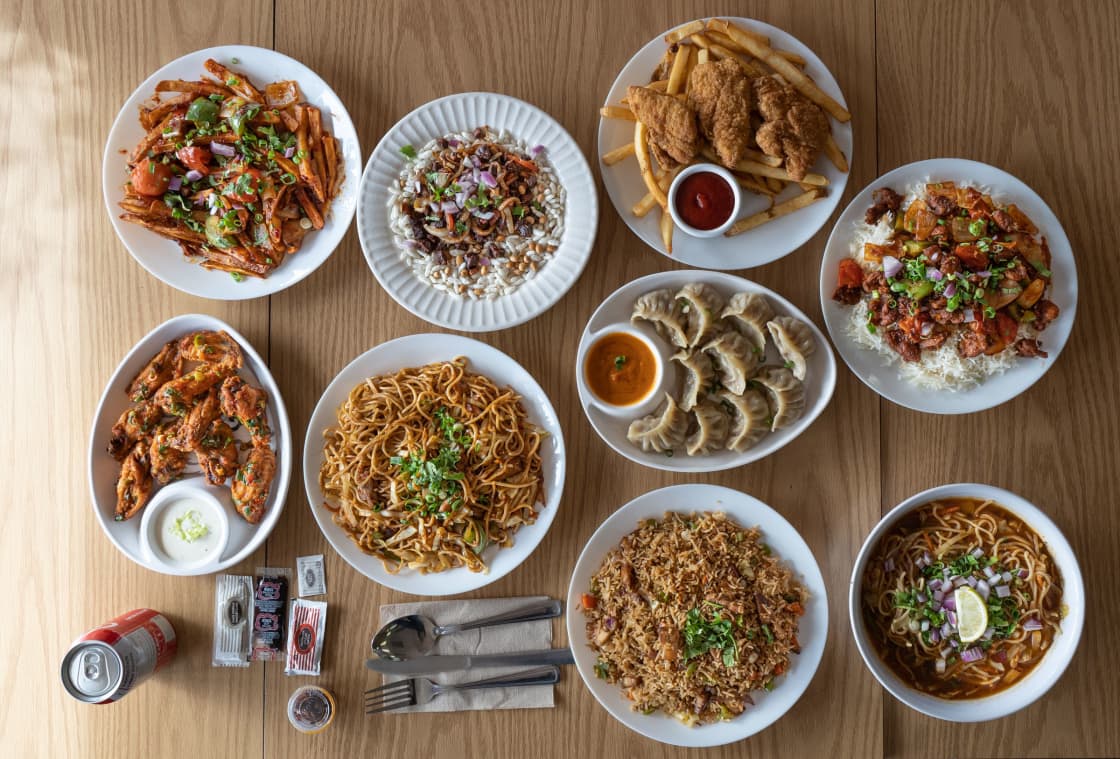
The food. More than thirty trucks and booths, weighted deliberately toward street food and regional specialties rather than restaurant menus. In recent years this has been the festival's main growth engine — the organizers have said as much — and it is the reason the crowd has grown the way it has. The practical effect is that you can eat across a dozen cuisines in an afternoon in portions small enough to keep going.
The marketplace. Seventy-plus booths: Asian-owned businesses, artisans, handcrafted goods, jewelry, artwork, specialty products, cultural and educational booths, community organizations, and a small health fair. The marketplace is genuinely a marketplace rather than a merchandise row, and for a lot of the small businesses in it this is the highest-footfall day of their year.
Two stages, all day. Dozens of performing groups across traditional and contemporary work: dance, martial arts, drumming, classical music — and, increasingly, modern acts, including K-pop and rock bands. The two-stage structure is what lets both exist without one crowding the other out, and the modern programming is an explicit strategy to pull in an audience that would not otherwise come. It has worked; the festival now draws visitors from Nevada, Idaho and Colorado.
Children's activities, built into the program rather than bolted on.
The eleven-hour problem, and how to solve it
Here is the thing nobody tells you: an eleven-hour one-day festival is not a longer version of a four-hour one. It is two different events sharing a fence.
The day festival, roughly eleven to five, is the food-and-market half. The queues are shortest at the start, the vendors are fully stocked, the marketplace is browsable, and the stages run the traditional program. It is also, in the middle of it, extremely hot — this is June, on a fairground, with limited shade — and one in the afternoon is the worst hour of the day on both counts.
The evening festival, roughly five to ten, is a different animal. The heat goes, the light gets good, the modern acts land in the back half of the program, and the crowd shifts older and livelier. Some food vendors sell out; others are at their best.
The mistake is trying to do both in one go with children. Eleven hours outdoors in June defeats adults. Pick a half.
The other mistake is arriving at one o'clock, which is what most people do, and which combines the worst heat with the longest queues.
If you want a single recommendation: arrive at eleven, eat hard for two hours, walk the marketplace, and leave by three. If you have no children with you and want the best of it: arrive at five and stay to the end.
Getting there from Utah County
The Fairpark sits at 155 North 1000 West in Salt Lake City, west of downtown. From Provo it is about forty-five minutes up I-15 in ordinary conditions, longer on a June Saturday afternoon.
Parking at the Fairpark on a festival Saturday is the usual problem — finite, and worse the later you arrive, which is another argument for the eleven o'clock plan.
FrontRunner is the better answer for a lot of people, and it is a genuinely underused option for Salt Lake events from this valley. The train from Provo, Orem, Vineyard or American Fork gets you into downtown Salt Lake without a car, and the last mile to the Fairpark is short. Our guide to using FrontRunner from Utah County covers the fares and the timetable traps, the main one being that the last northbound and southbound trains are earlier than people assume — which matters a great deal at a festival that runs to ten at night. Check the last train before you rely on it.
How it differs from Orem's, honestly
Utah County has its own Asian festival, and this site covers it. The two are not in competition and the difference is worth stating plainly.
The Orem Asian Festival is the local one. City-scale, close to home, the kind of thing you walk into on a Saturday because you were nearby. It is an easier proposition with small children, it costs you nothing in driving, and it is a genuine community event rather than a scaled-down version of something else.
The Utah Asian Festival is the state one. It is bigger by an order of magnitude in every dimension — performers, vendors, attendance, running time. It is a day out rather than a stop. It has performing groups and food vendors that simply do not travel to a city festival.
The way to think about it: go to Orem's every year because it is easy, and go to the Fairpark one when you want the full version. They are eight weeks or so apart in the calendar, which makes doing both entirely reasonable.
Why a pan-Asian festival is an odd and interesting thing
It is worth pausing on the word "pan-Asian," because it describes something that does not exist anywhere in Asia.
There is no single Asian culture. The distance between the traditions represented at this festival — Japanese, Chinese, Korean, Vietnamese, Cambodian, Laotian, Thai, Filipino, Indian, Nepali, Pacific Islander and a great many more — is the distance between any two unrelated civilizations. A "pan-Asian" festival is a diaspora invention: it exists because in a place like Utah, communities that would have nothing structural to do with each other at home find themselves categorized together, living in the same neighborhoods, sending children to the same schools, and discovering that pooling effort produces something none of them could stage alone.
That is what you are actually walking into. Not a tour of Asia, but a portrait of how Utah's Asian communities have organized themselves over five decades — which is a more interesting thing and, on the evidence of the crowds, a more durable one.
It also gives the event an internal tension that keeps it honest. Each community wants its own form represented accurately, not blended into a general aesthetic. The two-stage format and the sheer number of performing groups are how that gets resolved: you do not get a synthesis, you get sixty separate things in a row.
What a festival like this is actually for
It is easy to read a cultural festival as decoration — a nice day out, a bit of color, some food you would not otherwise cook. That reading misses most of what is going on, and the Utah Asian Festival makes the point better than most because its origins are so plainly practical.
It is a marketplace for businesses that have no other high-footfall day. A small importer, a home baker, a two-person restaurant, an artisan working out of a garage — these are businesses without advertising budgets, and one Saturday in front of tens of thousands of people is worth more than a year of anything else available to them. The marketplace is not a craft fair attached to a festival; for a lot of the vendors it is the commercial event of the year.
It is a transmission mechanism. Cultural forms survive by being performed, and they are performed because there is somewhere to perform them. A child who spends six weeks learning a dance for a June stage has learned the dance. Remove the stage and the six weeks do not happen, and a generation later the form is a photograph. Every dance group and drumming ensemble on that program is running on the same logic, and the festival is the reason the calendar has a deadline in it.
It is a way of being counted. A community that gathers twenty thousand people in one place on one day is visible to a city in a way that the same community spread across a valley is not. That visibility converts into practical things — services, funding, a seat at planning tables — and organizations that started as resettlement agencies understand this better than anyone.
And it is a low-stakes door. Most people who go are not from any of the communities represented. They come for the food, stay for a drum performance they had not planned on, and leave knowing slightly more about who else lives here. That is a modest outcome and it is the one that compounds, because it is the only one that scales to a whole city.
Practical notes
Sun. June, fairground asphalt, limited shade. Hats, water, and a plan for the middle of the day.
Cash and cards. Food vendors are individual businesses, so assume a mix and carry both.
Portions. Street-food portions from many vendors is the format. Do not commit to one large thing at the first booth; it is the same error as at any tasting event.
The program. The festival publishes an official guide with performance schedules, vendor lists, a map and the marketplace. Look at it before you go rather than at the gate, because on two stages with sixty groups there will be one act you would be annoyed to miss.
Volunteers. The festival is volunteer-run. The people directing you to a car park have jobs during the week.
The rest of Utah's Asian calendar
The June festival is the biggest single day, but it is not the only one, and a reader who enjoys it should know what else the year holds.
Obon, in July. The Salt Lake Buddhist Temple closes its block of 100 South for a Japanese Buddhist ancestor festival that has run since the 1930s — taiko drumming, street dancing in kimono and happi coats, and food from three in the afternoon. It is smaller, older and much more specific than the June festival, and it is free. Our guide to Obon and Japanese Utah covers it and the neighborhood it survives in.
Lunar New Year, in late January or February. The date moves with the lunar calendar. Celebrations happen at multiple venues around the valley rather than at one central event, which makes it the hardest of these to plan for and the one most worth asking about locally.
The temple and community celebrations that sit outside any festival calendar — Diwali, Vesak, Tet, Nowruz and others — are generally hosted by individual congregations and community organizations rather than publicized as public events. They are frequently open to visitors who ask, and almost never advertised to people who do not.
The everyday version, which is the one most people can actually use: the grocers. Utah Valley's Asian markets are where the ingredients, the snacks, the frozen goods and a good deal of the community notice-board activity live the other fifty-one weekends of the year, and they are open on a Tuesday. Our guide to Asian markets and grocers is the practical companion to all of the above.
The Fairpark as a venue, which shapes the day more than you expect
The Utah State Fairpark is a nineteenth-century fairground, and that has consequences worth knowing before you plan a day there.
It is flat and hard-surfaced, which is excellent for pushchairs, wheelchairs and wagons and unforgiving on feet. There is very little grass to sit on and most of what shade exists is at the buildings rather than over the open ground where the booths are. A fairground is designed to move crowds, not to let them linger comfortably, so anybody intending to stay several hours should bring something to sit on and plan a shade break rather than assume one will present itself.
It is also larger than it looks from the entrance, and the layout spreads a festival out. Two stages at a venue this size are far enough apart that you commit to one for a set rather than drifting between them, which is worth knowing when you are deciding what to miss.
The buildings matter. Indoor exhibition halls are air conditioned, which on a June Saturday is not a minor detail, and they are where a family with a melting toddler should head at two in the afternoon rather than persevering outdoors.
And the site is genuinely historic — the fairgrounds are on the National Register of Historic Places, and the Utah State Fair itself has been running there, with wartime interruptions, since the nineteenth century. The June festival is a newcomer on a very old piece of ground, which is a pleasing thing to think about while eating something from a truck.
The fiftieth
The 49th ran in 2026, which makes 2027 the fiftieth — half a century of a festival that began as a refugee resettlement project in 1977. If you have been meaning to go, that is the year, and it is a reasonable bet that it will be the biggest one they have staged.
Related Guides
- The Orem Asian Festival — Utah County's own, and the easier one
- Asian markets and grocers in Utah Valley — where the ingredients come from the rest of the year
- A Salt Lake City day trip from Provo — making a day of the drive
- FrontRunner from Utah County — the car-free way to a Salt Lake festival
- Festivals and celebrations in Utah Valley — the whole year, month by month
- Salt Lake and beyond — everything north of the point of the mountain
Dates, hours and the festival program are set by the Asian Association of Utah and change every year. Everything here was checked against the association's own festival pages on 17 September 2026. Confirm before you drive.
Frequently Asked Questions
When and where is the Utah Asian Festival?
Is it free?
How is this different from the Orem Asian Festival?
How long has it been running?
What is actually there?
Is it worth the drive from Utah County?
Is it good for children?
What is the best time to arrive?