
There are two very different reasons a student in this valley looks for service hours, and it is worth being honest that both are legitimate.
The first is the requirement — a scholarship condition, a club obligation, a class component, an application that will look thin without it. The second is the ordinary human one: you moved here, you would like to be useful, and the campus bubble is smaller than it looked in August.
The practical advice is the same either way. What differs is the paperwork, and the paperwork is where most people lose hours they served.
Start with the two search layers
Almost every specific opportunity in Utah County gets posted to one of two places, and checking both takes about ten minutes.
JustServe.org is the one most locals name first. It is free, provided by the Church of Jesus Christ of Latter-day Saints, and open to organizations and volunteers of any background — a substantial share of what is listed comes from secular nonprofits, city governments and schools. Filter to Utah County and you will find everything from a two-hour Saturday cleanup to a year-long tutoring placement. There is a mobile app, which matters when you are looking for something this week.
The United Way of Utah County volunteer portal at volunteer.unitedwayuc.org skews differently: more ongoing roles, more agency-level listings, more of the recurring work that keeps organizations running. United Way also operates 2-1-1, a free statewide line that works in both directions — to find help or to be pointed toward a place that needs you.
They overlap less than you would expect. Beyond them, both universities run service offices with their own placement relationships, and those are worth using because a placement arranged through a campus office usually comes with hour tracking already built in.
Our guide to volunteering in Utah Valley covers the organizations themselves in more depth. This page is about the parts specific to being a student.
The legal question students run into
Nobody expects a service-hours article to discuss wage law, and yet this is the issue that trips up more students in this valley than any other — because Utah Valley is full of students who are simultaneously employed by, and volunteering for, the same kinds of institutions.
The Fair Labor Standards Act cares about who counts as an employee, and it is not sentimental about labels. 29 C.F.R. 553.101 defines a volunteer as an individual who performs hours of service for a public agency for civic, charitable or humanitarian reasons, without promise, expectation or receipt of compensation for services rendered. The regulation is unusually candid about its own purpose: Congress did not intend to discourage or impede volunteer activities undertaken for civic, charitable or humanitarian purposes, but it did want to prevent manipulation or abuse of minimum wage or overtime requirements through coercion or undue pressure on individuals to "volunteer."
Two limits follow from the underlying statute, and both are practical rather than theoretical.
The compensation limit. Under 29 U.S.C. 203(e)(4)(A), a public agency volunteer stays outside the definition of employee where they receive no compensation, or are paid expenses, reasonable benefits, or a nominal fee. Utah's own statute puts a figure on nominal: Utah Code Section 67-20-2 defines an FLSA aggregate amount as, except as the Department of Labor otherwise requires, the aggregate of nominal fees a supervising agency may pay a volunteer, generally not exceeding 20 percent of the total compensation the agency would pay a full-time employee providing the same services.
The same-work limit. The same federal provision requires that the services are not the same type of services the individual is employed to perform for that public agency. A student on a city's payroll cannot volunteer to do that same city job unpaid on Saturday. This is not a technicality invented by a cautious HR department; it is the statute, and it exists because the alternative is an obvious route around overtime rules.
Neither limit applies in the same way to a private nonprofit, where the analysis is different and turns on Department of Labor interpretation rather than this statutory exclusion. But in a valley where a very large share of student employment sits with public universities, school districts and city departments, the public-agency version is the one that bites.
The fuller picture of what protects you while serving — and the approval step that makes it apply — is in our guide to volunteer liability law in Utah.
Court-ordered hours are a different category
Some students arrive at a pantry or a parks department working off hours a court assigned, and there is no reason to be cagey about it with a coordinator. It does, though, change the legal classification.
Utah Code Section 67-20-2 defines a compensatory service worker as someone performing public service for an agency, with or without compensation, as a condition or part of their incarceration, plea, sentence, diversion, probation or parole. That is a distinct status from a volunteer. Section 67-20-6 gives a compensatory service worker workers' compensation medical benefits as the exclusive remedy for injury, but does not fold them into the broader package of liability protection and indemnification that Section 67-20-3 extends to approved volunteers.
Practically: say so when you book. The organization needs to know because its record-keeping and any letter it signs are different, and because some placements are not available for court-ordered hours at all. Coordinators deal with this routinely and it is not a conversation anyone finds awkward except the person imagining it in advance.
What counts, and to whom
"Service hours" is not one standard. Three different bodies may be counting, and they do not agree.
A scholarship or application committee generally wants hours served for a recognized organization, verifiable by a third party, in a role you were not paid for. The looser the verification, the less weight they carry. A committee reading two hundred applications discounts a self-reported number and does not discount a letter on letterhead.
A university requirement may specify eligible categories, exclude hours served for your own religious congregation, exclude family-directed help, or require the placement to be pre-approved. Read the actual rule before serving, not after.
A club or chapter obligation is usually the loosest and the most likely to be accepted on trust. It is also the one most likely to change when the officers change.
Three gray areas come up constantly here. Ministering assignments and callings within a congregation are real service and are frequently excluded from formal hour counts, because they are internal to an organization you belong to. Helping family is almost never counted. Unpaid work for a business is not volunteering at all — an unpaid internship is a different legal animal with its own tests, and calling it service does not change that.
When in doubt, ask the body that will read the number, not the organization supplying it.
Documentation, which is where hours get lost
The single most common failure is not serving too little. It is serving and then being unable to prove it.
Collect four things at the time: the organization's legal name, the dates and total hours, a one-line description of what you did, and a named supervisor with a working phone number or email. If the organization uses a volunteer portal, confirm your hours appear in it before you leave, because portal entry is often done by a staff member later and later sometimes means never.
Two structural problems make this worse in Utah Valley specifically. Volunteer coordinators at small nonprofits turn over fast, and the person who supervised you in September may be gone by the time a scholarship committee calls in March. And student groups routinely serve as a group, with one officer holding the record — which works until that officer graduates.
If you are the officer holding the record, keep it somewhere that outlives your account. A shared document owned by the organization rather than by you is the entire fix.
Group projects, and the mistake groups make
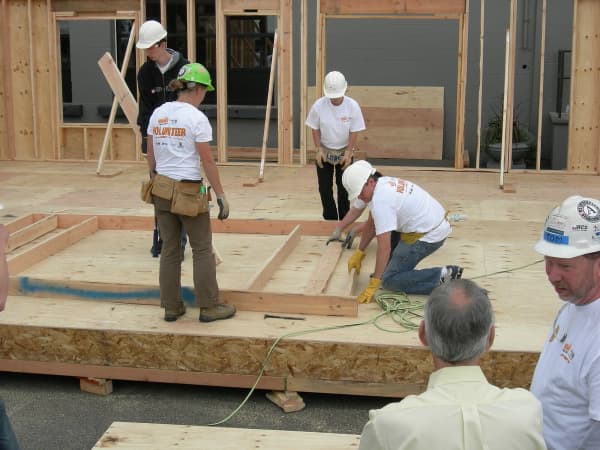
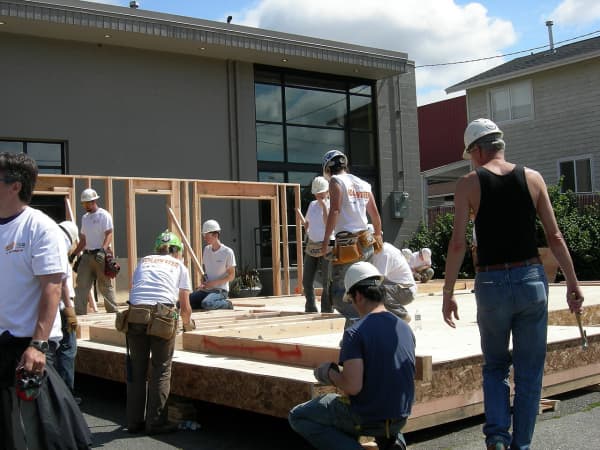
A club, a ward, a fraternity or a class wants the same thing: a lot of people doing visible work in one morning. Organizations want something different, and the gap is where group projects disappoint everyone.
Large untrained groups are good at work that parallelizes safely — litter collection, invasive species pulling, seeding, sorting, staging and hauling, painting, trailhead cleanup. They are not good at anything technical, and on skilled work forty people are not four times ten.
Three rules make a group project land. Book early: a city can often take you in a few weeks, a food pantry needs a specific slot because floor space is the constraint, and federal land agencies generally need months because the work runs under a partnership agreement rather than a sign-up sheet. Give a real headcount and age range, since supervision ratios and tool allocation come from those numbers and a group arriving twenty people over is a safety problem. Ask what they need instead of proposing what you would like to do — "we have thirty people and a Saturday in October, what would help?" gets a far better answer than a finished plan.
The trail and canyon side of this has its own considerations, covered in our trail and watershed volunteering guide. Food operations are covered in the food bank guide, including why groups should book Pleasant Grove rather than the satellite pantries.
Service trips, mileage and the deduction nobody claims correctly
Most students take the standard deduction and none of this matters. It matters to group leaders, to sponsoring organizations, and to anyone itemizing — and the rules are more specific than people assume.
Mileage. 26 U.S.C. 170(i) sets the standard mileage rate for use of a passenger automobile in connection with charitable service at 14 cents per mile. That number is not an IRS administrative figure that moves each year. It is written into the Internal Revenue Code, which is exactly why it has not tracked inflation or the business rate.
Travel with a vacation element. 26 U.S.C. 170(j) disallows a deduction for traveling expenses, including meals and lodging, while away from home — whether paid directly or by reimbursement — unless there is no significant element of personal pleasure, recreation, or vacation in the travel. A spring break build trip with a genuine work schedule and a trip with two service days bolted onto a holiday are treated differently, and the statute says so directly rather than leaving it to inference.
Substantiation. For money rather than mileage, 26 U.S.C. 170(f)(17) requires a bank record or a written communication from the organization showing its name, the date and the amount for any cash contribution. And under 26 U.S.C. 170(f)(8), no deduction is allowed for a contribution of $250 or more without a contemporaneous written record from the organization stating the amount, whether any goods or services were provided in return, and a description and good faith estimate of their value.
Worth stating plainly for the student reading this: the value of your time is never deductible. Unreimbursed out-of-pocket costs incurred in service can be; the hours cannot. The number of fundraising letters that imply otherwise is not evidence to the contrary.
What to do in your first semester, specifically
For a first-year student who wants this handled rather than hanging over them, there is a sequence that works and it is not the one most people follow.
Pick one organization, not five. The instinct is to sample widely so the application looks varied. Committees read the opposite signal: a list of eight one-off mornings reads as hour-collecting, and a year at one place reads as commitment. It is also easier. One intake, one background check if the role needs one, one supervisor who will still know your name in April.
Choose the category before the organization. Food, housing and homelessness, animals, trails and outdoors, tutoring and mentoring, seniors and end-of-life, refugee and new-arrival support. These differ enormously in commitment shape. Food and trail work run on short discrete shifts. Mentoring, hospice companionship and tutoring are relational, require background checks, and usually want a semester or more — which is why they are chronically short of people and why they count for more when someone asks what you did.
Start the background check before you need it. Anything with unsupervised contact with children or vulnerable adults requires one, and it takes days to weeks. Students routinely discover this the week a deadline lands.
Ask about the age minimum if you are bringing anyone younger. It varies by organization — twelve at some pantries with an adult present, eighteen for most driving, mentoring and hospice roles.
Put the recurring shift in your calendar as a fixed commitment. The reason volunteer retention collapses in October is not lost enthusiasm; it is that an unscheduled good intention loses every collision with a midterm.
A note on why organizations are wary of student groups
It is worth hearing the other side of this, because it explains responses that can otherwise read as ingratitude.
Utah Valley has an enormous student population and a modest nonprofit sector. Organizations here field a volume of group inquiries that would be unusual anywhere else, concentrated in the same few weeks each semester, largely from groups that need hours by a deadline. A pantry with a warehouse that fits eight people receives requests from groups of fifty. A coordinator who has been stood up three times stops holding slots.
None of that is a reason not to ask. It is a reason to ask well: a realistic number, a real date, flexibility about the task, an adult who will be there, and a message rather than a phone call during a distribution shift. Groups that do this get slots, get invited back, and end up with a standing relationship that is worth far more than any single morning.
The organizations are not gatekeeping. They are rationing a scarce resource, and the scarce resource is supervision.
The timing advice that nobody follows
Every organization in this valley is oversubscribed in late November and December and thin in February and July. Students are the group most able to act on that, because a semester schedule is more flexible than a job.
Summer is the harder gap and the more consequential one. School meal programs stop, household costs rise, and the volunteer base leaves town. If you are here over a summer term, you are more useful in July than you will ever be in December.
The corollary is about consistency rather than volume. Organizations here will tell you, if asked, that the volunteer they value most is not the one who serves forty hours in a week but the one who serves three hours a month for a year. That person becomes trained, then trusted, then able to lead — and crew leadership, shift leadership and coordination are what nearly every organization in Utah County is short of.
Related Guides
- How to Actually Volunteer in Utah Valley — the organization-by-organization directory
- Volunteer Liability in Utah
- Volunteering at Utah Valley's Food Banks and Pantries
- Trail, Canyon and Watershed Volunteering Around Provo
- Tutoring in Utah Valley — the paid side of the same skill
Frequently Asked Questions
Where can a student find service hours in Utah Valley quickly?
Does a stipend or an honorarium mean I am no longer a volunteer?
Can I volunteer at the same place I have a paid campus job?
Do court-ordered hours count as volunteering?
Can I deduct the cost of driving to volunteer?
Are service trips over spring break deductible?
What documentation should I collect for a scholarship or application?
How far ahead should a student group book a project?
Sources
The facts in this guide were checked against these sources. Hours, fees and rules change, so confirm anything time-sensitive with the source before you go. How we make Provo.com.
- GovInfo (U.S. Code). Checked October 12, 2026.
- GovInfo (U.S. Code). Checked October 12, 2026.
- Utah State Legislature. Checked October 12, 2026.
- Utah State Legislature. Checked October 12, 2026.
- Utah State Legislature. Checked October 12, 2026.
- United Way of Utah County. Checked October 12, 2026.
- eCFR. Checked October 12, 2026.