
Utah Valley has a reputation for service, and the reputation is earned. What it does not have is an obvious front door. Ask most people here how to start volunteering and you will get a warm, sincere, entirely unhelpful answer: oh, there's so much need, you should get involved. Where? With whom? Starting when?
This is a directory. It names organizations that are operating in Utah County right now, says what they need, and points at the two websites that carry most of the listings. It is written for everyone — people who moved here last month, students who want something outside a campus bubble, retirees with weekday hours, families looking for something to do together, and members of the Church of Jesus Christ of Latter-day Saints who want to serve somewhere beyond their own ward.
One caution before the list. Hours, addresses, and contact people change constantly in this sector, and several of the organizations below have moved locations or shifted their pantry hours within the past year. Everything here was checked while writing, but call or check the website before you drive.
Start with the two search layers
Almost every specific opportunity in this county gets posted to one of two places.
JustServe.org is the one locals mention first. It launched in 2012 and is provided free by the Church of Jesus Christ of Latter-day Saints, but it is not a church program in the way people sometimes assume — it is a public listings board, free for organizations and volunteers alike, and it does not restrict who can post or who can serve. The nonprofits below use it heavily. As of 2025 the platform passed one million registered users and it now operates in more than a dozen countries with roughly fifteen thousand active projects at any given moment. Filter to Utah County and you will find everything from a two-hour Saturday cleanup to a year-long tutoring placement. There is a mobile app.
United Way of Utah County's volunteer portal is the second, and it skews differently — more ongoing roles, more agency-level listings, more of the unglamorous recurring work that keeps organizations alive. United Way also runs 2-1-1, a free statewide line you can dial for both directions of the exchange: to find help, or to be pointed toward a place that needs you.
Check both. They overlap less than you would expect.
Food: the largest and most accessible need
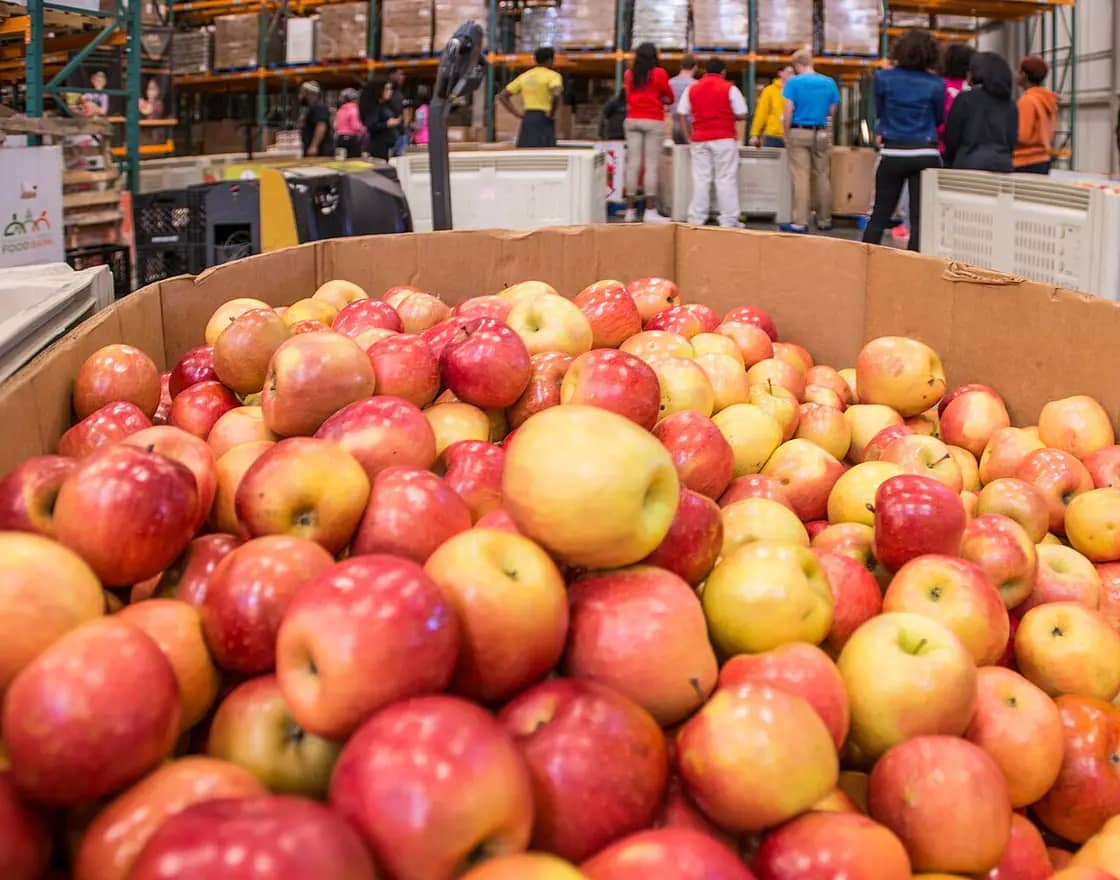
Food work is where most people start, partly because the shifts are short, partly because the tasks are learnable in five minutes, and partly because the need is constant.
Community Action Services and Food Bank has operated out of Provo since 1967 and runs one of the largest food banks in the state — and the only one serving Utah, Wasatch, and Summit counties. Their headquarters and Provo pantry sit at 815 S Freedom Blvd, Suite 100, and the main line is (801) 373-8200. Volunteers stock shelves, sort incoming donations, and walk guests through the pantry as they shop. Spanish speakers are specifically and repeatedly requested — that is worth knowing if you have the language. Volunteering runs through an account on their volunteer hub, and group shifts are booked separately from individual ones. Their published pantry hours have changed more than once in the past two years and are not consistent across every page of their own site, so confirm before you go.
Food & Care Coalition at 299 E 900 S in Provo is the closest thing the county has to a single door for people experiencing homelessness — meals, showers, laundry, hygiene, day services, on-site medical, dental, and mental health care through partner agencies, plus transitional and permanent housing. It runs on a remarkably small paid staff. By the organization's own accounting, volunteers contributed roughly fifty thousand hours in a recent year, covering more than half of its labor needs. That figure is the whole story of the place.
Meal service is the most common volunteer role and it is not a drop-in — recurring breakfast and lunch shifts ask for a commitment of about three months, closed-toe shoes, and the ability to stay for the full shift. Sorting donations and running a collection drive are the lower-commitment options. The volunteer coordinator can be reached at volunteer@foodandcare.org or (801) 373-1825.
Tabitha's Way runs three pantries and is the main food resource for the smaller cities at both ends of the valley. The Spanish Fork pantry serves the south end — Springville, Mapleton, Salem, Payson, Santaquin, Elk Ridge, Genola, Woodland Hills — and the Pleasant Grove pantry serves the north end, from Lehi and American Fork through Alpine, Highland, Cedar Hills, Lindon, and Vineyard. A third, smaller pantry operates in Saratoga Springs.
Two practical notes. The Spanish Fork pantry moved in January 2026 to 50 E 100 N, across the street from its old address, and several third-party directories still list the old one — if a listing sends you to 45 E 100 N, it is out of date. And groups should go to Pleasant Grove, at 675 W Garden Drive; the satellite locations do not have the floor space for more than a few volunteers at once. Tabitha's Way asks that volunteers be at least 12 years old, with anyone under 16 accompanied by an adult, and warns that much of the work involves repetitive lifting. The general line is (801) 709-8573.
Building and repairing homes
Habitat for Humanity of Utah County does two things that need volunteers, and most people only know about one.
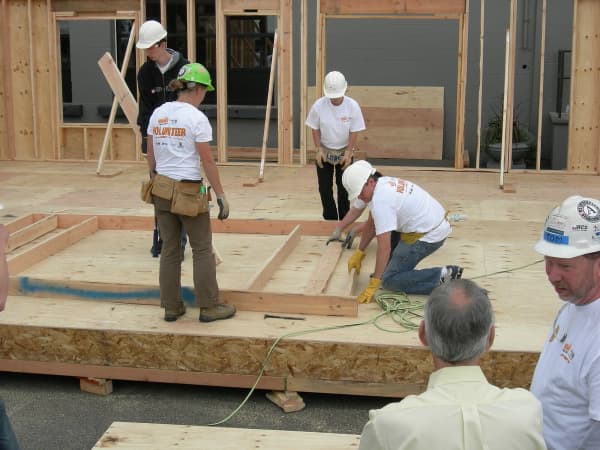
The build sites are the visible half — future homeowners work alongside volunteers on their own houses, the sweat-equity model the organization is known for. Construction shifts are booked through the volunteer coordinator at (801) 368-2250, and groups are asked to register every individual member so the counts are right.
The ReStore at 340 S Orem Blvd is the invisible half, and it is where the steadier need sits. It is a home-improvement thrift store — donated and surplus furniture, appliances, building materials — whose proceeds fund the building program. Volunteers unload trucks, price and merchandise inventory, and help customers on the floor. Shifts run Tuesday through Saturday, and the store also accepts community-service hours. Email marilee@habitatuc.org to get on the schedule.
Habitat's third program is quieter still: critical home repair grants and no-interest loans for low-income homeowners, seniors, and veterans in the county, used for things like exterior painting, porch and fence repair, and hazard removal. Skilled trades are useful here in a way they are not everywhere.
Families, new parents, and children
Most of this runs through United Way of Utah County, which operates several distinct volunteer programs rather than one general pool.
Welcome Baby, run in partnership with the Utah County Health Department, is free support for new and expecting parents — trained volunteers make home visits, run playgroups, and help with parenting workshops. It began as a grassroots effort by local nurses and has grown into a county-wide program. It also takes semester interns, which makes it one of the better fits for students in child development, family science, public health, or nonprofit management. If you are on the receiving end of that equation rather than the giving one, our new parent survival guide covers the local landscape.
Volunteer Income Tax Assistance (VITA) trains and IRS-certifies volunteers to prepare free returns for households under an income threshold that changes each year. Training runs in the fall and winter; the filing season is the work. You do not need an accounting background.
Sub for Santa is the county's largest seasonal effort and has been running for more than four decades. In a recent season it reached roughly seven thousand children across about twenty-six hundred families, and it now extends to foster teens and to seniors without family nearby. Volunteers help families complete applications, sort and deliver gifts, and staff the Angel Tree pickups. Spanish-speaking volunteers are requested every year for the application window, which runs in the fall — United Way has said publicly that around a fifth of applicants come from Spanish-speaking households.
Refugees and new arrivals
Utah Valley Refugees is a Provo-based nonprofit working with refugee families in Utah County on the long, unglamorous work of resettlement — housing, employment, language, navigating systems. It takes both volunteers and interns, and college credit is possible for the latter. In-kind and grocery donations are accepted at their Provo location.
This is relationship work more than event work. The organizations doing it will tell you plainly that a volunteer who shows up for six months is worth more than twenty who show up once, and they would rather you be honest about your capacity up front.
Animals
Two municipal shelters split the county, and which one you contact depends entirely on geography.
South Utah Valley Animal Shelter (SUVAS) at 582 W 3000 N in Spanish Fork covers Provo, Springville, Mapleton, Spanish Fork, Payson, Salem, Santaquin, Elk Ridge, Genola, Goshen, and Woodland Hills. It runs volunteer and foster programs, and it has said publicly that anyone who simply wants to walk a dog can come in during business hours and do so — no application process for that. Event and project sign-ups are coordinated largely through a volunteers' Facebook group rather than a form on the website, which is unusual and worth knowing before you conclude there is no way in.
North Utah Valley Animal Shelter (NUVAS) at 193 N 2000 W in Lindon, reachable at (801) 785-3442, covers Alpine, American Fork, Cedar Hills, Eagle Mountain, Highland, Lehi, Lindon, Orem, Pleasant Grove, and Saratoga Springs.
Fostering is the highest-impact option at both and the one shelters are chronically short of. It is also the one with real costs and real emotional weight, so read the terms before committing.
Seniors and end-of-life care
This is the most under-volunteered category in the valley and the one where a single reliable person makes the most difference.
Meals on Wheels delivers a weekday meal to homebound residents aged 60 and older across Utah, Wasatch, and Summit counties, and delivery routes take about an hour once a week. Volunteer driver programs also provide door-to-door rides for seniors to medical appointments and grocery stores in several Utah County cities. Both are coordinated regionally through the Mountainland Association of Governments, whose senior services guide is the clearest single index of what exists.
Hospice volunteering is a distinct thing worth naming separately. Local hospice agencies, including Intermountain's Utah County home care and hospice service, train volunteers to sit with patients — conversation, presence, reading aloud, giving a family caregiver two hours off. It requires training and a background check, it is emotionally serious work, and agencies are candid that it is not for everyone. It is also, by a wide margin, the volunteer role people describe as having changed them.
If you are a student
BYU's Y-Serve, in 2330 of the Wilkinson Center, runs at a scale most people underestimate. It offers roughly seventy programs — tutoring, mentoring, special-needs outreach, senior visits, hospital work, refugee support, crafts for humanitarian shipments — and every one of them is administered by student volunteer leaders rather than staff. In the 2024–25 school year the center reported about seventeen thousand student volunteers contributing more than fifty-five thousand hours. Programs are filterable by time commitment, and a real share of them ask for an hour a week or less. Reach them at yserve@byu.edu or (801) 422-8686.
Y-Serve also maintains a community needs page listing opportunities open to non-students, which is one of the better-hidden resources in the county.
UVU's Center for Social Impact plays the same role on the Orem campus, connecting students to community partners and service-learning placements. Both campuses matter here for a reason beyond the students themselves: a great deal of the valley's nonprofit labor is student labor, which means local organizations are structurally short-handed in May, and again between semesters. Non-student volunteers are disproportionately useful in exactly those weeks.
For the broader picture of student life on either campus, see our BYU student guide and UVU student guide.
A note on ministering
For members of the Church of Jesus Christ of Latter-day Saints, there is a parallel structure that visitors and newcomers often hear referenced without explanation. Ministering is the assignment of members within a congregation to look after specific other households — a check-in, a visit, help when something goes wrong. It is organized through the local ward rather than through any website, and if you are a member, the person to ask is your Relief Society or elders quorum leadership.
It is worth saying plainly that this is a separate system from everything else on this page, and that it does not substitute for either. Ward assignments cover the people already inside the congregation. The organizations above cover a county of roughly three-quarters of a million people, many of whom are not in anyone's ward. Most people here who serve seriously end up doing some of both. If you are new to the valley and trying to understand how the religious landscape fits together — including the substantial non-LDS congregations here — our guide to faith communities in Provo is the fuller picture.
What stops people
Having asked around, the barriers are boringly consistent, and all of them are solvable.
- The background check. Anything involving unsupervised contact with children or vulnerable adults requires one, and it takes days to weeks. Start it before you are ready to serve, not after.
- The age minimum. It varies. Twelve at some food pantries with an adult present; eighteen for mentoring, hospice, and most driving roles. Ask first if you are planning around a family or a youth group.
- Group versus individual. These are almost always different sign-up processes, and a group turning up on an individual sign-up is a genuine problem for a small warehouse. Book groups through the coordinator.
- Overestimating the commitment. People talk themselves out of serving because they imagine a weekly obligation. A large share of listed opportunities are one-time, and organizations would much rather have your two hours than your good intentions.
- Showing up only in December. November and December bring a flood of volunteers and, at some organizations, more people than shifts. February and July bring the same need and a much thinner sign-up sheet. Ask an organization when they are short. They will tell you, and the answer is almost never the holidays.
The valley does not lack for willingness. It lacks for specificity. Pick one organization off this page, look up its current hours, and send the email this week.
The rest of this guide, in detail
This page is the front door. Five companion guides go deeper on the parts people ask about most, and each is grounded in the law or the logistics that govern it rather than in general encouragement.
- Volunteer liability in Utah — the two statutes standing behind the waiver you sign, the approval step that switches Utah's on, and why the federal shield stops at the driver's seat.
- Food banks and pantries — who runs food in this county, what a sorting or distribution shift is like, and the federal Act that lets a pantry hand out a dented can.
- Trail, canyon and watershed work — establishing who owns the ground before you plan anything, and the 2025 rewrite of the federal volunteer statute that now covers the BLM alongside the Forest Service.
- Service hours for students and student groups — what counts, how to document it so it survives a scholarship committee, and the wage-law line a stipend can quietly cross.
The rest of the cluster is now built out:
- Shelters and housing nonprofits — why the county runs on vouchers rather than a big shelter, and the state rule that reserves most beds
- Tutoring and mentoring — the federal rule that decides what a volunteer tutor is allowed to know
- Holiday-season giving — Sub for Santa timing, and the condition standard most donated clothing fails
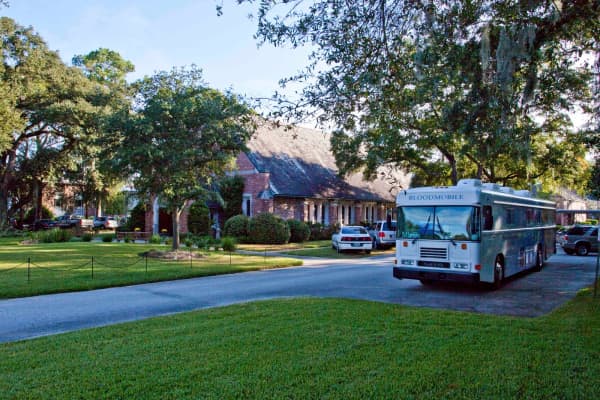
- Blood drives and health volunteering — eligibility, deferrals, and the two months this valley runs short
Related Guides
- Homeless Resources in Utah County — where volunteering goes furthest
- Volunteer Liability in Utah — the law behind the clipboard
- Going to Church in Provo: What Actually Happens if You Walk In (2026)
- New to a Provo YSA Ward? The Practical Guide (2026)
- Thanksgiving in Utah Valley: Who's Open and What Sells Out
Frequently Asked Questions
What is the easiest way to find a volunteer opportunity in Utah County?
Do I have to be a member of the Church of Jesus Christ of Latter-day Saints to volunteer here?
Can I volunteer with my kids?
What if I only have a couple of hours, one time?
When is the busiest time of year for volunteers in Utah Valley?
Am I legally protected if something goes wrong while I am volunteering?
Do I need a background check, and how long does it take?
What is the difference between volunteering and court-ordered community service?
Sources
The facts in this guide were checked against these sources. Hours, fees and rules change, so confirm anything time-sensitive with the source before you go. How we make Provo.com.
- Animal Control, Orem City. Checked October 12, 2026.
- Community Action Services and Food Bank. Checked October 12, 2026.
- Food & Care Coalition. Checked October 12, 2026.
- Tabitha's Way Local Food Pantry, Tabitha's Way. Checked October 12, 2026.