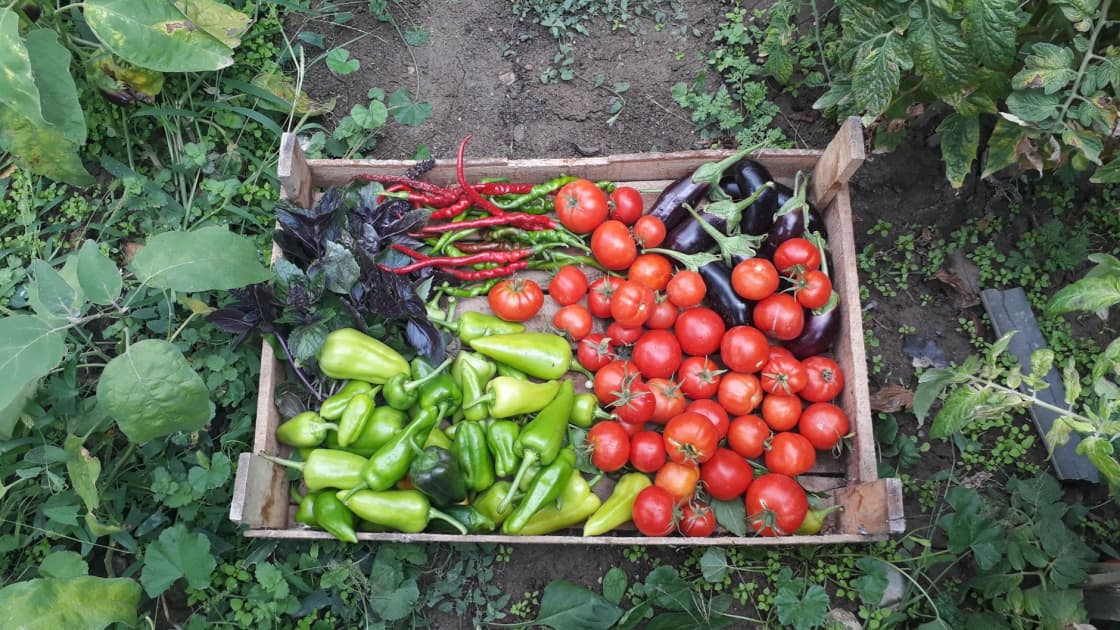

Utah County grows more food than most newcomers expect. Behind the subdivisions and the tech campuses there are still orchards on the south-county benches, sweet-corn fields west of Springville, and small vegetable farms tucked into the corners of nearly every city. The farmers markets are the obvious way in, and we have a guide to all of them, organized by day of the week. But markets run on a schedule, and a lot of the county's best produce moves through other channels: the roadside stand on the way home from work, the fruit stand at the edge of an orchard, and the weekly box from a farm you have paid in advance.
This guide covers that everyday layer. It explains how the county's sweet-corn and fruit stands work, how a CSA share works and how to find one that delivers here, the state directories worth bookmarking, and what is ripe when. Farm details change with every harvest, so treat anything specific here as a starting point and check with the farm before you drive.
The Short Answer
For sweet corn and summer vegetables, look for the roadside stands. Harward Farms of Springville runs a large network, about two dozen stands along the Wasatch Front, selling corn picked that morning from mid-July into late September. For fruit, head south to Santaquin and Payson, the county's fruit belt, where farm markets such as Rowley's Red Barn and family orchard stands sell cherries, apricots, peaches and apples in their seasons. For a weekly supply without the driving, join a CSA, and check the farm's current pickup list for a Utah County site. For everything else, the valley's farmers markets fill the gaps, and the Utah's Own label points to Utah-grown food on grocery shelves.
Why Buy Local Produce at All
The practical case is simple. Produce picked that morning tastes different from produce picked a week ago and shipped across the country, and the difference is largest for exactly the crops this county grows best. A sweet-corn ear starts converting its sugar to starch the moment it is picked, which is why a local ear eaten the same day is sweeter than anything in a supermarket. A peach picked ripe from a Santaquin tree has a texture that a peach picked hard for shipping never develops.
There is a variety case too. Farms selling directly can grow varieties chosen for flavor rather than for how well they survive a truck, and that is where the heirloom tomatoes, the odd squashes and the best peaches come from.
And there is a local case. Utah County's farmland is under steady pressure from development, and the farms that remain survive on direct sales. Every summer spent buying from a stand or a CSA is a small vote for the orchards and fields that give the county its character.
Sweet-Corn Stands: The Summer Ritual
If you have lived here through a summer, you know the stands: a canopy or a small shed at a busy corner, a hand-lettered sign, a pickup truck of corn, and a line at dinnertime. They are one of the valley's genuine summer rituals.
Harward Farms is the name most people mean. It is a family farm in Springville that has been farming since the mid-1980s, now in its fourth generation, and it grows sweet corn, tomatoes, watermelons and other vegetables. By the farm's own description, it picks corn fresh every morning and delivers it to roughly two dozen roadside stands along the Wasatch Front each day. The farm says its prime harvest runs from mid-July through late September, sometimes stretching into early October. Its stands are open Monday through Saturday and closed on Sundays, and some close early in the evening when they sell out, which on a hot Saturday in August is a real possibility. The farm posts its stand locations and harvest dates on its website, and it is listed in the state's agritourism farm directory, where it also advertises farm activities and summer programs for children.
Other stands come and go with each season. Family farms set up tables at their gates, growers park at the same corner every summer, and some stands are honor-system operations with a cash box. The easiest way to find them is still the old one: drive the rural edges of Springville, Spanish Fork, Mapleton, Payson, Lehi and the west side of the lake in August and watch for the signs.
Buying tips. Corn is best the day it is picked, so buy what you will eat today or tomorrow, and refrigerate it in the husk. Look for ears with green, slightly damp husks and brown, sticky silk. Ask what variety it is; many local farms grow several over the season, and they differ noticeably in sweetness and texture.
The Fruit Belt: Santaquin and Payson
Utah County's fruit country is the south end of the valley, where the benches below the mountains around Santaquin and Payson hold orchards of cherries, apricots, peaches, pears and apples. Our guide to u-pick orchards in Santaquin and Payson covers the farms that let you pick your own, how the season runs month by month, and why a late spring frost can thin a year's crop. For people who would rather someone else did the picking, the same area is full of fruit stands.
Rowley's Red Barn in Santaquin is a well-known fruit farm whose farm market sells ice cream and baked goods alongside its fruit. It is a common stop on the drive south, it is at its busiest in peak fruit season, and it is worth checking hours before a Sunday trip. Our guide to eating in south Utah County covers it in more detail.
Openshaw Acres is a Santaquin orchard family that describes seven generations of farming in the town. Its own site lists a Santaquin fruit stand and a Santaquin hometown market, plus farmers market locations in cities including Springville, Orem and Eagle Mountain, which brings orchard fruit to the north end of the valley in season.
Orchard stands beyond those two open and close with the crops, and many are small family operations with a sign at the road. Santaquin's Orchard Days festival in August is a good excuse to spend a day in the area, and our guide to it covers the town's history as a fruit town.
Buying for canning. The fruit stands are where the valley's canning culture shows itself. At the height of peach season, stands sell fruit by the box or the bushel, and many families put up a year's worth in a single weekend. If you are buying in bulk, ask which fruit is ready to eat and which needs a few days on the counter, and ask whether the stand sells seconds, the slightly blemished fruit that is ideal for jam, pie and freezing at a lower price.
CSAs: The Weekly Box
A CSA, short for Community Supported Agriculture, turns the usual shopping relationship around. Instead of buying produce when you want it, you buy a share of a farm's harvest before the season begins. In return, the farm gives you a box of whatever is ready each week, usually from early summer into fall, with spring and fall shares at some farms.
How it works. You sign up and pay, often in late winter or spring, when farms need cash for seed and labor. Many farms offer full shares for families and half shares for smaller households. Each week you collect your box at the farm, at a pickup point such as a church parking lot, a business or a market, or you pay extra for delivery. The contents change with the season: greens and radishes early, tomatoes and corn in high summer, squash and roots in the fall.
What you are really buying. A CSA is a partnership, not a subscription box. You share in the farm's good years and its bad ones, so a hailstorm or a late frost shows up in your box. In exchange you get the freshest possible produce, varieties you might never try otherwise, and a relationship with the people who grow your food. Some farms invite members to farm days, and some offer working shares, in which members trade hours in the field for a lower price.
Add-ons. Many CSAs sell extras alongside the vegetables: eggs, fruit, honey, flowers, bread and, at some farms, meat. A few farms run meat-focused shares instead, which suit families who want to buy beef, pork or chicken directly from a ranch.
Is it for you? A CSA works best for households that cook most nights and like a little surprise. It works less well for people who travel often in summer, since you still pay for the weeks you miss, or for picky eaters, since you will get a lot of whatever grew well that year. If you are unsure, start with a half share.
Finding a CSA That Delivers Here
This is the hard part, and the reason we have not printed a list. CSA pickup sites change from year to year, small farms start and stop programs, and directory entries go stale quickly. A farm that delivered to Orem three summers ago may not today. So the method matters more than any list.
Start with the directories, then confirm with the farm. LocalHarvest is a long-running national directory where farms list their own CSAs, searchable by city. The state's agritourism farm directory lists Utah farms that welcome visitors, many of which sell directly. Use both to build a shortlist, then go to each farm's own website for its current share options and pickup sites.
Look beyond the county line. Several Wasatch Front farms based in Salt Lake, Davis and Box Elder counties run CSAs with pickup points spread along the Front, and some have included Utah County cities in the past. Tagge's Famous Fruit and Veggie Farms in Perry, for example, advertises CSA shares on its website. Ask any farm you are considering whether it has a pickup site near you this year.
Ask at the farmers market. Many CSA farms also sell at markets, and the farmer at the table can tell you in a minute whether a share would work for you. This is also the best way to taste a farm's produce before paying for a season of it.
Sign up early. Popular CSAs cap their membership, and the good ones often fill well before the first harvest. If you want a share for the coming summer, start looking in late winter.
The State Directories and the Utah's Own Label
Two state resources are worth bookmarking.
The agritourism farm directory, run through the state, lists Utah farms that welcome the public, from produce farms to orchards and other agritourism operations. It is the most useful single starting point for finding working farms to visit, and each listing links to the farm itself.
Utah's Own is the state's program for identifying products grown or made in Utah, run through the Utah Department of Agriculture and Food. Its logo appears on packaging and shelf tags in grocery stores. When you cannot get to a farm or a market, it is the simplest way to put local food in your cart, and in winter it is often the only way.
Farmers Markets, Briefly
The valley's farmers markets are the other half of the local-produce story, and our farmers markets guide covers them all, organized by day of the week so you can find one on any given evening or Saturday morning. Two of the best known are the Provo Farmers Market and the Orem market, and both have their own guides on this site. Markets suit people who want to browse several farms at once, and they are the best place to meet growers, taste before you buy, and find out who runs a CSA or a stand. They also bring in bakers, cheesemakers and other local producers who do not run farm stands.
What Is Ripe When
Seasons in Utah County depend on elevation and on the spring frost, so treat this as a rough guide and expect a year to run early or late.
Late spring. Asparagus, greens, radishes, peas and the first strawberries. Most stands are not open yet, but early CSA shares and the first markets begin.
Early summer. Cherries arrive on the south-county benches, followed by apricots. Early vegetables fill CSA boxes, and the farmers markets hit their stride.
Midsummer. Sweet corn begins, the corn stands open, and summer squash, cucumbers, green beans and early tomatoes arrive. Raspberries and early peaches start in the fruit belt.
Late summer. The peak. Peaches, tomatoes, melons, peppers, corn and eggplant all overlap, the fruit stands are at their busiest, and canning season takes over kitchens across the valley.
Early fall. Apples and pears, winter squash, potatoes and onions, and the last of the tomatoes before the first hard freeze. Pumpkin patches and fall farm festivals take over, and our guide to the valley's fall farm festivals covers those.
Late fall and winter. The stands close. Stored apples, squash and potatoes carry on at a few farm markets, CSAs end or switch to winter shares, and the Utah's Own label in the grocery store becomes the main way to eat local.
Visiting a Farm Stand: The Etiquette
A few habits make you a welcome customer.
Bring cash. Many stands take cards now, but not all, and honor-system tables almost never do.
Go early for the best selection. The morning's pick sells fastest, and popular stands can sell out by evening on a busy day.
Respect the farm. If a stand is at a farm, stay out of the fields unless you are invited, keep children and dogs close, and park where you are told.
Ask questions. Farmers are usually happy to tell you what is best this week, how to store it, and when the next crop is coming.
Mind Sundays. Many stands in this valley close on Sundays, so plan weekend buying for Saturday.
Growing and Gleaning
Buying is not the only way to get local produce. Utah County's backyard gardens and fruit trees produce far more than their owners can eat in a good year, and neighbors routinely give away zucchini, apples and apricots. Community gardens in some cities rent plots to residents without space at home, and the county's extension service offers gardening classes and guidance tailored to local soil and climate. For many families, a CSA or a stand fills the gaps in a backyard garden rather than replacing it. Our community gardens guide lists them and how to get a plot.
The Short Version
For sweet corn, find a Harward Farms stand or a local roadside stand from mid-July on, and remember that many close on Sundays. For fruit, head to Santaquin and Payson, where Rowley's Red Barn and orchard families such as the Openshaws sell cherries through apples in season, or pick your own. For a weekly box, join a CSA, and confirm its current Utah County pickup site with the farm itself. Use the state's agritourism directory to find farms, look for the Utah's Own label in stores, and fill in the rest at the valley's farmers markets. Peak season is late July through September, and the best produce always goes to whoever arrives first.
Related Guides
- Utah Valley Farmers Markets, by Day of the Week
- U-Pick Orchards in Santaquin and Payson
- The Provo Farmers Market
- The Orem Farmers Market
- Santaquin Orchard Days
- Fall Farm Festivals in Utah Valley
- Where to Eat in South Utah County
Frequently Asked Questions
Where can I buy local sweet corn in Utah County?
What is a CSA?
How do I find a CSA that delivers to Utah County?
When is peak season for local produce in Utah County?
Where are the fruit stands in Utah County?
Are farm stands cheaper than the grocery store?
Do Utah County farm stands take cards?
Is there a label for Utah-grown food in stores?
Sources
The facts in this guide were checked against these sources. Hours, fees and rules change, so confirm anything time-sensitive with the source before you go. How we make Provo.com.
- Fresh Produce: Sweet Corn & Veggie Stands, Harward Farms. Checked October 12, 2026.
- Harward Farms home page, Harward Farms. Checked October 12, 2026.
- Openshaw Acres: Our Locations, Openshaw Acres. Checked October 12, 2026.
- Openshaw Acres home page, Openshaw Acres. Checked October 12, 2026.
- Rowley's Red Barn. Checked October 12, 2026.