Provo is a stop on one of the great train rides in North America, and many people who live here do not know it. Once a day in each direction, Amtrak's California Zephyr pulls up to a small platform a few blocks from downtown on its way between Chicago and the San Francisco Bay Area. It is the only long-distance passenger train that serves Utah Valley, and it is a genuine alternative to flying or driving for trips to Denver, the Colorado Rockies, Reno, Sacramento, the Bay Area or Chicago.
It is also a very particular way to travel. Plan as if the station has no ticket office and no waiting room. The train runs once a day, on a schedule set for a route of more than two thousand miles, and it can run late. Riding it well means knowing what the train is good for and what it is not.
This guide covers where the Provo station is and what it has, how to buy tickets and board, what coach and sleeping-car travel are like, the route in both directions, the trips from Provo that make the most sense, and the practical details of getting to and from the platform. It draws on Amtrak's station history, published details of the station and route, and our own transit guides.
The Station
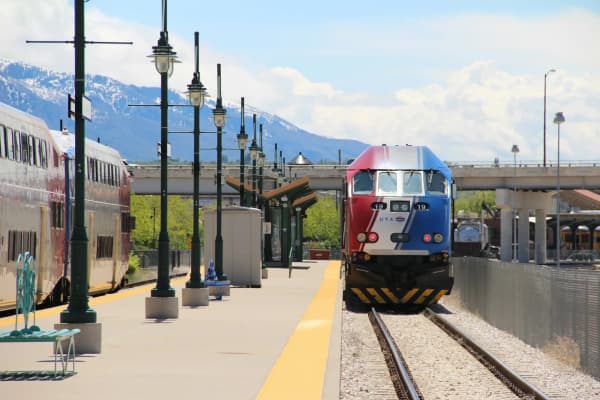
The Provo Amtrak station is not a building so much as a platform with shelters. It sits on the north side of the tracks, south of 600 South at 300 West, and it is reached from 200 West. It is within walking distance of downtown Provo.
Amtrak's station history describes the current shelter, which replaced an older station building used mostly by the Union Pacific Railroad. The new structure, partly brick and designed to recall the small-town depots of the past, is made up of three separate shelters, and one of them is enclosed and heated, which matters on a winter night. The project was paid for jointly by the city, Amtrak and a federal grant.
What the station does not have is just as important. Plan as if there is no ticket office, restroom, lounge or staff: passengers wait on the platform, and the train's crew handles boarding. The station's lot is small, and the track itself belongs to the Union Pacific, which also runs freight trains through Provo.
It is only a short walk from Provo Central, the FrontRunner station, where commuter trains and local buses stop. Our guide to FrontRunner from Provo covers that station.
The Route
The California Zephyr runs between Chicago and Emeryville, in the San Francisco Bay Area, by way of Omaha, Denver, Salt Lake City and Reno. It is one of Amtrak's long-distance routes, more than two thousand miles long, and the trip end to end takes a little over two days. Provo sits roughly two-thirds of the way along it, heading west.
Westbound from Provo, the train runs north to Salt Lake City, then west across the Great Basin through northern Nevada to Reno. From there it climbs into the Sierra Nevada, crosses the mountains and descends to Sacramento before finishing at Emeryville, across the bay from San Francisco.
Eastbound from Provo, the train turns into the mountains of eastern Utah and across the high desert toward Colorado. It climbs through the Rocky Mountains, following the upper Colorado River for long stretches, and then drops to Denver. From Denver it runs east across the Great Plains through Nebraska and Iowa to Chicago.
Amtrak counts the route among its most scenic, singling out the upper Colorado River valley in the Rockies and the Sierra Nevada. Which of those stretches you see in daylight depends on your direction and on how the train is running, so if the scenery is the point of the trip, check the timetable for when each section is scheduled.
Why the Zephyr Is Different From Flying or Driving
The Zephyr is not fast. A trip that takes a couple of hours by air can take most of a day or more by rail. People ride it for other reasons.
The first is the view. The route crosses mountains, canyons and deserts that no interstate reaches, and the train's lounge car is built for watching them. The second is comfort: room to walk, stretch and move between cars, and, in a sleeping car, a bed. The third is simplicity. There is no airport security line, no rental car and no long drive at the end of the day.
For some travelers, it is also a way to make the journey part of the trip. A family ride to Denver, a couple's overnight to the Sierra, or a solo trip across the country becomes an experience rather than a commute.
Coach and Sleeping Cars
Amtrak's long-distance trains offer two basic ways to travel.
Coach means a reserved seat in a car with more legroom than an airplane, reclining seats with leg rests, and access to the lounge and café cars. It is the least expensive option and is comfortable for a day trip or a single night for many travelers, though sleeping upright on a long trip takes some getting used to.
Sleeping cars offer private rooms. The smallest, roomettes, have two facing seats that convert to beds at night; larger bedrooms add more space and, in many cases, a private toilet and shower. Sleeping-car fares include meals in the dining car and cost much more than coach, especially as the travel date approaches.
The Zephyr's lounge car, with its large windows, is open to all passengers and is the best place to watch the scenery. Food is available in the café, and dining-car meals are part of sleeping-car fares.
Buying Tickets
Because the Provo station is unstaffed, plan to buy every ticket ahead of time, through Amtrak's website, its app or by phone. Fares change with demand, much like airline fares, so booking early usually brings the best prices, especially for sleeping-car rooms, which are limited.
Amtrak offers discounts for certain groups, such as children and seniors, and runs fare sales from time to time; check its site for the current offers. Keep your ticket on your phone or printed, ready to show the conductor when you board.
Boarding in Provo
Boarding at an unstaffed station takes a little planning. Arrive early, check the train's status on Amtrak's app or website before you leave home, and wait in the enclosed shelter if the weather is bad.
When the train arrives, it stops for only a short time. Crew members will direct you to the right car; coach passengers are often assigned seats by the conductor, and sleeping-car passengers are shown to their rooms. Keep your luggage manageable, since you will carry it onto the train yourself. With no staff at the station, there is no checked baggage service in Provo.
If you need help boarding, contact Amtrak ahead of time so the crew knows to expect you, since there is no station staff to assist.
Delays and How to Handle Them
Long-distance trains share track with freight railroads, and on a route of more than two thousand miles, delays can build. A train that leaves Chicago on time may reach Utah hours behind schedule, and a late train in Provo can mean a long wait on a cold platform.
The practical answer is to watch the train's status. Amtrak's app and website track the train as it travels, so you can adjust when you leave for the station. Build slack into any connection at the other end, and do not plan a tight meeting or flight around an arrival time.
Trips From Provo That Make Sense
The Zephyr works best for trips where the journey is part of the point, or where the destination is hard to reach otherwise.
Denver and the Colorado Rockies. The eastbound train runs through some of the most dramatic mountain scenery on the route, including the upper Colorado River valley, before reaching Denver. Colorado mountain towns along the line make a scenic weekend. You can even do Grand Junction or Glenwood Springs and back in a day; see our train days guide.
Reno and Lake Tahoe country. Westbound, the train crosses Nevada and climbs into the Sierra, making it a relaxed way to reach Reno and the mountain towns on the California side of the range.
Sacramento and the Bay Area. For a trip to Northern California, the Zephyr trades speed for scenery and comfort, ending at Emeryville, where Amtrak connects travelers onward to San Francisco.
Chicago and points east. The full eastbound trip is a multi-day adventure, best in a sleeping car, and Chicago connects to Amtrak trains across the East and Midwest.
Not Salt Lake City. For Salt Lake City, FrontRunner is the better choice, with many trips a day and direct connections to TRAX. The Zephyr runs only once a day each way. Our guide to a Salt Lake City day trip from Provo covers that trip.
Getting to the Station
The station's six parking spaces fill easily, so plan another way to get there.
Drop-off. Having someone drop you at the platform is the simplest option, especially for a train at an inconvenient hour.
Walking. The station is within walking distance of downtown Provo, which makes it easy to reach from a downtown hotel or a nearby home.
Transit. Provo Central, a short walk away, is served by FrontRunner and local buses. Check UTA's schedules against the train's time, since transit may not be running at every hour the Zephyr passes through. Our guide to getting around Provo without a car covers the options.
Long-term parking. If you plan to leave a car for a multi-day trip, confirm in advance where long-term parking is allowed, since the station lot is small and nearby lots may have time limits.
Planning Around the Timetable
The Zephyr keeps a single schedule for the whole route, and Provo's times in each direction are fixed by where the train needs to be in Chicago and the Bay Area, not by what suits Utah Valley. Before you plan a trip, look up the current Provo times in Amtrak's timetable for both directions, and plan the rest of the trip around them.
Two details catch first-time riders. The timetable lists local times at each stop, and the route crosses several time zones: Provo is on Mountain time, Chicago on Central and the California end on Pacific. When you plan a connection or tell someone when to meet you, use the local time at the station where you arrive. And because the train can run late, treat the scheduled arrival as the earliest you are likely to get in, not a promise.
Eating on Board
Food is part of the experience on a long-distance train. The café car sells snacks, drinks and light meals to every passenger, and the dining car serves full meals, which are included in sleeping-car fares. Whether coach passengers can buy dining-car meals has varied with Amtrak's policies, so check before you go if that matters to you.
Passengers can bring their own food and drinks on board, which is the easiest way to control costs on a long trip in coach. Pack things that travel well and do not need refrigeration, and bring a refillable water bottle.
Sleeping in Coach
Many travelers ride the Zephyr overnight in coach to save money, and it is manageable with preparation. Coach seats recline further than airline seats and have leg rests, but the cars stay lit to some degree through the night and the train moves and stops.
Bring an eye mask, earplugs or headphones, a travel pillow and a light blanket or jacket, since cars can be cool. A window seat gives you something to lean against and a view in the morning; an aisle seat makes it easier to get up without waking a neighbor. Walk to the lounge car to stretch when you wake, and expect to arrive more tired than you would after a night in a sleeping car.
Is It Worth It?
The honest answer depends on what you want. If you need to be somewhere quickly and cheaply, a flight or a drive will almost always beat the Zephyr. If you want the trip itself to be memorable, few journeys from Utah Valley compare.
The Zephyr is at its best for travelers who have time, want to see the mountains and deserts of the West from a window rather than a windshield, and value comfort and space over speed. A family seeing the Rockies together, a retiree crossing the country, or a couple treating the trip as a small vacation will usually find it worth the time. A business traveler with a morning meeting in Denver probably will not.
A Short History of the Line
Passenger trains have run through Utah Valley for well over a century, and the route the Zephyr follows has a long history of its own. The first train called the California Zephyr began running in 1949, operated jointly by three railroads between Chicago and Oakland through Denver and Salt Lake City, and it ran until 1970. The modern Amtrak train carries the name on a somewhat different route across Nevada and California.
Provo's own station has changed with the railroads. The older station building, used mostly by the Union Pacific, gave way to the current shelters, which were built to recall the depots of the past while serving a modern, unstaffed stop.
Traveling With Children
The Zephyr can be a memorable trip for children. They can walk between cars, watch the scenery from the lounge car, and, in a sleeping car, climb into bunks. A daytime stretch of the route is often enough for younger children; overnight trips work best in a sleeping car, where the family has its own space.
Pack snacks, games, headphones and a change of clothes, and plan for the possibility of delays. Amtrak offers discounted children's fares, which helps a family budget.
What to Pack
Pack for a long day or night on a moving train. Bring layers, since cars can be cool; a small pillow and blanket for coach; headphones and chargers; water and snacks; and any medications you need. Keep valuables with you, and label your luggage.
For sleeping-car passengers, a small overnight bag is easier to manage in a compact room than a large suitcase. Check Amtrak's baggage rules for size and weight limits before you pack.
How It Compares With the Bus and the Airport
Provo has other ways to leave town, and each fits a different trip. Intercity buses reach more destinations more often, often at lower cost, though with less comfort; our guide to intercity buses from Provo covers them. Provo's airport offers flights to a limited set of cities, covered in our guide to flying from Provo Airport, and Salt Lake City's airport, a FrontRunner and TRAX ride away, serves the rest of the world.
The Zephyr sits apart from all of them. It is the slowest option and often not the cheapest, but it is the only one that turns the trip itself into the destination.
The Short Version
Amtrak's California Zephyr stops in Provo once a day in each direction on its long run between Chicago and the San Francisco Bay Area, by way of Denver, Salt Lake City and Reno. The Provo station is an unstaffed platform with three shelters, one enclosed and heated, south of 600 South at 300 West, a short walk from Provo Central, with very limited parking; plan as if there is no ticket office, restroom or baggage service. Buy tickets online, in the app or by phone, arrive early, and watch the train's status, since it can run late. Choose coach for day trips and a sleeping car for overnights, and use FrontRunner, not the Zephyr, for Salt Lake City.
Related Guides
- FrontRunner from Provo
- The FrontRunner Commuting Guide
- Provo Without a Car
- Intercity Buses From Provo
- Flying From Provo Airport
- UTA Fares and Passes in Utah County
Frequently Asked Questions
Does Amtrak stop in Provo?
Where is the Provo Amtrak station?
Can I buy Amtrak tickets at the Provo station?
Where does the California Zephyr go from Provo?
Is the California Zephyr a good way to get to Salt Lake City?
What are the sleeper options on the California Zephyr?
Can I park at the Provo Amtrak station?
Is the California Zephyr on time?
Sources
The facts in this guide were checked against these sources. Hours, fees and rules change, so confirm anything time-sensitive with the source before you go. How we make Provo.com.
- Provo, UT (PRO) — Great American Stations, Amtrak. Checked October 12, 2026.
- Provo, UT (PRO) station page, Amtrak. Checked October 12, 2026.