
Provo has intercity bus service. Most people who live here do not know where it stops, and the reason is straightforward: it is not a bus station. It is a curb.
That single fact explains most of the confusion, most of the missed connections, and why a city of well over a hundred thousand people appears in some travelers' minds to have no long-distance bus service at all.
Where you actually board
The national-carrier stop is at 50 East 750 South, Provo — a curb cutout on the south side of 750 South, next to Provo Central Station.
Read that again, because the operators themselves put it in the booking confirmation in almost those words. There is no terminal building, no ticket counter, no waiting room and no staff. You stand at a marked curb.
Do not plan to park there. Personal vehicles are not permitted on the UTA property at the boarding location, and the operators warn that cars may be ticketed or towed. If you are leaving town for a week, this is not where you leave your car.
There is a second naming wrinkle worth knowing before you search for it. The facility appears as "Provo Intermodal Hub" in some booking systems and "Provo Central Station" in others. These refer to the same transit complex on the same block. If a route map shows an arrival at one name and a departure from the other, that is a labeling artifact, not two locations across town.
Who actually runs buses out of Provo
There are two meaningfully different options, and one of them is really two brands.
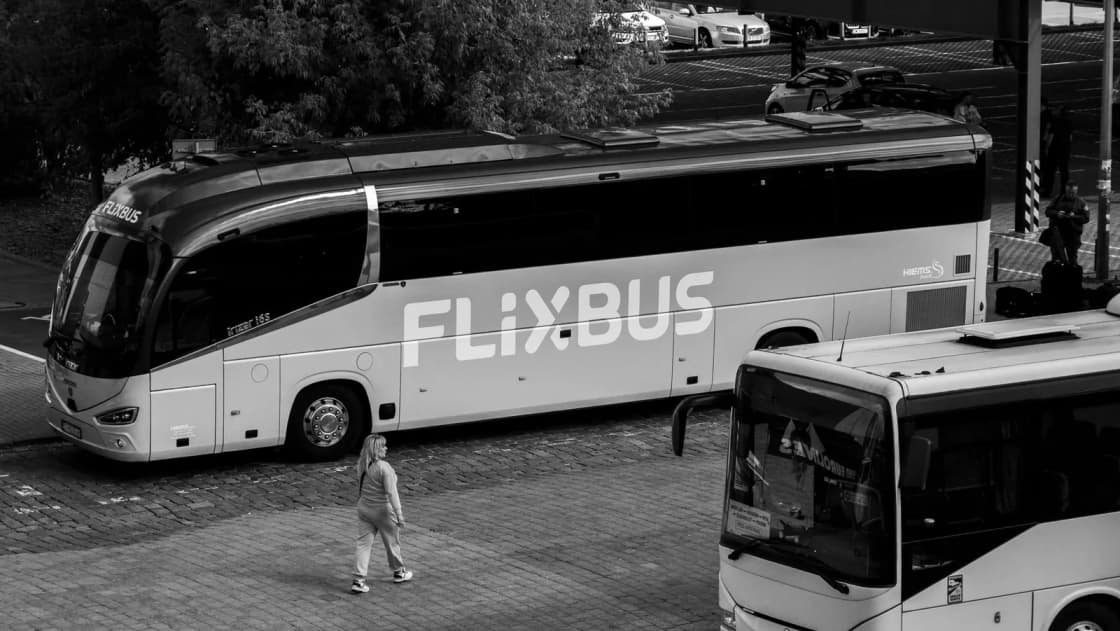
Greyhound and FlixBus
These sit under the same corporate parent following FlixMobility's acquisition of Greyhound, and you can book either through either brand's flow and compare schedules side by side. For a Provo traveler, they share the stop and are not genuine alternatives to one another.
Practical shape of the service:
- Provo to Salt Lake City runs roughly 45 to 46 miles in about 50 minutes.
- The national carrier has run on the order of four daily departures from Provo toward Salt Lake, with the last departure in the evening, around 9:00 p.m.
- Fares on that leg have started in the mid-teens.
- Buses carry Wi-Fi and power outlets, seat reservation is available at booking, and coaches are equipped with wheelchair lifts and spaces for mobility devices.
The Utah route network the national carrier has historically covered gives you the shape of what is reachable without a transfer: Provo, Salt Lake City, Ogden, Brigham City, Tremonton and Logan in the north, Green River to the east, and Parowan and St. George heading southwest on I-15 toward the Nevada line.
That last group is the one that matters for the Vegas question below.
Salt Lake Express
This is the regional operator, and for a lot of Provo trips it is the better tool.
Salt Lake Express is an intercity bus, airport shuttle and charter company covering Utah, Idaho, Wyoming, Montana, Nevada and Arizona. It is registered under the legal name Western Trails Charters & Tours LLC, and also trades as St. George Express and Aztec Shuttle — worth knowing, because you may buy a ticket under one of those names without realizing it is the same operator.
Its origin is a good piece of interior-West transportation history: it began in 1994 as a shuttle for students at what was then Ricks College in Rexburg, Idaho. It has grown substantially by acquisition since, taking over Northwestern Stage Lines of Spokane and Boise-Winnemucca Stages of Boise in 2022, and entering a partnership with Megabus in 2023 that put its routes into the Megabus booking system.
For Provo specifically:
- It runs multiple daily trips — on the order of eight — from Provo Central Station toward Salt Lake City.
- Critically, it serves Salt Lake City International Airport directly.
- Fares on that leg have started around $20, higher than the national carrier's Salt Lake fare, for a service that takes you somewhere the national carrier does not.
The airport question, which is the real use case
For most Provo residents, the honest answer to "should I take an intercity bus" is: only if you are going to the airport or past Salt Lake.
Here is why. Getting to Salt Lake City International from Provo without a car has historically been the awkward part of every trip. FrontRunner gets you to Salt Lake Central for a few dollars, but you then transfer to reach the terminal, with luggage, on a schedule you do not control.
Salt Lake Express eliminates that transfer. One ticket, one vehicle, curb at Provo to curb at the airport. For an early flight with two bags, that is worth considerably more than the fare difference against the train.
The national carriers do not solve this — they board at the Salt Lake Intermodal Hub downtown, from which the airport is still a separate leg.
When the train beats the bus
For Provo to Salt Lake City and back, take the train.
UTA's FrontRunner runs from Provo Central Station roughly hourly, takes about an hour and five minutes, and costs a few dollars. The intercity coach is faster per trip — around 50 minutes, because it skips the intermediate stops — but it runs a handful of times a day against the train's hourly service, and costs several times as much.
There is also Amtrak, which serves the corridor once daily. That is a long-distance train that happens to pass through, not a commuter option, and the timing reflects it.
The decision rule is simple:
- Destination is Salt Lake City itself → FrontRunner.
- Destination is the airport → regional shuttle operator.
- Destination is past Salt Lake — St. George, Vegas, Idaho, Wyoming → intercity bus, and buy the through ticket rather than piecing legs together.
For the local end of all this, our UVX guide covers the bus rapid transit spine that connects the station to BYU, UVU and downtown.
Getting to Las Vegas and St. George
The I-15 corridor south is served, with the national carrier historically making stops including Parowan and St. George en route toward the Nevada line.
What we are not going to do is print a schedule. Provo is a smaller stop with fewer daily departures than Salt Lake, and whether a given travel date offers a one-seat ride south or requires you to connect through Salt Lake genuinely varies. A corridor existing is not the same as a service existing on your Tuesday.
The practical method: price the trip both ways — direct from Provo, and FrontRunner to Salt Lake plus an intercity ticket from there. On a lot of dates the second option has more departures and a better price, at the cost of one transfer. On dates where a direct departure exists at a workable hour, take it.
Practical notes for the curb
Because there is no terminal, several ordinary bus-station assumptions do not hold:
- No indoor waiting. Provo winters are cold and the stop is exposed. Time your arrival tightly rather than sitting on a bench for an hour.
- No staff to ask. If the bus is late, the operator's app is your only information source. Both national brands offer real-time tracking.
- No luggage storage or left luggage.
- No parking, as above.
- Book ahead. Fares on these carriers rise as the date approaches — booking around ten days out has been worth roughly ten dollars on the Salt Lake leg alone.
- Confirm the address on your ticket, not from a guide. The operators state directly that the ticket carries the most current address, and curbside stops move more easily than terminals do.
Why Provo's intercity service is so thin
It is reasonable to ask why the fourth-largest city in Utah boards long-distance passengers at a curb, and the answer explains what will and will not change.
Intercity bus service in the United States has contracted for decades. Route networks shrank, terminals were sold, and the surviving carriers concentrated on the highest-volume city pairs. Downtown bus terminals were valuable real estate and expensive to staff, and one carrier after another traded them for curbside stops. Provo did not lose a terminal because Provo did anything wrong — this happened nearly everywhere outside the largest markets.
What replaced the terminal here is unusually good, though. The curb sits at a functioning intermodal facility with commuter rail, Amtrak and local bus service. That is a considerably better fallback than the parking-lot stops many cities got, and it means the connection between a long-distance bus and local transit actually works.
The second factor is competition from the car. Utah Valley is a car-oriented region with cheap parking and a young population that mostly drives. The addressable market for a bus to Salt Lake is small when the drive is 45 minutes and a carpool costs nothing.
Where the demand genuinely is: airport transfers, students traveling to and from Idaho and the intermountain West, and travelers without a car. That is exactly the market the regional operator serves, and it is why that operator runs more Provo departures than the national brands do.
Luggage, bikes and what you can bring
Policies differ between the national carriers and the regional operator, and the differences matter more than usual because there is no counter to sort it out at the curb.
General expectations on the national carriers:
- One or two checked bags within a weight limit, with additional bags at a fee, purchased in advance through the booking system rather than at the curb.
- One carry-on that fits at your seat.
- Bicycles and oversized items are typically restricted or require boxing. Do not turn up with an unboxed bike and hope.
- Fees are cheaper prepaid. Adding a bag through the app before travel costs less than sorting it out at boarding, and at a curbside stop there may be no mechanism to pay on the spot.
The regional operator runs smaller vehicles on many routes — shuttles and vans as well as coaches — which means luggage capacity can be genuinely limited. If you are traveling with skis, a large suitcase set or anything unusual, call and confirm rather than booking online and hoping.
For airport runs specifically, tell the operator you are going to a flight and confirm the luggage allowance when you book. Arriving at a curb with three bags for a van that has room for one is a bad morning.
Accessibility
The national carriers' coaches are equipped with wheelchair lifts and securement spaces, and this is one area where the big operators are stronger than the small ones.
The complication is the stop rather than the vehicle. A curbside boarding location has no waiting room, no staff and no shelter, which changes what an accessible trip looks like in practice. Advance notice is the mechanism that makes it work — carriers generally ask for notification ahead of travel so the equipment and the time are planned for, and at an unstaffed stop that notice matters more, not less.
For the regional operator running smaller vehicles, accessibility varies by vehicle type on a given route. Confirm when booking.
Connecting to and from the local network
The reason the curb works at all is what is next to it.
- FrontRunner commuter rail runs from the same complex north through Salt Lake to Ogden, and south to the end of the line.
- UVX, the valley's bus rapid transit spine, connects the station to downtown Provo, BYU, Orem and UVU. Our UVX guide covers it in detail.
- Local UTA routes feed the same hub.
- Shared scooters and e-bikes are commonly used for the last mile from the station, covered in our scooters and bike share guide.
The practical upshot: arriving in Provo by intercity bus without a car is workable. You can get from the curb to most of the valley on transit. That is not true of every curbside stop in the country and it is the strongest argument for the location.
Timing caution: local transit frequency drops sharply in the evening and on Sundays. A bus arriving at 9:00 p.m. on a Sunday may land you at a station with a long wait for a connection. Check the local schedule for your arrival time, not just the intercity one.
Booking practicalities
A short list of things that are specific to buying an intercity bus ticket rather than a plane ticket, and that catch people out.
Book early for price, not for availability. Fares on these carriers rise as the departure approaches, and the difference over a week or two is meaningful on a cheap ticket.
Check both brands and the regional operator separately. They do not appear in a single search, and the cheapest option on a given date varies.
Read the stop description, not just the city name. A curbside stop and a downtown terminal are both "Salt Lake City" in a search result and are not the same arrival.
Allow more connection time than you would for a train. Buses are subject to traffic and the schedule reflects intent rather than a guarantee.
Save the operator's tracking link. With no staff at the Provo stop, the app is your only source of truth about whether the bus is late.
Take a photo of your ticket rather than relying on connectivity at the curb.
The short version
- The Provo stop is a curb cutout at 50 East 750 South, on the south side of 750 South by Provo Central Station. Not a building.
- It appears under two names — Provo Intermodal Hub and Provo Central Station. Same place.
- No parking. Vehicles may be ticketed or towed.
- Greyhound and FlixBus are one company now; Salt Lake Express is the real alternative.
- Salt Lake Express serves the airport directly — the strongest reason to choose it.
- For Salt Lake City itself, take FrontRunner. Hourly, cheaper, and you are not standing at a curb.
- Going south to St. George or Vegas, price the direct Provo departure against a FrontRunner connection before you book.
Related Guides
- FrontRunner from Provo: What to Know Before You Ride
- The Provo DMV, Decoded: Two Agencies, Two Buildings
- Cracked Windshields in Provo: The Utah Rule Everyone Quotes Wrong
- Parking in Downtown Provo Without Getting a Ticket
- Driving Schools in Provo: Driver Ed, Road Tests & the Third-Party Shortcut
- Living in Provo Without a Car: An Honest Assessment
- PVU or SLC: Which Airport Should You Fly From?
- Towed in Provo: The Sign at the Entrance Decides Whether They Were Allowed To
- Winter Tires & Canyon Driving in Utah: What You Actually Need
- Finding a Trustworthy Mechanic in Utah Valley
- UTA On Demand in Utah County: The Van You Hail Like an Uber for $2.50
- Amtrak from Provo: Riding the California Zephyr
Frequently Asked Questions
Where do intercity buses stop in Provo?
Can you park at the Provo bus stop?
Is there a direct bus from Provo to Las Vegas?
What is Salt Lake Express?
Should I take the bus or the FrontRunner train to Salt Lake City?
Can I get from Provo to the Salt Lake City airport by bus?
Are Greyhound and FlixBus the same company now?
How long does the bus take from Provo to Salt Lake City?