Utah County's soil is alkaline, its summers are hot and dry, and its cities have spent decades planting the same handful of trees. USU Extension's foresters have been pushing homeowners toward better choices, and at least one city, Lehi, publishes a "don't plant" list for park strips. Here's what to plant, what to skip and how to keep a new tree alive.
This guide uses USU Extension's "16 Less Common Trees for Utah Landscapes," its Siberian elm profile and its October 2026 fact sheet "Top 5 Tree Planting Mistakes," plus Lehi City's park strip rules and unacceptable street tree list, all checked Nov. 24, 2026. For lawn conversions and rebates, see our lawn replacement rebates guide.
Trees to consider
USU Extension horticulture and forestry specialists Heidi Kratsch and Michael Kuhns wrote that Utah's habit of planting "only a few tough species" has left "a handful of maples, too many cottonwoods and willows, Siberian elm, etc." Their list of 16 less-common trees includes several suited to Utah County yards:
| Tree | Size | Why it fits here |
|---|---|---|
| Bur oak | Fairly large | Moderate to severe drought, high pH, heat, cold, wind; zones 2-8 |
| Kentucky coffeetree | Fairly large | Wide range of climates and soils; zones 3-8 |
| Turkish filbert | Medium | High pH, some compaction, moderate drought (not salt); zones 4-8 |
| Paperbark maple | Small to medium | Fairly drought-resistant, moderately high pH; zones 4-8 |
| Japanese tree lilac | Small to medium | Tolerates high pH; zones 3-7 |
| White fringetree | Large shrub to medium tree | High pH, heat, wide range of sites; zones 3-9 |
| Chitalpa | Small, multi-trunked | High pH, heat, drought; "ideal for low-water landscapes"; zones 6-9 |
| Lacebark pine | (not stated) | Tolerates nearby pavement and alkaline soil; zones 4-8 |
| Corneliancherry dogwood | Small to medium | Better than most dogwoods in high pH and poor soil; zones 4-8 |
| Baldcypress | Large | Wide range of soils; zones 4-9 |
Others on USU's list need more care here: European beech prefers acid soil and steady water, European larch wants moist soil, and giant sequoia likes moisture and should be kept off very hot sites.
Check your USDA hardiness zone before buying, as USU advises. Chitalpa is multi-trunked, which matters for park strips (below).
Trees to avoid
Siberian elm is the one USU Extension singles out: it "rarely should be planted" and "shouldn't be planted in most cases," because of weak wood and branches, pests and disease, and seedlings that sprout everywhere.
Lehi's unacceptable park strip trees are a useful checklist for any yard in the county. The city bans, from all park strips:
- ash; birch; black locust; boxelder;
- cottonwoods, aspens and poplars; willows;
- Siberian elm; Russian olive; saltcedar; tree of heaven;
- red, silver, sugar and Freeman maples;
- flowering (Callery) pear; fruitless mulberry; fruit-bearing trees;
- umbrella catalpa; weeping and multi-stemmed trees;
- evergreens and conifers; and honeylocust in strips narrower than 10 feet.
Lehi's reasons, stated for the list as a whole: problem roots, heavy insect or disease trouble, soft or brittle wood, fruit, blocked sight lines and too little variety.
Park strip rules
Lehi requires a free permit to plant any tree in a park strip, and:
- no trees in strips narrower than 4 feet, and no evergreens in strips under 10 feet;
- no trees under power lines, and at least 10 feet from transformers and hydrants;
- 35 feet from stop signs and intersections, 40 feet from traffic lights, 20 feet from light poles;
- 5 feet from water meters and driveways;
- single-trunk trees only.
Other cities set their own rules. Call your city's parks or urban forestry office before planting in a park strip. Lehi's forestry line is 385-201-2294.
Planting it right
USU Extension's October 2026 fact sheet by urban forestry specialist Miles Becker and arborist Daniel Allen lists the five mistakes that kill new trees:
- Wrong tree, wrong place. Test the soil, check your zone, and space medium and large trees about 25 feet apart, 10 feet from buildings and 5 feet from sidewalks and property lines.
- Planted too deep. Find the trunk flare and set it 1 to 2.5 inches above grade.
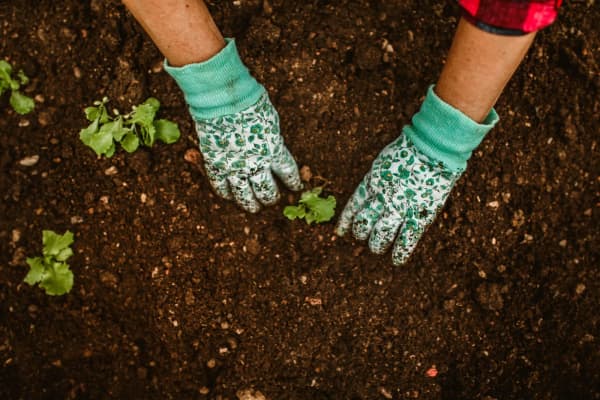
- Poor hole. Dig three times as wide as the root ball, rough up the sides and backfill with native soil only. Add an inch of compost under the mulch only for very poor soil.
- Bad roots. Check roots at the nursery, loosen the outer roots and cut circling roots back at planting.
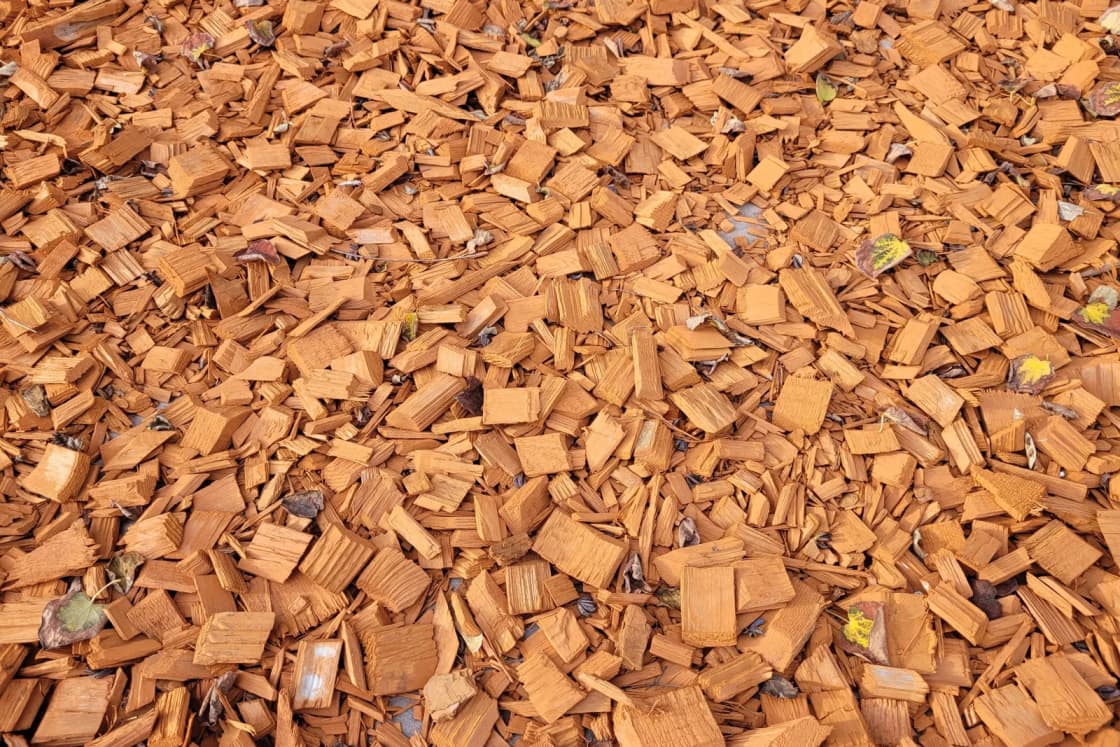
- Too little mulch. Spread 3 to 4 inches of coarse, untreated wood chips in a 2- to 5-foot circle, a few inches off the trunk. Skip shredded bark and landscape fabric.
If you're bringing nursery stock or soil from out of state, Utah's Japanese beetle quarantine regulates shipments from infested states.
Related guides
- Lawn replacement rebates in Utah County
- Japanese beetles in Utah County
- Master Gardener program in Utah County
- Community gardens in Utah Valley
- Goatheads and noxious weeds in Utah County
Frequently Asked Questions
What trees grow well in Utah County?
What is the most drought-tolerant shade tree for Utah?
What trees should you not plant in Utah?
Do you need a permit to plant a tree in a park strip?
How deep should you plant a tree?
How much mulch should go around a new tree?
How far from a house should you plant a tree?
Why are maples a problem in Utah County?
Sources
The facts in this guide were checked against these sources. Hours, fees and rules change, so confirm anything time-sensitive with the source before you go. How we make Provo.com.
- Unacceptable Street Trees, Lehi City. Checked November 24, 2026.
- Trees and Forestry (park strip permit rules), Lehi City. Checked November 24, 2026.
- 16 Less Common Trees for Utah Landscapes: Diversifying Utah's Community Forests (Heidi Kratsch and Michael Kuhns), Utah State University Extension. Checked November 24, 2026.
- Siberian Elm (tree identification), Utah State University Extension Forestry. Checked November 24, 2026.
- Top 5 Tree Planting Mistakes (October 2026, Miles Becker and Daniel Allen), Utah State University Extension Forestry. Checked November 24, 2026.