
Whether your lawn drinks treated city water or a second, untreated pipe depends on your city, and sometimes on your street. This page lays out, city by city, who runs pressurized irrigation (PI) in Utah County, how big each system is, when it runs, and what the rules and meters look like. We read each city's PI page and the water plans that Utah cities filed with the state Division of Water Resources on October 20, 2026.
For what secondary water is, how water shares work when you buy a house, and the vocabulary, read our secondary water guide. This page is the city-by-city reference.
The cities at a glance
| City | Who runs it | Size | Season | Source |
|---|---|---|---|---|
| Lehi | Lehi City | 18,000+ PI connections | Off by Oct. 15 | Lehi water plan; Lehi PI page |
| Saratoga Springs | City | 10,728 metered PI connections | Charged week of Apr. 15, drained week of Oct. 15 | City water plan; PI page |
| Highland | City (system built 1997-98) | 4,800 connections | Apr. 15 to Oct. 15 | Highland water plan; FAQ page |
| Lindon | City (installed around 1993) | 2,616-meter project (scheduled 2022 to 2023) | About late April to mid-October | Lindon metering project page |
| Mapleton | City | 1,821 active connections, about half the service area | About April through October | Mapleton water plan |
| Springville | City (in service 2016) | More than 1,500 connections, west side | Ready Apr. 15 (2024 notice) | Springville water plan; city notice |
| Spanish Fork | City | Not stated on its page | About mid-April to mid-October | Spanish Fork PI page |
| Pleasant Grove | City | 90% of irrigation connections residential | Not stated | Pleasant Grove water plan draft, Nov. 2025 |
| Orem | No general secondary system | Reuse water irrigates some parks | n/a | Orem water plan |
Provo's water plan, filed in 2026, does not describe a city-run pressurized irrigation system; its outdoor conservation steps focus on landscaping, smart controllers and rain barrels. If you are buying in Provo, ask the seller whether the property has an irrigation company share or a secondary hookup, and check the title report.
City notes
Lehi runs two systems, drinking water and PI, and its PI is fed by wells, canal diversions and the Central Utah Water Conservancy District, with 229 acre-feet of storage in 13 facilities. Lehi is in Phase 2 of its Water Shortage Management Plan (revised April 9, 2026): no sprinkling on consecutive days, two days a week, at least 48 hours apart. Its plan says tiered PI rates will start once every service is metered. Turn your connection off by October 15.
Saratoga Springs draws PI from five wells and surface water and stores it in 11 ponds totaling 113.4 acre-feet. Billing is a flat monthly charge all 12 months, plus a tiered rate in season that rises when use exceeds the property's allotment. Wait two weeks after the spring charge before running, keep systems off from 10 a.m. to 6 p.m., and close your own shut-off valve after November 1. The My Water Use portal shows hourly use for both systems.
Highland fills and charges its system starting at the end of March, which can take two weeks; keep your valve closed during charging, because pressure swings can damage a private system. A filter is required. Meter installation began in summer 2023.
Lindon's system was installed around 1993. The city's metering project called for 2,616 meters, with installation scheduled through summer 2023, funded by $1,963,000 from the state, $400,000 from the Central Utah Water Conservancy District and $841,000 in city money, and the city expects metering to cut use by up to 20%. PI is billed monthly, year-round.
Mapleton's PI serves the north and central parts of the city; the rest irrigate from culinary water, and dry mains could bring PI to about 1,500 more connections. Its plan (amended August 2025) publishes a tiered PI rate for users with access: a $15 base for 3/4-inch and 1-inch meters, then $1.00 per 1,000 gallons up to 8,000 gallons, $1.25 to 100,000, $1.50 to 200,000, and higher tiers above that.
Springville's PI went into service in 2016 and serves more than 1,500 connections on the west side. The city prices PI below culinary water to encourage its use, runs tiered rates on both systems, and asks residents to avoid watering from 10 a.m. to 6 p.m.
Spanish Fork owns the PI line from the main through the meter to the first fitting after it; everything past that is the owner's. The season runs about mid-April to mid-October, with exact dates set each year.
Pleasant Grove's November 2025 draft water plan says secondary metering and a tiered rate structure were near completion, and that current irrigation demand exceeds infrastructure capacity.
Orem has no general secondary system, according to its water plan. Its plan sets a goal of producing Type 1 reuse water at the city's water reclamation facility by 2025 to irrigate The Links at Sleepy Ridge, Lakeside Sports Park and Springwater Park.
Eagle Mountain and Vineyard list secondary water as a planning goal: Eagle Mountain is pursuing wastewater and industrial reuse for a secondary system, with a reuse permit awaiting state approval, and Vineyard's plan calls for a secondary water master plan.
The 2030 meter deadline
Utah Code 73-10-34 requires every pressurized secondary water supplier to meter each user by January 1, 2030, and new service in Utah County has had to be metered since 2020. A supplier may not raise rates more than 10% in a calendar year for metering costs, except after a catastrophic failure, and must explain the basis of an increase. Once meters are in, expect tiered pricing: the more you water, the more each gallon costs.
What to do as an owner
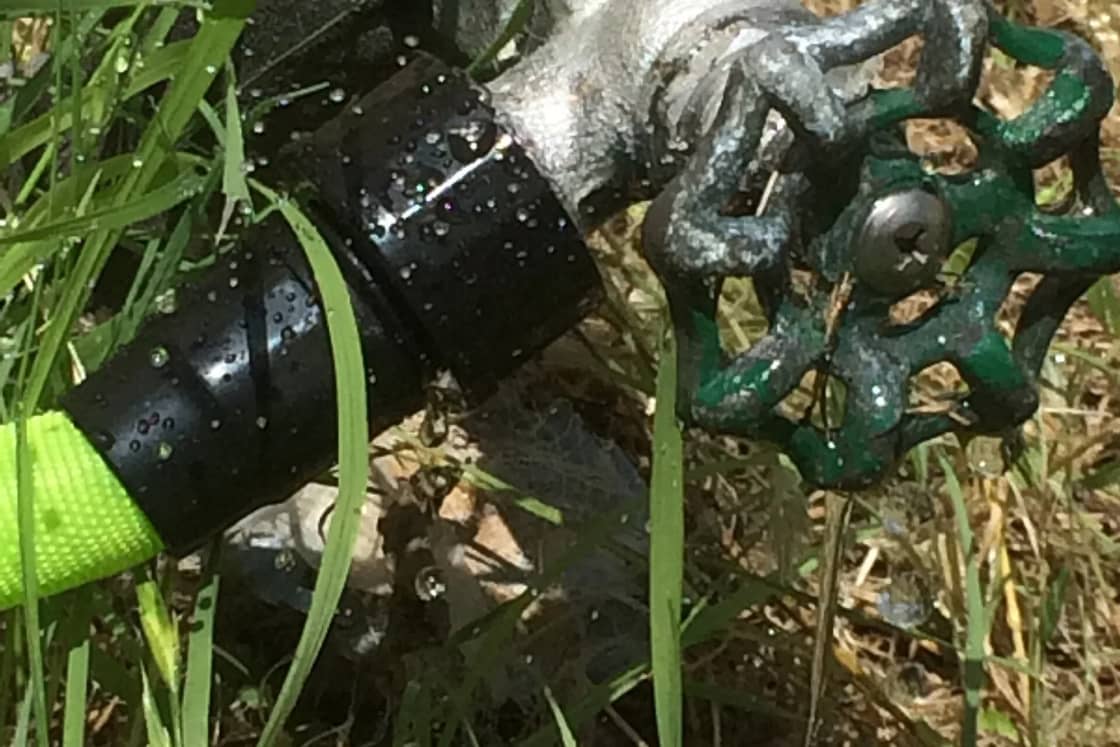
- Find out what you have. Look for a second shut-off valve and meter box in the yard, or ask your city's utility billing office.
- Respect the season. Keep your valve closed until your city says the system is charged, and winterize after shutoff; our sprinkler winterization guide covers it.
- Fit and clean a filter. Untreated canal and river water clogs heads.
- Never cross-connect PI to your drinking water. It is prohibited and can contaminate the house supply.
- Watch the meter. If your city has a portal, check weekly in July; that is when tiered bills climb. The Utah Division of Water Resources' weekly watering guide tells you how much your lawn needs.
Buying a house? Add secondary water to your questions, along with the first-year homeowner calendar and, if you are in a subdivision, our HOA guide. To use less water outdoors, see our water-wise landscaping guide.
Frequently Asked Questions
Which Utah County cities have pressurized irrigation?
When does pressurized irrigation turn on in Utah County?
When is pressurized irrigation shut off?
Is secondary water metered in Utah County?
Will my secondary water bill change after metering?
Can I drink pressurized irrigation water?
Do I need a filter on pressurized irrigation?
Are there watering-day rules on secondary water?
Sources
The facts in this guide were checked against these sources. Hours, fees and rules change, so confirm anything time-sensitive with the source before you go. How we make Provo.com.
- Lehi Water Use and Preservation Element, Lehi City / Utah Division of Water Resources. Checked October 20, 2026.
- Pressurized Irrigation, Lehi City. Checked October 20, 2026.
- Saratoga Springs Water Element, Saratoga Springs / Utah Division of Water Resources. Checked October 20, 2026.
- Pressurized Irrigation, Saratoga Springs. Checked October 20, 2026.
- Highland Water Element, Highland City / Utah Division of Water Resources. Checked October 20, 2026.
- Frequently Asked Questions: Pressurized Irrigation, Highland City. Checked October 20, 2026.
- Secondary Water Metering Project, Lindon City. Checked October 20, 2026.
- Mapleton Water Use and Conservation Element, Mapleton City / Utah Division of Water Resources. Checked October 20, 2026.
- Springville Water Element, Springville City / Utah Division of Water Resources. Checked October 20, 2026.
- Pressurized Irrigation Turned On for the Season, Springville City. Checked October 20, 2026.
- Pressurized Irrigation, Spanish Fork City. Checked October 20, 2026.
- Pleasant Grove Water Use and Preservation Element (draft), Pleasant Grove City / Utah Division of Water Resources. Checked October 20, 2026.
- Orem Water Element, Orem City / Utah Division of Water Resources. Checked October 20, 2026.
- Provo Water Element, Provo City / Utah Division of Water Resources. Checked October 20, 2026.
- Eagle Mountain Water Element, Eagle Mountain City / Utah Division of Water Resources. Checked October 20, 2026.
- Vineyard Water Element, Vineyard / Utah Division of Water Resources. Checked October 20, 2026.
- Utah Code 73-10-34, Secondary water metering, Utah Legislature. Checked October 20, 2026.