The spiny burs that flatten bike tires and stick in shoes are goatheads, the seed pods of puncturevine. It's a state-listed noxious weed, a single plant makes 500 to 2,000 seeds, and those seeds last 4 to 5 years in the soil. Beating it takes a few summers of stopping it from going to seed.
This guide uses the Utah Department of Agriculture and Food's noxious weed list, Utah County Public Works' weed control page, a USU Extension column in the Daily Herald (2023) and the Jordan River Commission's goathead guide, checked Nov. 20, 2026.
Know it
- Growth: an annual that forms flat mats 2 to 5 feet across.
- Leaves: small, hairy, arranged opposite each other.
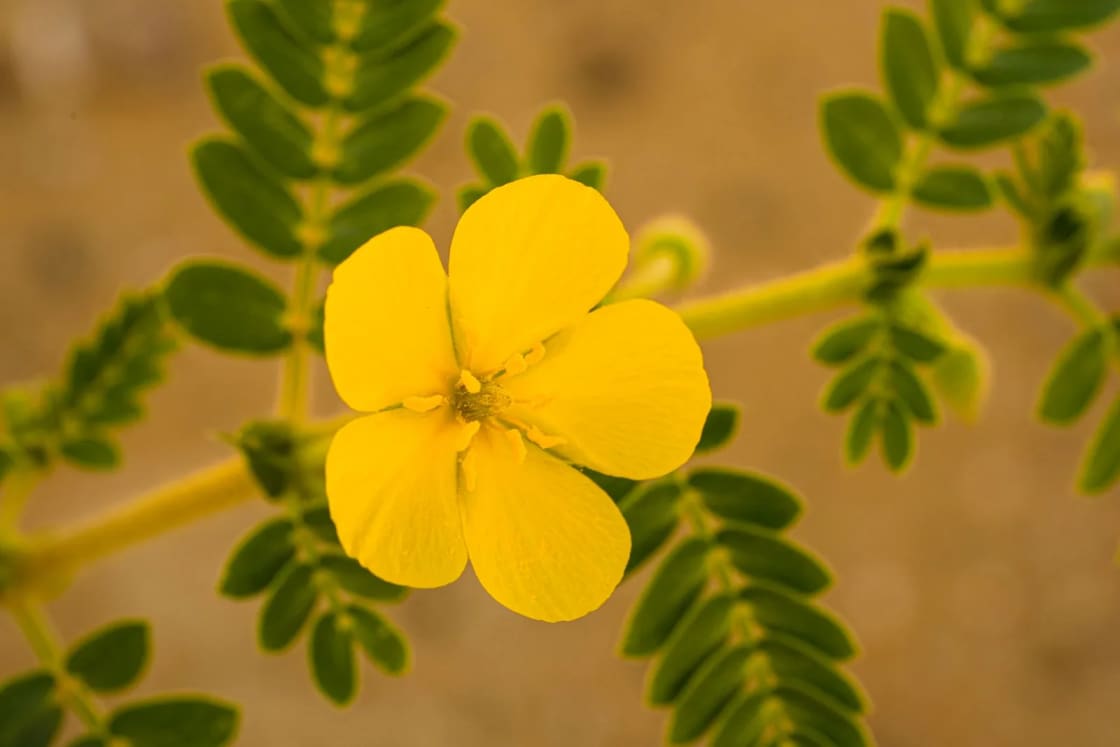
- Flowers: yellow, five-petaled, about half an inch wide, in mid-summer.
- Burs: spiny, holding five seeds, turning tan or gray and very hard.
- Speed: about 2 to 3 weeks from sprouting to seed.
Kill it
The rule from USU Extension: "prevent flowering and seed production."
- Pull, hoe or string-trim plants while they're young, before the yellow flowers appear.
- Bag anything with blossoms or burs; don't compost it.
- Sweep or vacuum burs off driveways, sidewalks and hardpacked areas.
- Check shoes, tires and clothes before moving into a clean area.
- Mulch bare soil; USU suggests a half-inch of compost refreshed each spring.
- Herbicides with glyphosate, 2,4-D or dicamba work on small plants before bloom. USU says glyphosate is the better choice in vegetable gardens. Spring pre-emergents (oryzalin, benefin, trifluralin) give only partial control.
- Repeat for several years. The seed bank is what you're really fighting.
Weevils? Two introduced weevils control puncturevine in mild climates but have failed to establish in Utah, likely because of cold winters.
The state list
Utah sorts noxious weeds into classes. Puncturevine is Class 3 (containment), with Canada thistle, field bindweed, poison hemlock, musk and Scotch thistle, phragmites and others. Class 4 (prohibited) includes Russian olive, Scotch broom, myrtle spurge and dames rocket.
What Utah County wants reported
Utah County Public Works' weed control page lists 16 priority weeds:
Canada thistle · dyer's woad · hoary cress · squarrose knapweed · Russian knapweed · yellow starthistle · diffuse knapweed · Scotch thistle · musk thistle · phragmites · poison hemlock · purple loosestrife · cutleaf vipergrass · garlic mustard · giant reed · oxeye daisy
Report through the "Report Noxious Weeds" form on the county's weed control page or the EDDMapS app, with photos of leaves, flowers and growth habit, plus the location and size. The county also keeps a list of businesses that treat noxious weeds. Contact: 801-851-8600, Utah County Public Works, 2855 S. State St., Provo.
Related guides
- Bike commuting in Provo
- Bike shops in Provo
- Japanese beetles in Utah County
- USU Extension Master Gardener program
Frequently Asked Questions
What is a goathead?
Is puncturevine a noxious weed in Utah?
How long do goathead seeds last?
What's the best way to get rid of goatheads?
What herbicide kills puncturevine?
Do puncturevine weevils work in Utah?
Which weeds does Utah County want reported?
How do I report a noxious weed in Utah County?
Sources
The facts in this guide were checked against these sources. Hours, fees and rules change, so confirm anything time-sensitive with the source before you go. How we make Provo.com.
- State of Utah Noxious Weed List, Utah Department of Agriculture and Food. Checked November 20, 2026.
- Utah County Public Works: Weed Control, Utah County Public Works. Checked November 20, 2026.
- Species Spotlight: Goatheads, Jordan River Commission. Checked November 20, 2026.
- Garden Help Desk: Stick to it and you can eliminate pesky puncturevine, Daily Herald. Checked November 20, 2026.