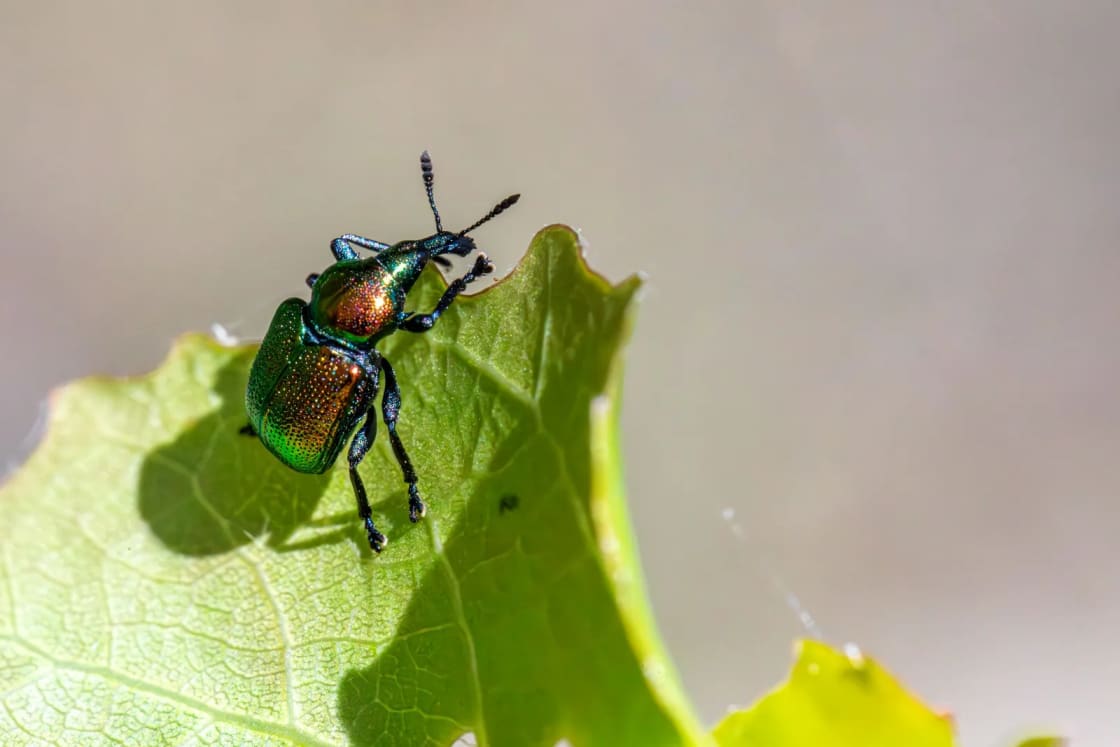
Japanese beetles were found in an Orem garden in 2006, and wiping them out became one of the largest eradication efforts of its kind in the country. Utah County has no treatments planned for 2026, but the beetle hasn't left the state: the Utah Department of Agriculture and Food (UDAF) is still treating sites in Davis, Salt Lake and Weber counties.
This guide uses UDAF's Japanese beetle eradication page, its risk analysis of the beetle in Utah, and KSL (2020), checked Nov. 19, 2026.
The Orem outbreak
| Year | What happened |
|---|---|
| 2006 | An Orem resident finds a beetle in her garden; UDAF finds 675 that year |
| 2007 | More than 2,000 detections across about 100 residential blocks |
| 2011 | No beetles detected |
| 2014 | Eradication declared a success |
| 2021 | 51.3 acres treated in Utah County |
| 2026 | No treatments planned for Utah County |
State entomologist Kristopher Watson told KSL in 2020 that the Orem program caught roughly 2,600 beetles and was the most successful eradication in the country so far. "I hope no one has to beat that," he said.
Where it stands in 2026
The beetle reappeared along the northern Wasatch Front in 2019, and UDAF has treated sites there every year since. Its spring 2026 plan:
| County | Acres treated, spring 2026 |
|---|---|
| Davis | 59 |
| Salt Lake | 6 |
| Weber | 9 |
| Utah | None planned |
UDAF finished its fifth year of this eradication work in 2025. Populations fell 33% from the year before, and the 2026 acreage is 61% smaller, but the agency says low-level populations persist in some places. It runs high-density trapping wherever beetles were caught the previous year.
Why it matters for gardens
The beetle eats more than 300 plant species, including fruit, vegetables, field crops, nursery stock and lawns, and it spends most of its life as a grub in the soil. UDAF's risk analysis estimated that an established population could cost Utah $125 million to $345 million in urban turf. Our vegetable garden guide and pest control guide cover the pests gardeners here do deal with.
How you can help
- Buy plants, sod and soil locally, or make sure out-of-state shipments meet Utah's quarantine. The quarantine, in place since 1993 under rule R68-15, regulates soil, sod and nursery stock from infested states.
- Leave state traps alone. UDAF hangs traps in trees and above lawns each summer.
- Call UDAF at 801-982-2311 with quarantine questions or a beetle you can't identify.
Related guides
- Goatheads and Utah County's noxious weeds
- Pest control in Utah Valley
- Vegetable gardening in Utah Valley
- Waterwise landscaping in Utah Valley
- Lawn mowing and yard care
Frequently Asked Questions
Are there Japanese beetles in Utah County?
What happened with Japanese beetles in Orem?
Where are Japanese beetles in Utah now?
Why does Utah care so much about one beetle?
What does a Japanese beetle look like?
What does the state spray?
Can I bring plants or soil from another state?
How do Japanese beetles spread?
Sources
The facts in this guide were checked against these sources. Hours, fees and rules change, so confirm anything time-sensitive with the source before you go. How we make Provo.com.
- Japanese Beetle Eradication, Utah Department of Agriculture and Food. Checked November 19, 2026.
- Risk Analysis of Japanese Beetle in Utah, Utah Department of Agriculture and Food. Checked November 19, 2026.
- State insect trappers on the hunt for the destructive Japanese beetle, KSL.com. Checked November 19, 2026.