
There are two ways to end up at a charter school in Utah Valley. The first is that a family goes looking — for a smaller building, a specific academic model, a fresh start after a hard year. The second, and it is more common than anyone admits, is that a neighbor mentioned one at a barbecue in February, the application took eleven minutes, and a seat came through in March.
Both are legitimate. But the second route is how families end up learning about transportation, or the sibling preference, or the way a K–6 charter ends in sixth grade with no obvious next step, in the week before school starts rather than the year before.
This is the version worth reading first.
What a charter school actually is
A charter school in Utah is a public school. Not a public-private hybrid, not a semi-private school with a friendly fee structure — a public school, funded with public money, free to attend, and open to any student who lives in the state.
What makes it a charter is the contract. Every charter operates under a written agreement with an authorizer, which in Utah is the State Charter School Board, a local school district, or a designated institution of higher education. That agreement — the charter itself — is what permits the school to exist, and it can be revoked. In exchange for that accountability, the school gets to run itself: its own governing board, its own hiring, its own curriculum emphasis, its own calendar, within the bounds of state and federal law.
Charter schools must comply with federal law and with Utah law. They must comply with State Board rules except those specifically waived in their charter. They are subject to open-meeting requirements, financial reporting and testing. They are not a way to opt out of public education; they are a differently-governed corner of it.
Statewide, charters account for well over a hundred of Utah's public schools. Utah County has an unusually dense concentration of them, which is why the option comes up in conversation here far more than it does in most of the country.
The one distinction people get wrong
If you take away nothing else: charter and private are not synonyms, and locally they get conflated constantly.
A charter is free, publicly funded, and admits by random lottery when it has more applicants than seats. A private school charges tuition and admits whom it likes.
The most common local mix-up involves American Heritage School in American Fork, which is a tuition-charging private school with a religious mission — not a charter, despite being described as one in a great deal of otherwise careful local writing. The same confusion attaches to several smaller faith-based schools in the valley.
The test is simple and takes one question: does this school charge tuition? If yes, it is private, and everything below about lotteries and preferences is irrelevant to it. If no, and it is not run by a district, it is almost certainly a charter.
There is now a third category muddying the water further, which is worth understanding on its own terms.
Where the Utah Fits All scholarship sits in all this
Utah's Utah Fits All Scholarship is a state-funded account that eligible families can spend on private-school tuition, curriculum, tutoring and other approved education costs. It is not a charter program and has nothing to do with charter admission, but it enters the conversation because it is the mechanism by which some families in Utah Valley now afford a private school they could not previously consider.
Its legal status is genuinely unresolved. In April 2025 a state district court judge ruled the program unconstitutional in a case brought by the Utah Education Association, finding it inconsistent with the state constitution's requirements for public education and with the limits on income-tax revenue. Days later the parties agreed the program would keep operating while the state appealed. That appeal has been before the Utah Supreme Court since 2025, with briefing completed in early 2026 and no decision issued as of this writing.
The practical read for a parent: the program is running, families are receiving and spending awards, and the final answer is not in. If a private school's affordability for your family depends entirely on that scholarship continuing, that is a risk to name out loud rather than assume away.
How the lottery works, precisely
This is the part that surprises people, because "lottery" implies a level draw and the draw is only level at the end.
Utah Code 53G-6-502 governs charter admission. The sequence runs roughly like this:
First, the school re-enrolls its existing students. Continuing students are not in the lottery. In an established K–6 charter, the great majority of seats in every grade above kindergarten are gone before a single new application is considered.
Second, the statutory preferences are applied. These commonly include children or grandchildren of individuals who actively participated in founding the school or who serve on its governing board; children of employees; siblings of students currently or previously enrolled; and foster children living in the household of an enrolled student. A school may also adopt a residence-based preference — for students living inside the district, inside the municipality, or within a two-mile radius of the building. Some schools have an articulation agreement letting students move from one charter to another with preference.
Third, everyone else is drawn at random for whatever seats remain.
Two consequences follow, and they matter more than the mechanics.
The sibling preference compounds. A family that gets one child into a popular charter has effectively secured a path for the younger ones. A family that misses is competing every year against a pool that shrinks as those siblings fill it. This is not a criticism of the rule — it exists so that families are not driving to three buildings every morning — but it means that entry-grade access is the real access, and later grades are much tighter than the headline seat count suggests.
Getting on the waitlist is not nothing. Waitlists move, sometimes substantially, through spring and into the first weeks of the school year, as accepted families take other offers. A number that looks hopeless in March is often not hopeless in August.
The timeline, and why February is late
Charter lotteries in Utah are run school by school. There is no single county-wide application, no common deadline, and no central portal — each school posts its own window and its own draw date, and they do not all match.
The broad rhythm is that applications open in winter, the main draw happens in late winter or early spring, offers go out by email with a short acceptance window measured in days rather than weeks, and the waitlist works from there.
The realistic approach is not to research exhaustively and then apply to the one you like best. It is to build a short list of schools you would genuinely accept, look up each one's posted lottery date, and enter all of them in a single sitting. Applications are free and non-binding. The cost of applying to four schools is one evening; the cost of applying to one is a year.
If you are moving to Utah Valley mid-year, apply anyway. Seats open when families move away, and the valley's population turns over enough that it happens.
What you are actually giving up
Charters trade services for autonomy, and the trade is real. Before accepting a seat, price these out honestly.
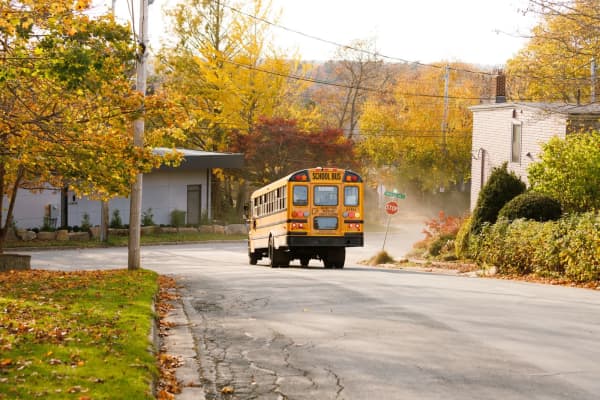
Transportation. Most Utah Valley charters do not run district-style bus routes. This is the item families most consistently underestimate. Two round trips a day, five days a week, for years, is a significant recurring cost in time — and it falls unevenly, usually on whichever parent has the more flexible job. Some schools coordinate carpools. Ask what actually exists rather than what is theoretically possible.
Food service. Some charters run a full lunch program; some run a limited one; some run none and expect packed lunches. Federal meal-benefit programs apply where a program exists, but the program has to exist first.
Building and facilities. Charters do not receive the same facility funding districts do, and many operate in converted commercial space or on a compact campus. A gym that doubles as a lunchroom and an auditorium is common. If your child is the sort who needs a field at recess, go and look at the field.
Depth of specialist staffing. A charter must serve students with disabilities and must follow IDEA — that is not optional. But a school of four hundred students supports a thinner bench than a district of thirteen thousand: fewer counselors, fewer specialists, more contracted services, less internal redundancy when someone leaves. Ask what is delivered on site, by an employee, weekly.
Secondary continuity. Many Utah Valley charters are K–6 or K–8. That is a fine school and a real cliff. Ask where the school's graduates actually go, and whether that next step has its own lottery.
The kinds of charter this valley has
Rather than a directory that ages badly, it helps to know the categories, because they attract very different families.
College-partnership high schools. The clearest local example is the Utah County Academy of Sciences, which operates in partnership with Utah Valley University across campuses in Orem and Provo and lets students accumulate substantial college credit while in high school. This model attracts academically driven students and asks a great deal of them.
Classical and liberal-arts schools. Several Utah Valley charters run explicitly classical curricula — Latin, primary texts, a formal tone, uniforms in some cases. Families either want this specifically or find it a poor fit; there is very little middle ground.
Pedagogically distinctive schools. Provo has a Waldorf-inspired charter; others in the valley run Montessori-influenced or project-based models. These exist because the model exists, not because they are chasing test scores, and they should be evaluated on whether the model suits your child.
Schools built around a specific student population. Some charters in the county specialize in serving students on the autism spectrum or with other specific needs, and run staffing ratios a comprehensive school cannot.
Neighborhood-scale K–6 and K–8 schools. The largest group. These compete with the district elementary down the street mostly on size, culture and continuity rather than on curriculum philosophy.
How to compare without drowning in rankings
Test-score rankings are the easiest thing to find and among the least useful things to use, for a reason specific to charters: a school families opt into, and drive to, selects for engaged families before it teaches anybody anything. Some of the score gap is instruction and some of it is who applied.
Better questions, in rough order of how much they predict a good year:
What is the teacher turnover? Ask directly: how many teachers returned this year? A small school with heavy churn is a hard place to be a student, whatever the model.
How long has the leadership been there? Charters live and die on their principal and their board. Frequent turnover at the top is the most reliable warning sign available to an outsider.
What happens when a child struggles? Not the marketing answer. The name of the person, the trigger for intervention, and what happened last time.
Can I sit in a classroom? A school confident in its ordinary Tuesday will let you see one. Tour-day polish tells you nothing.
Where do the sixth or eighth graders go next, and do they do well there?
And one that people forget: ask a family that left. Every school has some. The reasons are more informative than any brochure, and in a valley this connected you are two conversations away from finding one.
What this means for the district schools
It is worth understanding the other side of the ledger, because it will shape your neighborhood school over the next few years whatever you choose.
Funding in Utah follows the student. When a child living inside Provo City School District enrolls at a charter, the per-student money goes with them, but the cost of heating the elementary school on their street does not fall proportionally. District leaders have said publicly that around a thousand students inside Provo's boundaries attend charters, and that a further charter is expected to open in fall 2027 within the Spring Creek Elementary boundary.
That is a meaningful part of the pressure behind Provo's 2026 conversations about boundaries, dual language immersion and possible consolidation. It is not the whole story — birth rates and housing costs are doing at least as much — but it is a large, visible, local piece of it.
None of which is an argument against choosing a charter. It is an argument for knowing that the choice is not neutral, and that a parent making it is participating in a slow reallocation whether or not they think of it that way.
A reasonable way to decide
If you are starting from scratch, this sequence keeps the work proportionate:
Look hard at your assigned school first. In Utah Valley it is often good, and the default deserves an actual visit rather than an inherited assumption. Our guide to schools in Provo and Orem is a starting point, and if you are in Orem, Lindon, Pleasant Grove or Vineyard, read the Timpanogos School District explainer as well, because your district changes in 2027.
Then decide what specifically is missing — a smaller building, a particular subject emphasis, a fresh social start, a college-credit path. "Charter" is not an answer to that question; a specific charter might be.
Shortlist three or four, verify each lottery date, apply to all of them in one evening, and price the driving honestly before you accept anything.
And if none of it comes through, that is a normal outcome rather than a failure. Waitlists move, tutoring fills specific gaps far more cheaply than a school change does, and homeschooling in Utah is unusually straightforward here if the fit is genuinely wrong. The valley has more paths through this than most places, which is precisely why it is worth taking a year to choose one on purpose.
Who a charter school actually answers to
Parents comparing charters usually compare test scores and commute times. The more predictive question is who holds the school's charter and what that holder can do when something goes wrong, because the answer determines how a bad year is handled — and, in the worst case, how a closure is handled.
Utah's charter law is Utah Code Title 53G, Chapter 5. A charter school is a
public school. It is created when an authorizer approves an application under
Utah Code § 53G-5-304 and the parties then "set forth the terms and conditions
for the operation of the charter school in a written charter agreement"
under Utah Code § 53G-5-303. That agreement, not a handbook or a mission
statement, is the governing instrument. Ask to see it.
There is more than one kind of authorizer. The Utah State Charter School
Board is the one most families encounter. But a local school board may also
authorize a charter inside its own district boundaries, under Utah Code § 53G-5-305 — which produces the mildly counterintuitive result that some
charter schools are chartered by the very district families chose them to
leave. A charter authorized by a local school board also sits differently in one
structural respect: Utah Code § 53G-5-404 requires charter schools to be
organized and managed under Utah's Revised Nonprofit Corporation Act, and
district-authorized charters are exempt from that requirement.
Growth is not open-ended either. Under Utah Code § 53G-5-301, approvals are
subject to the Legislature appropriating funds for, or authorizing, an increase
in charter enrollment capacity — and the State Board has to go and ask for it.
When people say charter seats are capped, this is the mechanism.
What happens when a charter school is failing
Utah Code § 53G-5-501 sets out a ladder, and it is worth knowing the rungs.
If a school is found materially out of compliance with Utah Code § 53G-5-404
or with its own charter agreement, the authorizer must give written notice of
the reason and a reasonable time to remedy it. The governing board may request an
informal review to present evidence. If the deficiency is not remedied, the
authorizer may remove the school's director or finance officer, remove or
appoint a governing board member, appoint an interim director, mentor or finance
officer, terminate the charter agreement subject to Utah Code § 53G-5-503, or transfer operation and control to a high performing charter
school — including reconstituting the governing board.
In the sharpest cases the authorizer may petition a court to appoint a
receiver, where the school is subject to closure and has disposed of assets in
violation of Utah Code § 53G-5-403, or cannot repay money owed to the state or
federal government. Where a school carries outstanding bonds under the Charter
School Credit Enhancement Program, the Utah Charter School Finance Authority
must be notified as well. The State Board's rule R277-553 governs oversight,
monitoring and appeals.
The money question underneath all of it
A charter school has no property tax base. Instead, Utah Code § 53F-2-704
computes a per-pupil figure from the school districts' own local revenues — the
voted local levy, the board local levy net of specified transportation and early
literacy amounts, and the capital local levy — and uses it to fund charter
students. That is why charter growth and district budgets are discussed in the
same breath here, and why the argument is genuinely about money rather than
about ideology.
Related Guides
- Driving Schools in Provo: Driver Ed, Road Tests & the Third-Party Shortcut
- School Boundaries and Open Enrollment in Utah Valley: How to Actually Change Schools
- Which School District Am I In? Utah County Before and After the Alpine Split
- School Immunization Exemption Rates in Utah County
Frequently Asked Questions
Do charter schools in Utah cost money?
How does the charter school lottery actually work?
When should I apply to a charter school for next year?
What is the difference between a charter school and a private school?
Do charter schools provide bus transportation?
Can a charter school turn my child away for having a disability?
Why do charter schools matter to Provo City School District's budget?
Can my child play sports at the neighborhood high school if they attend a charter?