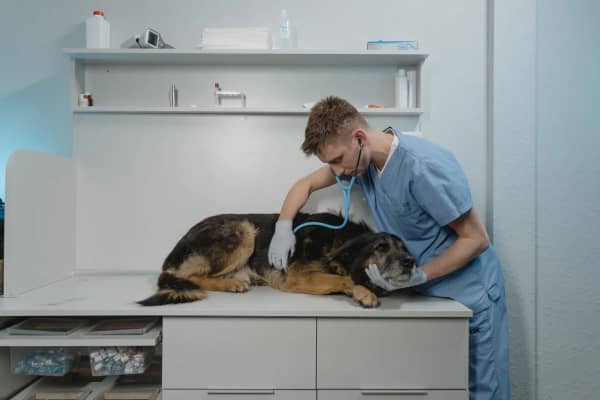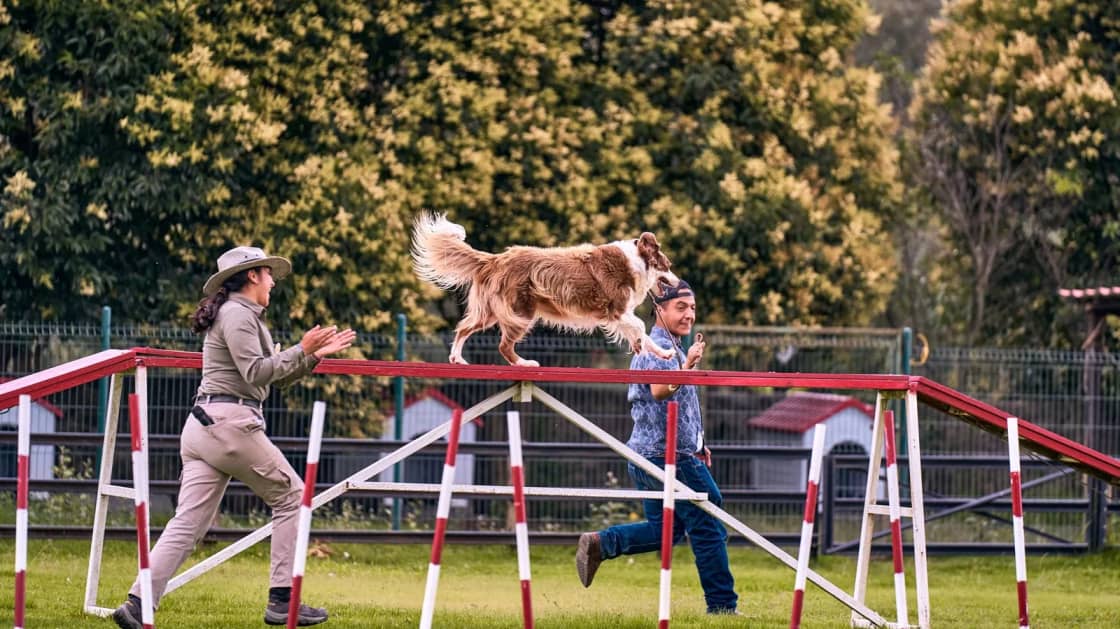

Your hairdresser needs a state license. So does your manicurist, your massage therapist, the person who installs your furnace, and the veterinary technician who holds your dog during a blood draw.
Your dog trainer does not.
Dog training is an unlicensed occupation in Utah and, with narrow exceptions, in every other state. There is no examination anyone must pass, no minimum education, no board of complaints, and no mechanism by which a person who injures a dog can be barred from advertising the same service next week under a new business name.
This is not a scandal being hidden. Trainers themselves say it bluntly — the phrase you will hear inside the profession is that the field is one hundred percent unregulated. But it puts the entire evaluation burden on you, and most Utah Valley dog owners hire a trainer without knowing it.
So the useful thing this guide can do is teach you to read the signals that do exist.
Why the vacuum exists
It is worth understanding why nobody licenses this, because the reason shapes what replaced it.
Occupational licensing typically arrives where there is a clear public safety hazard, an organized profession lobbying for it, and a body of agreed practice to examine against. Dog training has the first, arguably, and lacks the other two. The field has been split for decades over methodology, with genuine and unresolved disagreement between approaches emphasizing positive reinforcement and approaches incorporating aversive tools. There is no consensus curriculum to build a licensing exam around.
Into that vacuum stepped private certification bodies. They have no legal authority. They cannot stop anyone from working. What they can do is publish standards, test against them, and maintain a public register — which turns out to be most of what a consumer needs.
The catch is that there are a lot of them, they differ enormously in rigor, and the marketing does not distinguish.
The distinction that matters more than any single credential
Before the alphabet, learn this, because it separates meaningful credentials from decorative ones.
Some certifications are awarded by schools. Some are awarded by testing bodies.
A school certificate means you enrolled in a program, completed it, and received a document. It is a diploma. Its value equals the value of the school — which may be considerable — and it certifies that you absorbed that school's curriculum and methods.
An independent certification is issued by an organization that does no teaching. It exists to assess. It sets prerequisites, administers an examination or reviews submitted case work, and requires renewal. Because it does not sell the training, it has no commercial incentive to pass everyone.
Both categories contain good trainers. But a school certificate answers "where did you study?" and an independent certification answers "were you measured against an external standard?" Those are different questions, and a website saying only "certified dog trainer" has answered neither.
The credentials, decoded
Here is the practical field guide.
CCPDT — Certification Council for Professional Dog Trainers. Founded in 2001, historically the most recognizable independent certifying body in the United States. Its main credentials:
- CPDT-KA (Knowledge Assessed). Requires a documented minimum of three hundred hours of dog training experience within the previous three years, a passing score on an examination, and agreement to a code of ethics and a least intrusive, minimally aversive standard. Renewal roughly every three years through continuing education or re-examination. This is the closest thing the field has to a general professional credential.
- CPDT-KSA (Knowledge and Skills Assessed). Builds on the above by requiring video submissions demonstrating specific trained skills with several different dogs. It is substantially rarer — commonly reported as held by fewer than a thousand trainers.
- CBCC-KA. The council's behavior-consulting credential, aimed at complex cases rather than general obedience.
IAABC — International Association of Animal Behavior Consultants. Founded in 2004, structured differently. Its canine credentials are case-based and writing-intensive, requiring documented case work, coursework, references, and written submissions rather than a single multiple-choice examination. The CDBC designation is the relevant one and is specialized toward behavior problems — aggression, severe anxiety, phobias. Note that "IAABC member" and "IAABC-certified" are not the same claim.
KPA-CTP — Karen Pryor Academy Certified Training Partner. A school credential, from an academy founded in 2007, earned by completing a structured program of roughly six months. It reflects a specific methodological tradition centered on positive reinforcement and marker training. A KPA-CTP tells you what someone was taught and by whom — useful information, differently shaped from an exam-based credential.
CAAB and DACVB. The top of the academic and veterinary ladder. A Certified Applied Animal Behaviorist holds substantial graduate-level academic training in animal behavior. A Diplomate of the American College of Veterinary Behaviorists is a licensed veterinarian with board certification in behavior — the only category on this list that can diagnose medical conditions and prescribe medication. Both are rare, and neither functions as a general standard for ordinary training.
AKC CGC Evaluator. Frequently listed and frequently misread. This is authorization to administer the Canine Good Citizen test, not evidence of training competence. It is a role, not a qualification.
Pet Professional Guild. A membership organization organized around force-free principles rather than a competency examination. Membership signals a methodological commitment rather than an assessed skill level.
Verify, do not trust
Every credential above is verifiable. The certifying bodies maintain public registers, and looking someone up takes about two minutes.
Do it. Credential inflation is real in unregulated fields, and the letters on a website are typed by the person claiming them. A trainer who holds a credential will be entirely relaxed about you checking, and often pleased.
Two caveats to keep this fair. First, many excellent trainers hold no certification at all. In an unregulated field with a long apprenticeship tradition, that is common and is not by itself a warning sign — it simply means there is nothing external to check, so you must rely more heavily on references and on watching them work. Second, a credential is a floor, not a ceiling. It tells you someone met a standard. It does not tell you they will be good with your particular dog.
The question that reveals the most
If you ask a prospective trainer only one thing, ask this:
"What happens when my dog gets it wrong?"
Not "what methods do you use," which invites a rehearsed answer. The failure case is where methodology lives, and the answer will tell you what tools are in play, what the trainer does when a session stops going well, and whether they have thought about it at all.
Listen for specifics. A clear, comfortable, detailed answer — about resetting, about lowering criteria, about ending on something achievable, or about a correction and precisely what form it takes — indicates someone with a considered approach. Vagueness, irritation at the question, or a pivot to talking about pack leadership indicates something else.
You are entitled to know what will be done to your animal. Ask before, not after.
Two follow-ups worth adding: "May I watch a class before enrolling?" and "What does success look like at week four?" A trainer who will not let you observe is asking for unusual trust, and a trainer who cannot describe an intermediate milestone may not have a plan beyond showing up.
Choosing a format
The format matters as much as the trainer, and cost tracks it closely.
Group classes are the least expensive per hour and are the right answer for most ordinary goals — basic manners, puppy socialization, loose-leash walking. The distractions in a room full of other dogs are a feature, since a dog that only behaves in a silent kitchen has not learned much. They are a poor fit for a dog that is fearful or reactive, where a class environment can make things actively worse.
Private sessions, typically in your home, cost considerably more per hour and buy customization. This is the right choice for household-specific problems: door manners, resource guarding between a dog and a toddler, a dog that is fine outside and impossible inside. The trainer sees the actual environment, which is often diagnostic on its own.
Board-and-train is the most expensive and the highest-risk format. The dog lives with the trainer for a period and comes back trained, which is an appealing proposition for a busy family. The structural problem is that you are absent for all of it: you cannot see the methods, cannot evaluate the handling, and cannot intervene. There is also a transfer problem, because behavior learned in the trainer's environment with the trainer's timing does not automatically move to your house with your timing.
Board-and-train can be done well. If you use it, visit the facility in person before booking, ask where the dogs sleep and how many hours a day they are worked, ask the failure-case question above with particular care, and insist on multiple handover sessions in which you are trained. A program that returns the dog with a fifteen-minute demonstration is selling you a temporary result.
The methodology argument, stated fairly
You will encounter this within about ten minutes of researching trainers, usually in the form of one trainer disparaging another's approach, so it is worth understanding what the disagreement is.
Broadly, one camp works primarily through positive reinforcement — rewarding behavior you want, managing the environment so unwanted behavior is hard to practice, and avoiding tools that work by discomfort. Several certifying bodies formalise this. The CCPDT's standard of practice is framed around being least intrusive and minimally aversive, and organizations like the Pet Professional Guild are built explicitly on force-free principles.
The other camp, usually self-described as balanced, uses reinforcement as the primary engine but incorporates corrections, which may include tools such as prong or electronic collars, particularly for behaviors deemed safety-critical.
The honest summary of where this stands: the weight of professional and veterinary opinion has moved substantially toward reward-based methods over the past two decades, and the major certifying bodies reflect that. Concerns about aversive tools center on fallout — that discomfort suppresses the visible behavior while potentially increasing fear or aggression, and that a dog that stops growling has not stopped being uncomfortable, it has stopped warning you.
Trainers using balanced methods respond that tools are being caricatured, that skilled application differs from clumsy application, and that some cases involve real safety stakes.
You do not have to resolve this. You do have to know it exists, know which side the trainer you are considering sits on, and know that "balanced" is a methodological label rather than a neutral description. Ask directly which tools might be used on your dog and under what circumstances, and get the answer before the first session rather than discovering it in one.
Puppies, and the window that does not wait
If you have a puppy, timing matters more than trainer selection, and this is the single most consequential paragraph in this guide for you.
Puppies have a limited early developmental period during which new experiences are absorbed comparatively easily and after which novelty becomes considerably harder to accept. Socialization during that window — controlled, positive exposure to people, surfaces, sounds, handling, and other dogs — is a genuine investment in the adult dog's temperament, and it cannot be made up later at the same price.
The practical tension is that the window overlaps with the vaccination schedule, which is why the question "when can I take my puppy out?" is more nuanced than it appears. Veterinary guidance has generally moved toward starting socialization before the vaccination series is complete, using controlled settings rather than dog parks and public sidewalks, because behavioral problems are a more common cause of dogs being surrendered than infectious disease is. Ask your veterinarian how to thread that specifically, since the answer depends on local conditions and your puppy's status.
For Utah Valley, this has one seasonal consequence worth naming. A puppy that comes home in November hits its socialization window during inversion season and deep cold, when outdoor exposure is limited and everyone is indoors. Well-run indoor puppy classes are the standard answer, and they book up. If you are getting a winter puppy, arrange that in advance rather than in January.
The local layer
A few things are specific to doing this in Utah Valley.
Weather compresses the calendar. Outdoor group classes cluster in spring and autumn for good reason. Summer afternoons here get hot enough that asphalt burns paw pads, and the inversion season brings air quality bad enough that strenuous outdoor work is a poor idea for a dog as well as a person. Indoor facilities and early mornings absorb the difference. If you are adopting a puppy, the socialization window will not wait for pleasant weather, so plan around the season you have.
Apartment life shapes the problem set. Utah Valley has an unusually high concentration of dense student and young-family housing, which means barking, door reactivity, and elevator or stairwell encounters are the recurring complaints rather than recall in an open field. If you are renting, check your lease and your city's nuisance ordinance before the problem arrives — our guide to pet-friendly apartments in Provo covers the housing side.
Licensing and leash rules are municipal, not county-wide. Provo, Orem, Lehi, and the smaller cities each set their own animal ordinances, and requirements and fees are revised periodically. Check your own city's current animal services information rather than relying on a friend's account from a different city.
Practice space is a real constraint. Training needs graduated distraction, and Utah Valley's parks and trails supply it — but off-leash access, seasonal closures, and trail rules vary by location. Our guide to dog parks and pet life in Provo covers where the options are.
When it is not a training problem
Some things trainers should not be the first call for.
Sudden behavior change in a previously settled dog is a veterinary question before it is a training question. Pain, thyroid disorders, neurological conditions, and declining eyesight or hearing all present as behavior. A behavior plan built on an undiagnosed medical cause will not hold, and the dog is uncomfortable throughout.
Genuine aggression — bites, or credible threats to people or other animals — warrants a behavior-specific credential rather than a general obedience trainer, and often a veterinary behaviorist who can consider medication alongside behavior modification. This is also a liability question, and it does not improve by waiting.
Severe separation distress is a recognized behavior condition rather than disobedience, and it responds poorly to general obedience work.
Start with your vet in all three cases. A good trainer will tell you the same thing, and the willingness to refer out is one of the better signals of competence available.
The bottom line
Nobody is checking. That is the fact this whole guide rests on, and it is not a reason for alarm — it is a reason to do the twenty minutes of work the state does not do for you.
Learn the difference between a school certificate and an independent certification. Verify letters in the issuing body's public register rather than trusting a website. Ask what happens when your dog gets it wrong, and listen to how the answer is delivered as much as what it contains. Watch a class before you pay for a course. And route medical and aggression cases to a veterinarian first.
Do that, and the absence of a licensing board stops being a hazard and becomes what it is: a gap you can close yourself, for free, before you hand anyone your dog.
Related Guides
- Dog Parks & Pet Life in Provo
- Dog Boarding in Provo
- Dog Grooming in Provo
- Pet-Friendly Apartments in Provo
- Moving to Provo
- Cost of Living in Provo
- Things to Do in Utah Valley With Your Dog
Frequently Asked Questions
Do dog trainers need a license in Utah?
What does CPDT-KA mean?
Is a certification from a training school the same as a certification?
Is 'behaviorist' a protected title?
How much does dog training cost in Utah Valley?
Does Provo require a dog license?
Is board-and-train a good idea?
What if my dog is aggressive rather than untrained?
Sources
The facts in this guide were checked against these sources. Hours, fees and rules change, so confirm anything time-sensitive with the source before you go. How we make Provo.com.
- About the Certification Council for Professional Dog Trainers, CCPDT. Checked October 12, 2026.