
There is a specific hour in Utah Valley when the pet-care map goes blank, and most people discover it while holding a sick animal.
The county's long-standing after-hours clinic, Pet Urgent Care in Orem, posts its hours on its own website: Monday through Sunday, 6 p.m. to midnight. Major holidays vary.
Midnight. Not 8 a.m.
That matters because several third-party listings still say otherwise. A veterinary practice referral page in Provo shows the same clinic open weeknights from 6 p.m. through to 8 a.m., and continuously from Friday evening to Monday morning. A regional pet-guide site shows a third arrangement again — 4 p.m. to 10 p.m. on Mondays and Fridays, 6 p.m. to midnight midweek.
Three sources, three answers. The operator's own page is the one that counts, and it says midnight.
Why this particular error is worth an article
Stale hours on a directory listing are normally a minor annoyance. You drive to a closed shop and go home irritated.
The consequence here is different. A dog that has been hit by a car at 2 a.m., a cat that cannot urinate, a poisoning that started an hour ago — these are situations where the drive to a locked door costs the thing you cannot get back. And the people most likely to rely on a stale listing are the ones who have never needed emergency care before and are searching for the first time, at speed, at night.
The site's standing rule applies with unusual force here: for anything where arriving at a closed building has real consequences, read the operator's own page rather than a directory. Aggregators copy each other, and a wrong number replicates faster than a correction does.
Where the round-the-clock hospitals are
If your emergency lands after midnight, the hospitals advertising genuine twenty-four-hour staffing are in Salt Lake County. Veterinary Emergency Group operates a location in Sandy that states it is open twenty-four hours a day, seven days a week including holidays, takes walk-ins without appointments, and specifically describes itself as accessible from Provo. Other 24/7 emergency and specialty hospitals operate in the Salt Lake valley, including in Midvale and Millcreek.
From central Provo that is broadly a forty-minute drive up I-15 in clear conditions, longer in snow, and longer again if you are trying to navigate while someone holds a distressed animal.
Plan the route now. Put one of these addresses in your phone's maps app as a saved location tonight, the way you would with a hospital, because the moment you need it is the worst possible moment to be comparison-shopping.
Call while somebody else drives
The Orem clinic makes two statements on its own site that change how you should approach it.
The first: it makes every effort to open at posted times, but there will be occasions when it cannot. The second, and the more important one: due to caseload it may stop taking patients early.
So the posted midnight closing is a ceiling, not a guarantee. A phone call — (801) 765-1010 — confirms they are open and accepting, lets them prepare for what is coming through the door, and gets you triage advice for the drive. Two people means one drives and one calls. Alone with a critical animal, drive, and call hands-free.
The emergencies that get underestimated
Owners are generally good at recognizing blood and bad at recognizing the quiet ones.
The list that should produce an immediate drive: labored or open-mouthed breathing, collapse, seizures, suspected poisoning, a deep-chested dog with a distended abdomen retching without producing anything, straining to urinate without result, uncontrolled bleeding, major trauma, a stalled labor, and heatstroke.
Two deserve emphasis because they are routinely misread. Breathing difficulty in cats is subtle and often mistaken for hairball trouble. And a male cat straining in the litter tray looks like constipation and is frequently a urinary blockage, which is a genuine emergency that can become fatal within a day.
Heatstroke earns its own note locally. Utah Valley summers regularly push well past ninety, the humidity is low enough that people underestimate the load, and pavement holds heat long after the air has cooled. A dog left in a car here in July is in danger in minutes.
Poisoning: the clock starts before the symptoms
With many toxins, the treatment window closes before any sign appears. Waiting to see whether your dog seems unwell after eating something is the wrong instinct.
Call immediately, with three pieces of information ready: what it was, roughly how much, and how long ago. Keep the packaging or a sample of the plant.
Do not induce vomiting on your own initiative. For corrosive substances and petroleum products it causes a second injury on the way back up, and the home remedies circulating online are frequently dangerous. Wait for instruction from a veterinary professional.
Animal poison control hotlines operate around the clock and charge a consultation fee. That fee is generally worth paying: it buys a toxicologist's assessment and a case number that your treating clinic can reference, which speeds up everything that happens next.
What after-hours care costs, and how to talk about it
Emergency veterinary care is expensive in a way that catches people off guard, and the moment of maximum distress is the worst possible time to encounter the number for the first time.
An after-hours examination fee alone sits well above a routine daytime consultation, and that is before diagnostics. Imaging, in-house bloodwork, fluids, hospitalization, anaesthesia and surgery each add materially. A single overnight stay with supportive care can reach a figure that reshapes a month's budget.
Two practical moves. Ask for a written estimate before treatment begins — a reputable clinic offers one unprompted, and asking is normal rather than rude. And decide your ceiling before you are standing at the counter, because deciding it there, with a frightened animal in the back, is not really deciding.
The Orem clinic advertises payment plans through Scratchpay and CareCredit. Both are third-party financing products with their own approval criteria and interest terms, not clinic discounts. They can bridge a genuine gap; read what you are signing.
Three tiers of care, and why the names mislead
The words on the sign do not map cleanly onto what a building can do, and the distinction matters when you are choosing where to drive.
A general practice is your regular vet: routine examinations, vaccinations, dentistry, straightforward surgery, chronic disease management, and the relationship that underpins everything else. Open business hours. Many will fit an urgent case in during the day if you are an existing client and you call rather than turn up.
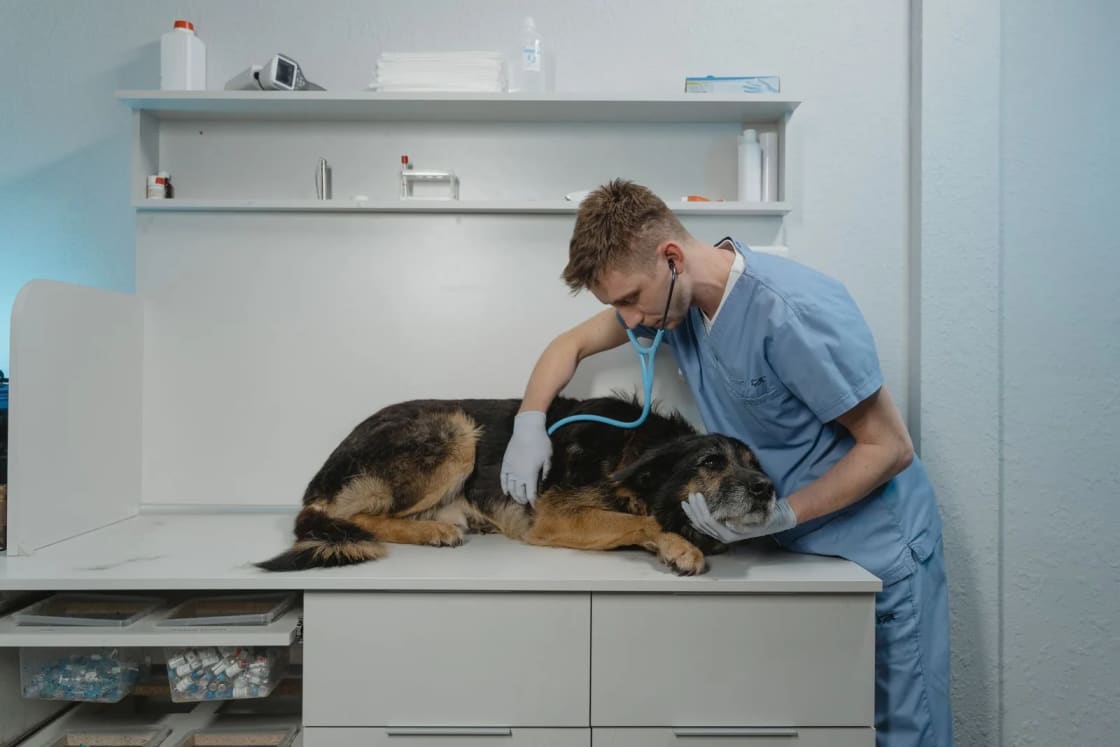
An urgent care clinic covers the hours when general practices are closed and handles cases that need attention tonight but not a specialist. Diagnostics, stabilization, straightforward emergency surgery. Pet Urgent Care in Orem describes exactly this scope — digital radiography, in-house lab work, a surgical suite and a pharmacy — and it is capable within it.
A 24-hour emergency and specialty hospital adds overnight monitoring plus board-certified specialists in fields like cardiology, internal medicine, neurology, oncology, ophthalmology and surgery. The critical addition is continuous care: an animal that needs somebody watching it at 4 a.m. needs a hospital that has somebody there at 4 a.m.
The failure mode is assuming "urgent care" means "hospital". It does not. A pet requiring overnight intensive support has to go where overnight support exists, and in this region that means north.
Waiting rooms, triage and the thing that feels like being ignored
Emergency clinics take patients by severity, not by arrival order. Pet Urgent Care states it directly: cases are seen on a first-come or severity basis, and a critical or life-threatening arrival can take precedence over an animal that was already waiting.
This produces the most common complaint about emergency veterinary care and the most understandable one. You arrived first. Somebody who arrived twenty minutes ago went in ahead of you. Nobody has explained why.
Reframe it, because the information is useful: a long wait usually means your pet has been triaged as stable. That is good news wearing the costume of bad news. The animals going in ahead of you are the ones in the worst trouble, which on a different night would be yours.
What you should do is tell the front desk the moment anything changes — breathing worsening, gums going pale, responsiveness dropping, a collapse. Staff cannot see into the waiting room continuously, and a deterioration re-triages the case. Speaking up is not queue-jumping; it is supplying the information the system runs on.
End-of-life decisions, and making them somewhere other than a waiting room
Euthanasia is among the most common reasons people visit an emergency clinic at night, and it is the decision least suited to being made at midnight under fluorescent light in front of a stranger.
For an aged or terminally ill animal, the conversation belongs with your regular vet, in daylight, before the crisis. What deterioration looks like for this specific condition. What pain looks like in this specific species — cats in particular conceal it well. What your threshold is. Whether in-home euthanasia is available, which several practices in the valley offer and which is considerably gentler for a cat that finds car travel terrifying.
Having had that conversation does not make the night easier. It does mean you are executing a decision you already reached rather than improvising one while distressed, and the difference in how people feel about it afterward is substantial.
Emergency clinics handle this with more care than their setting suggests, and staff will generally give you time with your animal before, during and after. You are permitted to ask for that time. Ask about aftercare options too — burial, individual cremation, communal cremation — because the choice is usually presented once, quickly, at the worst moment.
Pet insurance, considered honestly
Insurance is the mechanism most likely to change the arithmetic of a bad night, and it is close to useless bought during one.
Every policy excludes pre-existing conditions, which means the value of a policy is set entirely by how early you buy it. Waiting periods apply after purchase. Coverage of hereditary and breed-specific conditions varies enormously between providers, which matters in a valley where certain breeds are extremely popular.
The question worth asking is not whether insurance pays out more than it costs on average — for most policyholders it does not, that being how insurance works. The question is whether an unexpected four-figure bill would force you into a decision you would regret. If the answer is yes, the product is doing its job.
Choosing a regular vet before you need one
The single highest-value thing in this entire article: register with a practice while nothing is wrong.
A pet with an established file at a local practice gets faster and better care in a crisis, because somebody has already examined the animal, taken a history, and recorded a baseline. An unknown animal arriving at midnight is starting from zero.
Questions worth asking a prospective practice:
- What happens after hours, and where do you send emergencies?
- Do you handle your own urgent cases during business hours, or refer?
- Where do surgical and specialist cases go?
- How do you handle records transfer if I move?
- What are your payment terms, and do you require payment at time of service?
A practice that answers those clearly and without irritation is showing you how the difficult night will go. One that is vague is also telling you something.
Pet Urgent Care states that it works with many general practices in the valley and transfers records back to your regular vet — which only functions if you have a regular vet for records to go back to.
Cost of routine care, and where it can be reduced
Vaccination clinics, low-cost spay and neuter programs and shelter-run services exist across Utah County and cost considerably less than a full-service practice for the same procedure. They are a legitimate option for healthy animals needing routine work.
What they do not provide is continuity. A vaccination clinic does not know your dog. For anything diagnostic, chronic or surgical, the relationship is the product you are buying.
The underrated cost saver is dental care, which owners skip for years because the anaesthetic makes it feel optional. Untreated periodontal disease routinely turns into extractions that cost several times what maintenance would have.
Large animals, exotics and everything that is not a dog or cat
Utah County still has a substantial rural belt, and equine and livestock veterinary work is a distinct field with distinct practitioners. A small-animal clinic cannot treat a horse.
Exotics are a similar problem in the opposite direction. Rabbits, reptiles, birds and small mammals require specific expertise, and a practice that is excellent with dogs may tell you it does not see rabbits. Some emergency hospitals do accept exotics — the Sandy 24-hour location specifically lists birds, reptiles and other exotic pets — but do not assume it.
Find this out before the emergency. "Which vet in this valley sees rabbits?" is a much easier question on a Tuesday afternoon than at 11 p.m.
What to have ready before the bad night
A short list, assembled in advance, that meaningfully improves outcomes:
- Your regular vet's number and address, saved in your phone
- The after-hours clinic's number and address, saved separately
- A 24-hour hospital in Salt Lake County, saved as a route
- An animal poison control number
- Your pet's medications, doses and known conditions, written down
- Microchip number and registration details, kept current
- A carrier or crate that is accessible rather than buried in a garage
- A decision, made calmly, about your financial ceiling
The carrier one sounds trivial and is not. Getting a panicking cat into a carrier you had to excavate first, in the dark, adds ten minutes at exactly the wrong time.
The one-line version
Utah Valley has good veterinary care and a hole in the middle of the night. Your after-hours option in the county closes at midnight by its own posting; anything later means Salt Lake County. Register with a practice now, save the numbers now, and call before you drive.
Hours and services change, and clinics open and close. Everything here reflects what operators published at the time of writing — check the clinic's own page before you rely on it.
Related Guides
- Dog Parks & Pet Life in Provo
- Pet-Friendly Apartments in Provo
- Urgent Care or the ER? Where to Go in Provo & Orem
- Healthcare in Provo
- Cost of Living in Provo
- Adopting a Pet in Utah County
- Yoga in Provo: Nobody Licenses Your Teacher, and the Studio May Owe You a Bond
- Homeless Resources in Utah County: Where to Get Help, and How to Help
- Nails & Lashes in Provo: Salons, Student Rates & What to Ask
- Provo Weather by Month: Seasons, Snow, Inversion & the Best Time to Visit (2026)
- Dog Boarding and Daycare in Utah Valley: What to Ask Before You Leave the Dog
Frequently Asked Questions
Is there a 24-hour emergency vet in Utah County?
Why do listings show the Orem clinic open until 8 a.m.?
What counts as a genuine pet emergency?
How much does an emergency vet visit cost in Utah Valley?
Should I call ahead or just drive?
How do emergency clinics decide who gets seen first?
How do I choose a regular vet before an emergency happens?
What should I do if my pet eats something toxic?
Sources
The facts in this guide were checked against these sources. Hours, fees and rules change, so confirm anything time-sensitive with the source before you go. How we make Provo.com.
- Pet Urgent Care, Pet Urgent Care (Orem). Checked October 12, 2026.