
You can look up a Provo locksmith's city license. You can verify a contractor with the state. You can check whether a restaurant passed its last health inspection.
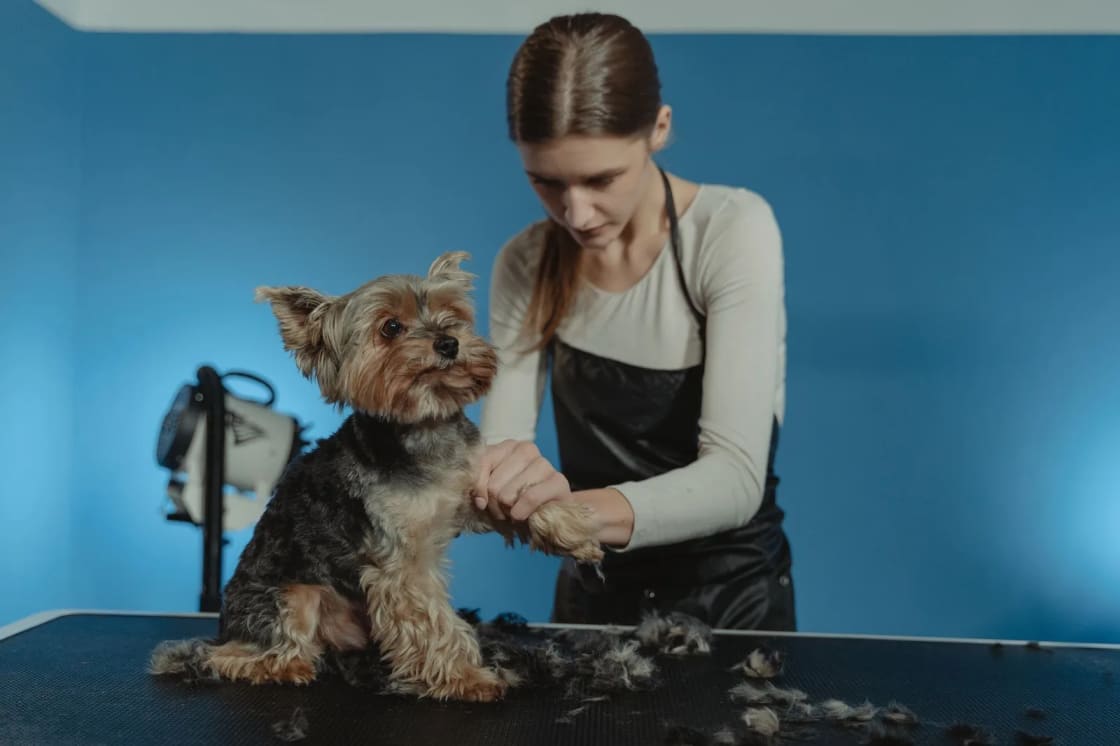
You cannot do any of that for the person who is about to put your dog on a table with a pair of clippers and a dryer.
Utah has no grooming license. No examination, no state registry, no inspection regime, no board taking complaints. Anyone may open a grooming business tomorrow with a city business license and a set of shears. That is not a scandal — most states are the same, and plenty of superb groomers have never held a credential in their lives. But it does mean that the vetting is entirely yours, and that the questions you ask are doing all the work a licensing board would otherwise do.
What Provo's animal code does and does not cover
Provo's Title 8 governs animal control, and it is worth understanding precisely what it reaches.
Chapter 8.05 covers kennels. Section 8.05.010 states that no person may operate or maintain a dog or cat kennel without first obtaining a permit from the office of animal control, on forms that office provides. Section 8.05.040 defines a kennel as premises where more than two dogs or two cats are raised, kept, housed, boarded or engaged in the commercial business of breeding — with a sensible carve-out for an unplanned litter, so long as the household returns to two or fewer within four months of the birth.
Two things follow, and only one of them is clean.
The clean one: in Provo, more than two dogs is a kennel, and a kennel needs a permit. That is a useful number for any household considering a third dog, and it surprises people regularly.
The unclear one: whether a day-use grooming salon is captured by "kept, housed, boarded." A salon holding four dogs on a Tuesday morning is not boarding them, but it is arguably keeping them. The chapter reads throughout as though it was written with boarding facilities and breeding operations in view, and it does not mention grooming anywhere. We are not going to resolve that here, because the text does not resolve it. If the answer matters to you — because you are opening a salon, or because you want to know what oversight applies to one — Provo Animal Control is the office that administers the chapter, and their reading is the one that counts.
What you should not conclude is that a grooming salon has been inspected and approved by someone. In all likelihood, nobody has looked.
Certification exists, but you have to ask for it
Voluntary certification is real. National trade organizations run testing programs where a groomer's practical work is assessed by other groomers across breed patterns, and some salons put their staff through them. Others run structured apprenticeships, which in a hands-on trade is frequently worth more than a certificate.
Neither is required and neither is a guarantee. What they signal is that someone chose to be measured against a standard when nothing compelled them to, and that is worth something in an unregulated trade.
Ask directly: where did you train, how long have you been grooming, do you hold any certification, and who else works on the animals. Then ask about the specific thing that matters more than any of it — pet first aid and CPR training, which is common among careful groomers and rare among careless ones.
The drying question
If you ask one safety question, make it this one.
Heat plus a confined space plus an animal that cannot leave is the combination behind the grooming industry's worst incidents. Heated cage dryers — units that blow warmed air into an enclosed crate — have caused serious injuries and deaths, and the risk concentrates in the case where a dog is left unattended and nobody notices the crate is too hot for too long.
The industry has largely moved. Many salons now use ambient-temperature dryers, hand drying with a high-velocity dryer while the dog is on the table, or a hard rule that a dog under any dryer is never left alone.
So ask: are your dryers heated, and is a dog ever left unattended under one? Any groomer who takes safety seriously will have an immediate, specific answer and will not be offended. Vagueness is the signal.
The follow-on questions are of the same shape. What happens if a dog panics on the table. Whether dogs are ever left alone on a table with a grooming loop attached. What their protocol is if an animal is nicked, which happens even to excellent groomers working on a squirming dog. The answer you want is: we stop, we tell you, we show you.
Utah Valley changes the coat
Grooming advice from a humid climate transfers badly to a valley this dry, and a few local realities matter.
Dry air and skin. Low humidity through much of the year means dry skin and static-prone coats, and it makes over-bathing more consequential than it would be elsewhere. Stripping natural oils from a coat is easier here and shows faster. A groomer who asks about your dog's skin before choosing a shampoo is paying attention.
Grass awns. Cheatgrass and other awned grasses are everywhere in this valley, and their seeds are barbed to travel one direction only. They lodge between toes, in ear canals, under armpits and occasionally up a nose, and once embedded they migrate inward rather than working their way out. Any dog walking the foothills, the river trail or an unmaintained field between roughly June and the first hard frost should get checked, and a thorough groom is when that check naturally happens. Ask your groomer to look, especially between the pads.
Winter paws. Snow balls up in the fur between pads and freezes into hard clumps that hurt, and ice melt on sidewalks and complex walkways irritates skin and gets licked off. A trim of the fur between the pads through winter solves most of it, and a rinse of the feet after a walk on treated pavement solves most of the rest.
Sun. At this elevation, sun exposure on a shaved or thin-coated dog is not theoretical. It is another reason clipping a double coat down in July can make things worse rather than better.
For the outdoor hazard that has nothing to do with grooming but can kill a dog in a day — harmful algal blooms on Utah Lake in late summer — our dog parks and pet life guide covers the advisory system and why the water's appearance is a misleading guide.
The double-coat conversation
This is the most common serious mistake made in good faith.
Double-coated breeds — huskies, malamutes, German shepherds, golden retrievers, Australian shepherds, corgis, chows and many mixes carrying their genetics — grow a dense insulating undercoat beneath a coarser layer of guard hairs. The system works in both directions: it traps warm air in winter and it holds a buffer of cooler air and blocks sun in summer. It is not a coat, it is a structure.
Shaving removes the guard coat. What grows back is frequently not what was there before — patchy, woolly, a different texture, sometimes indefinitely. The dog is left with less sun protection and no meaningful gain in cooling, because dogs shed heat mainly by panting rather than through the skin.
The right move in a hot Utah summer is a deshed: bath, thorough undercoat removal, and blow-out of everything loose so air moves freely through what remains. It takes longer than a clip and it is worth every minute. A dog carrying a winter's worth of dead undercoat in July is hot; the same dog properly deshed is fine.
There are real exceptions — severe matting, a medical reason, a specific veterinary instruction — and a good groomer will name them rather than treating a shave-down as a default. If a salon quotes a summer shave for a husky without any discussion, find another salon.
Matting, honestly
Matting is where owner expectations and animal welfare collide most often.
A mat is hair felted against itself, and once it is tight it pulls on the skin continuously, every time the dog moves. Underneath a long-standing mat you can find irritated skin, sores, or trapped moisture. Brushing out severe matting is not a matter of patience; it is hours of dragging a comb through hair that is anchored to a living animal.
The humane answer is usually to clip beneath the matting, accept a short coat for a few months, and then rebuild with a shorter interval between grooms and a real brushing routine at home. Good groomers say this plainly and charge for the extra time and blade wear, because shaving through matting destroys blades.
Ask about the policy before you book, not when you arrive. And if you are told severe matting can be brushed out quickly at no extra charge, that is not a bargain — it is either untrue or it is going to be unpleasant for your dog.
Choosing a format
Salons are the standard: fixed location, full equipment, multiple staff, usually the widest range of services. Dogs typically stay for a few hours, which means crate time between stages.
Mobile grooming brings a self-contained van to your door. It is a different experience for the animal — no crate, no other dogs, one person start to finish — and for anxious dogs, reactive dogs and seniors it is often the difference between a tolerable appointment and an ordeal. It books further ahead and costs more, and it is worth it for the right dog. Parking is the wrinkle in dense Provo housing; check what the van needs before the first visit.
Self-serve dog washes solve a narrow but real problem: a big dog, a muddy trail, and a bathtub you do not want to use. Raised tubs, provided shampoo, dryers and someone else cleaning the drain. Not grooming, but the right tool after a canyon hike.
Veterinary grooming matters for dogs who need sedation to be handled safely — some seniors, some dogs with pain conditions, some with a history of trauma. If a regular salon has told you they cannot safely groom your dog, that is the honest answer, and a veterinary setting is the next step rather than a different salon willing to try.
The first appointment
Book a meet-and-greet if the salon offers one. Ten minutes in the space tells you what a website cannot: whether it smells clean, whether the dogs present seem settled, whether staff handle animals calmly.
Bring vaccination records. Most groomers require rabies and many ask for distemper and bordetella. Your rabies paperwork is also connected to Provo's dog licensing requirement, which is separate and which our dog parks and pet life guide covers.
Be specific and realistic about what you want. Photographs help far more than breed-pattern names, and a groomer who tells you your dog's coat will not do the thing in the photograph is being useful rather than difficult.
Say the true things about your dog. Ear sensitivity, a bad history with nail trims, arthritis, resource guarding, a tendency to snap when startled. A groomer who knows works around it. A groomer who is surprised by it gets bitten, and your dog gets a worse experience and possibly a note in the file.
Start puppies early — after the vaccination series is far enough along that your veterinarian agrees, with a short introductory visit that is mostly handling, a bath and nails. The goal of a puppy's first grooms is not a haircut. It is teaching a dog that the table is boring.
Reading the price
Nobody quotes grooming from a fixed menu, and the reason is legitimate: the same breed at the same weight can be a routine hour or a difficult three depending on coat condition and temperament.
Expect price to move with size, coat type and length, matting, behavior and any add-ons — deshed treatments, teeth brushing, medicated baths, nail grinding rather than clipping. Expect a matted dog to cost more than a maintained one, and understand that this is a time charge rather than a penalty.
Ask what the quote includes and what would change it. And treat a quote given over the phone for a dog nobody has seen as an estimate, because that is what it is.
Red flags
You cannot see most of a grooming operation, so weigh what you can.
Reluctance to answer the drying question. No willingness to let you see the working area at any time. A dismissive answer about matting policy. Pressure toward a shave-down without discussion. No vaccination requirement at all, which tells you what the other dogs in the building are. Dogs left alone under running dryers. An unwillingness to say who specifically will be working on your animal.
And the human one: a groomer who talks about dogs the way someone talks about parcels. This is a trade where care is the entire product.
Where grooming stops and veterinary medicine starts
Grooming is not a licensed occupation in Utah, and that is the right answer to the licensing question. But it is only half the picture, because the absence of a grooming license does not mean a groomer may do anything. There is a line, it is drawn by statute, and it sits closer to the grooming table than most owners assume.
The Veterinary Practice Act, Title 58 Chapter 28, defines the protected activity
at Utah Code § 58-28-102(11). The practice of veterinary medicine, surgery and
dentistry means, among other things, to diagnose, prognose, or treat any
disease, defect, deformity, wound, injury, or physical condition of any animal;
to administer, prescribe or dispense any drug, medicine, treatment, method or
practice, or apply any apparatus or appliance for the cure, relief or correction
of any animal disease, deformity, defect, wound or injury; to represent by any
means that one is qualified to practice veterinary medicine; or to use the title
veterinary, veterinarian, animal doctor or animal surgeon, or any
designation tending to indicate such qualification.
Read that against what happens on a normal grooming appointment and the boundary becomes usable. Bathing, clipping, de-shedding, nail trimming and ear cleaning are not the diagnosis or treatment of a disease or defect. Telling you that the hot spot on your dog's flank is a yeast infection, and selling you something to put on it, is. So is expressing an abscess, medicating an ear, or working on a mat that has broken the skin. A good groomer will stop, show you, and tell you to call a vet — and that is not caution, it is the statute.
Three adjacent services turn up on grooming price lists in this valley, and each
has an explicit statutory threshold under § 58-28-307(12), the exemptions
section. They are worth knowing before you buy any of them as an add-on.
Animal massage is exempt from the Veterinary Practice Act only where the individual has completed at least 60 hours of animal massage therapy training in areas the division specifies by rule. No veterinary referral is required, but the training floor is real and it is a fair question to ask.
Animal physical therapy is exempt only where it is performed by a physical therapist licensed under Title 58 Chapter 24b who has completed at least 100 hours of division-approved animal physical therapy training including quadruped anatomy and hands-on work — and only upon written referral by a licensed veterinarian. Both conditions apply. A "canine rehab" service without a licensed human PT behind it and a written vet referral does not fit the exemption.
Animal chiropractic is exempt only where performed by a chiropractic physician licensed under Title 58 Chapter 73 certified by the American Veterinary Chiropractic Association. Again, a specific human license plus a specific certification.
Two more exemptions are worth knowing because they explain things owners see.
§ 58-28-307(1) lets you practice veterinary medicine on your own animal,
which is why home care is lawful — but the subsection expressly withdraws the
exemption for administering, dispensing or prescribing a prescription drug, or a
non-prescription drug intended for off-label use, unless it comes through an
existing veterinarian-patient relationship. And § 58-28-307(14) permits an
animal shelter employee acting under the indirect supervision of a licensed
veterinarian to perform euthanasia in the course of employment, and to administer
a rabies vaccine to a shelter animal where the supervising veterinarian is under
contract with the shelter.
None of this means a groomer needs a credential. It means the credentialing question is the wrong one. What protects your dog is the shop's willingness to say no — to refuse a matted senior it cannot safely handle, to stop when it finds something under the coat, and to hand you a phone number instead of a product. When you are choosing between shops, ask what they do when they find a lump, a hot spot or an ear that smells wrong. The answer separates the good ones faster than any list of certificates on the wall.
Related guides
- Nails & Lashes in Provo: Salons, Student Rates & What to Ask
- Yoga in Provo: Nobody Licenses Your Teacher, and the Studio May Owe You a Bond
- Tattoo & Piercing in Provo: Shops, Utah Law & What to Check First
- Provo ZIP Codes, Explained: Why There Are Six and Only Three Are Places
- Phone & Computer Repair in Provo: Who Fixes What, and When Not To
- Power Outages in Provo: The City Would Rather You Didn't Call — Except When It Really Wants You To
- The Fault Under Utah Valley: What the Forecast Actually Says, and What It Leaves Out
- Salons & Barbershops in Provo: Where to Get a Haircut
- Dry Cleaning & Alterations in Provo: Suits, Missions & Wedding Deadlines
- Dog Boarding and Daycare in Utah Valley: What to Ask Before You Leave the Dog
- Getting a Passport in Utah County: Two Payments, One Building, and the Check Nobody Brings
- Dog Training in Utah Valley Dog parks and pet life in Provo covers licensing, shelters, veterinary care and the off-leash situation, and hiring home pros in Utah Valley covers the general shape of vetting a service business when the state is not doing it for you.
The short answer
There is no license, so ask questions instead. Are the dryers heated and is a dog ever left alone under one. What happens if my dog panics. What is your matting policy. Where did you train. Can I see the back.
Then two things specific to this valley: do not let anyone shave a double-coated dog in July without a real reason, and have someone check between the toes for grass awns from June until it freezes.
Everything else is preference. Those are the parts that go wrong.
Frequently Asked Questions
Do dog groomers need a license in Utah?
Does Provo regulate grooming salons?
How many dogs can I keep in Provo before I need a permit?
Should I shave my husky or golden retriever in summer?
What should I ask about drying?
My dog is badly matted. What will happen?
How often does my dog need grooming?
Do groomers require vaccinations?
Sources
The facts in this guide were checked against these sources. Hours, fees and rules change, so confirm anything time-sensitive with the source before you go. How we make Provo.com.
- Animal License | Provo, UT, Provo City. Checked October 12, 2026.
- Animal Control | Provo, UT, Provo City. Checked October 12, 2026.
- Utah Code 58-28-307: Exemptions from licensure (Veterinary Practice Act), Utah State Legislature. Checked October 12, 2026.