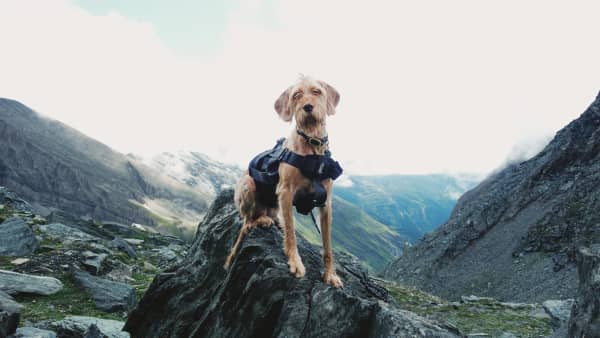
Utah Valley is a dog place. You see them on the Provo River Parkway at dawn, on the Y trail in the heat of a summer afternoon, in the back of pickup trucks headed up the canyons and at the trailheads on a Saturday morning. What surprises newcomers is how specific the local rules are, and how often the rules people repeat are wrong in both directions.
Two myths do most of the damage. The first is that dogs are banned from Utah County's canyons because they are watershed. They are not; that ban belongs to Salt Lake County's protected canyons, and Utah County's canyons generally welcome leashed dogs. The second is that a nice day means a restaurant patio with your dog under the table. In Provo, a city code section says otherwise. This guide sorts out both, then covers the trails, Provo's single off-leash park, the water hazard that is dangerous to dogs, licensing, seasonal risks and a few good dog days out.
The Rules in One Minute
If you read nothing else, read this.
- Canyons: Utah County's canyons, including American Fork, Provo and Rock canyons, generally allow leashed dogs. The famous watershed ban applies to Salt Lake County's protected canyons.
- City parks: In Provo, dogs are allowed in every city park on a leash.
- Off-leash: Provo has exactly one off-leash area, the dog park inside Bicentennial Park.
- National Forest: The leash rule is looser on the forest, but dogs must be leashed in developed sites such as trailheads, campgrounds and reservoir areas.
- Food businesses: Provo's code keeps animals out of and away from places that sell or display food, which reaches the patio. Service animals are exempt.
- License: Provo requires a license for dogs over three months old.
- Water: Utah Lake's harmful algal blooms, mostly in late summer and early fall, can kill a dog.
The Watershed Myth, Sorted
Ask around Utah Valley whether you can take a dog up a canyon and you will often hear a confident no: it is watershed, dogs are banned, and it is a serious offense. That answer is right about the wrong county.
The strict watershed dog ban applies to Salt Lake County's protected canyons: Big Cottonwood, Little Cottonwood, City Creek above the treatment plant, and Parleys north and east of Mountain Dell. There, dogs are not permitted even inside a vehicle driving through, and violations are Class B misdemeanors. It is one of the strictest pet rules in the region.
Utah County's canyons are not under that prohibition. American Fork Canyon, Provo Canyon and Rock Canyon generally allow leashed dogs. That is good news for Utah Valley dog owners, who have some of the best dog hiking on the Wasatch Front on their doorstep while their Salt Lake neighbors drive around the canyons they cannot use.
The myth matters in both directions. Believing it keeps Utah County owners off trails they are allowed to use, and forgetting that the ban is real in Salt Lake County gets people ticketed on a summer trip north. If you are planning a day in the Cottonwood canyons from Provo, the dog stays home.
A few other Salt Lake County rules catch Utah Valley visitors, too. Draper restricts dogs in Corner Canyon over water-quality concerns, and Millcreek Canyon runs an odd-and-even day system that includes off-leash days. When in doubt on a trip north, look up the specific canyon before you load the car.
Hiking With Your Dog
The detailed trail-by-trail breakdown lives in our guide to dog-friendly hikes near Provo, but the shape of it is simple.
Provo's city trails allow leashed dogs. The Provo River Parkway, Rock Canyon, the Bonneville Shoreline Trail and the Y Mountain trail are all open to dogs on a leash, and the leash rule applies on city trails the same way it applies in city parks.
The leash rule can change under your feet. A hike that starts on city land and climbs onto National Forest land moves from a city leash requirement to the forest's looser rule, then back to a strict leash rule at the next developed trailhead, campground or reservoir area. The simplest approach is to keep the leash on unless you know exactly whose land you are on and what it allows.
Some areas carry their own restrictions. Certain National Forest and wilderness areas post rules of their own, so check the specific trail, especially for anything with a visitor center, a cave, a developed recreation area or a permit system.
Heat is the underrated hazard. South-facing trails and exposed paved sections get punishing by mid-morning in summer. Dogs cannot shed heat the way people can, and a hot trail can overheat a dog long before its owner feels uncomfortable. Hike early, carry water for the dog as well as for yourself, and turn around at the first sign of heavy panting, stumbling or lagging behind.
Good first hikes. Rock Canyon and the lower sections of the Bonneville Shoreline Trail are easy to shorten, which makes them better first outings for a young or out-of-shape dog than a steep, committing climb. Save the Y for a cool morning and a dog that has already shown it can handle a steady grade.
What to Pack for a Dog Hike
A dog's day pack does not need to be elaborate, but a few items solve most of the problems that end hikes early.
Water and a bowl. Carry more water than you think the dog will need, plus a collapsible bowl. Creeks are unreliable, can carry parasites, and dry up in late summer.
A standard leash, plus a spare. A fixed-length leash gives you better control on narrow trails than a retractable one, and a spare clip or slip lead weighs almost nothing.
Waste bags. Pack more than one, and a small sealable bag or container to carry full ones out.
A basic first-aid kit. Tweezers for splinters, cactus spines and grass awns, a roll of self-adhesive wrap, and gauze cover the most common trail injuries. Add booties if your dog's paws are sensitive or the trail is rocky.
ID and your vet's number. Current tags, an up-to-date microchip record, and the number of your vet and the nearest emergency clinic saved on your phone.
A light and a towel. A headlamp for the walk out if the day runs long, and an old towel for the car.
Provo's One Off-Leash Park
Provo has exactly one off-leash dog park, and the city says so in writing. Provo City's parks rules allow dogs in all city parks as long as they are on a leash, and the only off-leash area is the designated dog park inside Bicentennial Park, in southeast Provo.
That clarity is worth holding onto, because online lists of "Provo dog parks" often name several ordinary parks. Those are parks where your dog is legally required to be leashed. Letting a dog run loose in one because a website called it a dog park is still a violation.
Dog park manners. Bring your own water and bags, keep an eye on your dog rather than your phone, leave a dog that is sick, in heat or not yet vaccinated at home, and step in early if play turns into bullying. A tired, well-socialized dog makes the park better for everyone; an overwhelmed one makes it worse.
Beyond Provo. Other Utah Valley cities have their own parks departments and their own rules, and some have added fenced off-leash areas. Before you let a dog run loose anywhere, check that city's parks page for where off-leash play is allowed.
Paved Trails and City Parks
For daily walks, the valley's paved trails are hard to beat. The Provo River Parkway allows leashed dogs, and cleaning up after them is required. Keep the leash short on the busy stretches, where the path is shared with cyclists, runners, strollers and kids on scooters, and step off to the side to let faster traffic pass.
City parks are fine for a leashed stroll, a game of fetch on a long line where that is allowed, or a picnic with a dog at your feet. Read the signs at the park entrance and at sports fields and playgrounds, which are the rules that apply on the spot.
Water: Lakes, Rivers and the Bloom Season
Dogs love water, and Utah Valley has plenty of it. It also has the one local hazard that can kill a dog.
Utah Lake's harmful algal blooms. Utah Lake develops harmful algal blooms, primarily from cyanobacteria, mostly in late summer and early fall. Dogs are more exposed than people because they wade, swim, drink the water and then lick their coats. Treat bloom season as a hard stop for dog swimming, keep dogs away from water that looks discolored, scummy or like spilled paint, and if a dog does swim during bloom season, rinse it thoroughly before it starts grooming. If a dog vomits, drools, stumbles or has trouble breathing after contact with lake water, treat it as an emergency and call a vet.
Reservoirs. The canyon reservoirs make fine dog outings outside the swimming areas and developed zones, but remember that on National Forest land dogs must be leashed in developed sites, including reservoir areas. Keep dogs out of designated swim beaches, and give other visitors space.
Rivers. The Provo River is cold and fast in places, especially during spring runoff. A strong swimmer can still be swept into a snag or over a diversion, so keep dogs out of fast water and away from the banks during high flows.
Patios, Stores and Restaurants
This is the rule that surprises people most. Provo City Code 8.06.110, titled "Places Prohibited to Animals," makes it unlawful to take or permit any animal, whether loose, on a leash or in your arms, in or about any establishment where food or food products are sold or displayed. The section names restaurants, grocery stores, convenience stores, meat markets and fruit and vegetable stores, and says the list is not exhaustive.
The load-bearing words are in or about, not "inside." That wording reaches the patio, the sidewalk tables and the line at the door. People sometimes assume the sparse dog-patio scene in Provo reflects local taste. It reflects a code section.
Service animals are exempt, as are identified trainers working with a service animal. Rules in other Utah Valley cities may differ, so the safe habit everywhere is simple: ask first, and do not be offended by a no. Our guide to dog parks and pet life in Provo walks through the code in more detail.
Licensing, Vets and Services
Licensing. Provo's code makes it unlawful to own, keep or harbor a dog over three months old without a license, and you are expected to apply within ten days of getting the dog or of the dog reaching that age. It is a requirement many residents have never heard of, and it is easiest to handle at the same time as vaccinations. If you live elsewhere in the valley, check your own city's animal services rules.
Vets. Find a regular vet before you need one, and know where the nearest emergency clinic is before a canyon weekend. Our veterinarian guide covers the options across the valley.
Training. A dog that comes when called, walks on a loose leash and ignores other dogs on the trail makes every item on this list easier. Our dog training guide covers the local options.
Care while you are away. For trips where the dog cannot come, our guides to dog boarding and grooming cover the local options.
Renting with a dog. If you are moving here with a pet, our guide to pet-friendly apartments in Provo covers what renting with a pet involves here.
Seasonal Hazards
Summer heat. Pavement and dark trail surfaces get hot enough to burn paw pads on summer afternoons. If the ground is too hot for the back of your hand, it is too hot for your dog. Never leave a dog in a parked car in warm weather, even briefly, and plan outdoor time for mornings and evenings.
July fireworks. Utah celebrates both the Fourth of July and Pioneer Day on July 24, which means two stretches of fireworks in one month. Keep anxious dogs indoors, close the windows, make sure ID tags and microchip details are current, and expect more lost-dog posts than usual in the days after each holiday.
Fall and spring. Dry grasses shed seeds with sharp awns that work their way into ears, noses and paws. Check your dog after walks in tall grass, especially between the toes.
Winter. Ice-melt on sidewalks can irritate paws, so wipe feet after walks. Frozen ponds and reservoirs are never safe for a dog to cross, and the most dangerous rescues happen when an owner goes out on the ice after a dog that fell through.
Wildlife. The foothills and canyons are home to deer, moose and rattlesnakes. Keep dogs leashed where wildlife is likely, give moose a very wide berth, and back away from any snake.
Dog-Friendly Day Plans
The Provo classic. An early loop in Rock Canyon or along the Bonneville Shoreline Trail, a midday rest at home out of the heat, and an evening walk on the Provo River Parkway.
The social day. A morning at the Bicentennial Park dog park for off-leash play, followed by a leashed walk in a quiet city park and a stop for a treat at home rather than a patio.
The canyon day. A drive up Provo Canyon or American Fork Canyon for a leashed hike on National Forest land, with the leash firmly on at trailheads, campgrounds and reservoir areas, plenty of water and a cool-down before the drive home.
The winter walk. On a clear winter day, the valley-floor trails and the lower Parkway stay walkable when the high country is buried, and a dog in a coat and booties can enjoy the quiet.
Adopting a Dog Here
If you are ready to add a dog to your household, the county's shelters and rescue groups always have dogs looking for homes. Our guide to animal shelters and adoption in Utah County explains how the local system works. It is also worth reading our explainer on dog bite liability in Utah, which covers the legal side of being responsible for a dog in public.
Trail Etiquette That Keeps Dogs Welcome
Dog access depends on dog owners. A few habits keep trails open and neighbors friendly.
Pick it up and carry it out. Bagged waste left beside a trail is worse than none at all. Carry it to a trash can.
Keep the leash short when passing. Many hikers are nervous around dogs, some are allergic, and some are with small children or their own dogs. Step aside, shorten the leash and let people pass.
Yield and wait. On narrow trails, move off to the side with your dog, and wait for horses and cyclists to go by.
Respect private land. Many foothill trails pass near homes, orchards and irrigation ditches. Stay on the trail, and keep dogs out of yards and fields.
The Short Version
Utah County's canyons generally allow leashed dogs; the strict watershed ban applies to Salt Lake County's protected canyons, including Big and Little Cottonwood. In Provo, dogs are allowed in city parks on a leash, the only off-leash area is the dog park in Bicentennial Park, dogs over three months old need a license, and the city's code keeps animals out of and away from food businesses, patios included, except for service animals. The Provo River Parkway, Rock Canyon, the Bonneville Shoreline Trail and the Y all allow leashed dogs. Watch the heat in summer, keep dogs indoors during July fireworks, and keep them out of Utah Lake in bloom season, when the water can be deadly. For a dog-lover's road trip, the Best Friends sanctuary near Kanab is about four and a half hours south.
Related Guides
-
Advertisement
Frequently Asked Questions
Can I take my dog up the canyons in Utah County?
Where can my dog be off-leash in Provo?
Are dogs allowed on restaurant patios in Provo?
Do I need a license for my dog in Provo?
Is it safe for my dog to swim in Utah Lake?
Are dogs allowed on the Provo River Parkway?
Can I bring my dog to Big or Little Cottonwood Canyon?
Which Provo trails allow dogs?
Sources
The facts in this guide were checked against these sources. Hours, fees and rules change, so confirm anything time-sensitive with the source before you go. How we make Provo.com.
- Park Use Guidelines, Provo City. Checked October 12, 2026.
- Provo City: Park Rules, Provo City. Checked October 12, 2026.
- Salt Lake County Health: Watershed, Salt Lake County Health. Checked October 12, 2026.
- Central Wasatch Commission: Watershed 101, Central Wasatch Commission. Checked October 12, 2026.